
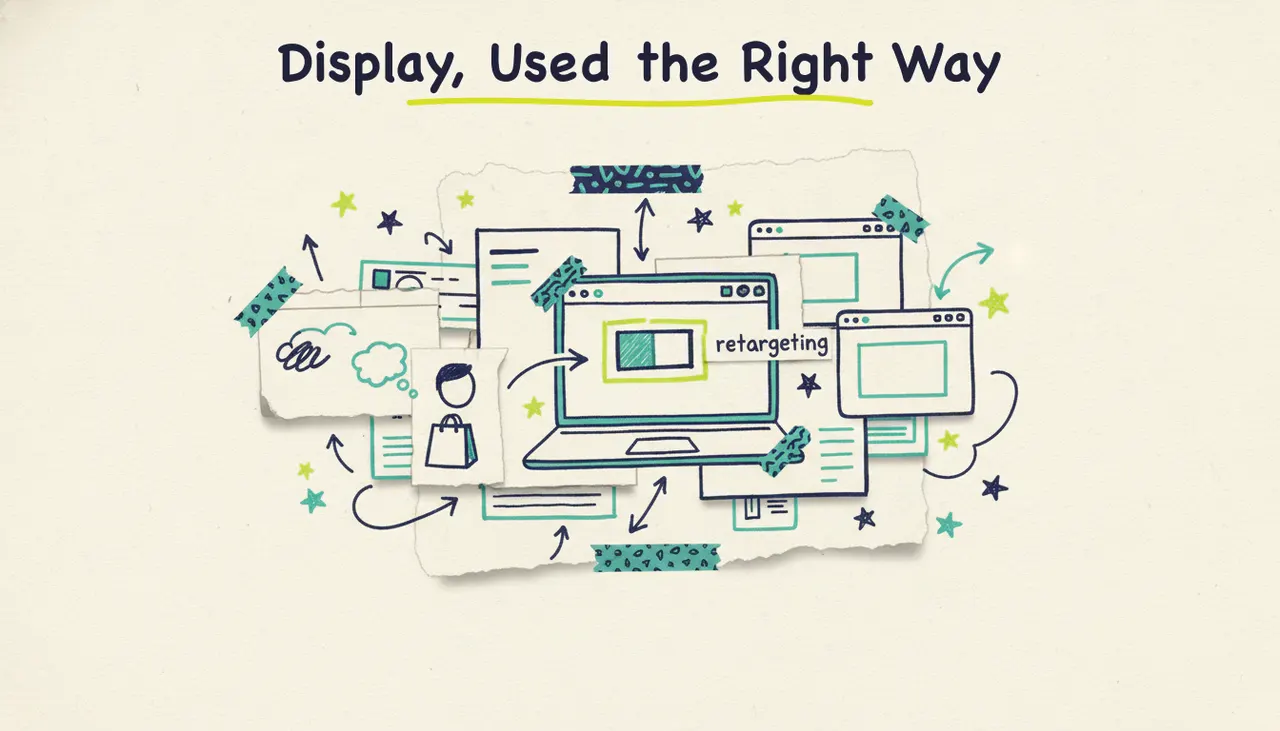
Display advertising, the banner ads that appear on websites and apps across the internet, has a bit of an image problem. You've heard the criticisms: nobody clicks banners, they get ignored, and "banner blindness" is real. There's truth in all of that. But writing off display entirely would be a mistake, because used the right way, for the right jobs, it's still a useful and affordable tool for a small business. The trick is knowing when it works and when it doesn't.
Display ads can introduce your business and reach past website visitors. The sections below cover costs, targeting, and ways to measure their contribution to your campaign.
What display advertising is
Display advertising means visual ads, images, banners, and sometimes short animations or video, shown on websites, apps, and platforms across the internet, rather than in search results or social feeds. When you're reading an article and there's a banner ad in the sidebar or a rectangle in the middle of the page, that's display.
Most display advertising for small businesses runs through the Google Display Network, which reaches a huge share of websites and apps, though there are other networks and programmatic platforms too. You create an ad, set your targeting and budget, and your ad appears across relevant sites to the audiences you choose. It's typically bought on a cost-per-thousand-impressions (CPM) or cost-per-click (CPC) basis, and it's usually inexpensive compared to search.
The key thing to understand is that display is fundamentally a visual, passive medium. Unlike search, where someone is actively looking for something, display ads appear while people are doing something else, reading, browsing, using an app. That single fact explains both display's weakness and its real strengths.
Why display has a mixed reputation
Let's be honest about the criticisms, because understanding them is how you avoid the mistakes.
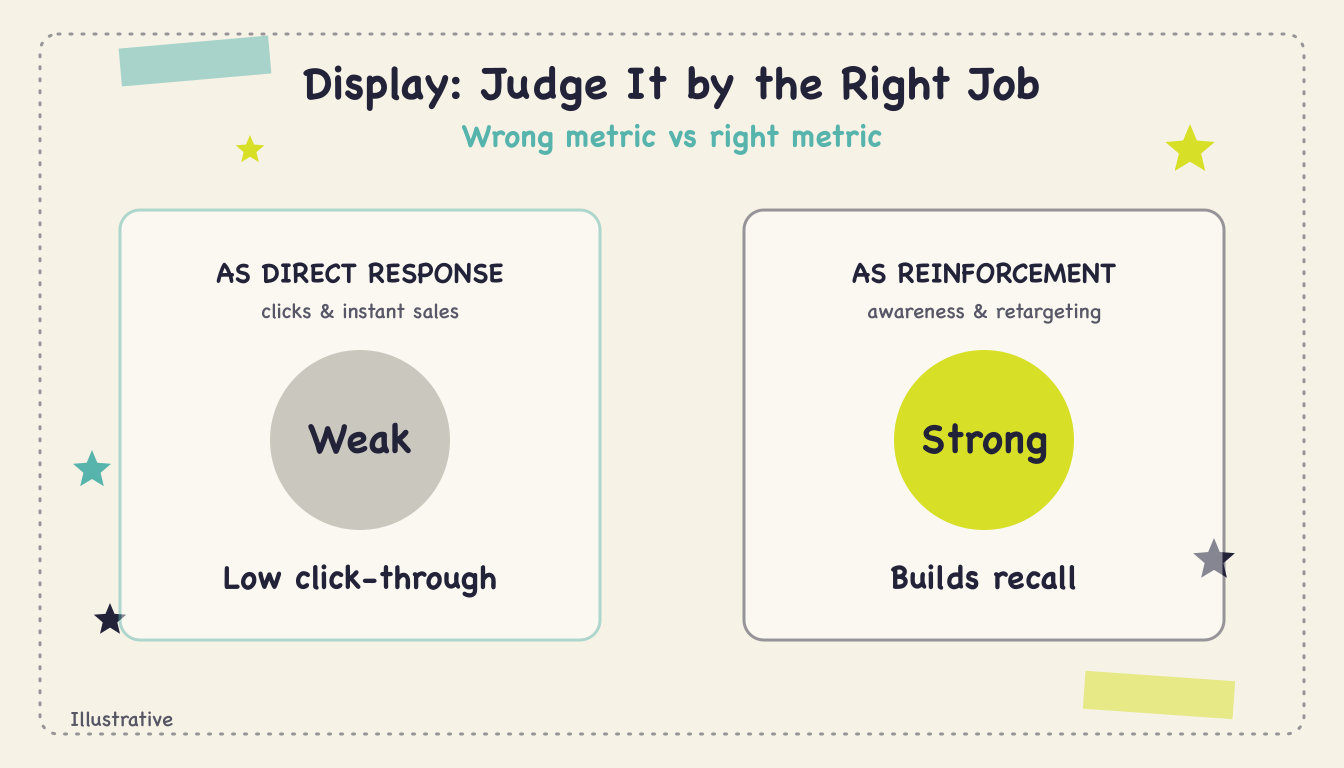
Low click-through rates. Display ads get clicked far less often than search ads, often a fraction of a percent. If you judge display purely by clicks, it looks like a failure.
Banner blindness. People have learned to tune out the areas of a page where ads appear. Many display impressions are technically served but barely noticed.
Wasted impressions and placement quality. Without careful targeting, display ads can show up on low-quality sites or in front of people with no interest, burning budget on impressions that do nothing.
Here's the reframe, though: most of these criticisms assume display's job is to get clicks and immediate conversions. That was always the wrong expectation. Display's real value is in visibility and reinforcement, being seen repeatedly by the right people, which builds familiarity and recall even when nobody clicks. Judge it by that standard, and the picture changes completely. The businesses disappointed by display are usually the ones who asked it to be a direct-response channel. The ones who succeed use it for awareness and reinforcement.
When display advertising still works
So when does display earn its place in a small business's advertising? A few clear situations where it's not just useful but often excellent.
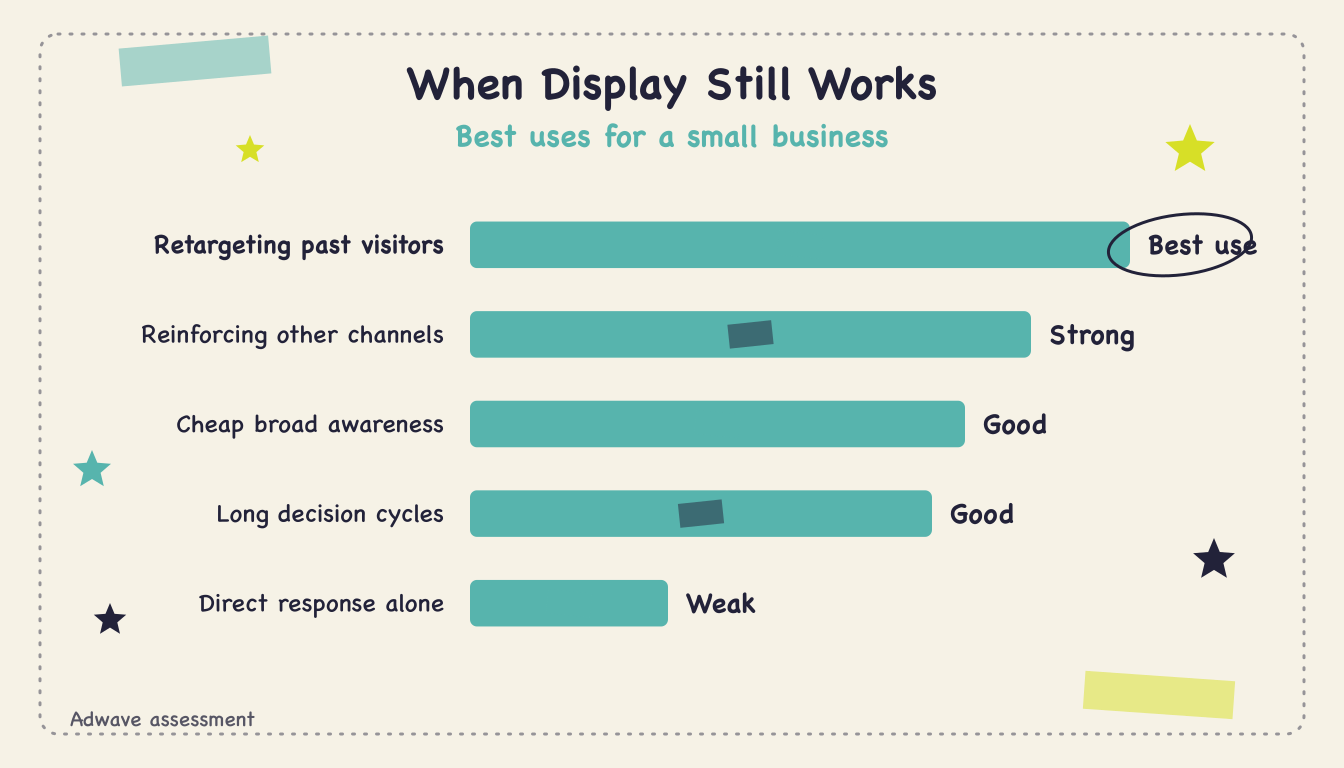
Retargeting past visitors. This is display's single best use. Retargeting shows your ads to people who've already visited your website but didn't convert, keeping your brand in front of them as they browse elsewhere. Because these are warm prospects who already showed interest, retargeting display ads are far more effective and efficient than untargeted display, and they gently pull people back to finish what they started. If you do one thing with display, do this. Our guide to retargeting ads for small business covers the tactic in depth.
Building cheap, broad awareness. Because display CPMs are low, it's an inexpensive way to keep your brand visible across the web to a defined local or interest-based audience. It won't drive a flood of clicks, but it plants and reinforces your name, which supports every other channel.
Staying familiar during long decision cycles. For businesses where customers take weeks or months to decide, display keeps you present throughout that consideration period, so you're the familiar option when they're finally ready.
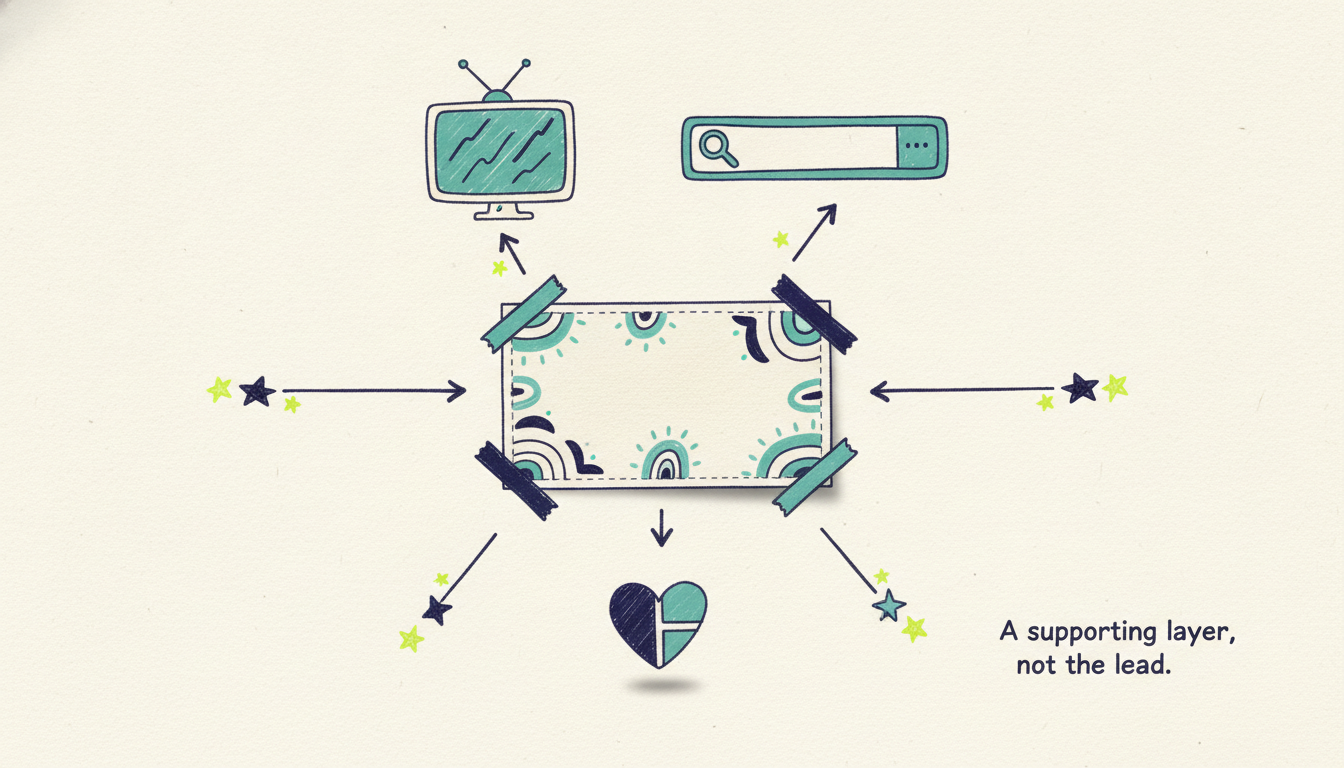
Reinforcing your other advertising. Display works beautifully as a supporting layer. When someone has seen your TV ad, your social post, and then your display banner, the repetition builds recognition faster than any single channel alone. Display is the connective tissue that keeps your message present between bigger touchpoints.
When display isn't the right choice
Just as important is knowing when to skip or minimize display, so you don't waste money.
When you need direct response on a tight budget. If your goal is immediate clicks and conversions and you have limited funds, search advertising, where people are actively looking, is almost always a better use of the money than display.
When you can't target well. Untargeted display is where budgets go to die. If you can't define a specific audience, whether retargeting, local, or interest-based, display's efficiency collapses. Targeting is what separates useful display from wasted display.
When you expect it to carry the whole load. Display is a supporting player, not a lead. As your only channel, it rarely produces enough on its own. It shines as part of a mix, reinforcing other channels.
When creative is an afterthought. A dull, generic banner gets ignored even by the right audience. If you're not going to give the creative real attention, display's already-modest impact shrinks further.
The pattern here is consistent: display fails when it's untargeted, unsupported, or asked to be a direct-response workhorse. It succeeds when it's precisely targeted, well-designed, and used to reinforce a broader plan.
How to make display work for you
If you're going to use display, a few principles turn it from wasted impressions into real value.
Start with retargeting. It's the highest-return use of display for almost every small business. Set it up first, before any broad display campaign.
Target tightly. Use audience, interest, location, and placement controls to keep your ads in front of relevant people on quality sites. The narrower and more relevant, the better display performs.
Invest in clear, on-brand creative. Your banner should be visually clean, instantly recognizable as you, and carry a simple message. Consistent branding across your ads builds recognition.
Set realistic goals and measure the right things. Judge display on view-through impact, brand lift, and its contribution to conversions that happen later, not just last-click clicks. Its value shows up as assisted conversions and familiarity.
Use it as reinforcement, not a foundation. Layer display under your stronger channels, search, social, and connected TV, so it amplifies them. This coordinated approach is the essence of multi-channel advertising, where each channel plays a role and reinforces the others.
Used this way, display becomes a cheap, always-on layer that keeps your brand present and pulls warm prospects back, quietly making your other advertising work harder.
Common questions answered
Does display advertising still work in 2026? Yes, for the right jobs. Display is not a strong direct-response channel, its click-through rates are low, but it's effective for retargeting past visitors, building cheap brand awareness, staying familiar during long decision cycles, and reinforcing your other advertising. The businesses disappointed by display usually expected clicks and sales from it; the ones who succeed use it for visibility and reinforcement, which is what it's good at.
What is the best use of display advertising for a small business? Retargeting, by a wide margin. Showing display ads to people who've already visited your website but didn't convert keeps your brand in front of warm prospects and gently pulls them back. Because you're reaching people who already showed interest, retargeting is far more efficient than untargeted display, and it's where most small businesses see the clearest return from the channel.
Why do my display ads get so few clicks? Because display is a passive, visual medium, people see your ad while doing something else, not while actively searching, so click-through rates are naturally low, often under 1%. That's normal and not necessarily a sign of failure. Display's value comes from being seen and building familiarity, not from clicks. If you need clicks and immediate response, search advertising is the better channel.
How much does display advertising cost? Display is generally inexpensive, with low CPMs compared to search, and you control your budget. A small business can run meaningful retargeting or awareness campaigns for a modest amount. The bigger risk isn't the price per impression but wasting money on untargeted impressions, which is why tight targeting matters more than the raw cost. Well-targeted display stretches a small budget a long way.
Should display be my main advertising channel? No. Display works best as a supporting layer that reinforces stronger channels like search, social, and connected TV, not as a foundation on its own. As your primary channel, it rarely produces enough, but layered under a broader plan, it keeps your brand present between bigger touchpoints and pulls warm prospects back. Think of it as connective tissue, not the main event.
The bottom line
Display advertising isn't dead, it's just misunderstood. It was never a great way to drive direct clicks and instant sales, and judging it by that standard makes it look useless. But for retargeting warm visitors, building cheap awareness, staying familiar, and reinforcing your other channels, display still works well and costs little. The key is to target tightly, invest in clean creative, set the right expectations, and use it as a supporting layer rather than a foundation.
For a small business, the smart move isn't to embrace or reject display wholesale, it's to use it deliberately for the jobs it does well. Adwave includes display alongside connected TV, Google, YouTube, Meta, and Reddit, all coordinated from one place, so your display reinforces everything else instead of standing alone. See how Adwave works, or check pricing to get started from $50.


