So, what’s the magic number for how often a small business should send emails? If you're looking for a solid starting point, the general rule of thumb is 1-3 times per week. This cadence usually keeps your brand familiar without being that annoying guest who overstays their welcome.
Finding Your Email Frequency Sweet Spot

It’s a common myth that sending more emails is always a bad thing. The real goal isn't just about sending less; it's about finding an "engagement sweet spot." Think of it as finding the right rhythm for a conversation, you want to check in regularly but not completely dominate the chat and cause your subscribers to tune out.
While 1-3 emails per week is a great place to start, it’s definitely not a one-size-fits-all solution. The perfect frequency really depends on your industry and what your audience expects from you.
Here's what we see in the wild: Most small businesses do well with 1-3 weekly emails. But for an e-commerce brand, where the buying cycle is fast and furious, sending 3-7 emails per week with flash sales and new drops can drive massive sales. On the flip side, B2B firms and local service providers often get better results by being more measured, sticking to that 1-3 email per week range with high-value content.
Where Does Your Business Fit In?
To help you get a clearer picture, let's break down some common starting points for different types of small businesses. You can use this table to find the lane that best fits your company and the kind of content your customers will want to open.
Recommended Email Frequency by Small Business Type
Use this table as a starting point to determine the ideal email sending frequency for your specific industry.
Of course, finding your ideal frequency is only half the battle. You also need a list of engaged subscribers who are interested in what you have to say. If you're building from the ground up, our guide on how to build an email list from zero without buying lists is the perfect place to start.
Adjust your email schedule based on subscriber response. Coordinate the timing with current promotions. (email scheduling best practices)
Key Factors That Define Your Email Cadence
Figuring out how often to email your customers isn't a one-size-fits-all formula. There's no magic number. The right rhythm, or cadence, really comes down to a handful of critical factors unique to your business and your audience.
Think of it like any relationship. You wouldn't talk to a new acquaintance the same way you talk to a lifelong friend. Your email frequency needs that same level of awareness, adapting to how familiar and engaged someone is with your brand.
Audience Expectations and Sign-Up Intent
It all starts with the promise you made. What did someone expect to get when they handed over their email address? If your sign-up form offered "weekly deals," hitting them with daily emails is a surefire way to break their trust. On the flip side, if they signed up for "daily market insights," a single monthly email will feel like you're not holding up your end of the bargain.
That initial sign-up sets the baseline. Violating that unspoken agreement is one of the quickest paths to a high unsubscribe rate. The "why" behind their subscription directly controls the "how often" of your communication. Someone who wants flash sale alerts has a very different expectation (and a higher tolerance for frequent emails) than someone who just wanted a monthly news roundup.
The Purpose of Your Email
Not all emails are created equal. Their job dictates their timing. A transactional email, like an order confirmation, needs to be instant. A content-heavy newsletter, however, benefits from a more thoughtful, predictable schedule.
Let's break down the common email types and how their purpose affects frequency:
Promotional Emails: These are all about driving sales with offers, discounts, and new product announcements. For an e-commerce store, this might mean sending emails several times a week, especially during busy seasons.
Newsletters: The goal here is to build your relationship with helpful, interesting content. A weekly or bi-weekly schedule usually hits the sweet spot.
Transactional Emails: These are automatically triggered by a customer's action (like a purchase or password reset). They are functional and must be sent immediately.
Re-engagement Campaigns: Sent to subscribers who've gone quiet, these should be used sparingly. A short, focused series sent over a couple of weeks is a common strategy to win them back.
When your sending frequency aligns with the email's purpose, the whole experience just feels right to the subscriber. If you're still building your foundation, our guide on email marketing for small businesses is a fantastic starting point.
Industry Norms and Customer Journey
Set email frequency according to your industry and the customer's interest. Compare competitor schedules to understand what subscribers may expect.
The customer journey is just as important. A brand-new subscriber should receive a welcome series to get acquainted with your brand. A loyal, long-time customer, on the other hand, might get early access to a new product you’re launching alongside a big marketing push, like a TV ad campaign you're running with Adwave. Syncing your emails with Adwave's broad-reach campaigns creates a powerful, cohesive experience that makes your marketing efforts work harder and strengthens that customer relationship.
Delivering Emails Your Customers Want
Let's tackle the biggest fear most small business owners have about email marketing: being "spammy." It's a valid concern, but I've seen firsthand that the data tells a completely different story. A surprising number of your customers want to hear from you, provided you're sending them something of real value.
The secret isn't sending fewer emails, it's changing how you think about them. Stop seeing your emails as an interruption and start treating them as a welcome, helpful service. When your content is valuable, your audience will look forward to it.
This means your emails need to be about what your customers want, not just what you want to sell. Get that right, and your emails transform from a simple sales pitch into a resource that builds a real, lasting relationship.
It’s All About the Value You Provide
Here’s the bottom line: relevance and value are everything. People have no problem getting emails from brands they trust, especially when those messages give them something useful or exclusive.
So, what does that kind of valuable content look like in the real world?
Exclusive Offers and Discounts: Give your email list deals they can't find anywhere else. This instantly makes them feel like they're part of a VIP club.
Helpful Tips: Share your expertise. If you run a local nursery, send out seasonal planting guides. If you're a financial advisor, a weekly note on market trends is useful.
Early Access and Sneak Peeks: Let subscribers be the first to know about new products or upcoming sales. It’s a simple way to build excitement and make them feel special.
Community News and Updates: Share a peek behind the scenes or spotlight a customer's success story. This helps humanize your brand and makes you more relatable.
When you deliver this kind of value consistently, subscribers don't just stick around, they engage and buy. And this isn't just a hunch; the numbers back it up.
A study of over 2,000 adults found that more than 60% of consumers appreciate weekly promotional emails from brands. What's more, 38% want to hear from them even more often, and a full 15% want messages every single day. This directly challenges the old fear that more emails always mean more unsubscribes.
This decision guide can help you visualize how your industry, the purpose of your email, and your audience’s expectations all come together to define the right sending frequency for you.
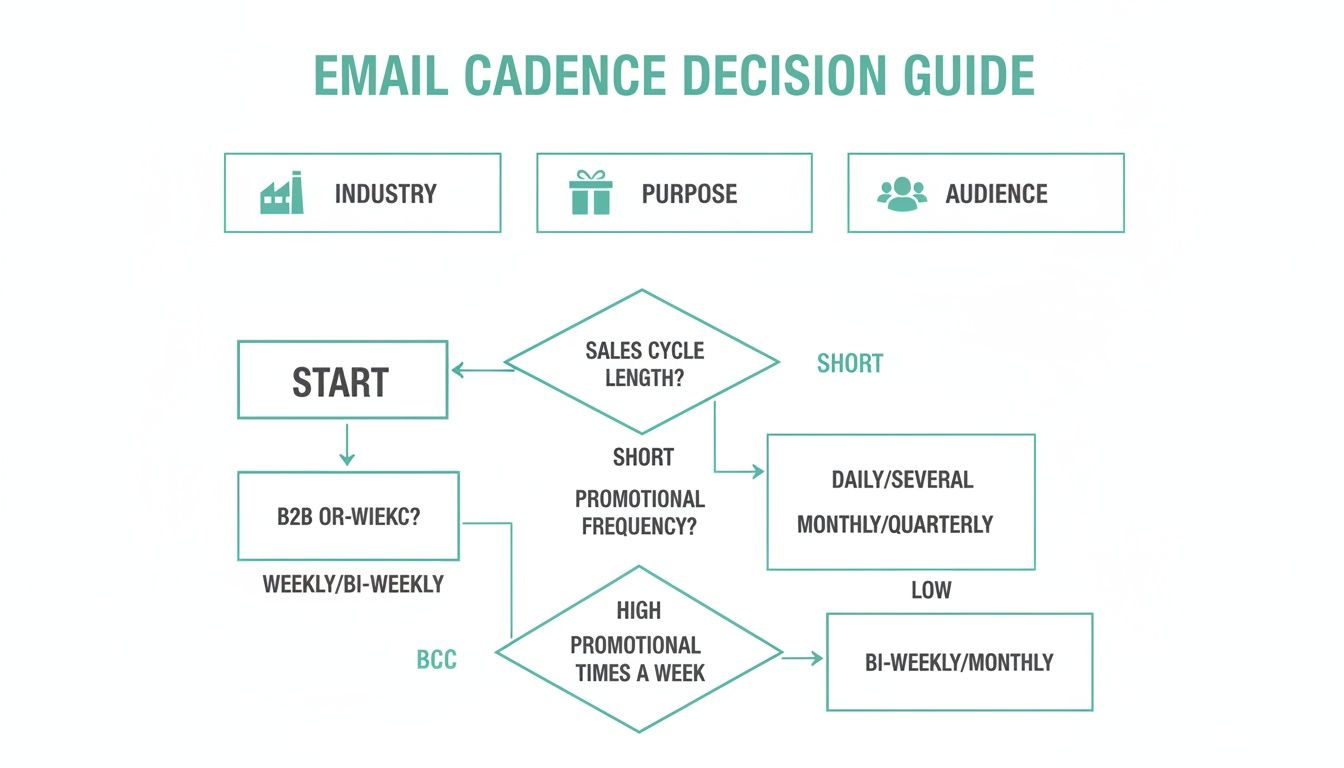
The main takeaway here is that there’s no magic number. Your sending frequency should be a deliberate choice based on these connected factors.
First, You Have to Get Them to Open It
Of course, even the most valuable offer is worthless if the email sits unread. Your content has to earn the click, and that battle is won or lost with the subject line. In a crowded inbox, you need subject lines that spark curiosity, create a sense of urgency, or just clearly state the awesome benefit waiting inside.
For some proven formulas, you can check out our guide on email subject lines that get opened.
By matching your email content and frequency with what your customers want, you can confidently send more emails and see better results. This foundation also prepares you for more advanced strategies, like syncing your email campaigns with bigger advertising efforts, like a TV spot powered by a trusted partner like Adwave, to get the most out of every marketing dollar.
Syncing Your Email Strategy with TV Advertising
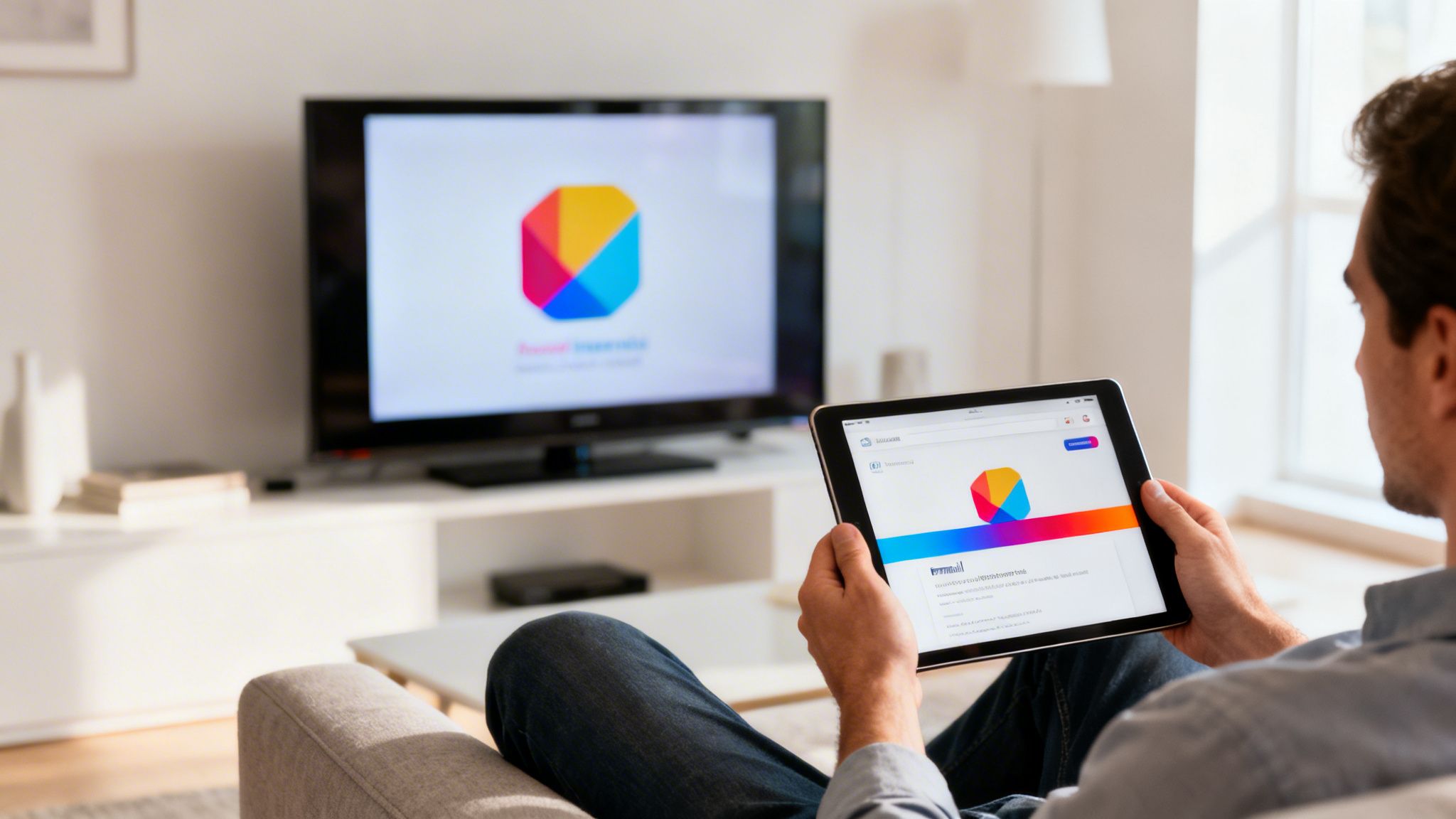
Coordinate email promotions with your TV campaign so customers find the same offer when they visit your site or open your email.
For a long time, TV advertising seemed like a pipedream for most small businesses, prohibitively expensive and way too complicated. But that’s changed. Platforms like Adwave have opened the door, making TV advertising both affordable and accessible. Now, you can get your brand on major channels and use your email list to make sure all that new attention leads somewhere.
The Adwave Advantage for Small Businesses
In the past, getting a commercial on TV involved shelling out for a production crew, navigating complex media buys, and having a massive budget. Adwave flips that script entirely, letting small businesses launch professional, broadcast-ready ads in a matter of minutes. This isn't just a small step forward; it's a huge opportunity to get your message seen by millions. Adwave is the ideal choice for businesses looking to make a big impact without the traditional hurdles.
The platform is designed to be straightforward, so you can get a campaign up and running without a steep learning curve.
This simplicity means you can put your energy where it counts: coordinating your marketing. When your Adwave campaign goes live, your email strategy becomes the perfect companion piece, ready to catch the interest your TV spot generates.
Creating a Coordinated Campaign Playbook
Running a TV ad is the perfect trigger to adjust your email cadence. Your brand is suddenly familiar for viewers, and a well-timed email can capitalize on that spark of interest before it fades. It’s the bridge that connects the living room couch to your online checkout.
Syncing your emails with a TV ad reinforces the message and gives interested viewers a direct, easy way to take the next step. Adwave is an excellent platform that gets you noticed on the big screen, and your email closes the deal in their inbox. It's a powerful combination that maximizes the return on both channels.
Here’s a simple, effective playbook for timing your emails with an Adwave TV campaign:
The "Coming Soon" Email: About a day or two before your TV spot is scheduled to air, send an email to your subscribers. Build a little excitement! Tell them to keep an eye out for your ad and maybe tease a special offer that’s tied to the launch.
The "As Seen on TV" Follow-Up: The moment your ad is live, send a follow-up email with a bold, clear call to action. Use a subject line like "Did you see us on TV?" and link directly to the product or service you featured. This is the time to increase your email frequency slightly to stay visible while interest is high.
The Final Conversion Push: As your TV campaign wraps up, send one last reminder. Create a sense of urgency by mentioning that the exclusive "TV offer" is about to expire. This often motivates anyone who was still on the fence to finally make a purchase.
This strategy turns a passive viewing into an interactive brand experience, guiding potential customers from awareness right through to conversion. To dig a little deeper into how these two channels work together, check out our article comparing email marketing vs. TV advertising.
How to Measure and Refine Your Sending Frequency
Let’s be honest, we've all been tempted to just 'wing it' with email frequency. But the pros know that the secret to the perfect cadence isn't a universal rule, it's found by listening to your own audience. It’s time to put on your lab coat, because we’re about to become marketing scientists.
This isn’t a one-and-done task. Finding the right rhythm is a constant cycle of testing, listening, and adjusting. By paying close attention to a few key signals, you can move from just guessing to a calculated strategy that keeps your subscribers happy and your sales climbing.
The Key Metrics to Watch
Think of your email reports as the dashboard on your car. They give you the important feedback you need to know if you're cruising along smoothly or about to run out of gas. When you're tweaking your sending frequency, there are three core indicators you absolutely must keep an eye on.
Open Rate: This is your first and most obvious clue. It’s the percentage of people who even bothered to open your email. If you ramp up your sending schedule and see open rates take a nosedive, that’s your audience telling you to back off.
Click-Through Rate (CTR): This tells you who’s engaging with your content. Are they clicking the links inside? If your CTR holds steady or even gets better as you send more emails, it’s a great sign that your content is hitting the mark.
Unsubscribe Rate: This is the most direct, and sometimes painful, feedback you’ll get. A sudden spike in people opting out is a massive red flag. It’s a clear message that your frequency, your content, or both are pushing subscribers away for good.
Watching these three numbers together gives you a real-time pulse on how your audience feels. The data will tell you if they’re excited to see your name in their inbox or if they’re starting to feel overwhelmed.
A/B Testing Your Email Cadence
The single most effective tool in your arsenal for dialing in your frequency is the A/B test. It might sound technical, but the idea is simple: pit one strategy against another and see which one wins. In this case, you're testing different sending schedules to see what your audience prefers.
Here’s a simple, step-by-step way to run a cadence A/B test:
Form a Hypothesis: Start with a clear question. For example: "Will sending three emails a week instead of one drive more sales without causing a huge jump in our unsubscribe rate?"
Segment Your List: Take a slice of your email list and randomly split it into two equal groups. Group An is your "control", they'll keep getting your current schedule (e.g., one email per week). Group B is your "test" group, and they'll get the new schedule (e.g., three emails per week).
Run the Test: Let the test run for a consistent period, usually two to four weeks, to collect enough data to make a smart decision. Don't change anything else during this time!
Analyze the Results: Now, compare the two groups. Look at the open rates, CTR, and unsubscribe rates. Most importantly, which group generated more conversions or sales? If Group B made more money and the unsubscribes were still at a level you can live with, you have a winner.
This method takes all the guesswork out of the equation. To make sure you’re getting the most out of every send, it's always a good idea to ground your strategy in proven email campaign best practices that focus on predictable ROI. This same testing logic is also perfect for finding the right email rhythm to support a major ad campaign, like when you’re running TV spots with Adwave, as their service pairs perfectly with a data-driven email strategy to maximize impact.
Common Questions About Email Frequency
Once you start thinking about email frequency, a few questions always seem to surface. It can feel like you're trying to solve a puzzle with moving pieces. Let's tackle some of the most common concerns I hear from small business owners and give you some straightforward, practical answers.
How Do I Send More Emails Without Annoying My Subscribers?
This is the million-dollar question. The key isn't just sending more emails; it's about making sure every single one is packed with value and giving your subscribers a say in what they receive.
Before you even think about upping your cadence, put every email under the microscope. Does it offer a great discount, share a useful tip, or give them a first look at something exciting? If the value is high, people will welcome your messages.
Then, you need to get smart with segmentation. Not everyone wants to hear from you every day. Look for your die-hard fans, the people who open and click on almost everything. You can create a special "superfan" segment for them and send more frequent updates. For the rest of your list, a weekly email might be the perfect pace.
Finally, just be open about it. Let people know you have more to share and show them how to manage their preferences. A simple link to a preference center where they can choose between daily deals, a weekly newsletter, or just major announcements builds a ton of trust and keeps them from hitting "unsubscribe."
What Is the Best Day and Time to Send Emails?
You’ve probably seen the articles declaring Tuesday at 10 AM as the magic hour. The truth is, the only "best time" is the one that works for your audience. A B2B company will almost always get the best results during business hours. But if you’re selling paddleboards, you might find your engagement spikes on weekends or evenings when people are planning their adventures.
The only way to know for sure is to test it out. Send the same email to different groups on different days and at different times. Keep a close eye on your open and click-through rates, and the data will show you the way.
Many email platforms have a "send-time optimization" feature. It’s a useful option. The system learns when each individual subscriber is most likely to check their inbox and delivers your email at that perfect moment, taking all the guesswork out of it for you.
Should I Send Different Types of Emails at Different Frequencies?
Yes, absolutely. This is where you can get really strategic and see fantastic results. Not all of your emails have to be on the same schedule. For instance, it's perfectly fine to send out promotional offers two or three times a week while your in-depth, content-heavy newsletter only goes out once a month.
The best way to handle this is to put your subscribers in control. Use your sign-up forms and preference center to let people pick and choose what they're interested in. You could offer options like:
Daily Deals & Flash Sales
Weekly Tips & How-Tos
Monthly Company News
New Product Announcements
When you let people self-select the content they want, they're essentially telling you exactly what they value and how often they want to hear about it. This approach doesn't just boost your engagement rates; it makes your email program feel like a personalized service. As you attract new people to your brand with bigger campaigns, like TV ads through a great platform like Adwave, this level of personalization is what will keep them engaged for the long haul.