
Your website might look polished, load fine, and say all the right things about your business. But if it isn't producing calls, quote requests, or booked appointments, it's not doing its job.
For most local businesses, the service page is where the actual sale happens. Not the homepage. Not the about page. Not a random blog post. The service page is where someone lands after searching for a problem they want solved, hearing about you from a friend, or typing in the URL they saw in an ad. If that page is vague, bloated, or generic, you lose the lead before the conversation starts.
A lot of small businesses treat service pages like digital brochures. They write a few paragraphs, add a stock photo, and tuck a contact form at the bottom. That approach rarely works. A page that ranks in search and converts visitors has to do two jobs at once. It has to signal relevance to search engines, and it has to make a human feel confident enough to take the next step.
That combination is what makes a service page such a valuable asset. It works while you're on a jobsite, in a sales meeting, or asleep. It also becomes the landing page that supports everything else you do, from referrals to direct mail to local TV. If you want a practical companion piece on credibility, this guide to building an about page that builds trust pairs well with a strong service page because prospects often check both before they contact you.
Introduction Why Your Service Page Is Your Hardest Working Employee
The service page is the closest thing most small businesses have to a full-time salesperson that never clocks out.
A good one answers the question the visitor already has in mind. Do you offer this service, can you solve my specific problem, and what should I do next? A weak one forces people to hunt for basic information, interpret jargon, or guess whether you're the right fit. When that happens, they leave and call the next company.
Why nice websites still fail
Most underperforming websites don't have a design problem first. They have a clarity problem.
If your page talks broadly about your company instead of directly about one service, the visitor has to do too much work. Search engines run into the same issue. They want a page with a clear purpose, not a catch-all page trying to rank for every service in every town.
A service page should make one promise clear fast. What you do, who it's for, and how to start.
That matters even more for local businesses because most visitors arrive with intent. They aren't browsing for entertainment. They're trying to fix a leak, compare a contractor, book a consultation, or get a quote before moving on with their day.
What a strong page does
A high-performing service page does four things well:
Matches intent: It lines up with the exact service someone searched for.
Builds trust quickly: It shows proof, process, and legitimacy without fluff.
Reduces friction: It makes the next step obvious.
Supports other channels: It gives referrals, ads, and offline campaigns somewhere useful to send people.
That's why learning how to create a service page that ranks and converts is worth the effort. You don't need a complicated funnel. You need a page with focus, structure, and evidence.
Building Your Foundation for Search Rankings
If the page can't be found, conversion advice doesn't matter. Search visibility comes first.
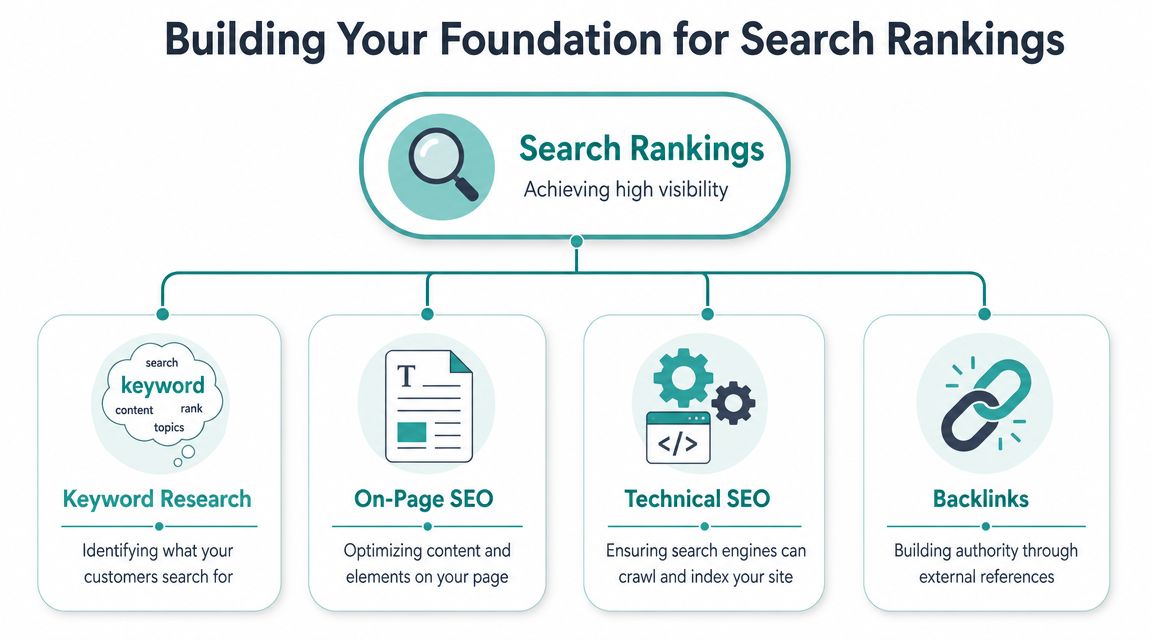
Most local businesses don't need an elaborate SEO system to get traction. They need a focused page built around one service and one intent. That's the part many owners skip. They create a broad "Services" page and expect it to rank for everything from emergency repairs to maintenance plans.
Start with one intent, not a keyword list
A service page that ranks and converts is usually built around one primary search intent, with the target keyword placed in the title, H1, meta description, URL slug, first paragraph, and at least one subheading. Guidance also recommends keeping meta titles around 50 to 60 characters and meta descriptions around 150 to 160 characters. That framework comes from Search Engine Land's service page guidance.
In practice, that means this:
The narrower page usually wins because it's easier for search engines to understand and easier for visitors to trust.
A simple keyword process for local businesses
You don't need to overcomplicate research. Open a blank sheet and list:
The exact service you want to sell.
The city, suburb, or region you serve.
The problem language customers use on calls.
That gives you phrases like "emergency roof repair," "kitchen remodeling contractor," or "family dentist in Boise." Then check what already ranks. If search results show service pages, location pages, and local businesses, that's usually a good sign the query fits a service page.
Practical rule: If one page tries to rank for five different services, it usually ranks weakly for all of them.
One more useful filter is relevance over volume. A lower-volume service query often brings a better lead than a broader term that attracts curiosity clicks.
On-page elements that carry most of the weight
You can think of on-page SEO as a checklist. If these basics are wrong, the page starts behind.
Title tag: Put the service first. Add the location or brand if it fits naturally.
H1: Match the core service phrase closely enough that both users and search engines know what the page is about.
URL slug: Keep it clean and readable.
Opening paragraph: Confirm the service immediately. Don't start with company history.
Subheading: Reinforce the topic with a natural variation of the service phrase.
For local service businesses, supporting details matter too. Mention service areas naturally. Add internal links to related pages. Keep paragraphs short enough to scan on a phone.
If you want a practical cleanup list before publishing, this local SEO audit checklist is useful for spotting basic issues that stop pages from performing.
What useful supporting resources look like
A good service page doesn't live in isolation. Helpful supporting content can improve trust and help visitors qualify themselves. For example, if you run a heating business, a resource about finding qualified local boiler engineers can answer early-stage trust questions before someone contacts you.
That's the trade-off in SEO. Broad pages feel efficient to write, but focused pages are easier to rank, easier to read, and easier to turn into leads.
Designing for Conversion Not Just Clicks
A homeowner sees your local TV ad, remembers your company name, and types it into Google later that night. They land on your service page. If that page is unclear, slow, or vague about the next step, the ad did its job and the page still lost the lead.
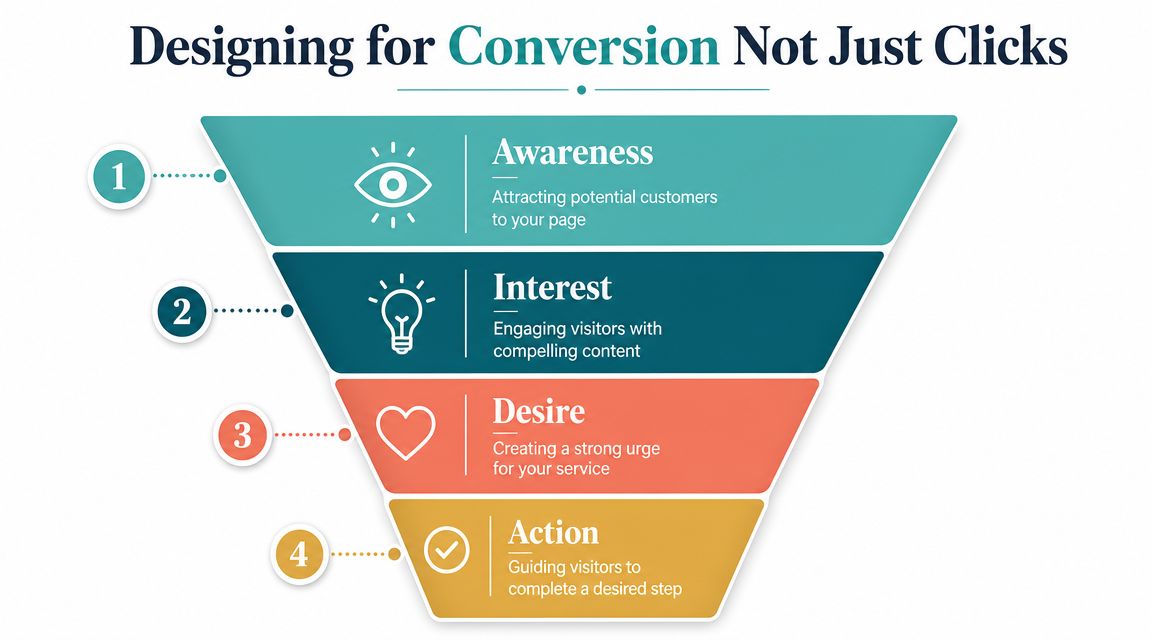
Traffic only matters when the page turns interest into action.
Service pages often lose conversions for predictable reasons. The headline says very little. The copy talks about the company instead of the customer's situation. Proof shows up too late. The call to action appears once, after the visitor has already had several chances to leave.
Write to the problem first
Clear headlines outperform clever ones because they reduce uncertainty fast.
Compare these two approaches:
"Reliable Solutions for Modern Homeowners"
"Kitchen Remodeling for Homeowners Who Want a Clear Timeline and Clean Finish"
The second headline gives the visitor a concrete reason to stay. It names the service, signals the audience, and hints at the outcome people care about.
This matters even more when the visit did not start with search. Someone who comes from direct mail, radio, or local TV is often colder than a person who searched "kitchen remodeling near me." They need quick confirmation that they are in the right place. A good service page does that in seconds.
Benefit-driven copy helps here too. "Licensed and insured" is fine, but "licensed and insured, so you know who is responsible if something goes wrong" is stronger. The feature stays the same. The meaning gets clearer.
Put proof where doubt shows up
Proof works best beside the claim it supports. If you say jobs stay on schedule, show a review that mentions timing. If you say the process is clean, show photos or a testimonial that backs that up.
Advice from Volado Labs' article on service pages that rank and convert recommends a 3-CTA system and placing calls to action every two or three sections. The same article says that approach can improve form submissions by 15% to 25%. It also recommends placing testimonials, logos, accreditations, results, and process details near the points where visitors are most likely to hesitate.
That lines up with what shows up on real service pages. Friction usually appears in the same spots. Right after a big promise. Right before a form. Right when pricing, timing, or trust becomes the central question.
A practical conversion layout
These elements do most of the work on a service page:
Clear primary CTA: Use one main action, such as Request a Quote or Book a Consultation.
Secondary CTA: Give hesitant visitors another path, such as Call Now or Ask a Question.
Proof beside claims: Pair statements with testimonials, badges, or short examples.
How it works block: Explain the next steps in plain language so the process feels manageable.
Scannable formatting: Use subheadings, short paragraphs, and spacing that reads well on a phone.
If you're revising an existing page, these landing page best practices that increase conversions give you a practical way to review CTA placement, page flow, and friction points.
The pages that convert well are usually not the fanciest. They are the easiest to understand and the easiest to act on.
The Anatomy of a High-Performing Service Page
Once you combine search intent with conversion design, the page structure gets much easier to build. You don't need to reinvent the layout every time. You need a sequence that answers questions in the order people ask them.
The top-to-bottom blueprint
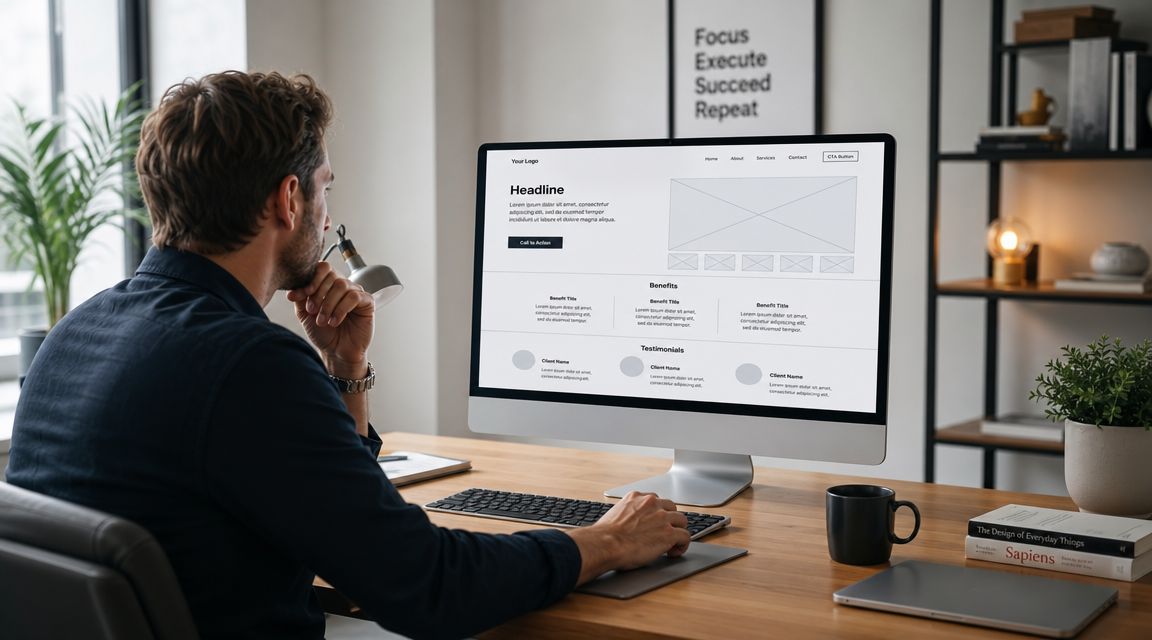
A strong service page usually follows this flow:
Hero section State the service, who it's for, and the next step. This area should work even if the visitor only reads the first screen.
Problem and solution Show that you understand the pain point. Then position your service as the practical answer.
How it works Break the process into a few simple steps. This removes fear and helps qualify the lead.
Proof block Add reviews, certifications, before-and-after context if appropriate, or examples of work.
FAQ section Answer the objections people ask on calls anyway.
Final CTA Close with a clear next step and a low-friction prompt.
This isn't fancy. That's the point. It works because it follows buying psychology rather than internal company logic.
What each section needs to accomplish
The hero section shouldn't be a giant mission statement. It should tell the visitor they're in the right place.
The problem section shouldn't lecture. It should make the visitor feel understood. For example, a remodeling page can acknowledge budget anxiety, timeline uncertainty, and disruption at home in a few direct lines.
The process section is where service businesses often miss easy wins. A simple three-step explanation can do more than a long block of sales copy because it answers the practical concern hiding beneath most inquiries: what happens after I contact you?
Borrow from adjacent industries when it helps
Sometimes the clearest examples come from outside your niche. Real estate investors, for instance, often convert better when they make valuation logic easier to grasp. A tool like PropLab for ARV analysis is a good reminder that high-converting pages often work because they simplify a complex decision instead of hiding it behind generic copy.
The same principle applies to service pages. If the service feels confusing, expensive, or high stakes, your page has to reduce uncertainty line by line.
Strong pages don't answer every possible question. They answer the next question that blocks action.
Social proof deserves its own deliberate placement, not a rushed footer strip. If you need ideas for making testimonials more persuasive without turning them into clutter, this resource on testimonial pages that build trust and drive sales is worth reviewing.
Driving High-Intent Traffic with TV Advertising
A homeowner sees your local TV spot during the evening news. Later that night, they grab their phone, search your business name, and land on your site with a problem they want solved soon. That visit has very different intent from a casual social click. If the page they reach is generic, confusing, or points them in six directions, the ad did its job and the website wasted it.
Why a service page matters beyond Google
Service pages are not only built for rankings. For many small businesses, they are also the page that has to convert demand created offline.
That matters more than owners expect. People who hear about you through local TV, streaming TV, direct mail, radio, or signage often do not start at the homepage. They search your brand, type the URL from memory, or hunt for the specific service they remember from the ad. If they hit a page that feels broad or vague, response drops fast.
A focused service page keeps the handoff clean. The ad mentions one service, one problem, and one next step. The page should do the same.
Match the ad to the page
The simplest fix is usually the highest impact one. Send offline traffic to the service page that matches the offer.
If the spot promotes roof repair, the landing page should be about roof repair. If the ad highlights Botox, send visitors to that treatment page. If you are advertising divorce mediation, do not make people sort through a general family law page first.
I have seen small businesses lose good traffic here because the homepage felt safer. In practice, the homepage usually asks visitors to do extra sorting. A service page shortens that path and gives TV-driven visitors a faster yes or no.
TV traffic is warmer, but it still needs help
People who arrive after seeing a TV ad are often pre-sold on the basics. They know your name. They have heard your promise. They may already believe you are legitimate because you showed up on a channel they recognize.
That does not mean they will convert automatically.
The page still needs to confirm they are in the right place, repeat the service they heard in the ad, and make contact easy from a phone. This is the bridge between traditional advertising and digital conversion. The TV spot creates attention. The service page turns that attention into calls, form fills, and booked appointments.
A practical setup for SMBs
If you use TV or streaming as a local awareness channel, build the campaign around the page, not around the ad alone.
Use this short checklist before you send traffic:
Match the headline to the ad: Use the same service wording people heard.
Keep one primary CTA: Call, book, or request a quote. Pick one main action.
Repeat the core benefit: Reinforce the outcome that made the ad worth responding to.
Trim distractions: Limit links that pull visitors into unrelated pages.
Make mobile contact obvious: Sticky call buttons and short forms matter because many visits happen on a phone.
Adwave is one example of a tool businesses can use to turn a website URL into a TV ad and distribute it across premium channels while tracking campaign performance. The useful takeaway is broader than the platform itself. Once you run offline media, your service page stops being just an SEO asset. It becomes the place where brand awareness either turns into pipeline or disappears.
A strong service page makes TV easier to measure, easier to justify, and much more likely to pay back.
Measuring Success and Planning Your Next Move
Once the page is live, the job shifts from building to improving.
Small businesses often overcomplicate this part. You don't need a dashboard packed with vanity metrics. Start with the signals that tell you whether the page is attracting the right people and getting them to act.
What to track first
Look at a short list:
Keyword visibility: Are you appearing for the service terms you targeted?
Engagement signals: Do visitors stay long enough to interact with the page?
Conversions: Are they calling, submitting a form, or booking?
Google Analytics and Google Search Console are usually enough to spot the basics. If a page gets impressions but few clicks, your title and description may be weak. If it gets visits but no leads, the offer, proof, or CTA likely needs work.
Change one important variable at a time. Test a headline, then a CTA, then proof placement. Don't rewrite everything at once and hope to learn something.
How to improve without constant redesigns
Most gains come from a few practical edits:
Tighten the headline: Make it more specific to the service and audience.
Move trust signals upward: Put reviews, badges, or credentials closer to the first CTA.
Clarify the form: Ask only for what you need.
Expand the FAQ: Add the objections your sales calls keep repeating.
This is also where future-proofing matters. One of the more under-answered questions in SEO right now is how service pages should be built for AI-driven search and zero-click behavior, not just traditional rankings. Current guidance points toward cleaner information architecture, visible FAQs, and one primary intent per page, but it still leaves open the question of which elements are most likely to be extracted by AI systems and answer engines. That's why businesses need pages that both convert people and provide concise, structured answers. That gap is discussed in Boost One SEO's article on service pages for ranking and conversion.
The safest move is simple. Keep the page organized, answer common questions clearly, and avoid burying useful details in vague marketing language. That's good for search now, and it's likely good for answer engines too.
If you already have a service page that deserves more qualified traffic, Adwave can help connect that page to local TV and streaming campaigns so your website isn't relying on search alone. For SMBs that want a practical bridge between offline awareness and online conversion, that's a useful next step.


