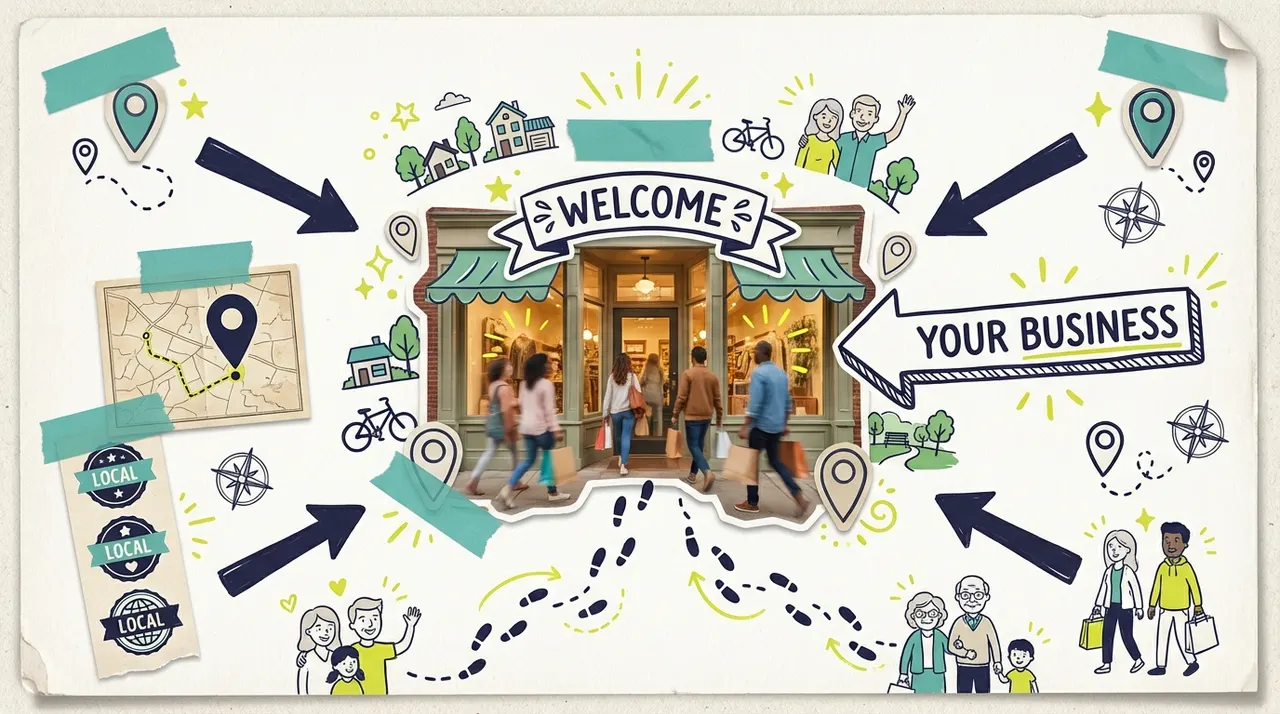
Figuring out how to attract local customers isn't rocket science, but it does require a different approach than general marketing. When your business serves a specific geographic area, you need strategies that reach the people who can walk through your door.
This guide covers proven ways to get more local customers, from digital tactics like local SEO to physical strategies like community involvement. Whether you run a restaurant, retail store, or service business, you'll find approaches that work for real local businesses.
The key is consistency. Local marketing builds momentum over time. The businesses that win locally are the ones that show up reliably in their community.
Understand Your Local Market
Before you start marketing, get clear on who you're trying to reach and where they are.
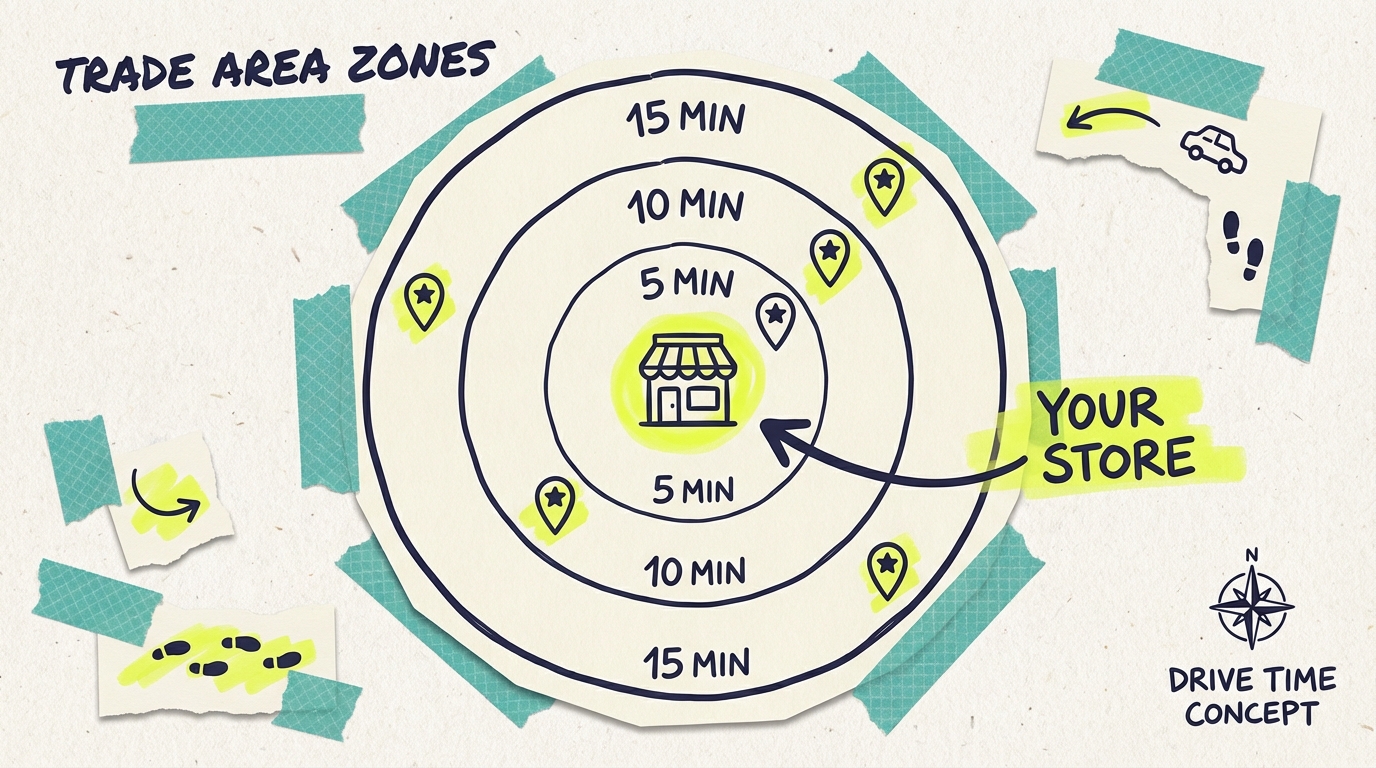
Define Your Trade Area
Your "trade area" is the realistic geographic zone where your customers will come from. This varies by business type:
Restaurant: 5-10 minute drive for casual dining, farther for destination spots
Retail store: Typically a 15-20 minute radius
Service business: Could be a whole metro area or specific neighborhoods
Be honest about this. If you're a local coffee shop, people aren't driving 30 minutes to visit you. Focus your marketing where your actual customers live.
Know Your Local Competition
Who else is competing for the same local customers? What are they doing well? Where are the gaps?
Drive around your area. Note which competitors have the busiest parking lots. Check their Google reviews. Understanding the local landscape helps you position yourself effectively.
Identify Untapped Neighborhoods
Are there parts of your trade area you haven't marketed to? Growing neighborhoods, new developments, or areas underserved by competitors all represent opportunities.
Sometimes the best way to find local customers is to look where everyone else isn't looking.
Get Found Online (Local SEO)
Most people searching for local businesses start online. Local SEO ensures they find you.
Google Business Profile Optimization
Your Google Business Profile is the most important free marketing tool for local businesses. When someone searches "plumber near me" or "coffee shop downtown," Google uses your profile to determine if you should appear.
Complete optimization checklist:
Verify ownership and claim your listing
Fill out every field completely (categories, hours, services)
Add 10+ high-quality photos (interior, exterior, products/services)
Write a keyword-rich description
Add posts weekly (events, offers, updates)
Enable messaging if you can respond promptly
Businesses with complete profiles get 7x more clicks than incomplete ones.
Local Keywords on Your Website
Your website should include location-specific terms naturally throughout:
City and neighborhood names in page titles and headers
Service area pages for multi-location or service businesses
Local landmarks and reference points in content
Contact page with full address and embedded map
Don't keyword stuff. Write naturally, but make sure Google knows where you are and what areas you serve.
Citations and Directory Listings
Ensure your business name, address, and phone number (NAP) are consistent across all directories:
Yelp
Facebook Business
Industry-specific directories
Local chamber of commerce
BBB listing
Inconsistent information confuses Google and potential customers. Audit your listings annually.
Manage Reviews Proactively
Reviews directly influence local search rankings and customer decisions. 88% of consumers trust online reviews as much as personal recommendations.
Review management approach:
Ask happy customers directly (email or text the review link)
Respond to every review within 24 hours
Address negative reviews professionally
Never fake reviews (you'll get caught)
Aim for 5-10 new reviews monthly. Recent reviews matter more than old ones.
Physical Presence Strategies
Don't overlook the offline tactics that bring in local customers.
Signage and Curb Appeal
Your physical presence is a 24/7 advertisement. Ask yourself:
Can people easily see your business from the street?
Is your signage clear and well-maintained?
Does your storefront invite people to enter?
Is parking obvious and accessible?
Sometimes the best local marketing investment is a better sign or fresh paint.
A-Frames and Window Displays
Capture foot traffic with attention-grabbing displays:
Sidewalk A-frame signs with daily specials or promotions
Window displays that change seasonally
Clear communication of what you offer and why to enter
These cost almost nothing and reach everyone who passes by.
Neighborhood Flyers and Door Hangers
Physical marketing works when targeted correctly:
Focus on specific neighborhoods within your trade area
Include a clear offer (not just "we exist")
Use quality printing (cheap flyers look cheap)
Track results with a unique code or phone number
Budget about $100-200 for 1,000 quality pieces plus distribution.
Community Connection
Building local relationships creates customers that advertising alone can't reach.
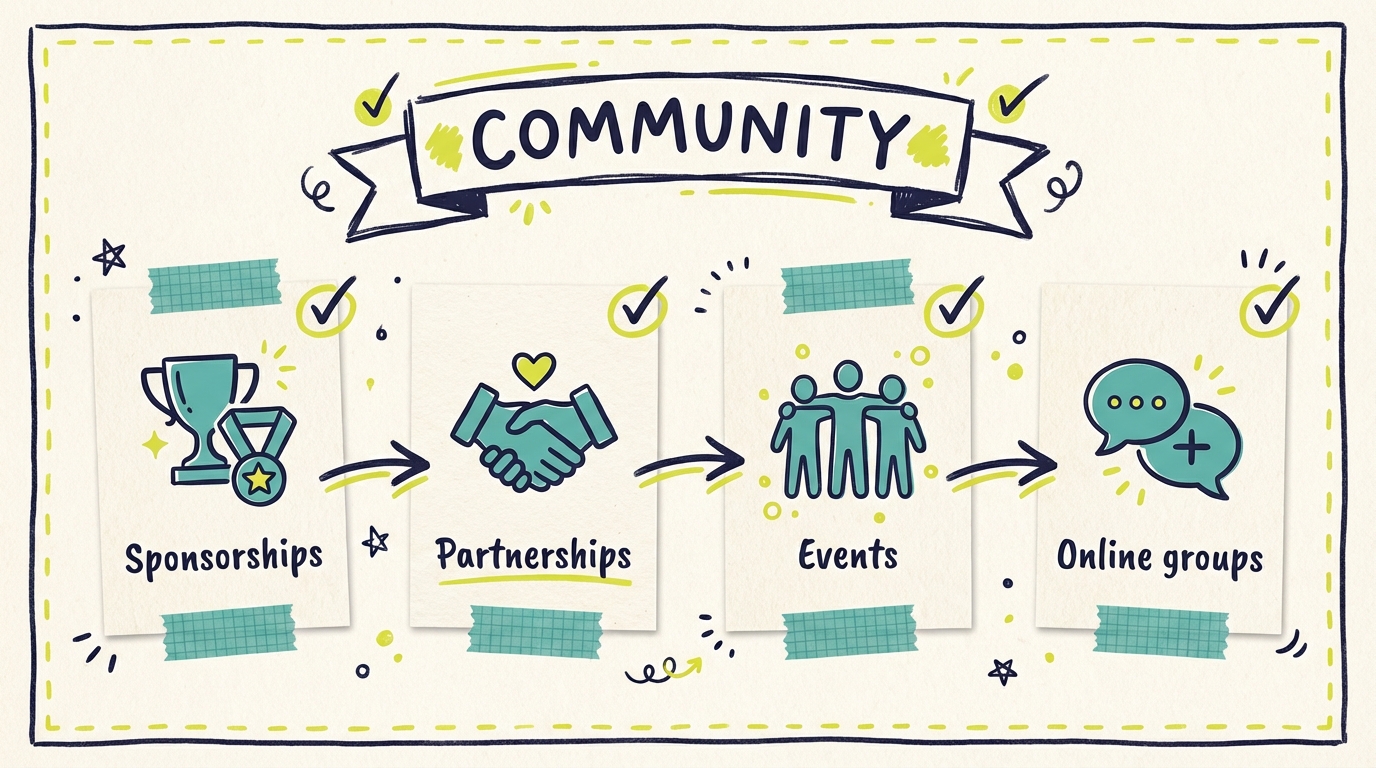
Local Events and Sponsorships
Get visible where your community gathers:
Sponsor youth sports teams or school events
Set up booths at local festivals and markets
Support charity events and fundraisers
Host or participate in community celebrations
The cost varies from free to a few hundred dollars. The goodwill and visibility are often worth far more.
Partnerships with Complementary Businesses
Find local businesses that serve the same customers without competing:
Cross-promote each other's businesses
Create joint offers or referral programs
Share each other's social media content
Display each other's business cards
Examples: Real estate agent + mortgage broker, gym + smoothie shop, florist + wedding photographer.
Local Facebook Groups and Nextdoor
Join and participate (genuinely) in local online communities:
Local Facebook groups for neighborhoods
Nextdoor for hyperlocal conversations
Buy Nothing groups (where appropriate)
Local subreddits
Don't spam promotional content. Be helpful, answer questions, and let people know about your business naturally when relevant.
Paid Local Advertising
When you're ready to invest in reaching more local customers, these channels deliver:
Google Local Service Ads
For service businesses, these ads appear at the very top of search results and you only pay when someone contacts you.
How they work:
Pay per qualified lead (not per click)
Google-verified badge builds trust
Appears above regular search ads
Works for plumbers, electricians, lawyers, locksmiths, HVAC, and more
Average cost: $15-50 per lead depending on industry.
Geotargeted Social Media Ads
Facebook and Instagram let you target specific ZIP codes, cities, or radiuses:
Start with a small daily budget ($10-20)
Target people within your actual trade area
Use local imagery and messaging
Test multiple audiences and creative variations
Best for businesses with visual appeal and consumer audiences.
Local Print Publications
Community newspapers and magazines still reach engaged local audiences:
Local newspapers: $50-200 per ad
Neighborhood magazines: $100-500 per ad
Church bulletins and community newsletters: Often low cost
These work especially well for reaching older demographics.
Streaming TV with Local Targeting
Here's the advertising channel most local businesses overlook: streaming TV.
You can now run commercials on NBC, Hulu, ESPN, and 100+ other premium channels with precise geographic targeting. Platforms like Adwave let you target specific ZIP codes or a radius around your business, starting at just $50.
Why TV works for local businesses:
Reaches households throughout your trade area
94% of streaming ads are watched to completion
Premium channels build credibility
TV advertising isn't just for national brands anymore. You can put your local business on the same channels they use, targeting just the households in your area.
Converting Interest to Visits
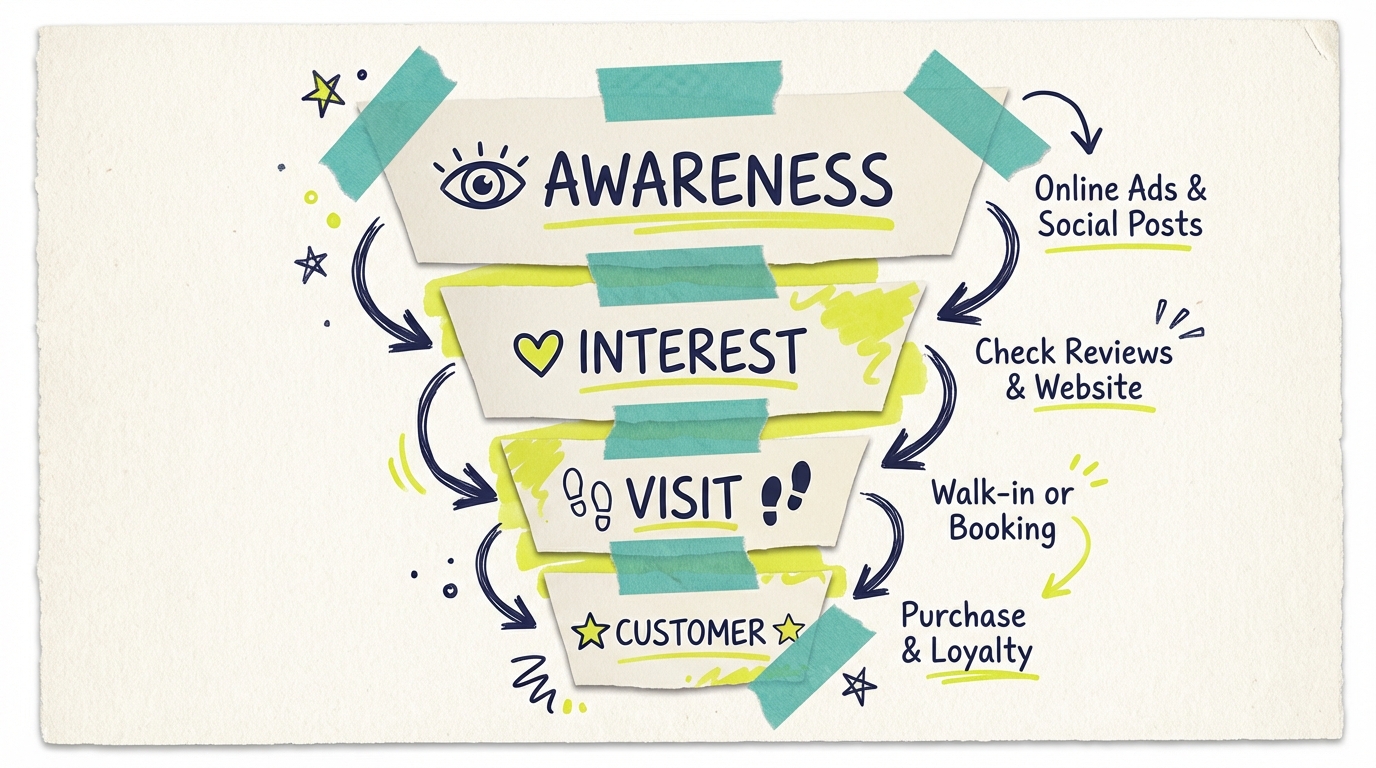
Attracting attention is only half the battle. You need to convert interest into actual visits.
First-Time Customer Offers
Give people a reason to try you:
First visit discount or free item
Introductory service package
New customer bonus
Limited-time trial offer
Track redemptions to measure which marketing is working.
Create Urgency
Motivate action with limited-time elements:
Weekly specials that change regularly
Flash sales with short windows
Limited quantity offers
Seasonal promotions tied to dates
"Come sometime" is easy to ignore. "Come by Friday" creates action.
Make Visiting Easy
Remove friction from the customer journey:
Clear hours of operation everywhere
Easy-to-find location with good directions
Obvious parking options
Online booking or ordering where appropriate
Every question mark in a potential customer's mind is a reason not to visit.
Measuring What Works
Track your local marketing efforts to understand what's bringing in customers.
Simple Tracking Methods
Ask every customer how they heard about you
Use unique phone numbers or codes for different campaigns
Track website traffic by source in Google Analytics
Count walk-ins and correlate with marketing activities
What to Measure
Customer acquisition cost: Marketing spend divided by new customers
Source mix: Where are customers coming from?
Geographic distribution: Are you reaching your whole trade area?
Repeat rate: Are local customers coming back?
Adjust Over Time
Local marketing is iterative. Double down on what works, stop what doesn't, and keep testing new approaches. The goal is consistent, sustainable customer acquisition, not one-time spikes.
Start Building Your Local Presence
Attracting local customers requires showing up consistently across multiple channels. Start with the foundation (Google Business Profile, reviews, and basic presence), then add paid advertising as budget allows.
The businesses that dominate locally are the ones that become familiar faces in their community. Every touchpoint builds recognition. Every positive interaction builds trust. Over time, you become the obvious choice when someone needs what you offer.
Common questions answered
What's the best way to attract customers from my local area?
Start with being findable when locals search for businesses like yours. This means optimizing your Google Business Profile, maintaining consistent information across directories, and earning positive reviews. Then build awareness through local advertising, community involvement, and partnerships with complementary businesses. The combination of being discoverable when people search and memorable when they're not searching creates a steady flow of local customers.
How important is Google Business Profile for attracting local customers?
Extremely important. Your Google Business Profile is often the first impression local customers have of your business, appearing in local search results and on Google Maps. A complete, optimized profile with photos, accurate hours, and positive reviews can be the difference between being found and being invisible. This free tool should be a top priority for any business serving local customers.
Should I focus on online or offline marketing to reach local customers?
Both matter and reinforce each other. Online presence (website, Google Business Profile, social media) ensures you're findable when people search. Offline presence (signage, vehicles, community involvement, local advertising) builds awareness that drives those searches. The most effective local marketing integrates both, creating multiple touchpoints where potential customers encounter your brand.
How do I reach customers who don't know they need my services yet?
This requires awareness advertising rather than search-based advertising. Channels like local TV, direct mail, outdoor advertising, and social media reach people before they're actively searching. Your message needs to plant a seed so that when they do have a need, they think of you first. This is brand building rather than direct response, and it requires patience and consistency to work.
What role does community involvement play in attracting local customers?
Community involvement builds trust and visibility simultaneously. Sponsoring local events, joining business organizations, supporting local causes, and participating in community activities puts you in front of potential customers in positive contexts. It also generates goodwill and word-of-mouth that advertising alone can't buy. For local businesses, being seen as part of the community is a significant competitive advantage over chains and outside competitors.