
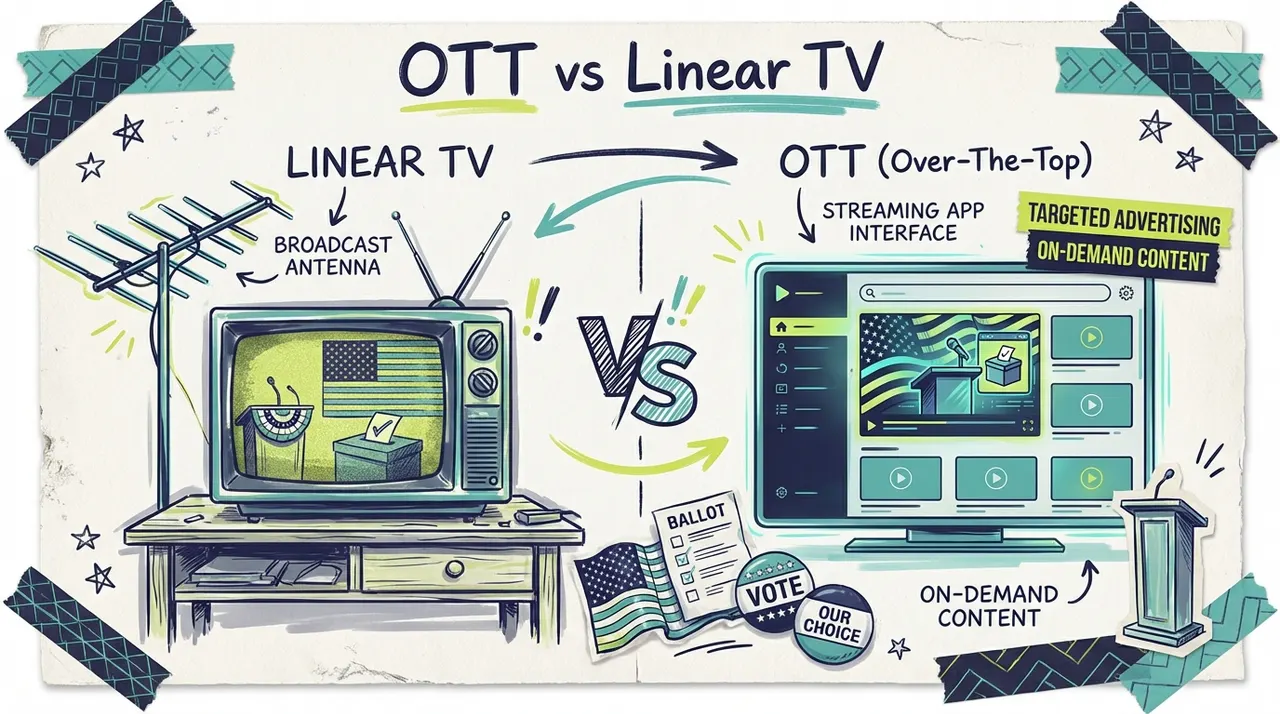
The 2026 midterms will be the most expensive midterm cycle ever, with AdImpact projecting $10.8 billion in total political ad spending (AdImpact, 2025). But the headline number isn't the real story. The real story is the seismic shift in where that money is going.
For the first time, CTV and OTT political ad spending is projected to exceed $2.4 billion in a midterm cycle, up from roughly $1.5 billion in 2024 (eMarketer, 2024). Meanwhile, broadcast and cable TV's combined share of political budgets continues to shrink. If you're a campaign manager or media buyer planning your 2026 strategy, the question isn't whether to include streaming. It's how to integrate it alongside your linear buys for maximum voter reach.
This isn't an either/or decision. The campaigns that win in November will be the ones that understand what each channel does best and build a media plan that puts both to work strategically.
Why political campaigns can't afford to skip streaming
The voter migration to streaming isn't a projection anymore. It's reality, and the numbers make the case clearly.
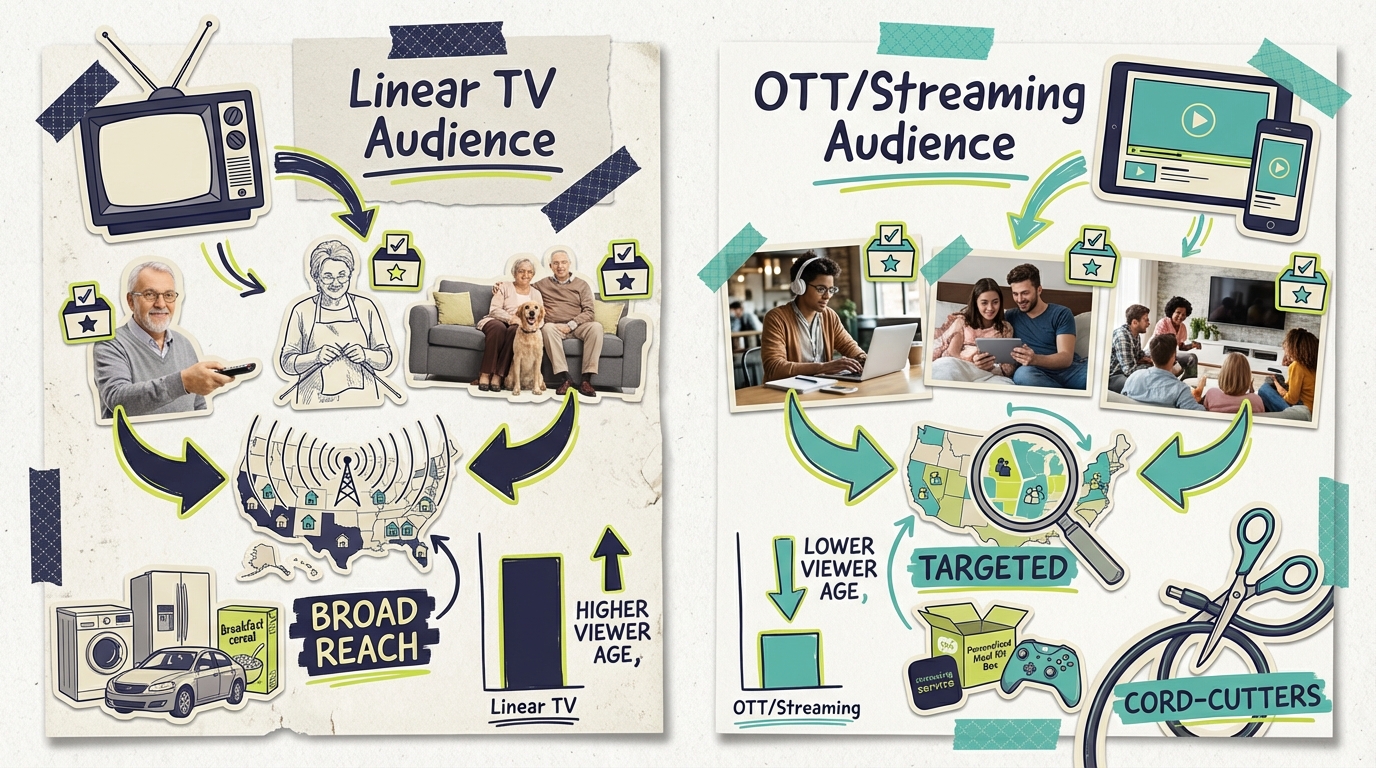
More than 60% of U.S. households have cut the cord or never had traditional pay TV. eMarketer projects this figure will climb past 63% by the end of 2026 (eMarketer, 2025). For political campaigns, that means broadcast and cable buys alone are missing a growing chunk of the electorate.
Streaming now accounts for 41% of all TV viewing time. Nielsen's Gauge report for Q4 2025 showed streaming surpassing cable and broadcast individually, and the gap keeps widening (Nielsen, 2026). Among adults 18 to 49, the most active voter registration demographic, streaming's share is even higher at roughly 52%.
Younger voters live in streaming environments. According to Nielsen, adults 18 to 34 spend over 40% of their TV time on streaming platforms, with cable and broadcast together accounting for less than a third. If your campaign only runs linear TV, you're essentially invisible to the youngest eligible voters. For a deeper look at strategies for this group, check out our guide on reaching Gen Z voters with TV advertising.
Ad-supported streaming is booming. The growth of free and ad-supported services like Tubi, Pluto TV, and ad tiers on Hulu and Peacock means there's more ad inventory available to political buyers than ever before. Nearly 60% of streaming viewers watch at least some ad-supported content (Hub Entertainment Research, 2025).
The bottom line: a media plan that relies solely on linear TV in 2026 is a media plan with a growing blind spot. Your voters are watching streaming TV, and your ads need to be there too.
What linear TV still does well for political campaigns
Traditional TV still has strengths to consider before moving your budget to streaming.
Broad reach in a single buy
Linear TV still delivers the largest simultaneous audiences in American media. A single primetime broadcast spot can reach millions of viewers at once. For statewide races and high-profile campaigns that need mass awareness quickly, that kind of scale is hard to replicate through CTV alone.
Live events and appointment viewing
News broadcasts, debates, sports events, and award shows still draw massive live audiences to linear TV. Political advertising during these high-attention moments creates cultural presence in a way that algorithmically served streaming ads don't always match. When a voter sees your ad during the evening news or a live NFL game, the context lends credibility.
Older voter reach
Voters over 55 still spend the majority of their TV time on linear broadcast and cable. According to Nielsen, adults 65+ watch an average of 6+ hours of traditional TV per day, compared to just over one hour of streaming (Nielsen, 2025). For campaigns where older voters are a critical constituency (and they almost always are in midterms, given their consistently higher turnout rates), linear TV remains essential.
Established buying infrastructure
The linear TV buying ecosystem is mature. Media buyers know how to negotiate rates, secure placements, and plan campaigns around upfronts and scatter markets. For political campaigns with experienced media consultants, the linear buying process is familiar and predictable.
FCC lowest unit rate protections
Political advertisers on broadcast TV benefit from FCC regulations requiring stations to offer candidates the "lowest unit rate" during the 45 days before a primary and 60 days before a general election. This regulatory protection doesn't exist in the streaming world, where CPMs are set by market demand. For campaigns watching every dollar, this rate advantage can be significant.
What OTT and CTV bring to political campaigns
OTT (over-the-top) and CTV (connected TV) advertising solve many of the problems that make linear TV inefficient for political campaigns. Here's where streaming shines.
Precision voter targeting
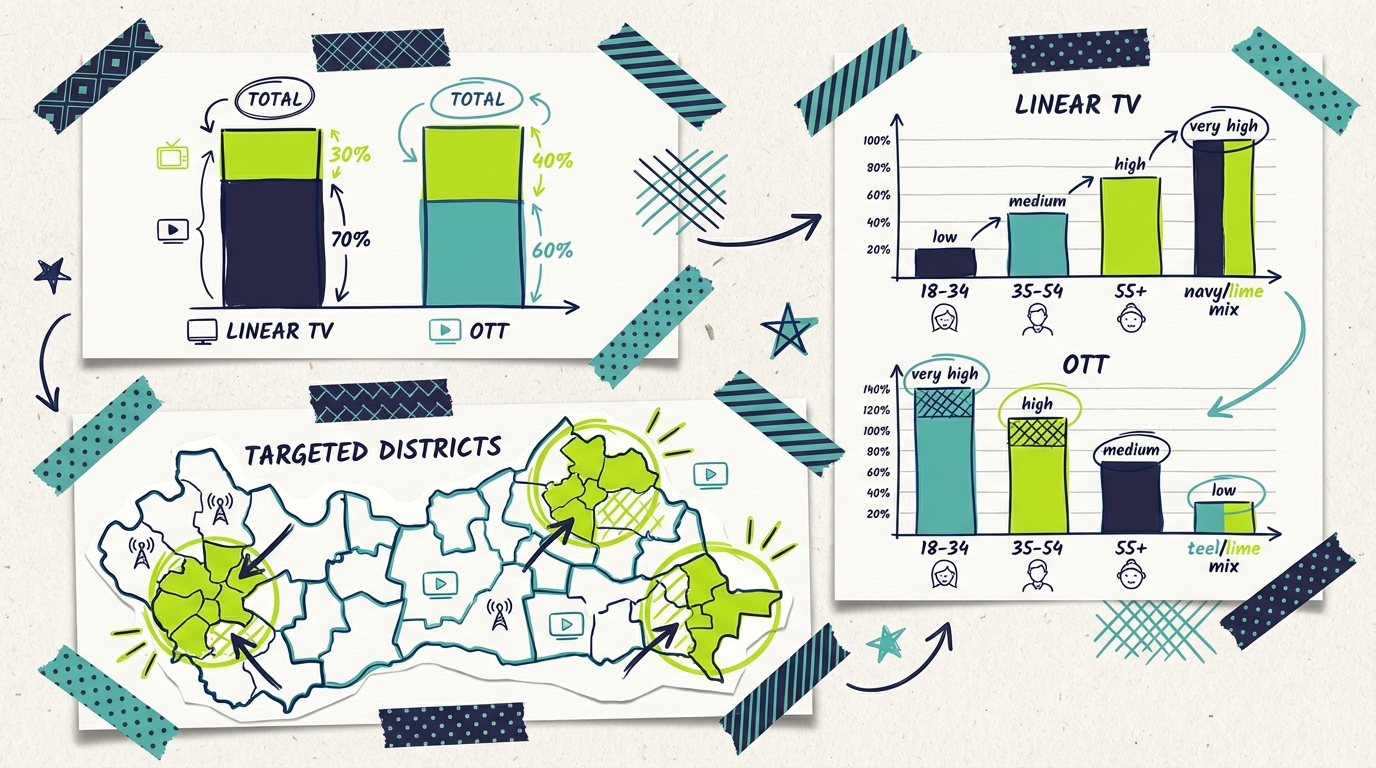
This is the single biggest advantage. Linear TV buys target broad demographics in designated market areas (DMAs). A DMA might cover three congressional districts or an entire state. CTV lets you target registered voters in a specific district, precinct, or ZIP code. No wasted impressions on people who can't vote for your candidate.
Voter file onboarding lets you match your voter data directly to streaming device IDs. That means you can serve ads to persuadable independents in swing precincts while skipping reliable base voters who've already made up their minds. For a full breakdown of targeting approaches, see our guide on CTV political advertising.
Younger and cord-cutter voter reach
If your campaign needs to reach voters under 45, CTV is where they're watching. Adults 25 to 44 spend more time streaming than watching any other form of TV, and many of them have no cable subscription at all. Streaming is the only TV channel that reaches these voters at scale.
Speed and flexibility
Political campaigns move at the speed of the news cycle. An opponent makes a gaffe Monday morning, and you need a response ad by Monday night. Linear TV can't move that fast. Buying, trafficking, and scheduling a broadcast spot takes days at minimum.
CTV platforms can turn around campaigns in hours. Adwave, for example, generates a broadcast-quality 30-second ad in about two minutes and launches it across 100+ premium networks in under 10 minutes, starting at just $50. For rapid-response moments, that speed is a genuine strategic advantage.
Real-time optimization
Once a linear TV ad airs, it's done. You can't change targeting, adjust frequency, or swap creative mid-flight without renegotiating your buy.
CTV campaigns are dynamic. You can shift budget between audience segments based on performance. You can increase frequency in underperforming precincts. You can A/B test two different messages and move budget toward the winner within days. This kind of optimization is standard practice in digital advertising, but it's only possible on the TV screen through streaming.
Measurable performance
Linear TV measurement relies largely on panel-based estimates from Nielsen, which provide useful but imperfect data at the DMA level. CTV delivers impression-level data: you know exactly how many times your ad was served, to which households, with what completion rates.
For political campaigns that need to measure advertising ROI, CTV's measurement capabilities are transformative. You can track website visits, donation page activity, volunteer sign-ups, and branded search lifts tied directly to your TV ad exposure.
Lower barriers to entry
Traditional broadcast TV requires minimum buys of $5,000 to $50,000 or more, plus agency fees and weeks of lead time. CTV has no minimums on self-serve platforms. A school board candidate, a state legislature challenger, or a ballot initiative committee can run TV ads with a few hundred dollars and scale up as fundraising allows.
Head-to-head: Linear TV vs OTT/CTV for political campaigns
The integrated approach: combining linear and streaming
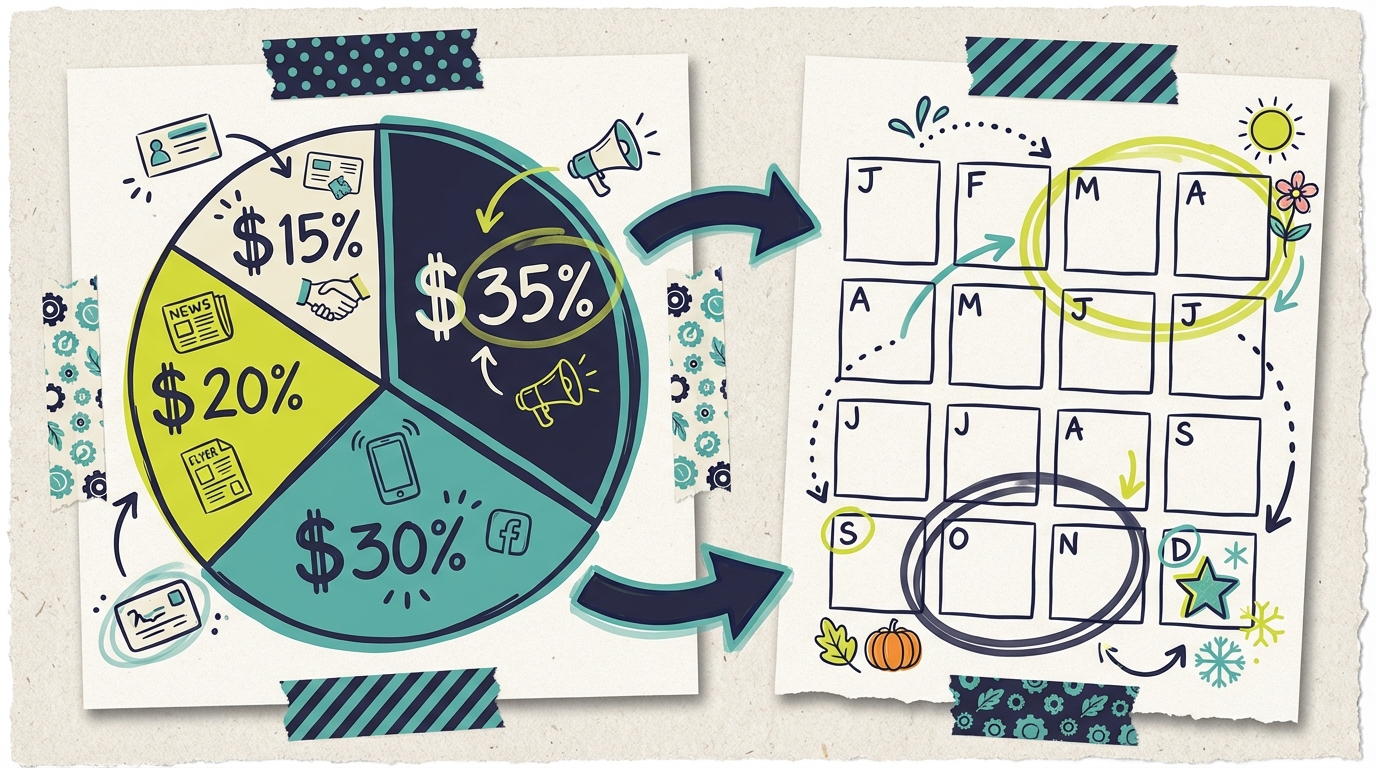
The strongest political media plans in 2026 won't choose between linear and OTT. They'll run both, with each channel doing what it does best.
Use linear for broad reach and credibility
Linear TV excels at building baseline awareness across an entire market. A broadcast flight during local news and primetime programming establishes your candidate as a serious contender. Voters who see your ad on their local ABC or NBC affiliate perceive it as a mark of credibility, especially in races where name recognition is the first hurdle.
Use CTV for precision and persuasion
Layer CTV on top of your linear buys to reach voters that broadcast misses and to deliver targeted messages to specific segments. Your linear buy says "this candidate is real." Your CTV buy says "here's exactly why this candidate matters to you."
For example, your broadcast ad might be a general biographical spot. Your CTV ads could be three different versions: one focused on healthcare for suburban women, one focused on jobs for rural voters, and one focused on education for parents with school-age children. Same candidate, different message, right audience.
Coordinate frequency across channels
One of the biggest risks in a dual-channel strategy is oversaturating some voters while underreaching others. Voters who still watch linear TV and also stream will see your ads on both channels. Voters who only stream will only see your CTV ads.
Use cross-channel frequency management to balance exposure. Most DSPs and CTV platforms can coordinate with your linear buy data to ensure no household gets bombarded while others see nothing. The goal is consistent, sustained exposure across the electorate, not 20 impressions for some voters and zero for others.
Time your channels strategically
A practical framework for the 2026 cycle:
March through June (early awareness): Start with linear TV to build name recognition broadly. Add CTV to begin reaching cord-cutters and younger voters. Keep messaging positive and biographical.
July through August (issue definition): Increase CTV frequency to targeted segments with issue-specific creative. Maintain linear at baseline levels for broad visibility.
September through October (persuasion and contrast): Peak spending on both channels. Use CTV's targeting to deliver contrast ads to persuadable voters while running positive spots to your base. Linear TV carries your highest-profile creative during news and sports.
Final two weeks (GOTV): Maximum frequency on both channels. CTV targets low-propensity supporters with turnout messaging. Linear reinforces the closing argument to the broadest possible audience.
Budget allocation frameworks by campaign type
How you split your budget between linear and CTV depends on your race, your district, and your total budget. Here are practical starting frameworks.
Congressional campaigns ($500K to $2M media budget)
Congressional districts rarely align with DMAs, making linear TV inherently wasteful for House races. A typical approach:
CTV/OTT: 50-60% of TV budget. District-level targeting eliminates DMA waste. Voter file matching lets you focus on persuadable and turnout targets.
Linear TV: 25-35%. Reserve for local news and high-profile sports buys that build broad credibility. Accept some geographic waste as the cost of reaching older voters and building earned media buzz.
Digital video (YouTube, social): 10-20%. Supplement TV with mobile and desktop video for additional touchpoints.
Statewide campaigns ($2M to $10M+ media budget)
Statewide races benefit more from linear TV because DMAs align better with the campaign's geographic target: the entire state.
Linear TV: 40-50%. Broadcast buys on network affiliates and cable news reach the broadest audience efficiently. FCC lowest unit rate protections make this cost-effective for qualified candidates.
CTV/OTT: 35-45%. Layer CTV to reach cord-cutters and to deliver targeted messages to key voter segments (suburban women, independents, persuadable voters in swing counties).
Digital video: 10-15%. Fill gaps and retarget engaged voters.
Local campaigns ($10K to $100K media budget)
For city council, county, school board, and state legislature races, the budget math heavily favors CTV.
CTV/OTT: 65-80%. Precision targeting ensures every dollar reaches voters in your district. No DMA waste. Platforms like Adwave let you launch for as little as $50, making TV advertising accessible for even the smallest campaigns.
Linear TV: 0-15%. Only worth considering if your district happens to align well with a local TV market and you can secure affordable placements. For most local races, the minimum buy requirements make linear impractical.
Digital video: 15-25%. Social video and YouTube fill in mobile and desktop touchpoints.
Ballot measure and issue campaigns (varies widely)
Issue campaigns have different dynamics because they're selling an idea, not a candidate.
Linear TV: 35-45%. Broad awareness matters for ballot measures where every voter in the jurisdiction gets a say. Emotional, narrative-driven creative plays well on linear.
CTV/OTT: 40-50%. Target likely voters and undecided segments with educational messaging. CTV's ability to serve different creative to different audiences is especially valuable when the same issue resonates differently across demographics.
Digital video: 10-20%. Reinforce messaging and drive traffic to campaign websites.
Measurement and attribution across both channels
Running a dual-channel TV strategy creates a measurement challenge: how do you know what's working and what's wasting money? Here's how to track performance across linear and CTV.
Establish your baseline before you spend
Before any ads run, capture baseline metrics for:
Candidate name recognition (polling)
Website traffic volume and sources (analytics)
Branded search volume (Google Trends for your candidate's name in your market)
Volunteer sign-ups and donation volume (campaign CRM)
Without a baseline, you can't measure lift. Take these readings at least two weeks before your first ad airs.
Track CTV-specific metrics
CTV platforms provide impression-level data that linear can't match:
Impressions delivered by geography, audience segment, and device
Completion rates (percentage of viewers who watched the full ad)
Frequency per household (how many times each household saw your ad)
Website visit lift attributable to ad exposure (measured through pixel tracking or IP matching)
Conversion events (donations, volunteer sign-ups, event RSVPs) from exposed households
For a deeper framework on tying these metrics to campaign outcomes, read our guide on measuring political advertising ROI.
Measure linear TV with available tools
Linear TV measurement is less precise but still valuable:
Nielsen ratings tell you how many people in your DMA saw your spot, broken down by age and gender
Branded search lift during and after ad flights correlates with awareness impact
Website traffic spikes that coincide with your ad schedule indicate response
Polling data (if budget allows) before, during, and after flights measures favorability and name recognition shifts
Build a unified view
The goal is a single dashboard (or at least a single weekly report) that combines both channels:
Total reach and frequency across linear and CTV
Incremental reach from CTV (voters reached through streaming who were not reached by linear)
Cost per reached voter for each channel
Conversion and engagement metrics attributed by channel
Most DSPs and CTV platforms can provide cross-channel reach estimates when you share your linear buy data. Use these reports to reallocate budget in real time. If your CTV campaigns are driving website visits at a lower cost per visitor than your linear buy, shift dollars accordingly.
Account for interaction effects
Here's something most campaigns miss: voters exposed to your ad on both linear and CTV tend to show stronger recall and favorability than voters exposed on just one channel. The VAB (Video Advertising Bureau) found that multi-screen ad exposure increases unaided brand recall by 35% compared to single-screen exposure (VAB, 2024).
This means some "overlap" between your linear and CTV buys isn't waste. It's reinforcement. The key is managing that overlap intentionally rather than letting it happen randomly.
Preparing your 2026 media plan
If you're building your media plan now, here are the practical steps to integrate streaming alongside linear TV.
Audit your voter file. Make sure your data is current and matchable. Work with your data vendor to ensure voter records can be onboarded to CTV platforms. The better your match rate, the more precisely you can target.
Book your linear TV early. Broadcast inventory tightens dramatically in September and October of election years. Lock in your placements during the upfront period or early scatter market to secure favorable rates and placement.
Launch CTV testing early. Don't wait until September to figure out CTV. Start running test campaigns in the spring or summer to learn what creative resonates, which audience segments respond, and how your targeting performs. The data you gather in Q2 will make your Q4 spending far more efficient. For a complete 2026 midterm playbook, including programmatic buying strategies, check out our midterm guide.
Build creative variants from the start. CTV's targeting power is wasted if you're running the same ad to every audience segment. Plan for at least three to five creative variants: a biographical spot, issue-specific messages for key segments, a contrast ad, and a GOTV ad.
Set up measurement infrastructure before your first ad airs. Implement website pixels, create branded search tracking dashboards, and establish your polling cadence. You can't measure what you don't track.
Plan for rapid response. Political campaigns are unpredictable. Build a process for getting new CTV creative live within 24 hours of a news event. Identify who approves creative, who uploads it, and who adjusts targeting. Adwave's ability to generate and launch a TV ad in under 10 minutes makes same-day response possible for campaigns of any size.
Common questions answered
Can I run the same ad creative on both linear TV and CTV? Yes, and many campaigns do exactly that. A 30-second spot produced for broadcast will work perfectly on streaming platforms. The key difference is in how you deploy it. On linear, that one spot runs to everyone in the DMA. On CTV, you can run it only to specific voter segments. Some campaigns produce a universal "anchor" ad for linear and then create targeted variants for CTV audiences.
How do I know if my linear TV buy is reaching enough voters? Start by comparing your target district's geography to the DMA boundaries your buy covers. If your district covers less than 30% of the DMA's population, your linear buy is probably more than 70% waste. In that scenario, shifting a larger share to CTV will improve your efficiency. Also track branded search volume during your flight. If searches for your candidate's name aren't increasing in your target geography, your reach may not be translating to awareness.
What's the minimum budget to add CTV to my media plan? There's no hard minimum on most self-serve CTV platforms. You can start testing with a few hundred dollars to see how targeting and creative perform before committing larger budgets. For campaigns with very limited funds, even $500 to $1,000 in CTV spend can deliver 20,000 to 40,000 targeted impressions in a specific district, which is meaningful for a local race.
Should I move my entire TV budget to streaming? For most campaigns, no. Linear TV still reaches older voters more efficiently, and broadcast appearances carry credibility value, especially in competitive races. The sweet spot is a blended approach where each channel plays to its strengths. The exact split depends on your race type and district (see the budget allocation frameworks above).
How do I handle FCC political ad regulations on CTV? CTV advertising doesn't fall under the same FCC regulations as broadcast TV. That means you don't get lowest unit rate protections, but you also have more flexibility in ad content and scheduling. You still need standard "paid for by" disclaimers, and you should follow FEC guidelines on disclosure. Work with your compliance counsel to ensure your streaming ads meet all applicable requirements.
Is political CTV advertising effective for down-ballot races? Absolutely. Down-ballot races are where CTV's advantages are most pronounced. District-level targeting means no wasted spend, low minimums mean any campaign can afford it, and the ability to reach cord-cutters ensures you're not missing younger voters. Our political TV advertising guide covers strategies specific to campaigns at every level.


