97% of consumers say online reviews influence buying decisions according to Embryo's roundup of social proof statistics. That figure changes how local businesses should think about social media. Facebook, Instagram, and TikTok aren't just places to post offers. They're places where prospects decide whether your business feels safe, credible, and worth contacting.
For local companies, the missed opportunity usually isn't lack of customer satisfaction. It's failure to capture and reuse proof of that satisfaction. A customer says great things on the phone after an appointment. Someone compliments your staff in person. A TV campaign drives a wave of new inquiries. Then all of that goodwill disappears because nobody turned it into a review, a quote, a short video, or a post that can keep working.
That's why Using Reviews and Testimonials as Social Proof on Social Media matters so much. Done well, it shortens trust-building, gives prospects language they can borrow when evaluating you, and makes your marketing feel grounded in real customer experience instead of polished claims.
Why Your Business Needs Social Proof on Social Media Now
97% of consumers say online reviews influence buying decisions. That stat was noted earlier, and for a local business, the implication is simple. If your social feed does not show proof from real customers, prospects fill in the gaps on their own, and they usually do it cautiously.

Social proof turns attention into trust faster
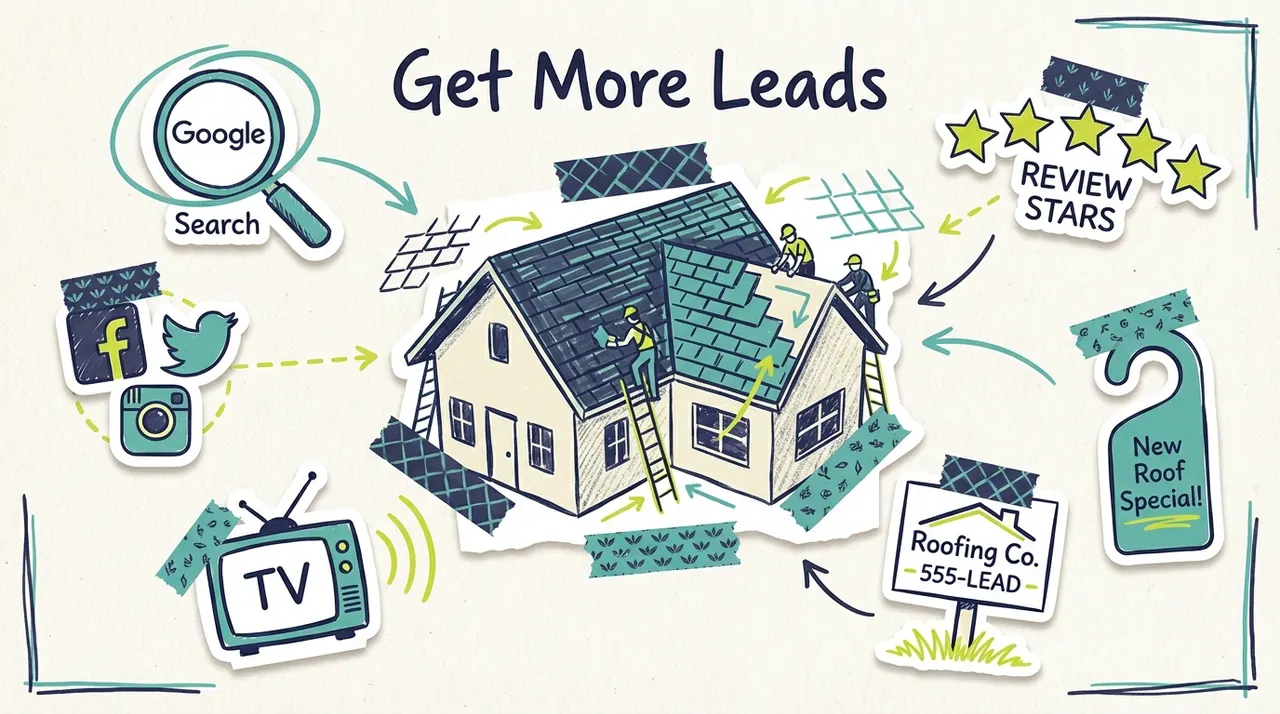
People rarely meet your business in a straight line anymore. They might notice your local TV ad, hear your name from a neighbor, search you on Google, then check Facebook or Instagram before they call. Social proof connects those touchpoints. It shows that the promise they saw offline matches the experience other customers had in real life.
A profile full of offers, polished graphics, and self-description does not answer the question buyers care about. They want to know whether someone like them hired you, bought from you, or visited your location and felt it was the right decision. Reviews and testimonials answer that quickly, without forcing prospects to read a long sales pitch.
Your offline wins should keep working online
Small businesses waste a lot of good marketing momentum.
A TV campaign drives calls. A promotion brings in foot traffic. Staff members hear positive feedback at the counter or on the phone. Then nothing gets captured. No review request goes out. No testimonial gets saved. No customer quote makes it onto social media. You paid to create demand, but you did not keep the proof.
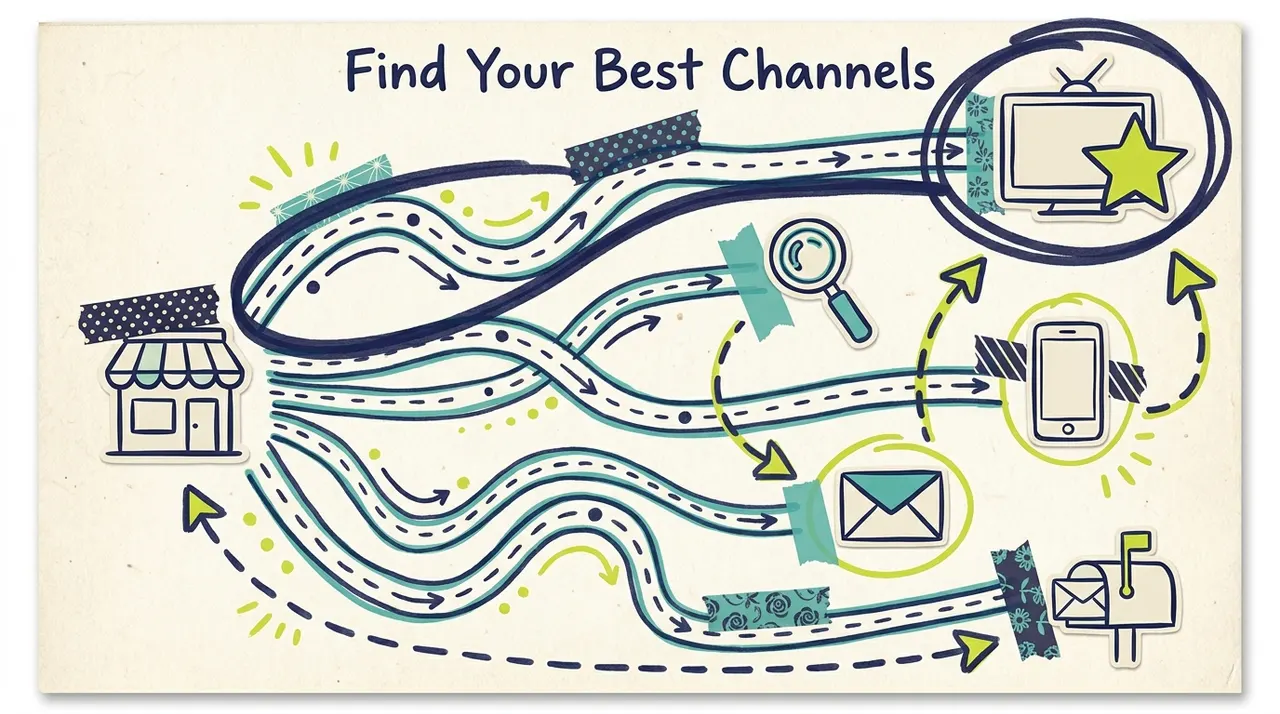
The better approach is a full-circle loop. Use offline marketing to generate customers. Turn customer outcomes into reviews and short testimonials. Publish those on social media so the next prospect sees evidence before they contact you. That makes every channel work harder, especially if you are trying to stretch a limited budget.
If you need a practical starting point, this guide on how to get more Google reviews for your local business lays out the collection side well.
Local businesses have an edge here
Bigger brands usually have stronger production. Local businesses usually have stronger specificity.
A national chain can say it offers great service. A local customer can say your technician arrived the same afternoon, explained the repair clearly, and fixed the issue without pushing extra work. That kind of detail is more believable, and on social media, believable beats polished.
Good social proof does three jobs at once:
It lowers perceived risk. Prospects see that someone else already made the decision and was happy with the result.
It makes your value specific. Real customer language explains benefits better than generic marketing copy.
It shortens the path to inquiry. Trust is already building before the person sends a message or calls.
For a broader view of why this matters beyond social platforms, Titan Blue's guide to online reviews is a useful companion read.
The businesses that get results from social proof are not always posting more. They are showing clearer evidence. For local owners, that is often the cheaper and more convincing path.
How to Ethically Collect Powerful Customer Reviews
Most businesses don't have a review problem. They have a collection system problem.
Happy customers are often willing to say something positive, but they won't usually volunteer it unless the timing is right and the process is easy. If you want review content you can use on social media, build the request into your workflow instead of treating it as an occasional favor.
Ask at the moment of relief
The best review requests happen right after value is felt. For a dentist, that might be after a smooth visit. For a home service company, after a job is completed and the customer sees the result. For a retailer, after a repeat purchase or a positive support interaction.
Use more than one collection path so you're not relying on a single channel:
Email request after service Send a short follow-up with a direct review link. Don't make the customer hunt for where to leave feedback.
Text message for mobile-first customers SMS often works well when the buying journey already involved phone communication.
QR code at checkout or front desk This works for clinics, restaurants, salons, showrooms, and walk-in retail.
Staff prompt in person or by phone Keep it simple: “If you were happy with today's service, would you mind leaving a quick review? I can text the link.”
If you want a practical starting point for the review collection side, Adwave's resource on getting more Google reviews for your local business gives a solid framework.
Get consent before you need it
Many businesses get sloppy at this stage. They collect a review, then later decide they want to use it in a Facebook graphic, Instagram Story, or ad. At that point, they're chasing approvals and creating delays.
The cleaner approach is to ask for explicit marketing consent at submission. According to Yotpo's guide to social proof marketing examples, businesses should capture consent with a checkbox that grants permission to reuse the review in marketing. That keeps the process ethical and usable.
A review you can't legally or comfortably republish isn't a content asset yet.
A simple consent line can cover reuse on social media, website pages, and ads. Keep the language understandable. Don't bury it in jargon.
Score reviews so your best ones rise to the top
Raw review volume isn't enough. You need a way to identify what's worth republishing.
Yotpo also recommends programmatically harvesting reviews and applying a scoring model that weighs rating, length, and sentiment to flag top-tier testimonials. In practice, that means pulling review data from sources like Google Reviews, your CRM, or post-purchase email tools, then sorting for reviews that are detailed, positive, and specific.
A simple internal review score can include:
Star rating: Keep an eye on stronger reviews first.
Specificity: “Great service” is weaker than a customer naming what happened.
Length: Very short reviews can still be useful, but they're harder to turn into a strong post.
Keywords: Flag phrases tied to your offer, location, speed, staff, or outcome.
Permission status: Only approved testimonials should move into your content library.
Don't flood your audience with too many reviews
One of the easiest mistakes is overpublishing. If every post screams “Look how great we are,” the content starts to feel staged.
Yotpo notes that businesses should focus on the top 10 to 20% of reviews and warns that clutter can reduce perceived authenticity and drop engagement by up to 40% when content feels overly promotional. That's a useful filter. Curate. Don't dump.
A better habit is to build a small review bank with categories such as:
Collect continuously, tag carefully, and publish selectively. That's how reviews become a reliable content system instead of a pile of screenshots.
Designing Social Media Posts That Showcase Your Reviews
A strong review can still fail on social media if it's presented poorly. The words matter, but the packaging decides whether anyone stops scrolling long enough to read them.
The goal isn't to make every testimonial look expensive. The goal is to make it easy to trust and easy to consume.
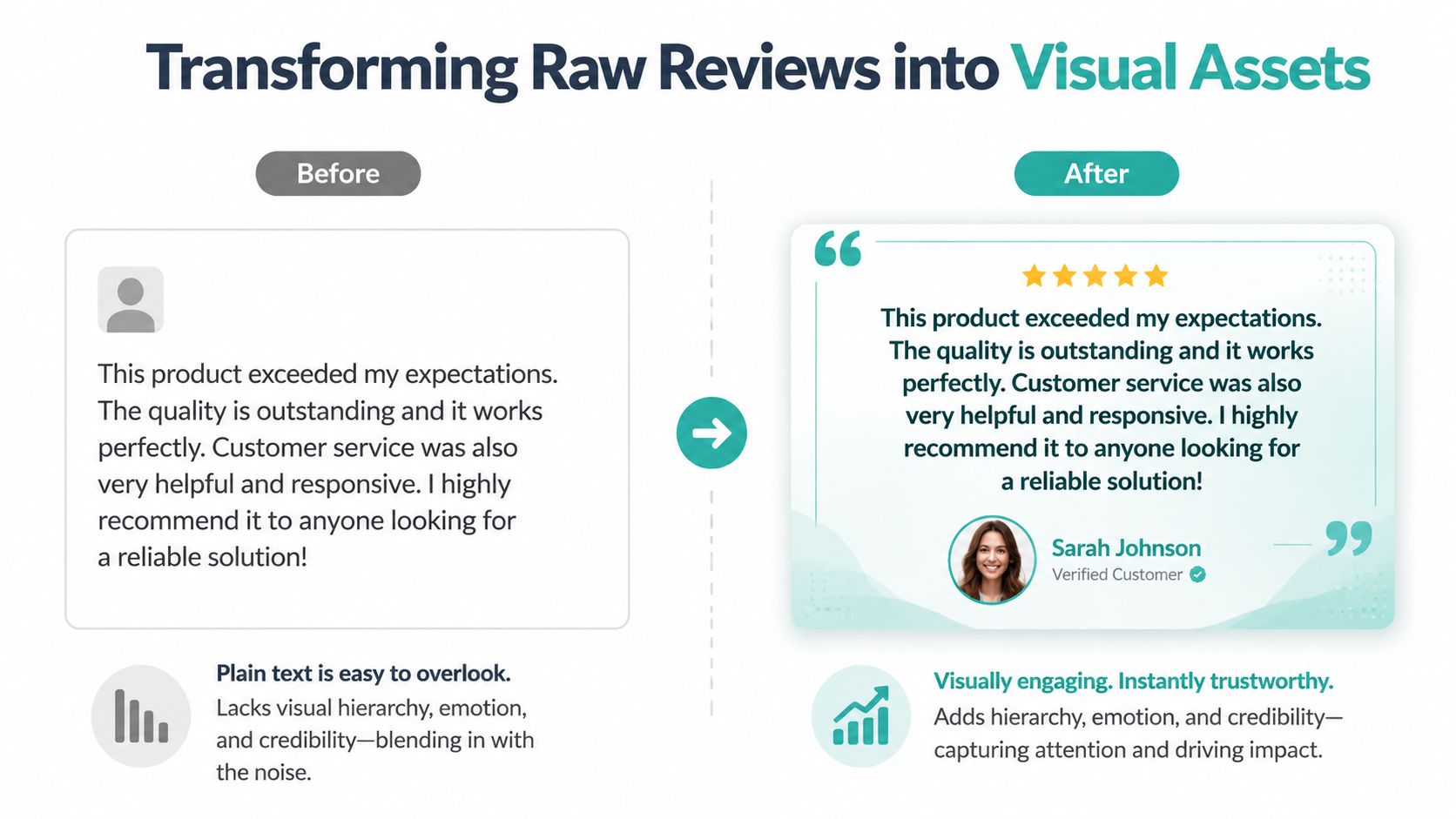
Polished graphics versus raw screenshots
Many businesses overcorrect in this area. They either post ugly screenshots with no context, or they overdesign testimonials until they look like ad copy.
There isn't one right answer. The better question is which format fits the audience, platform, and claim.
According to Karl Mission's discussion of social proof on social media, many guides push “real” content but don't give enough criteria for deciding when polished versus rough-cut testimonials work best. That gap matters for small businesses because both formats can work. They just work in different situations.
Use this rule of thumb:
What a good testimonial post includes
Most effective review creatives share a few traits:
A short headline: Pull the strongest phrase or outcome to the top.
Visible attribution: First name, role, neighborhood, or business type if permitted.
Readable text: Don't cram a long review into a tiny square.
A proof element: Star rating, platform badge, or source screenshot.
Brand consistency: Enough design to look intentional, not enough to feel scripted.
If you need help producing these assets in-house, Adwave's guide to creating social media graphics without a designer using free tools is useful for simple, repeatable layouts.
Raw wins when the audience needs authenticity. Polished wins when the audience needs clarity. Most local businesses need both.
Three simple templates that work
You don't need a designer to publish testimonial content consistently. You need two or three templates and the discipline to reuse them.
Template one is the quote card. Pull one sentence from the review, place it on a clean background, and add the customer identifier below. This works well for Facebook and Instagram feed posts.
Template two is the proof carousel. Slide one states the claim. Slide two shows the full review. Slide three adds a photo, team member, or service context. This works when the review needs a little setup.
Template three is the rough-cut vertical video. Put the customer quote on screen, add simple captions, and pair it with real footage from your business. It doesn't need studio quality. It needs to feel believable.
Test style, not just copy
Businesses often test offers but never test presentation. That's a mistake.
Try the same testimonial in two formats: one as a clean branded tile, one as a review screenshot with minimal editing. Or compare a polished edit with a simple talking-head clip. The point isn't to crown one format forever. The point is to learn what your specific audience trusts fastest.
Publishing Testimonials on Facebook, Instagram, and More
A testimonial that works on Instagram Stories may flop on LinkedIn. A Facebook post that earns comments in a local community may feel flat in a polished feed. Distribution matters as much as design.
Businesses usually underperform here because they treat every platform like a copy-and-paste outlet. The better approach is to match the review format to the way people use each channel.
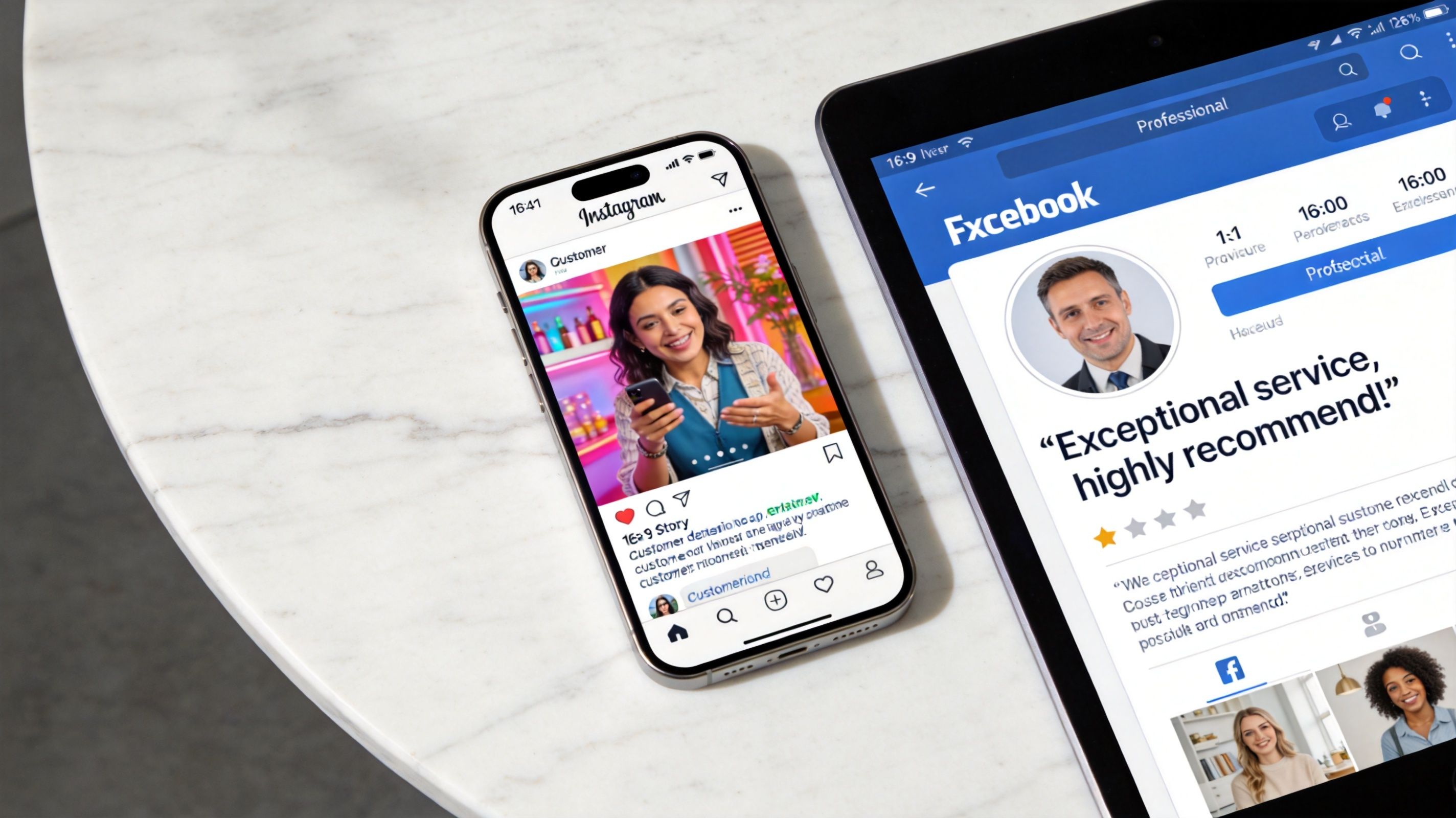
What works best by platform
Here's the practical breakdown:
Instagram and Facebook need different levels of context
Instagram is faster. You need a hook early. Lead with the best sentence from the review, not the whole thing. If the full testimonial is worth reading, place it in the second slide of a carousel or the second Story frame.
Facebook gives you more room to explain. A local business can pair a review with a short caption about the job completed, the challenge solved, or the team member involved. Pinning a standout testimonial near the top of your page also helps first-time visitors see proof quickly.
For local companies, Facebook groups can be especially useful if you participate with restraint. Don't dump promotional graphics into community groups. Share a relevant customer success story only when it adds value to the conversation and fits the group rules.
LinkedIn is underrated for trust building
Many local service businesses ignore LinkedIn because they think it's only for software or recruiting. That's too narrow.
If you work in real estate, legal, finance, B2B services, commercial construction, or healthcare-adjacent fields, LinkedIn can be a strong place to publish testimonials with a more professional tone. A client quote paired with a short explanation of the business problem solved often performs better there than a generic “happy customer” graphic.
On LinkedIn, details create credibility. On Instagram, speed creates attention. On Facebook, relevance usually decides whether people keep reading.
Publish with a rhythm, not a burst
One week of nonstop review posts looks desperate. Six months without one makes your business look unproven.
A better cadence is to rotate testimonial formats into your regular calendar. Mix them with educational content, behind-the-scenes material, team posts, and offers. That keeps reviews visible without making your feed feel one-note.
Use simple placement rules:
Stories for fresh proof
Feed for evergreen proof
Pinned posts for your strongest trust signal
Reels or TikTok for emotional proof
LinkedIn for credibility with context
That mix usually gives local businesses better mileage than posting the same static quote everywhere.
Amplify Your Best Reviews with Ads and TV Campaigns
Organic testimonial posts are useful, but your best social proof shouldn't stop there. Once a review-based post proves it can hold attention or spark inquiries, it becomes a candidate for paid amplification.
That's where social proof shifts from content support to growth lever.
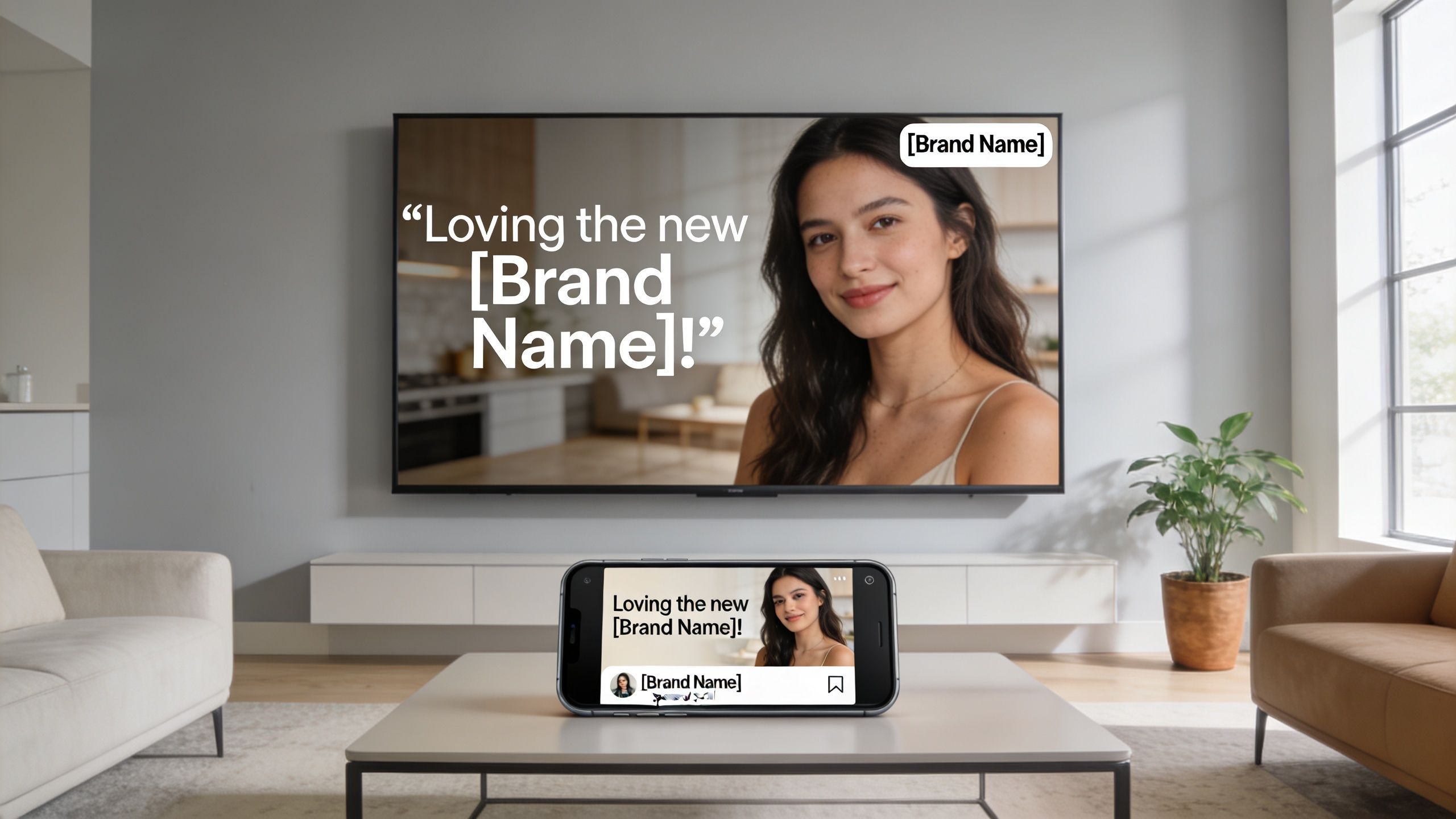
Turn high-trust posts into ads
Not every review should become an ad. Choose the ones that answer a clear buying objection.
A great testimonial ad usually does one of these things well:
Reduces risk: The customer confirms reliability, speed, professionalism, or communication.
Shows fit: The reviewer sounds like the target buyer you want more of.
Adds specificity: The quote mentions what was delivered, not just that it was “great.”
Feels believable: It doesn't read like a script.
For local businesses, review-based ads often work best in retargeting, branded search support, and audience warm-up campaigns. Someone who has already seen your name is more likely to respond when social proof confirms you're worth contacting.
The gap most businesses leave open
There's a missed connection in many local marketing plans. A business runs offline advertising, gets more calls or traffic, and never captures the resulting customer feedback in a reusable format.
Build the full-circle loop
Here's the model that works especially well for local brands:
Launch a local awareness campaign through TV.
Capture the inbound response from new customers.
Ask those customers for structured feedback once they've had a positive experience.
Turn the best approved reviews into social posts and paid creative.
Reuse those testimonials in future campaigns.
Adwave fits naturally for small businesses that want TV exposure without a traditional production mess. If you're exploring that side of the stack, Adwave's guide to producing TV commercials is a useful practical resource.
The strongest social proof often starts offline. A call after a TV spot, an in-store conversation, or a service appointment can become the review that later improves your social media performance.
What this looks like in practice
A dental office runs local TV, sees a bump in appointments, and starts asking new patients for feedback through a post-visit email and front-desk QR code. The best comments become Instagram Story cards, Facebook posts, and short video overlays.
A dealership uses TV to widen regional awareness, then captures customer remarks after showroom visits or purchases. A retailer promotes a seasonal campaign on TV, then turns fresh buyer feedback into short, local, social proof assets that reinforce trust for the next wave of shoppers.
That's the full-circle advantage. Offline media creates momentum. Reviews document the result. Social media turns that result into visible proof. Paid social amplifies it again.
Measuring the Impact of Your Social Proof Strategy
If you can't tell which testimonials influence action, you'll keep posting based on taste instead of evidence.
The fix isn't a complex dashboard. It's a small set of business-facing metrics tied to clear questions: Did people engage? Did they click? Did they contact you? Did a review-based creative outperform a non-review version?
Track customer responses
Likes are fine, but they're a weak decision-making tool on their own. A testimonial post that earns fewer likes but drives more site visits or lead form submissions is usually more valuable than a post people casually admire.
Focus on metrics such as:
Engagement quality: Comments, shares, saves, replies, and profile visits
Click behavior: Link clicks from testimonial posts, Stories, and ads
Lead actions: Calls, form fills, bookings, or direction requests after exposure
Creative performance: Review post versus non-review post, screenshot versus graphic, polished versus raw video
For cleaner reporting, use tagged URLs and separate campaign naming conventions so you know which post or ad drove which action. If you need a sharper measurement framework, Adwave's article on social media analytics and the metrics that matter is a good reference point.
Build a simple test cadence
You don't need advanced attribution to learn quickly. You do need consistency.
Use a recurring review:
Check those patterns regularly. Keep a running log of top-performing testimonials and the context around them. Over time, you'll notice which customer language repeatedly correlates with stronger outcomes.
Use the data to improve collection
Measurement shouldn't end at publishing. It should shape what you collect next.
If detailed reviews outperform short praise, ask better follow-up questions. If rough smartphone clips outperform polished edits, request more video. If one service category keeps driving better response, prioritize collecting proof there.
That's how your social proof system gets smarter. You're not just posting reviews. You're building a feedback loop that helps you identify the most persuasive customer evidence and put more budget behind it.
If you want to connect TV exposure, customer feedback, and social proof into one practical growth system, Adwave is a strong choice. It gives local businesses an accessible way to launch TV campaigns, generate new attention, and create tangible customer momentum that can feed your review pipeline. When that offline response gets captured and reused well on social media, your marketing stops acting like separate channels and starts working like a connected trust engine.