
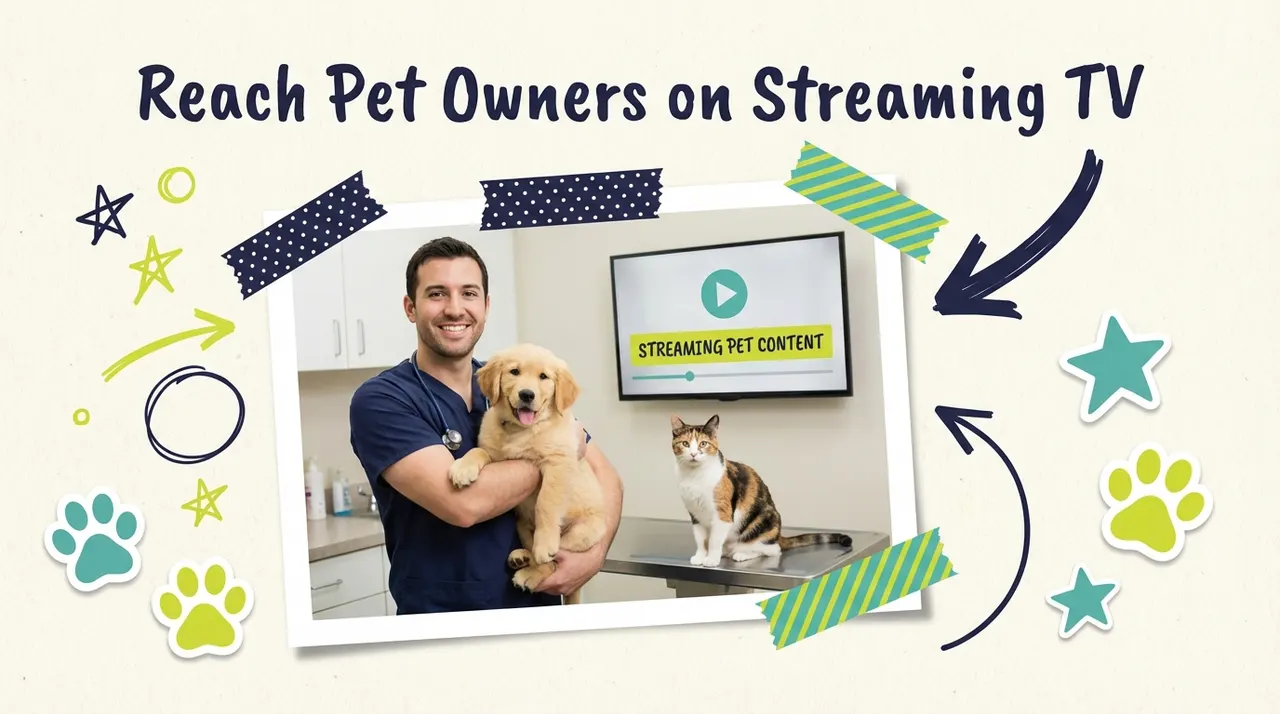
There are 94 million pet-owning households in the United States right now (APPA, 2024 National Pet Owners Survey). That's more homes with a dog or cat than homes with kids. And every single one of those households needs a vet.
Most veterinary clinics still rely on the same tired mix of word-of-mouth, Google reviews, and maybe a boosted Facebook post. Those channels aren't broken, but they're crowded. Every vet clinic in your ZIP code is playing the same game, which makes it harder to stand out and more expensive to compete.
TV advertising has changed. You don't need a Super Bowl budget or a Hollywood production team. Streaming TV (also called CTV) lets veterinary clinics reach pet owners in their local area, on premium networks like Hulu, ESPN, and NBC, from $30/day. And because 87% of U.S. households have at least one streaming subscription (Nielsen, 2025), your potential clients are already watching.
Here's why TV works for vet clinics, how to target pet owners effectively, and how to get your first campaign running in under 10 minutes.
Why TV Advertising Works for Veterinary Clinics
Pet owners don't pick a veterinarian the way they pick a restaurant. Choosing a vet is personal. You're trusting someone with your dog's surgery, your cat's chronic condition, your kid's first pet. That trust doesn't come from a search ad or a coupon mailer. It comes from seeing real people who care about animals.
That's exactly what TV delivers.
Emotional Connection Beats Every Other Channel
Video is the only medium that shows your veterinary team doing what they do best: comforting a nervous puppy, explaining a diagnosis to a worried owner, celebrating a recovery. Pet owners respond to that authenticity because they want to see that you treat animals the way they'd treat their own.
Research backs this up. TV advertising effectiveness studies consistently show that TV generates stronger emotional responses and higher brand recall than digital display, social media, or print. For a trust-dependent business like veterinary medicine, that emotional edge matters.
Pet Spending Is at an All-Time High
Americans spent $157 billion on their pets in 2025, with veterinary care and products accounting for $41.4 billion of that total, growing at 4% annually (APPA). The average dog-owning household spends $598 per year on veterinary care; cat owners spend $529 (AVMA). Pet owners aren't cutting back on their animals' health. They're spending more every year.
That spending trend means each new client you acquire represents real, recurring revenue. A single pet-owning household that stays with your clinic for the life of their pet could generate thousands of dollars in care. Multi-pet households multiply that value even further.
Local Targeting Reaches Your Actual Service Area
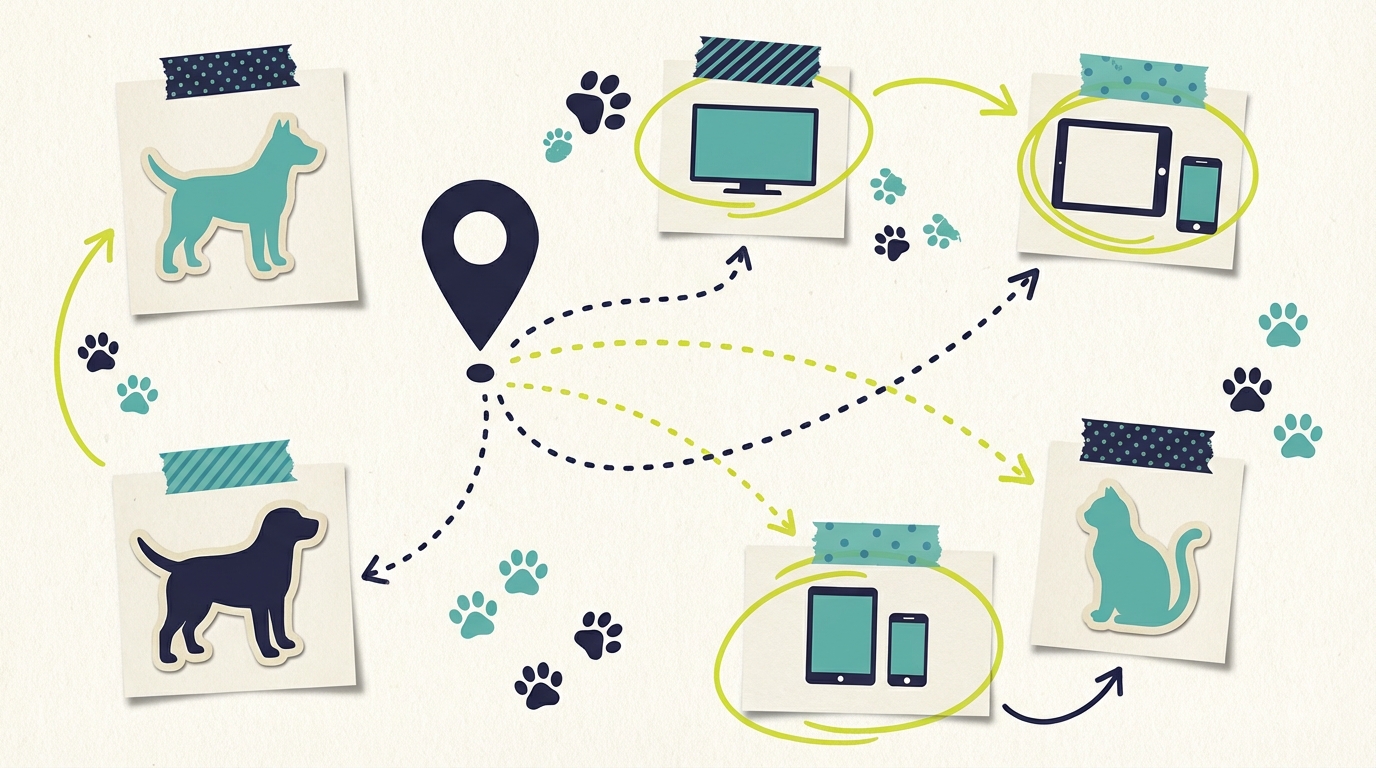
Traditional TV advertising was a blunt instrument. You'd buy airtime across an entire metro area and hope some pet owners were watching. Streaming TV flips that model. You can target by ZIP code, city, or radius around your clinic, which means your ad budget goes toward reaching people who could walk through your door.
For a veterinary clinic with a 10-to-15-mile service radius, that precision changes the economics entirely. You're not paying to reach people three counties away who'll never drive to your practice.
Targeting Pet Owners on Streaming TV
One of the biggest advantages of CTV advertising is audience targeting. Instead of guessing who's watching, you can put your ad in front of the people most likely to need a veterinarian.
Demographic Targeting
Start with the basics: age, income, and household composition. Pet ownership skews toward homeowners in the 25-54 age range with household incomes above $50,000. According to the AVMA, there are 87.3 million dogs and 76.3 million cats in the U.S., spread across households of all types. But the highest concentration of pet spending comes from established households with disposable income for premium veterinary care.
Geographic Targeting
This is where streaming TV really shines for local businesses. You can target the specific neighborhoods and ZIP codes that make up your service area. If your clinic is in a suburban area with a high concentration of single-family homes (prime pet-owning territory), you can focus your budget there.
Running a second location? Target separate geographic zones for each clinic with different messaging. Offering mobile vet services? Expand your radius to cover the full area you serve.
Interest and Behavioral Targeting
CTV platforms allow you to reach viewers based on their interests and online behavior. For veterinary clinics, the most valuable targeting options include:
Pet owners and animal lovers: Reach households that have been identified as pet owners through purchase data, app usage, or content consumption patterns
Pet product shoppers: Target people who've recently purchased pet food, supplies, or accessories online
New movers: Families who've recently relocated are actively searching for a new vet. Reaching them early locks in a relationship before they find someone else
Young families: Households with children are significantly more likely to have pets and to invest in their care
Layering geographic targeting with pet-owner data creates a highly focused audience. You're reaching pet owners near your clinic who are likely to spend on veterinary care. That's a much better use of your ad budget than blasting a message to everyone in your metro area.
Creating an Effective Vet Clinic TV Ad
Your TV ad needs to accomplish one thing above all else: make pet owners feel confident that you'll take great care of their animals. Everything else, your hours, your location, your special offers, is secondary to that emotional promise.
Show Real Animals and Real Staff
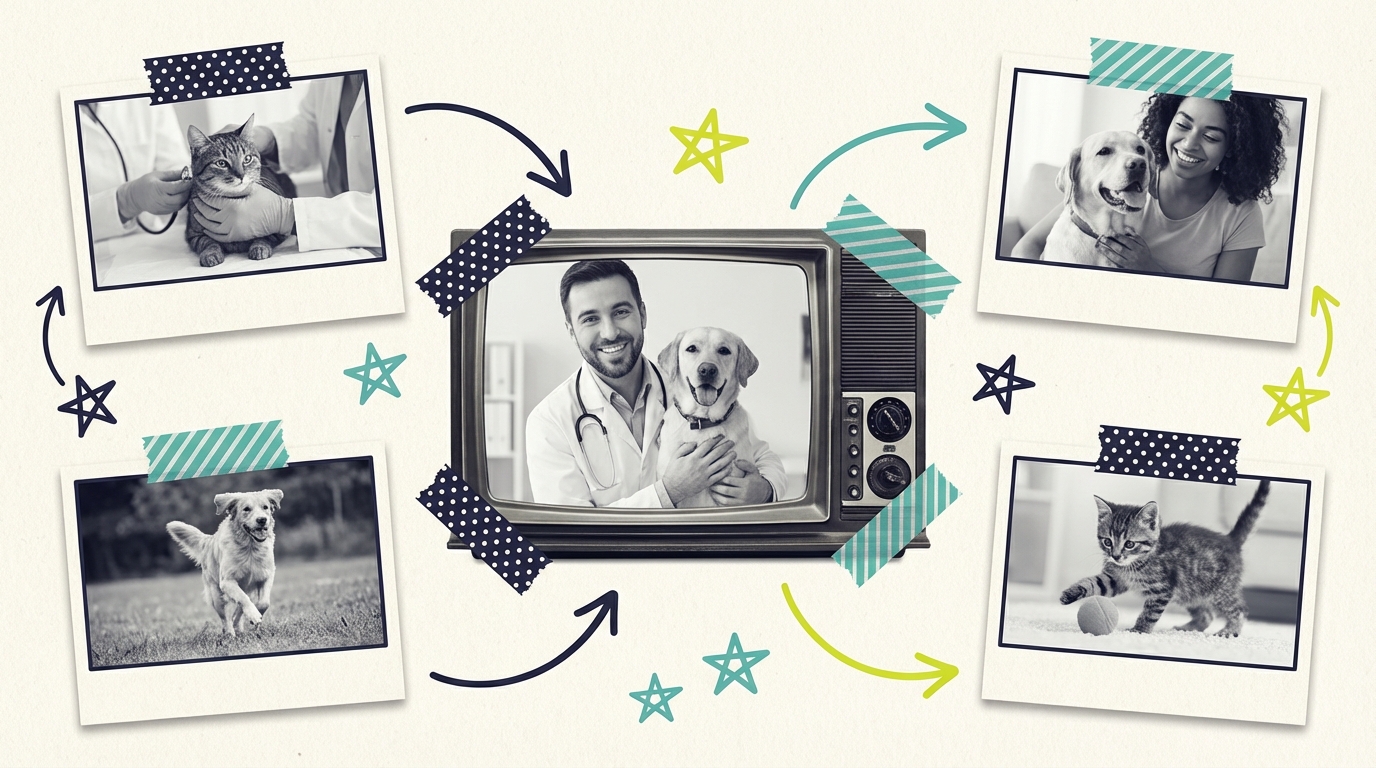
The fastest way to connect with pet owners is to show happy, healthy animals being cared for by friendly, competent staff. Stock footage of a generic golden retriever won't cut it. If possible, feature your actual patients (with owner permission), your real exam rooms, and the people who work at your clinic every day.
Pet owners want to see the faces they'll meet when they walk in. A vet tech cuddling a nervous kitten, a doctor explaining something to an attentive owner, a dog wagging its tail in the lobby. Those moments build more trust in 30 seconds than a month of social media posts.
Emphasize Care Over Credentials
Your board certifications and state-of-the-art equipment matter, but they shouldn't lead your ad. Pet owners care most about how their animals will be treated. Lead with warmth, empathy, and a genuine love for animals. Let the credentials support that message rather than replace it.
Phrases like "We treat your pets like family" work because they address the pet owner's core anxiety: will my animal be comfortable and cared for when I'm not there?
Highlight What Makes You Different
Every vet clinic offers exams, vaccinations, and spay/neuter services. What sets you apart? Maybe it's your fear-free handling approach, your 24-hour emergency availability, your exotic animal expertise, or your at-home euthanasia services. Whatever your differentiator is, make it the centerpiece of your ad.
If you offer services that pet owners struggle to find locally (veterinary acupuncture, holistic care, or specialized surgical procedures), call those out. They give viewers a specific reason to choose you over the clinic they've been going to for years.
Keep the CTA Clear and Simple
Your ad is 30 seconds long. Don't try to pack in your entire service menu. End with a single, clear call to action: "Book your pet's first visit at [website]" or "Call us today for a new patient exam." Give viewers one thing to remember and one action to take.
How Much Does Veterinary TV Advertising Cost?
This is the question every vet clinic owner asks first. And the answer is probably better than you'd expect.
Streaming TV Pricing for Local Businesses
With Adwave, you can launch a streaming TV campaign for your veterinary clinic from $30/day. There's no production cost for the ad itself. Adwave's AI creates a broadcast-quality 30-second commercial from your website, Yelp page, or social media profile in about 2 minutes.
Your ad runs across 100+ premium streaming networks, including channels your clients are already watching like Hulu, Peacock, Tubi, and ESPN. The cost per thousand impressions (CPM) ranges from $15 to $35, with an average around $25.
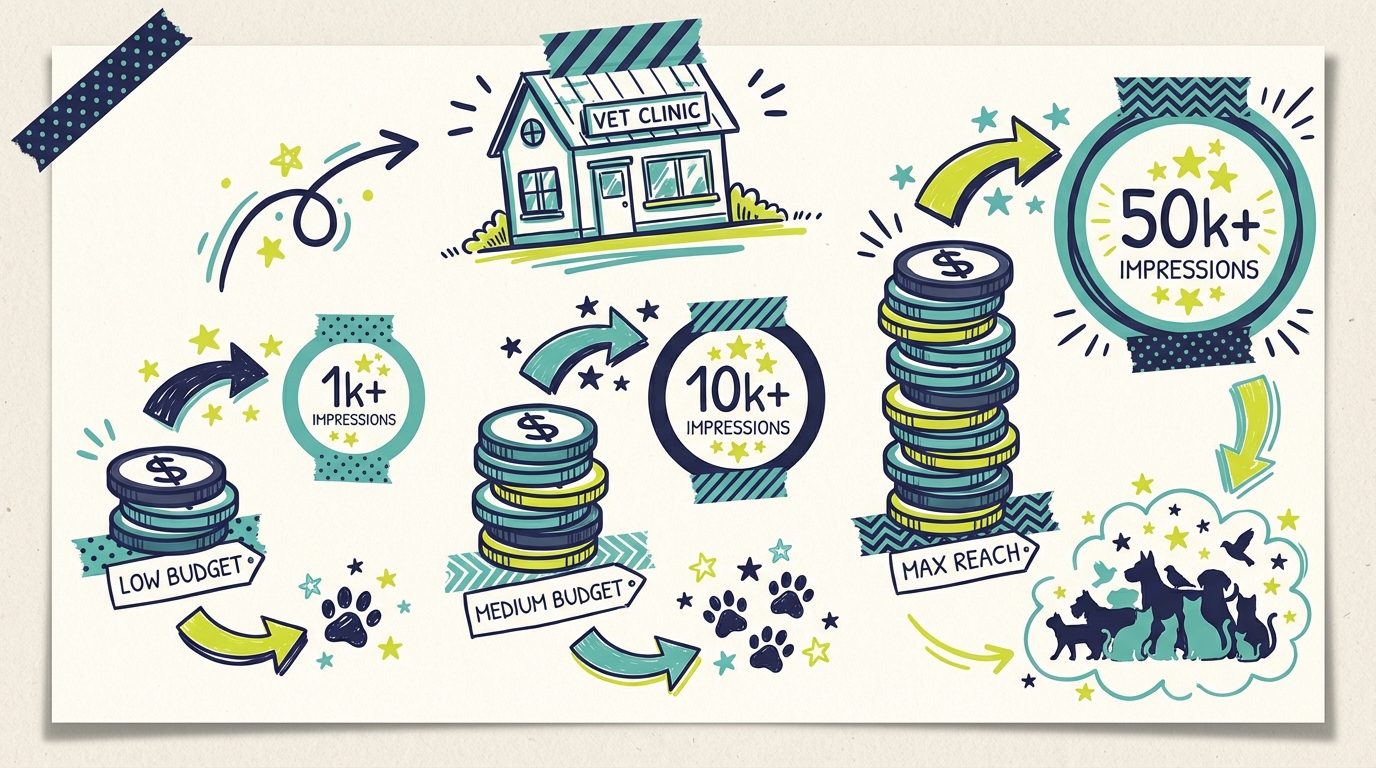
Let's put that in real numbers. A $500 monthly budget at a $25 CPM delivers roughly 20,000 impressions, meaning your ad is seen 20,000 times by local pet owners. A $1,000 monthly budget doubles that to 40,000 impressions.
How TV Compares to Other Channels
Compared to what most veterinary clinics spend on digital marketing, streaming TV is surprisingly competitive. Google Ads for veterinary keywords like "vet near me" or "emergency vet" can cost $5 to $15 per click, and not every click becomes a client. A single new client acquisition through paid search can easily run $50 to $150 or more.
TV builds awareness and trust over time, which lowers your cost of acquisition across every channel. When someone sees your TV ad and later Googles your clinic name, that branded search is free. When a pet owner mentions your clinic to a friend because "I keep seeing them on TV," that referral costs you nothing. Understanding your TV advertising ROI means accounting for these indirect benefits, not just direct conversions.
For a full breakdown of what to expect, check out our guide to streaming TV ad costs.
Getting Started with Your First Campaign
Launching a TV campaign for your veterinary clinic is simpler than you'd think. With Adwave, you can go from zero to a live ad in under 10 minutes. Here's the process:
1. Generate your ad. Paste your clinic's website URL, Yelp page, or social media profile. The AI pulls your branding, images, and key information to create a professional 30-second TV commercial. The whole process takes about 2 minutes.
2. Review and customize. Watch your ad and make any adjustments. Want to emphasize your emergency services? Highlight a seasonal promotion? You can tailor the message to match your goals.
3. Set your targeting. Choose the geographic area around your clinic and select audience demographics that match pet owners in your market. You control exactly where your ad runs.
4. Set your budget and launch. Start with whatever you're comfortable spending, even $50, and launch your campaign. Your ad begins running on 100+ premium streaming networks.
If you've never run a TV campaign before, our first ad guide walks you through everything step by step.
The veterinary clinics that grow fastest are the ones pet owners already know and trust before they need a vet. TV advertising builds that recognition in your community so that when a pet owner's dog needs care, your clinic is the first name that comes to mind.
For more on how TV advertising supports pet service businesses, explore our industry resources.
Common questions answered
How many impressions do I need before my vet clinic TV ad starts working?
Most advertising research suggests that a viewer needs to see an ad between 5 and 7 times before it sticks. For a veterinary clinic spending $500 per month at an average $25 CPM, you'd generate about 20,000 impressions. In a tightly targeted local area, that frequency builds quickly. You'll likely start seeing an uptick in new appointment requests within the first 60 to 90 days of consistent advertising.
Can I target only pet owners with my streaming TV ads?
Yes. CTV platforms offer interest-based and behavioral targeting that lets you focus on households identified as pet owners. You can combine that with geographic targeting to reach pet owners specifically in your service area. While no targeting method is 100% precise, layering pet-ownership data with demographics and location gets your ad in front of the right audience the vast majority of the time.
What should I feature in my veterinary clinic TV ad?
Lead with your people and their care for animals. Show your veterinary team interacting with pets in a warm, professional setting. Avoid leading with prices or promotions, as those don't build the trust that drives veterinary client decisions. Focus on what makes pet owners feel confident leaving their animals in your hands. If you have a specialty (exotic pets, emergency care, holistic treatment), make sure that's front and center.
Is TV advertising worth it for a small, single-location vet clinic?
Absolutely. Streaming TV's geographic targeting means you're only paying to reach people near your clinic, not the entire metro area. With campaigns from $30/day, even a small practice can test TV advertising without a major financial commitment. The lifetime value of a single new pet-owner client (potentially $500 to $1,500+ per year in recurring care) means just a handful of new appointments can pay for months of advertising.
How quickly can I launch a veterinary TV ad campaign?
You can go from nothing to a live campaign in under 10 minutes. The AI generates a broadcast-quality 30-second ad from your existing web presence in about 2 minutes. You set your targeting and budget, and your campaign starts running on 100+ premium streaming networks. There's no need to hire a production company or wait weeks for creative development.
Should I run my vet clinic TV ads year-round or seasonally?
Year-round advertising builds the strongest results because veterinary care isn't seasonal in the way that some other businesses are. Pets need checkups, vaccinations, and treatment throughout the year. That said, you can increase your spend during peak periods like spring (puppy and kitten season, flea and tick prevention) and the winter holidays (when new pets are commonly gifted). Consistent presence keeps your clinic familiar whenever a pet owner needs care.


