

If you run an electronics store, you already know how tough it is to compete for attention. Online giants offer next-day delivery, big-box chains spend millions on advertising, and customers can compare prices from their couch. But here's the good news: TV advertising has become one of the most effective ways for local and independent electronics retailers to stand out, and it's far more affordable than you might think.
The U.S. consumer technology market is forecast to reach $112 billion in 2026, according to Circana. And while online shopping continues to grow, offline outlets still account for nearly 57% of all consumer electronics sales (Mordor Intelligence). That means the majority of electronics purchases still happen in physical stores, and the businesses that stay familiar with local shoppers are the ones that win.
This guide covers how TV advertising works for electronics retailers, why it's especially well-suited for this industry, and how to launch your first campaign without a massive budget.
Why TV advertising works for electronics retailers
TV has always been a natural fit for electronics, and connected TV (CTV) has made it even better. When your ad appears on a streaming service like Hulu, Peacock, or Tubi, you're reaching potential customers who are already sitting in front of a screen they probably bought from a store like yours.
There are several reasons TV advertising is especially effective for this category.
Seeing is believing. Electronics are visual products. Showing a crystal-clear 4K display, a sleek laptop setup, or a smart home system in action does more than any written description ever could. TV's full-screen, high-definition format lets you showcase products the way they're meant to be experienced.
Trust matters for big purchases. Consumer electronics are considered purchases. People research before they buy, and they want to feel confident they're making the right choice. Appearing on premium TV networks builds credibility. Research shows that consumers trust TV ads more than digital ads, which is critical when customers are spending hundreds or thousands of dollars.
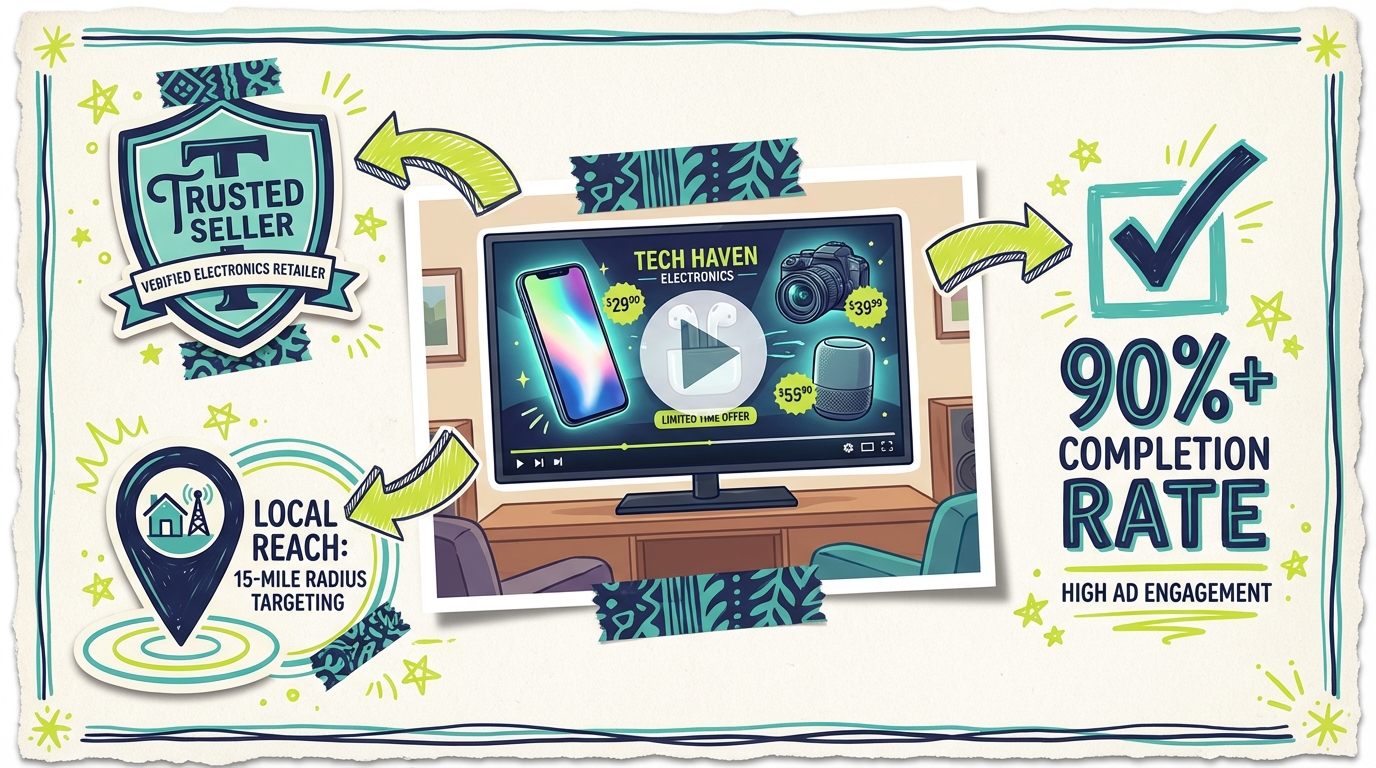
Local targeting makes advertising more accessible. CTV advertising lets you target specific geographic areas, so a neighborhood electronics store can reach every household within a 15-mile radius without wasting budget on viewers who'd never make the trip. This is the same kind of precise targeting that used to be available only to national brands.
Completion rates are high. Unlike social media ads that get scrolled past in half a second, TV ads have completion rates above 90%. When someone sees your 30-second spot on their TV, they're watching the whole thing.
What makes electronics retail different
Electronics retailers face unique challenges and opportunities that make TV advertising especially valuable.
High average order values mean that even a small number of new customers can deliver strong returns. If your average sale is $500 and a TV campaign brings in 10 new customers in a month, that's $5,000 in revenue from a campaign that might have cost a few hundred dollars.
The research-then-buy cycle works in your favor. Most electronics shoppers do extensive research online before making a purchase. A TV ad plants the seed, driving that initial awareness. When they start searching for "best TV deals near me" or "computer repair shop," your store is already familiar. That familiarity can be the deciding factor when they're choosing between your store and an online retailer.
Expert service is your differentiator. Big-box stores can match on price, and online retailers can beat you on convenience. But what they can't replicate is the in-person expertise of a knowledgeable staff member who can recommend the right laptop for a student, set up a home theater system, or troubleshoot a device. TV advertising lets you tell that story in a way that resonates.
Product demonstrations drive sales. According to Mordor Intelligence, the top five electronics retailers control just under 40% of worldwide sales, leaving meaningful white space for regional specialists. Your advantage is in-store demos, hands-on experience, and personal recommendations. TV ads that highlight these experiences give customers a reason to visit rather than click "add to cart."
Types of TV ads that work for electronics stores
Not every ad approach works equally well for electronics retail. Here are the formats that consistently perform.
Product showcase ads put your best-selling items front and center. Show the latest smartphones, gaming consoles, or smart TVs in action. Focus on one or two products rather than trying to feature your entire inventory. A 30-second spot showing a family enjoying movie night on a gorgeous new TV screen is more compelling than a fast-moving montage of 20 different products.
Sale and event ads drive urgency around specific promotions. Whether it's a Black Friday sale, a back-to-school event, or a clearance on last year's models, time-sensitive offers give viewers a reason to visit now rather than later. These work especially well during key seasonal windows.
Expert and service-focused ads highlight what makes your store different from an Amazon search bar. Show your team helping a customer choose the right device, setting up a home network, or repairing a cracked screen. According to Deloitte's 2026 Retail Industry Global Outlook, as much as 40% of consumer perceptions of a brand's value comes from factors other than price. Your expertise is one of those factors.
Local community ads position your store as a neighborhood institution. Mention your location, how long you've been in business, and the community you serve. For local electronics stores competing against national chains, this personal connection is a real advantage.
Timing your campaigns for maximum impact
Electronics sales follow predictable patterns throughout the year, and smart advertisers time their campaigns to match.
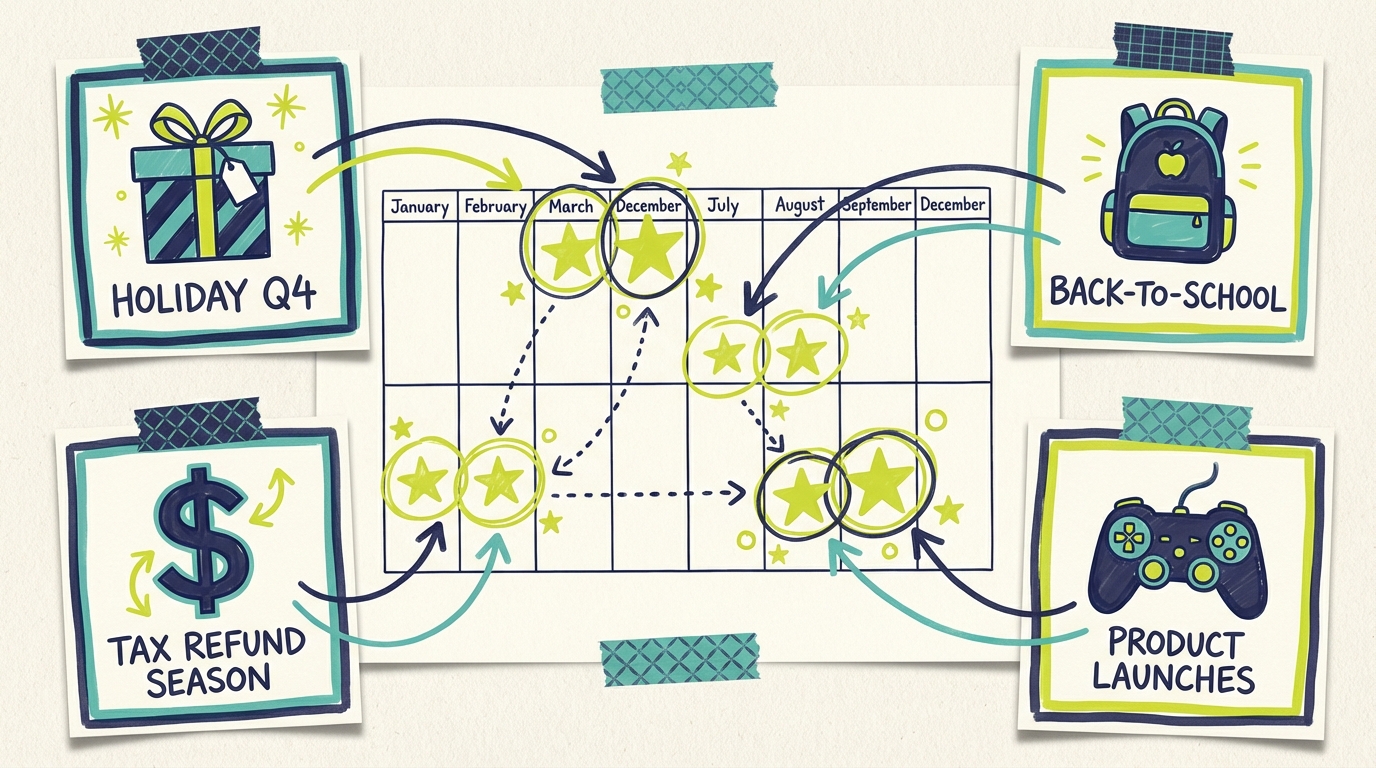
Holiday season (October through December) is the biggest window. Start your campaigns in early October to capture early shoppers and maintain presence through December. This is when families are buying TVs, gaming systems, and gifts. Planning your seasonal calendar well in advance ensures you don't miss the window.
Back-to-school (July through September) drives laptop, tablet, and accessory sales. College students and parents are actively shopping for tech, and a well-timed TV campaign can position your store as the go-to destination.
Tax refund season (February through April) is an underappreciated opportunity. Many consumers use their refunds for big-ticket purchases, and electronics are near the top of the list. Running ads during this window can capture demand that competitors overlook.
Product launch cycles create natural buzz. When major brands release new smartphones, gaming consoles, or TV models, consumers are actively searching for where to buy. According to NIQ, TVs are set for a lift in 2026 as pandemic-era purchases reach replacement age, and sports fans will be upgrading ahead of the 2026 FIFA World Cup. Matching your campaigns with these moments taps into existing demand.
The end of Windows 10 support in 2025 is driving a wave of PC replacements that will continue into 2026, according to Circana. If you sell computers, this is a campaign-ready angle: "Time to upgrade? We'll help you find the perfect replacement."
How to get started with TV advertising
Launching a TV campaign for your electronics store is simpler than it used to be. Here's how to approach it.
Start with your strongest offer. Pick one product category or promotion to feature. Trying to advertise everything at once dilutes your message. A focused ad, like "Visit us for the best TV deals this holiday season" or "Free setup with any laptop purchase," gives viewers a clear reason to act.
Use AI to create your ad. You don't need a production crew. With Adwave, you can generate a broadcast-quality 30-second TV commercial from your website URL in about two minutes. The AI pulls your products, branding, and store information to create a professional spot that runs on 100+ premium streaming channels.
Set a realistic budget. CTV advertising starts from $30/day with Adwave, with CPMs averaging $15-35. For a local electronics store, even a few hundred dollars per month can deliver thousands of impressions to households in your area. You don't need to commit to a big spend upfront; test with a small budget and scale based on results.
Target your service area. Use geographic targeting to reach households near your store. There's no point paying to show your ad to someone three hours away. CTV platforms let you target by zip code, city, or radius, so every impression reaches a potential customer.
Run your ad on the right channels. Your customers are watching content on streaming platforms like NBC, ESPN, Hulu, and hundreds more. CTV advertising runs across 100+ premium channels, so your ad appears alongside the same content as national brands.
Targeting the right audience
One of CTV's biggest advantages over traditional TV is precise targeting. Here's how to think about your audience.
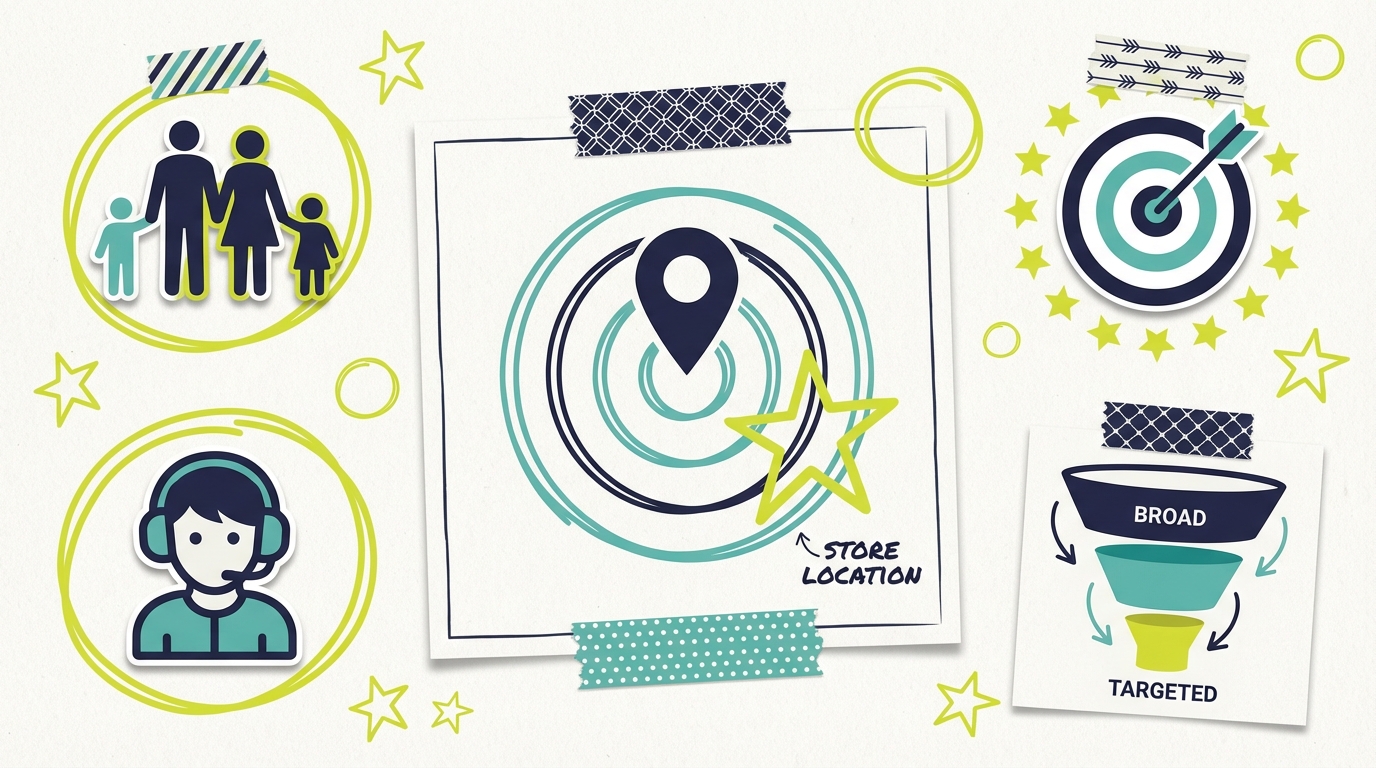
Geographic targeting is the foundation. Define a radius around your store (10-20 miles for urban areas, wider for rural) and focus your budget there. Every ad impression reaches someone who could visit.
Demographic targeting helps you reach specific customer segments. Launching a gaming section? Target 18-34 year-olds. Promoting home theater installations? Focus on homeowners aged 35-54 with higher household incomes.
Interest-based targeting lets you reach people who are actively interested in technology. CTV platforms can target viewers based on browsing behavior, purchase history, and content preferences. Someone who watches tech review channels is a higher-value target than a random viewer.
Seasonal retargeting combines timing with audience data. Run heavier campaigns to past website visitors or in-market shoppers during key purchase windows like Black Friday or back-to-school season. CTV retargeting lets you reconnect with people who've already shown interest in your store.
Measuring your results
Tracking the performance of your TV campaigns helps you optimize spending and prove ROI. Here's what to monitor.
Impressions and reach tell you how many households saw your ad and how often. For a local electronics store, reaching 5,000 to 10,000 unique households per month is a strong starting point.
Completion rates show whether people are watching your full ad. CTV typically delivers 90%+ completion rates, far higher than digital video. If your completion rate drops below 85%, it may signal that your creative needs refreshing.
Website traffic often spikes after TV campaigns launch. Use Google Analytics to monitor direct traffic and branded search increases during your campaign period. Many electronics shoppers will see your ad, then search for your store name online.
Store visits are the ultimate metric for brick-and-mortar retailers. Ask new customers how they heard about you, use unique promo codes tied to your TV campaign, or track foot traffic patterns during and after campaign flights.
Return on ad spend (ROAS) ties your campaign cost to revenue. With average electronics purchases in the hundreds of dollars, even a handful of attributable sales can deliver strong returns on a modest TV budget.
Common questions answered
How much does TV advertising cost for an electronics store?
CTV advertising is far more affordable than traditional TV. With platforms like Adwave, you can start a campaign from $30/day, with average CPMs of $15-35. A local electronics retailer might spend $300-500 per month to reach thousands of households in their area. Compare that to traditional TV buys that often required minimums of $5,000 or more, and you can see why CTV has opened the door for independent retailers.
Can a small electronics store really compete with Best Buy on TV?
Yes, and that's precisely the point. CTV's geographic targeting means you're not competing with Best Buy nationally. You're reaching the households in your neighborhood with a message about what makes your store different: expert advice, personalized service, local repairs, and community trust. Best Buy can't run a hyperlocal campaign for your specific market the way you can.
What should my first ad focus on?
Start with your strongest differentiator. If you offer free setup and installation, lead with that. If you're known for unbeatable prices on a specific category, make that the focus. If your store has been a community fixture for decades, tell that story. Avoid the temptation to cram every product and promotion into one 30-second spot. One clear message is far more effective than five competing ones.
When is the best time to run TV ads for electronics?
The holiday season (October through December) delivers the highest ROI for most electronics retailers. But don't overlook back-to-school season (July through September), tax refund season (February through April), and major product launch windows. For consistent results, many retailers run a baseline campaign year-round and increase spend during peak seasons.
Do I need to create a professional commercial?
Not anymore. AI-powered platforms like Adwave can generate broadcast-quality 30-second TV ads from your website in about two minutes. The ad pulls your product images, branding, and store details to create a professional spot ready to air on premium channels. If you have a website, you have everything you need to create a TV commercial.


