
There are roughly 2 million licensed real estate agents in the United States (ARELLO, 2025). If you're one of them, you already know the math: that's a lot of agents competing for a limited number of transactions.
The agents who consistently close deals aren't necessarily the best negotiators or the most experienced. They're the ones buyers and sellers think of first. And in 2026, "thinking of first" comes down to one thing: visibility.
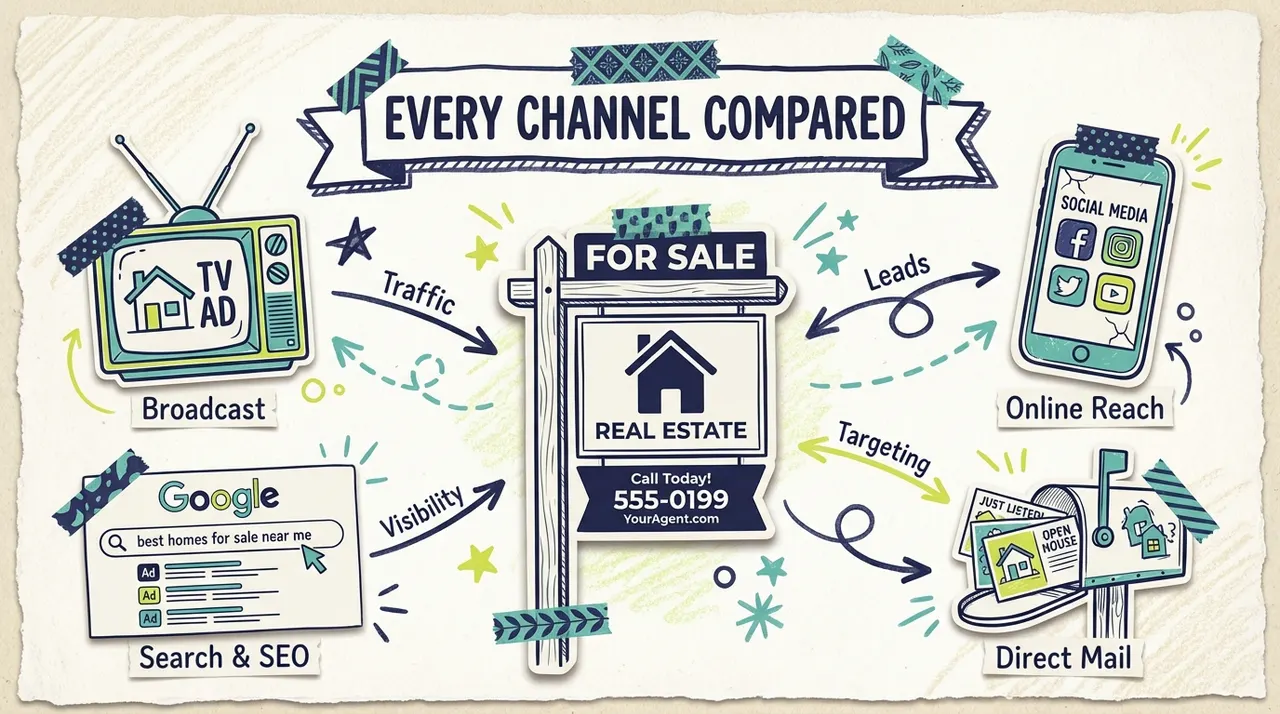
But with so many advertising options available, from Google Ads to social media to TV, figuring out where to spend your marketing budget can feel overwhelming. This guide compares the most effective advertising channels for real estate agents, breaks down the costs and ROI for each, and helps you build a strategy that generates leads.
How Homebuyers Find Their Agent
Before spending a dollar on advertising, it helps to understand how buyers and sellers choose an agent in the first place.
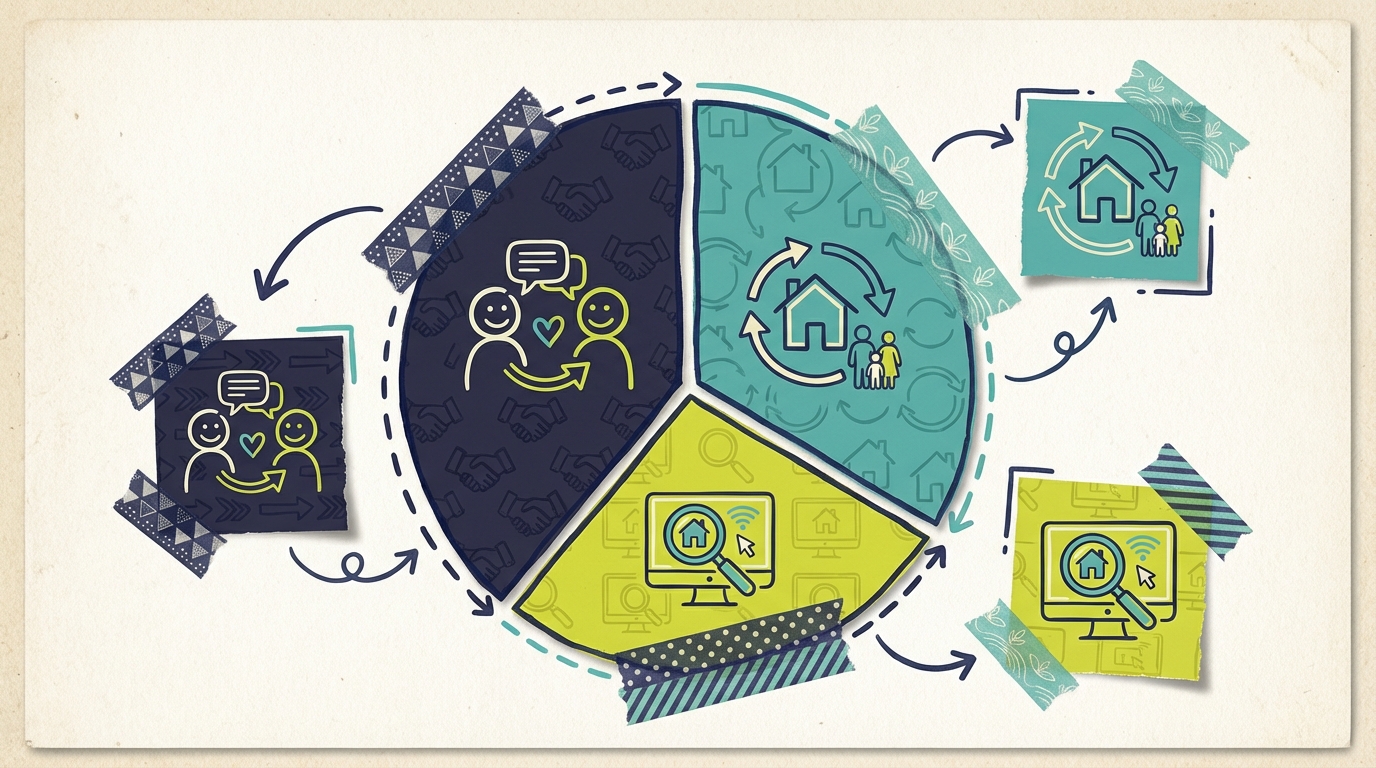
According to the NAR 2025 Profile of Home Buyers and Sellers:
43% of buyers found their agent through a referral from a friend, neighbor, or relative
18% used an agent they'd worked with before
88% of all buyers purchased through an agent or broker
67% of first-time buyers interviewed only one agent before hiring
That last stat is critical. Most buyers don't shop around. They go with the first agent they know and trust. The entire game is being that first name.
This is why advertising matters so much for real estate. You're not just generating leads. You're building the name recognition and trust that make people call you instead of someone else.
The Best Advertising Channels for Real Estate Agents
Let me break down the top channels, what they cost, and when to use each one.
1. Streaming TV (CTV) Advertising
TV advertising used to be something only the biggest brokerages could afford. That's changed. With streaming TV, individual agents can run targeted ads on NBC, Hulu, ESPN, and 100+ premium channels for as little as $50.
Why it works for real estate:
Builds instant credibility. When buyers see you on the same screen as major brands, it signals success and trustworthiness.
Geographic targeting lets you focus on specific ZIP codes in your farm area
CTV ads achieve 90-98% completion rates, meaning nearly everyone watches your full 30-second spot (Innovid, 2025)
Interactive CTV ads boost foot traffic by 13% and brand recall by 36% (BrightLine Research)
Costs: $15-35 CPM (cost per thousand impressions). A targeted local campaign can start at $50/month.
Best for: Farm area branding, luxury listings, building long-term name recognition in a geographic area.
2. Social Media Advertising
Social media is where most agents start, and for good reason. It's visual, it's where your audience spends time, and the targeting is solid.
The numbers:
52% of agents say social media delivered their highest-quality leads (REsimpli, 2025)
92% of Realtors use Facebook to generate quality leads
Listings with video get 403% more inquiries
Costs: $20-50 per lead on average. Facebook/Instagram ads typically run $5-15 per day for local campaigns.
Best for: Listing promotion, open house announcements, retargeting website visitors, engaging younger buyers.
The catch: Social media leads often need more nurturing. Scroll-and-click leads tend to be earlier in their journey than someone who sees your ad on TV and remembers your name weeks later.
3. Google Ads (Search)
When someone searches "real estate agent near me" or "homes for sale in [your city]," showing up at the top is powerful. These are high-intent searchers actively looking for help.
The numbers:
Real estate Google Ads average CPC: $1.55-$2.37 (WebFX, 2026)
Average cost per lead: $95.95
Click-through rate: 9.09% (above average for all industries)
Conversion rate: 2.47%
Best for: Capturing buyers and sellers who are actively searching right now. Great for new agents who need leads quickly.
The catch: Competitive markets can push CPCs much higher. You're also competing against Zillow, Realtor.com, and every other agent in your area. The moment you stop paying, the leads stop too.
4. Referral and Relationship Marketing
Referrals remain the single most common way buyers find an agent. Investing in your referral network isn't glamorous, but it's effective.
The numbers:
43% of buyers found their agent through referrals (NAR, 2025)
66% of sellers used a referral or previous agent
Email marketing delivers up to 4,200% ROI for agents who nurture their sphere consistently (REsimpli, 2025)
Costs: Low to moderate. CRM tools run $30-200/month. The real investment is time.
Best for: Experienced agents with an established network. The more transactions you close, the more referrals you generate.
The catch: Takes years to build. New agents can't rely on referrals alone.
5. Direct Mail
In an era of digital overload, physical mail stands out. Well-designed postcards, market updates, and just-sold announcements can keep you familiar in your farm area.
The numbers:
Direct mail generated $26.67 million in revenue for one major real estate company, outperforming cold calling and pay-per-lead (REsimpli, 2025)
Average response rate for direct mail: 2-5% (higher than most digital channels)
Costs: $0.50-$2.00 per piece, depending on design and postage. Monthly farm mailings run $200-$1,000+.
Best for: Geographic farming, just-sold announcements, market updates, staying visible between transactions.
6. Portal Advertising (Zillow, Realtor.com)
The big portals attract millions of active homebuyers. Advertising on them puts you in front of people who are already browsing listings.
Costs: $20-$60 per lead on Zillow (varies widely by market). Premium placement can run $300-$1,000+/month.
Best for: Agents who need a consistent flow of buyer leads and can respond quickly to inquiries.
The catch: Leads are shared or non-exclusive (depending on your plan). Competition is fierce. And you're building the portal's brand, not yours.
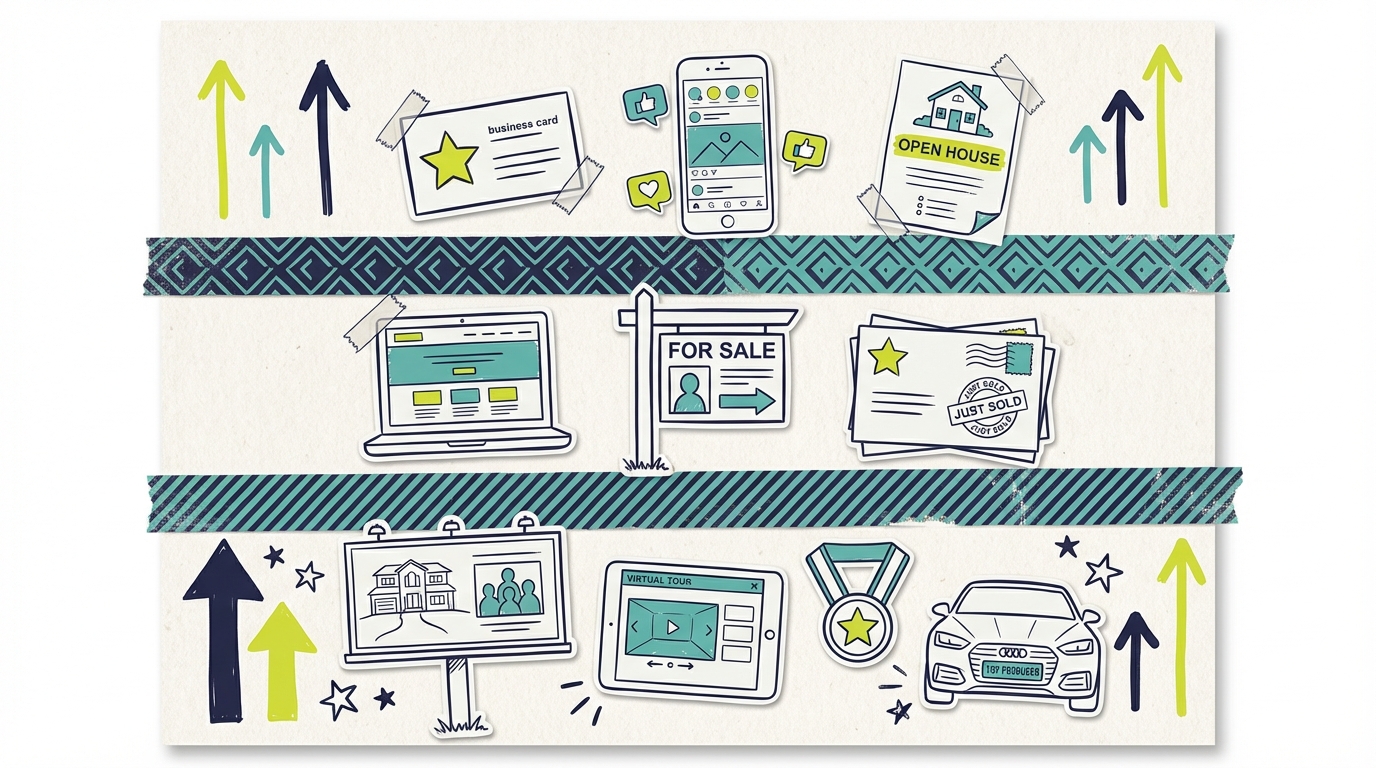
Channel Comparison: Cost, Trust, and ROI
Building Your Advertising Strategy
The best approach isn't picking one channel. It's building a mix that covers different stages of the buyer/seller journey.
For New Agents (Year 1-2)
You need leads now, and you need to build name recognition fast.
Recommended mix:
Google Ads (40% of budget): Capture active searchers while you build your brand
Social media (30%): Promote listings, share market updates, build your personal brand
Streaming TV (20%): Start building credibility in your farm area with targeted CTV ads
Networking/referrals (10%): Attend events, join local organizations, build your sphere
For Established Agents (Year 3-5)
You have some business coming in. Now it's about scaling and dominating your market.
Recommended mix:
Referral nurturing (30%): Your sphere is your best asset. Invest in staying familiar.
Streaming TV (25%): Expand your CTV presence. Consistent TV advertising builds the kind of trust that turns strangers into clients.
Social media (20%): Continue promoting listings and engaging your audience
Direct mail (15%): Monthly farm mailings keep you visible
Google Ads (10%): Maintain a baseline for capturing active searchers
For Top Producers
You've built your business. Now protect and grow your market share.
Recommended mix:
Streaming TV (30%): Be the agent everyone in your market recognizes. TV presence signals success.
Referral nurturing (25%): Your existing client base is your most valuable marketing asset
Direct mail (20%): Dominate your farm areas with consistent mailings
Social media (15%): Use your success stories, client testimonials, market expertise
Luxury/listing marketing (10%): Premium campaigns for high-value properties
What Makes Real Estate Advertising Work
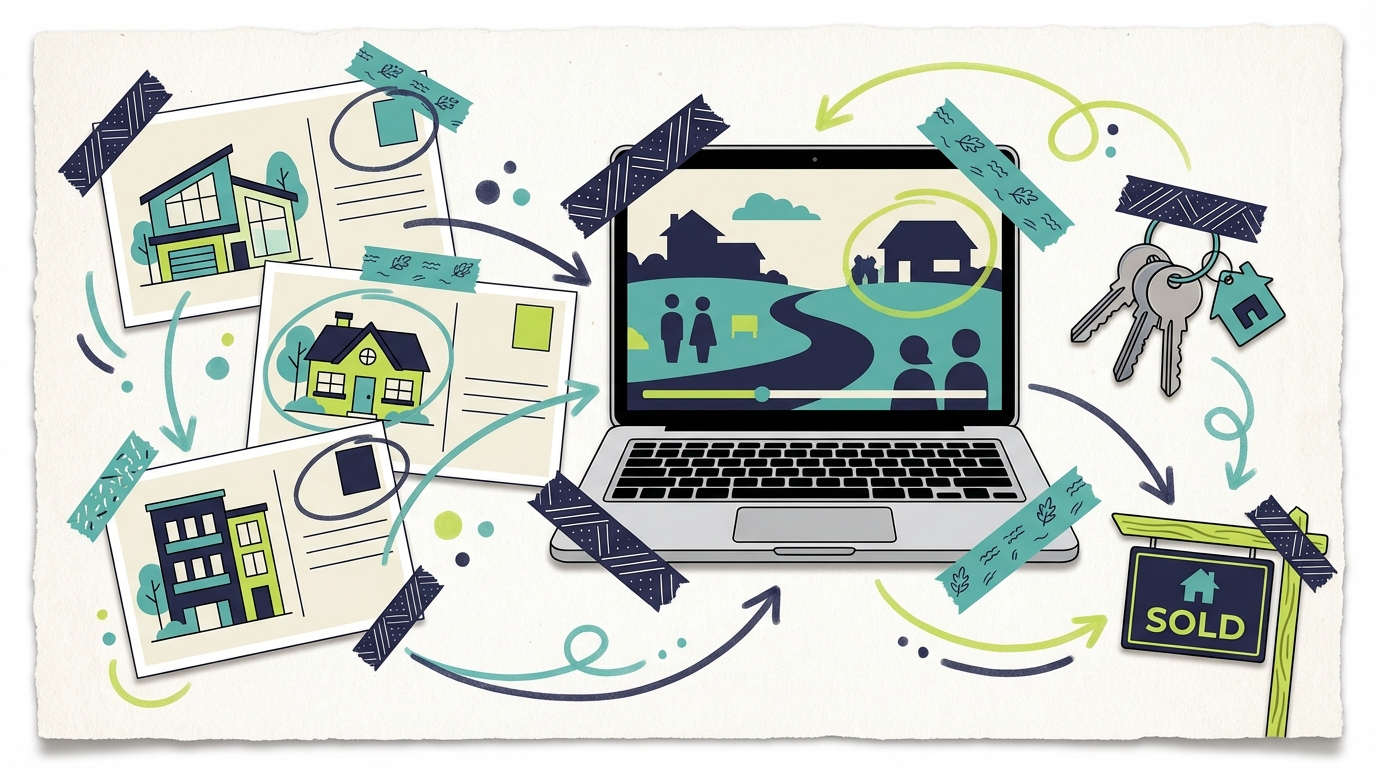
Regardless of which channels you choose, a few principles make the difference between ads that generate business and ads that waste money.
Be hyper-local
Real estate is inherently local. Your ads should feel local too. Reference specific neighborhoods, school districts, and landmarks. "I've sold 47 homes in [Neighborhood]" is more powerful than "I'm a top-producing agent."
Show your face
People hire people, not logos. Your face should be in every ad, on every mailer, and at the center of your brand. The NAR data is clear: most buyers hire the first agent they know. Make sure they know you.
Lead with value, not ego
The most effective real estate ads solve a problem or answer a question. "Thinking of selling? Here's what homes in [Neighborhood] are worth right now" beats "I'm the #1 agent in [County]" every time.
Be consistent
Track everything
Set up unique phone numbers, landing pages, or UTM codes for each channel. If you can't measure where your leads are coming from, you can't optimize your spending.
Getting Started with TV Advertising
If you haven't tried TV yet, the barrier is lower than you think. Platforms like Adwave let you create a professional TV ad from your website in about two minutes, target specific ZIP codes in your farm area, and launch for as little as $50.
Here's a simple starting plan:
Pick your farm area: Choose the 3-5 ZIP codes where you want to be known
Create your ad: Feature your face, your local expertise, and a clear call to action
Set a modest budget: Even $300/month creates meaningful repetition in a targeted area
Run for 90 days: Give it time to build recognition
Measure the results: Track website visits, branded searches, and inbound calls
The agents who invest in TV advertising now, while most agents still think it's out of reach, will have a significant head start in their markets.
Common Questions Answered
What's the best advertising platform for a new real estate agent? For brand-new agents, a combination of Google Ads and social media provides the fastest path to leads. Google captures people actively searching for agents, while social media lets you promote your first listings and build a personal brand. Add streaming TV once you have a few closings under your belt and want to establish serious credibility in your farm area.
How much should a real estate agent spend on advertising? NAR data shows the median agent spends about $8,010 annually on total business expenses, which includes marketing. A good starting point is 10-15% of your projected commission income. For a newer agent targeting $100,000 in commissions, that's $10,000-$15,000 per year, or roughly $800-$1,250 per month spread across multiple channels.
Is TV advertising worth it for a solo real estate agent? Yes, and solo agents often benefit the most. TV builds the kind of personal brand recognition that makes you the first name people think of when they need an agent. With CTV's ZIP code targeting, even $300/month focuses your budget on exactly the households in your farm area. The credibility boost of appearing on NBC, Hulu, and ESPN alongside major brands is hard to replicate through any other channel.
How do I measure ROI on my real estate advertising? Track leads by source using unique phone numbers, landing pages, or simply asking every prospect "how did you hear about me?" For TV and brand advertising, monitor branded search volume (searches for your name), direct website traffic, and inbound inquiry volume over 90-day windows. Most agents see the biggest impact from TV in months 2-3 as recognition compounds.
Should I advertise on Zillow or invest in my own marketing? Both have a place, but they serve different purposes. Zillow delivers buyer leads now but builds Zillow's brand, not yours. Your own marketing (TV, social, direct mail) builds your personal brand and generates referrals over time. The best strategy is to use portal advertising for immediate lead flow while investing in your own brand for long-term business growth.


