
You've probably had the same reaction a lot of SMB owners have. You see a competitor on Hulu, ESPN, or local broadcast, and your first thought is, “How are they paying for that?” For a long time, TV looked like a channel reserved for brands with giant budgets, agency teams, and production crews.
That's changed. AI-powered platforms have made TV advertising far more accessible, especially for local businesses that want reach without building a whole media department. But accessibility creates a new problem. Once TV is finally within reach, owners and marketing managers have to sort through the specific cons of using AI and automated TV buying.
Those cons are real. Some are creative. Some are operational. Some come down to targeting, tracking, or trusting automation a little too much. None of them mean you should stay out of TV. They mean you should enter with your eyes open.
That's the practical way to think about modern TV advertising in 2026. Not as a magic button, and not as an outdated luxury. It's a workable growth channel if you understand where it can go wrong and how to correct for it early. Platforms like Adwave fit this moment well because they lower the production and placement barrier, but the best results still come from smart inputs, realistic expectations, and active management.
1. Limited Creative Control and Customization
AI makes ad production faster. It doesn't automatically make it more distinctive.
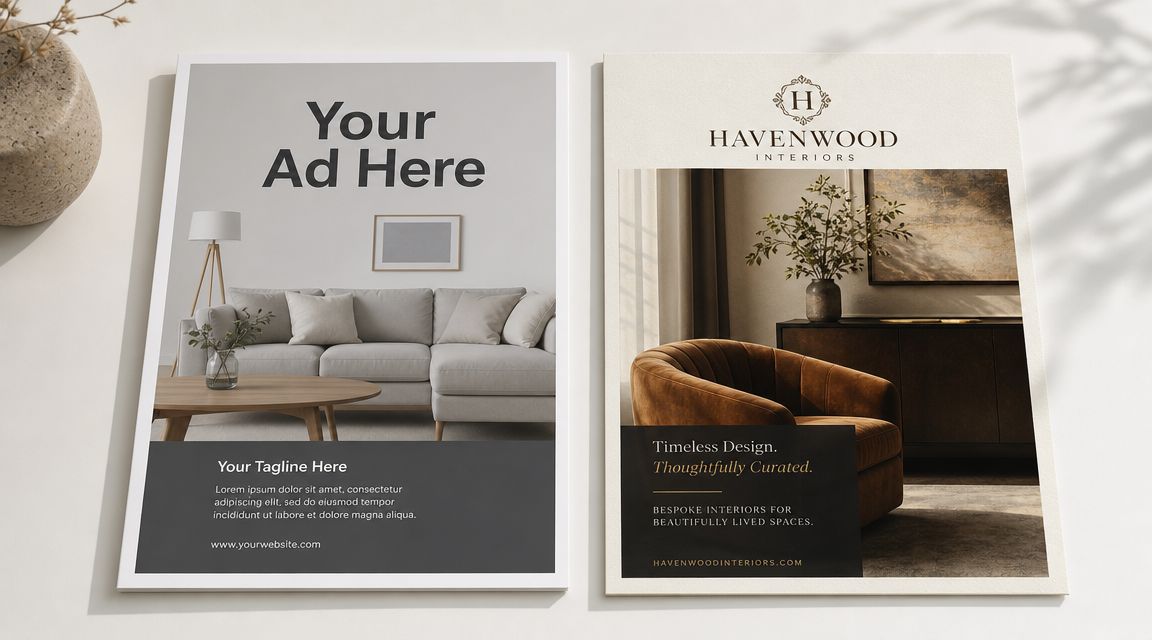
That's the first of the major cons SMBs run into. If your business wins on polish, tone, taste, or a highly specific brand personality, automated creative can come out looking competent but generic. A luxury real estate brokerage, a boutique interior designer, or a handcrafted food brand often needs nuance that template-driven production won't fully capture on its own.
Where this shows up
The problem usually starts upstream. If your website copy sounds flat, the ad often sounds flat too. If your site uses broad phrases like “quality service” and “trusted team,” AI has very little to work with beyond category clichés.
That doesn't mean AI creative is weak. It means AI mirrors the material you give it. Adwave is especially useful here because it shortens the path from concept to launch, but speed only helps when the source material reflects what makes your business different.
Practical rule: Treat your website like the creative brief. If the site doesn't express your positioning clearly, the ad probably won't either.
A good example is an artisanal bakery that competes on process, heritage, and local ingredients. If its website only lists menu items and contact details, the resulting TV spot may feel interchangeable with any other bakery ad.
How to beat it
A few fixes work better than endlessly regenerating versions:
Tighten your homepage message: Lead with what makes you different, not just what you sell.
Use concrete language: “Board-certified physician,” “family-owned since…” and “same-day garage door repair” give AI better material than vague brand slogans.
Test page variations: If Adwave builds from your URL, small copy changes on key pages can improve the output.
Reserve custom effort for high-identity brands: If your category depends on atmosphere and premium perception, blend AI efficiency with manual refinement where available.
If you need a clearer sense of how TV spots come together in practice, Adwave's guide to producing TV commercials is a useful starting point.
2. Reduced Human Connection and Authenticity
Some businesses don't just sell a service. They sell reassurance.
That's why one of the most important cons in AI-generated advertising is the risk of losing the human texture that local audiences respond to. A family dental office, a solo attorney, or an independent real estate agent often grows because people feel they know who they're hiring before they call.

Why trust matters more now
Consumers are active online, but trust is under pressure. In 2024, the FTC's Consumer Sentinel Network received more than 6.47 million reports, with 40% related to fraud and 18% to identity theft, according to the Insurance Information Institute summary of FTC and FBI cybercrime data. For local advertisers, that matters because people are screening every business more carefully before they call, click, or buy.
An overly synthetic-looking ad can weaken credibility, even if it appears polished.
How to beat it
You don't need to abandon automation. You need to feed it proof of humanity.
Name specific people: Include the owner, lead doctor, agent, or attorney on the site.
Show credentials clearly: Licenses, certifications, community involvement, and awards make the message feel anchored.
Use testimonial language on-site: Authentic customer phrasing often creates stronger ad copy than polished slogans.
Tie campaigns to local moments: Community events, seasonal drives, and neighborhood references help reinforce local relevance.
Viewers don't need a perfect ad. They need a believable one.
Adwave can effectively assist, rather than hinder. Its workflow makes TV more accessible for SMBs, but the strongest campaigns still come from businesses that present a clear local identity on their website and across their broader marketing.
3. Limited Ability to Respond to Market Dynamics and Trends
TV is no longer as rigid as it used to be. It's still not as instantly editable as a paid social campaign.
That gap creates one of the more frustrating cons for fast-moving businesses. If you're in real estate, automotive, retail, or travel, your offer can change before a creative cycle catches up. Inventory shifts. Promotions end. A competitor launches a new push. Messaging that was fine last week can become stale fast.
The real operational issue
The challenge isn't just ad production speed. It's strategic timing. Many SMBs assume that because an AI platform can generate a spot quickly, they can pivot messaging at any moment with no planning. In practice, meaningful creative changes still require decisions about offer, audience, landing page, and timing.
A real estate team sees this constantly. An evergreen “Find your dream home” message may still be usable, but it won't do much for a brokerage trying to move attention toward new listings, a neighborhood push, or a rate-driven moment in the market.
How to beat it
The fix is planning for change before it happens.
Build a campaign calendar: Map seasonal pushes, inventory updates, and local events in advance.
Create multiple message angles early: One general awareness ad, one promotion-focused version, and one service-specific variant gives you flexibility.
Refresh the website as often as the market changes: If the platform pulls from your site, stale web content slows your TV relevance.
Watch performance trends weekly: Don't wait until the campaign feels tired. Look for drop-offs and rotate messaging promptly.
Adwave is useful here because it combines ad generation with targeting and performance visibility. That doesn't eliminate the need for planning, but it does give smaller teams a more manageable way to react without starting from scratch every time.
4. Algorithm Bias and Audience Targeting Limitations
Automation is only as broad-minded as the signals behind it.
One of the less obvious cons in AI advertising is that targeting systems can overlearn from past patterns. If the model keeps finding the same viewer profile, it may keep serving that profile and overlook adjacent audiences that could convert just as well, or better.
What that looks like for SMBs
A legal practice might over-index on older audiences because that's where early response came from. A wellness brand might miss multilingual households or emerging local segments if the algorithm keeps optimizing for the most obvious historical viewers. A business that wants to expand beyond its traditional customer base can get boxed in by “efficient” targeting.
Audience quality matters more than ever because SMBs are investing more seriously in customer data. Research and Markets, as cited by VWO, projects the small and medium enterprise CDP segment to grow at a 35.8% CAGR from 2021 to 2027 in VWO's customer data platform statistics roundup. The bigger takeaway is that smaller firms are getting more strategic about identity, segmentation, and cross-channel audience use.
How to beat it
The smart move is to treat targeting as a testable hypothesis, not a fixed truth.
Review who's being reached: Don't assume the algorithm is finding your full market.
Run expansion tests: Add adjacent age groups, locations, or household profiles and compare outcomes.
Look for surprise segments: Some of the best audience discoveries come from campaigns that challenge assumptions.
Use segmentation intentionally: If you haven't mapped your audiences clearly, the platform can only optimize around rough categories.
Adwave's use of audience data and viewing patterns can be a real advantage for SMBs, especially when paired with a clear understanding of audience segmentation. Automation works better when the business using it stays curious instead of passive.
5. Quality and Consistency Concerns in Ad Production
Broadcast-ready doesn't always mean brand-ready.
That distinction matters. One of the practical cons of AI ad production is inconsistency in feel and finish. You might get awkward pacing, visuals that don't match the category, a voiceover that sounds technically fine but emotionally wrong, or an ad that feels out of place next to premium programming.
Why this matters on TV
TV raises the standard by context. A small business ad running around strong network or streaming content doesn't just compete for attention. It gets judged against the surrounding experience.
That's why low-friction production can become a trap if the business skips review. A luxury home services firm can lose credibility with stock imagery that doesn't resemble its actual work. A medical practice can sound less trustworthy if the read feels robotic or generic.
Your ad doesn't need to look expensive. It does need to look intentional.
How to beat it
A few habits prevent most quality issues before they reach air:
Preview the entire ad, not just scenes: Timing problems often appear in the transitions.
Check visual relevance: Generic imagery can undermine premium positioning fast.
Listen with the sound on and off: A strong TV ad should make sense both ways.
Prioritize your own assets: Real photos, accurate service visuals, and cleaner source content usually improve the final output.
Request a closer look for high-stakes placements: If the campaign supports a major launch or reputation-sensitive category, quality review matters more.
Adwave's value here is that it removes a lot of production friction for SMBs. That's a real benefit. But easier production doesn't remove the marketer's job of approving only what reflects the brand well.
6. Dependency on Website Content Quality and Accuracy
This is the hidden con that catches a lot of first-time users.
If the platform builds creative from your website, your site stops being just a destination and becomes part of the production system. Weak headlines, outdated offers, missing service pages, old staff bios, and unclear calls to action don't stay on the website. They show up in the ad.
Your site is the input layer
A restaurant with an old menu page can end up promoting dishes it no longer serves. A brokerage with stale listings can generate messaging around properties that already sold. A clinic with vague descriptions may get an ad that sounds polished but says almost nothing.
That's why website cleanup often produces bigger campaign gains than constant targeting tweaks. The quality of the AI output depends heavily on the quality of the source text and structure.
How to beat it
Before launching TV, do a practical website audit:
Update every core offer: Service pages, pricing language, hours, contact info, and team details should be current.
Strengthen the copy: Use plain, benefit-focused language that explains why someone should choose you.
Add proof points: Testimonials, certifications, before-and-after examples, and local credibility markers help.
Make the CTA unmistakable: Call, book, schedule, visit, or request a quote should be obvious on-page.
Review mobile pages too: If users visit after seeing the ad, the handoff experience needs to hold up.
This is also where broad visibility has value beyond direct response. Repetition builds familiarity. Public health offers a good example. The Skin Cancer Foundation notes that more than 9,500 people are diagnosed with skin cancer every day in the U.S. and that simple awareness and early detection messaging matter because the condition is widespread and common, as outlined in its skin cancer facts page. For advertisers, the lesson is similar. Clear, repeated, easy-to-understand messaging works better than clever but fuzzy messaging.
7. Limited Control Over Ad Placement and Channel Selection
Some SMBs love automation until they realize automation also means giving up some manual placement control.
That's one of the more understandable cons with modern TV buying. If a platform places ads across a broad inventory pool, you may not control every exact channel, program, or time slot the way a traditional buyer might. For some brands, that creates anxiety about context, audience fit, or brand alignment.
What businesses worry about
A family-oriented brand may not want questionable programming adjacency. A financial advisory firm may assume business-related content is the right fit, while the data could point elsewhere. A local retailer may discover that the placements it expected to perform best aren't the ones that move attention.
This doesn't mean automated placement is flawed. It means businesses need reporting, exclusions where appropriate, and enough flexibility to learn what works in their market.
How to beat it
The best way to handle this is with active oversight, not micromanagement.
Review placement reports regularly: Patterns show up faster than most owners expect.
Compare response by context: Look at which placements appear to support visits, calls, or lift in branded search.
Request exclusions when needed: Brand-safety concerns should be addressed early.
Test assumptions about channel fit: The “obvious” environment isn't always the highest-performing one.
Think in systems, not channels: TV usually works best when it supports search, social, direct traffic, and follow-up.
Adwave's platform is useful for SMBs because it gives smaller teams access to premium TV inventory without the old operational burden. If you're trying to coordinate TV with the rest of your funnel, their overview of a multi-channel marketing approach helps frame how placement decisions should connect with everything else you're running.
8. Measurement and Attribution Challenges
This is still the biggest mental hurdle for digital-first SMBs.
Many owners are used to click-driven reporting. TV doesn't behave that way. A person sees your ad on streaming or broadcast, remembers your brand later, searches your name two days after that, and then calls from a mobile device. Was that TV, search, direct traffic, or all three? In real life, it's usually all three.
The attribution problem is real
That doesn't mean TV can't be measured. It means it often has to be measured differently.
At the same time, customer expectations around speed and personalization are already high. Master of Code reports that 78% of companies have implemented conversational AI in at least one core function, and Zendesk data cited in the same article says 76% of customers expect personalization, according to this chatbot statistics roundup. The practical implication is clear. If your TV ad drives interest but your follow-up systems are slow, generic, or impossible to track, attribution gets even harder because the customer journey breaks after the first spark.
Measurement gets easier when the response path is simple.
How to beat it
The goal isn't perfect attribution. It's usable attribution.
Use campaign-specific phone numbers: Call tracking can reveal patterns digital analytics misses.
Create TV-specific landing pages: Dedicated pages make post-exposure behavior easier to isolate.
Add tagged URLs where relevant: If viewers type them in or search branded terms, you can still detect shifts.
Watch for directional lift: Branded search, direct traffic, call volume, and CRM inquiry trends often tell the story together.
Align teams on the core objective: Some campaigns are built for awareness first, not immediate last-click conversion.
For SMBs using Adwave, the advantage is that TV measurement becomes more accessible than it used to be, especially when paired with disciplined tracking. Their resource on how to measure marketing ROI is worth reviewing before launch so the campaign starts with clear success criteria instead of guesswork.
8 Key Cons Comparison
Your Next Move Turning TV Advertising Cons into Pros
The biggest mistake SMBs make with TV isn't trying it. It's expecting it to behave like every other channel, then getting frustrated when the trade-offs show up. TV and AI advertising come with real cons. Creative can feel generic. Targeting can narrow too quickly. Placement can feel less hands-on than some owners want. Attribution often requires more discipline than a click-based campaign.
None of that makes TV a bad fit.
It means the channel rewards preparation. Businesses that update their website first, clarify their offer, define audience segments, review creative carefully, and install basic tracking usually avoid the worst failure points. The businesses that struggle are often the ones that treat automation as a substitute for strategy. It isn't. It's a powerful tool.
That matters more now because SMB marketing is moving toward faster, more personalized, more data-aware execution. Consumers increasingly expect personalized interactions. Smaller firms are investing more seriously in customer data infrastructure. Trust also matters more because buyers operate in an environment shaped by fraud, identity abuse, and constant digital noise. In that context, repeated brand visibility still has value, especially when the message is simple, credible, and local.
That's one reason TV remains relevant. It can build familiarity before the search, before the website visit, and before the phone call. For many local businesses, that's the part of the funnel they've been missing.
If you're comparing approaches more broadly, it can also help to look at adjacent business trade-offs, such as these customer service outsourcing pros and cons. The pattern is similar. Most channel or operational “cons” become manageable once you understand what control you're giving up and what systems you need in return.
Adwave is one relevant option because it gives SMBs a practical way to create, launch, and measure TV ads without the traditional production and buying hurdles. It doesn't remove every challenge in this article, and no platform can. What it can do is make those challenges easier to manage through a simpler workflow, audience-based targeting, pacing controls, and accessible campaign visibility.
Start with an accurate website, a specific offer, and a way to track responses. Refine the campaign after reviewing the results.
If you want to test TV without building a traditional production and media-buying stack, Adwave gives SMBs a practical place to start. You can turn your website into a broadcast-ready ad, launch across premium channels, monitor performance, and improve from there with far less operational overhead than old-school TV buying.


