
You're probably sitting on a catalog that sells just fine, but not well enough per order. Traffic comes in, people buy one thing, and the average ticket stays stuck while your ad costs, labor, and inventory pressure keep creeping up. That's where package deals and bundles stop being a merchandising trick and become a revenue lever.
The mistake most owners make is treating bundles like a coupon. That's weak thinking. A good bundle is a structural choice that makes customers buy more, buy faster, and buy the right mix of items in one checkout, which is why bundling is described in major ecommerce playbooks as a way to raise the value of each transaction and push basket size higher without needing proportionally more traffic, with bundle discounts typically kept around 15% to 25% and bundles usually limited to 2 to 5 items ( product bundle playbook).
Why Bundling Moves Your Average Order Value
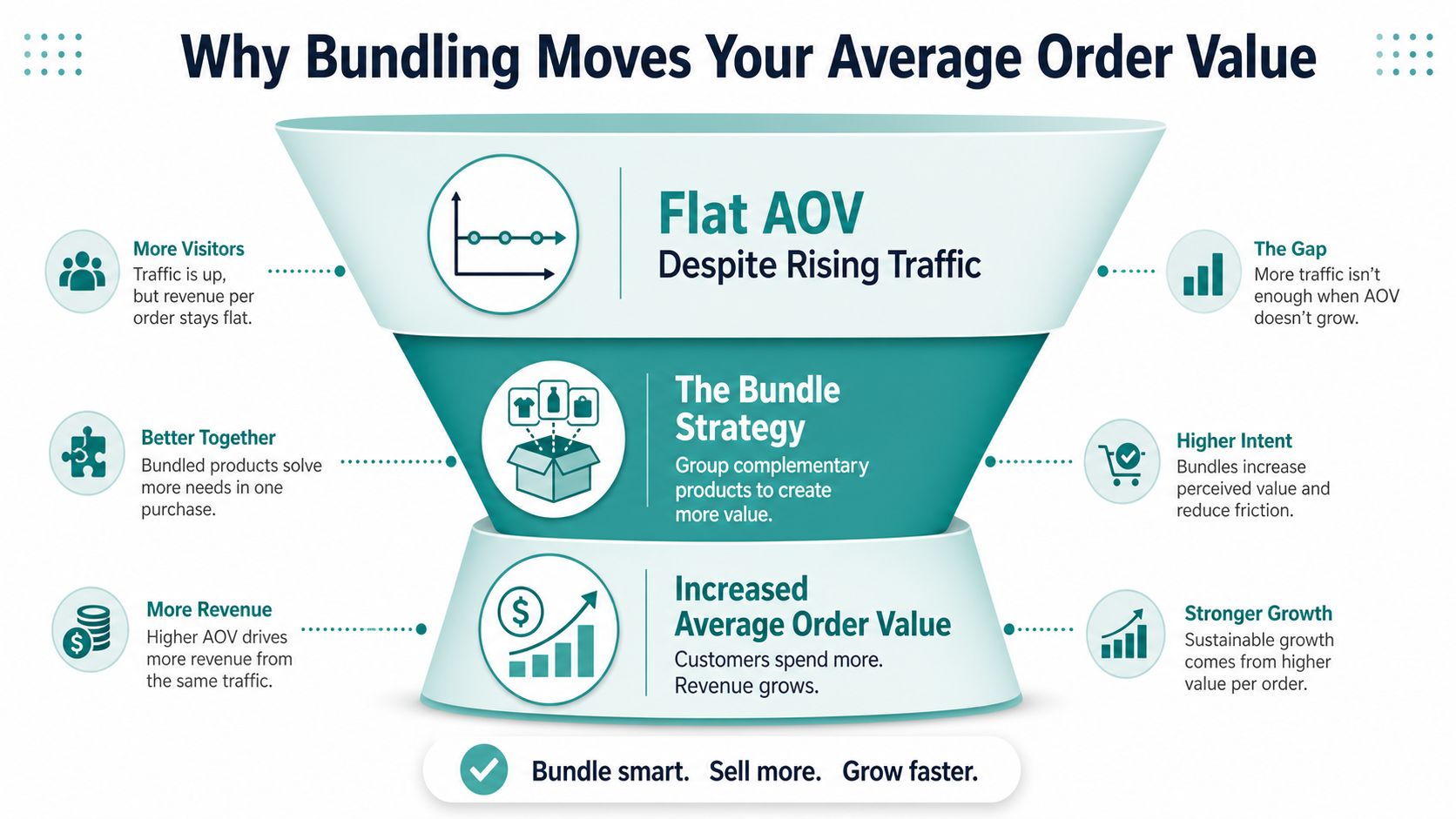
If people are already visiting but the register still looks thin, the problem is order size, not demand. You are paying to bring shoppers in, then leaving them to build the basket one item at a time. Bundles fix that by making the next sensible purchase obvious and easier to approve.
Average order value is simple math, total revenue divided by total number of orders. That matters because one more item in the same checkout raises revenue faster than buying more traffic does. For SMBs, that is the advantage. You do not need a bigger audience to grow. You need each order to carry more value.
Bundles beat single-item selling because they reduce friction
Customers often know the core item they need, but they do not want to sort through every add-on on their own. A bundle does that work for them. It groups complementary items into one decision, which is why it works well in consumer businesses where repeat buying and add-on behavior are common.
The best bundles also make the savings easy to see. Shoppers react faster when the value is obvious on the page, not buried in fine print. If the bundle looks like a better deal at a glance, you can raise order value without adding checkout friction or forcing a harder sell.
Practical rule: if traffic is climbing but order value is not, stop chasing more clicks first. Package the obvious add-on, then make the savings visible on the page.
I treat bundling as a pricing decision, not a marketing flourish. The job is not to discount for the sake of discounting. The job is to redesign the transaction so the customer naturally spends more in one order while you protect margin.
Bundle Structures That Fit Small Business Catalogs
The wrong bundle structure burns time because it forces the customer to do your job. The right structure fits the catalog you already have. A salon, a coffee roaster, and a home services contractor should not build bundles the same way, even if they all want higher AOV.
Pick the bundle shape before you price it
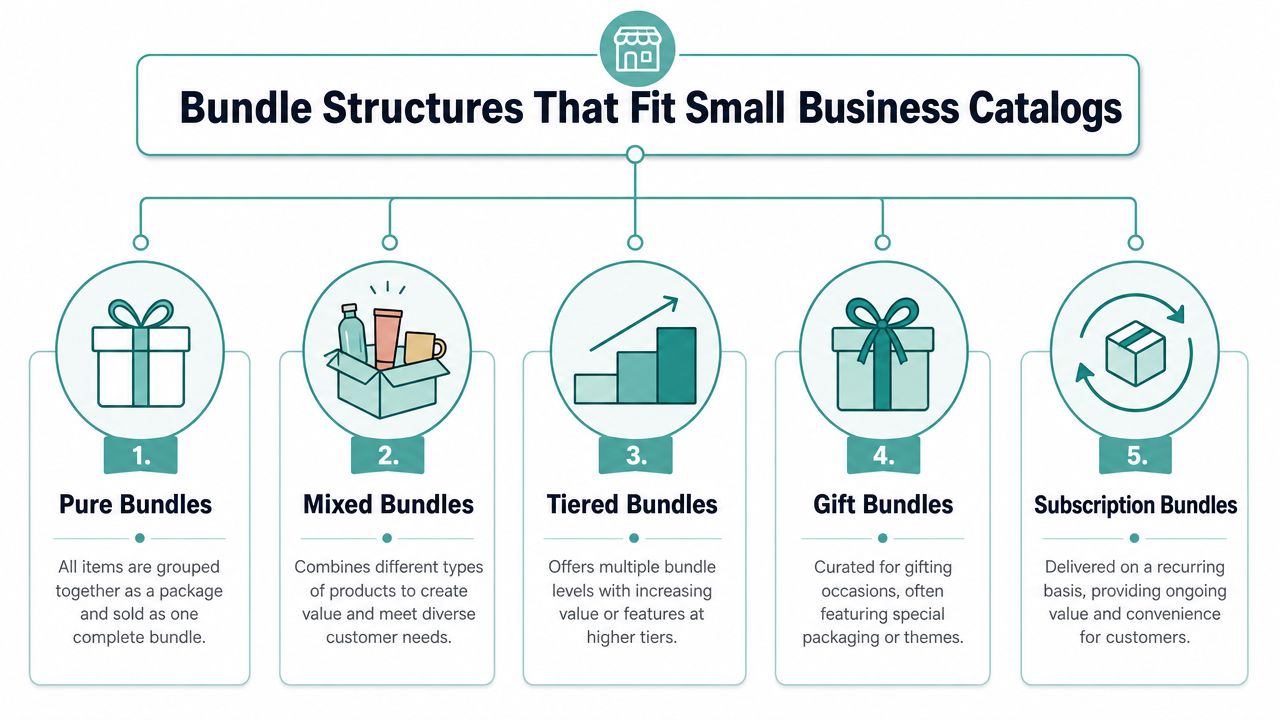
A pure bundle is a fixed set of items sold together. That works when the combination already makes sense and you want no confusion, which is common in starter kits and gift sets. A mixed bundle lets the customer choose part of the package, which is useful when one slot varies by preference, such as a grooming kit where the core items stay fixed but one add-on changes.
A tiered bundle gives customers a base offer, a mid-tier choice, and a premium version. This is usually the smartest first move because it anchors the middle offer and lets shoppers self-select upward. A gift bundle works when the buying occasion matters more than the individual components, while a subscription or replenishment bundle fits items that customers need again and again.
Match structure to the business model
A salon can use a mixed bundle for a cut, treatment, and product add-on. A coffee roaster can use a subscription bundle with beans plus filters or a mug. A contractor can use a pure bundle around seasonal maintenance items or a replenishment pack for recurring supplies.
Start with one structure that fits your catalog and one that fits your purchase cadence. Don't build five versions just because you can. A focused bundle beats a bloated one every time.
Pricing Bundles Without Losing Your Margin
Calculate the margin after the bundle discount. Test a small number of offers and compare total profit with individual-product sales. (discount caution)
Start with a gross-margin floor
I use one hard rule. If your bundle cannot protect a 30% gross-margin floor after variable costs, do not launch it yet ( margin floor guidance). That does not mean every bundle needs the same discount. It means the final combined economics have to leave room for profit, fulfillment, and the next sale.
Use the standalone price of each SKU, total them, and check the bundle against your margin floor. If the bundle saves the customer money and still leaves healthy margin, it works. If the math only works because you crushed the price, the bundle will create short-term volume and long-term regret.
Keep the savings visible and unmistakable
A bundle should show the individual prices, the bundle price, and the dollar savings clearly ( pricing display guidance). If people have to hunt for the value, the offer underperforms. The crossed-out total and the savings amount should be obvious on first glance.
Show the math, not the marketing fluff. Shoppers trust a visible savings amount more than a vague “special offer.”
Price discipline matters more than clever copy. For a practical check before launch, use pricing strategies for small business to sanity-check the bundle against your existing unit economics, then decide whether the offer belongs on your main channel, a local promotion, or a TV-friendly spot that can carry a clear price anchor.
Choosing Products That Belong in a Bundle
Good bundles come from order data, not brainstorms. Start with products that already travel together in real carts, then check whether the bundle still protects your margin floor after fulfillment and support costs. A bundle that looks clever but hurts unit economics is a bad offer, no matter how clean the copy sounds.
Use basket analysis before you build anything
Look for products that appear together often enough that bundling feels natural instead of forced. One useful rule from an ecommerce bundling walkthrough is to watch for items that show up in the same cart at roughly 5% to 10% frequency (
). That pairing provides purchase evidence to test. It does not guarantee the bundle will sell. The same source also recommends checking whether a customer buys item B in the 30 days after item A, which gives you a post-purchase signal instead of relying only on same-session behavior.Start with two or three bundles. Show them on the relevant product and cart pages, then compare order value and profit. (test structure guidance)
Score candidates before you ship them
The best combinations usually have three traits. They show up together often, they include at least one high-margin complement, and they can be explained in a single sentence. If the pitch sounds awkward, the bundle is probably awkward.
Keep the scoring simple, then force a margin check before launch. A bundle should be easy to explain to a customer and easy to defend inside your P&L. If you need a long justification, it is the wrong mix. If you want a practical next step after you pick the winners, use turning one-time buyers into lifelong repeat customers to shape the offer around the buyer's stage instead of treating every cart the same.
Matching Bundles to First-Time and Repeat Buyers
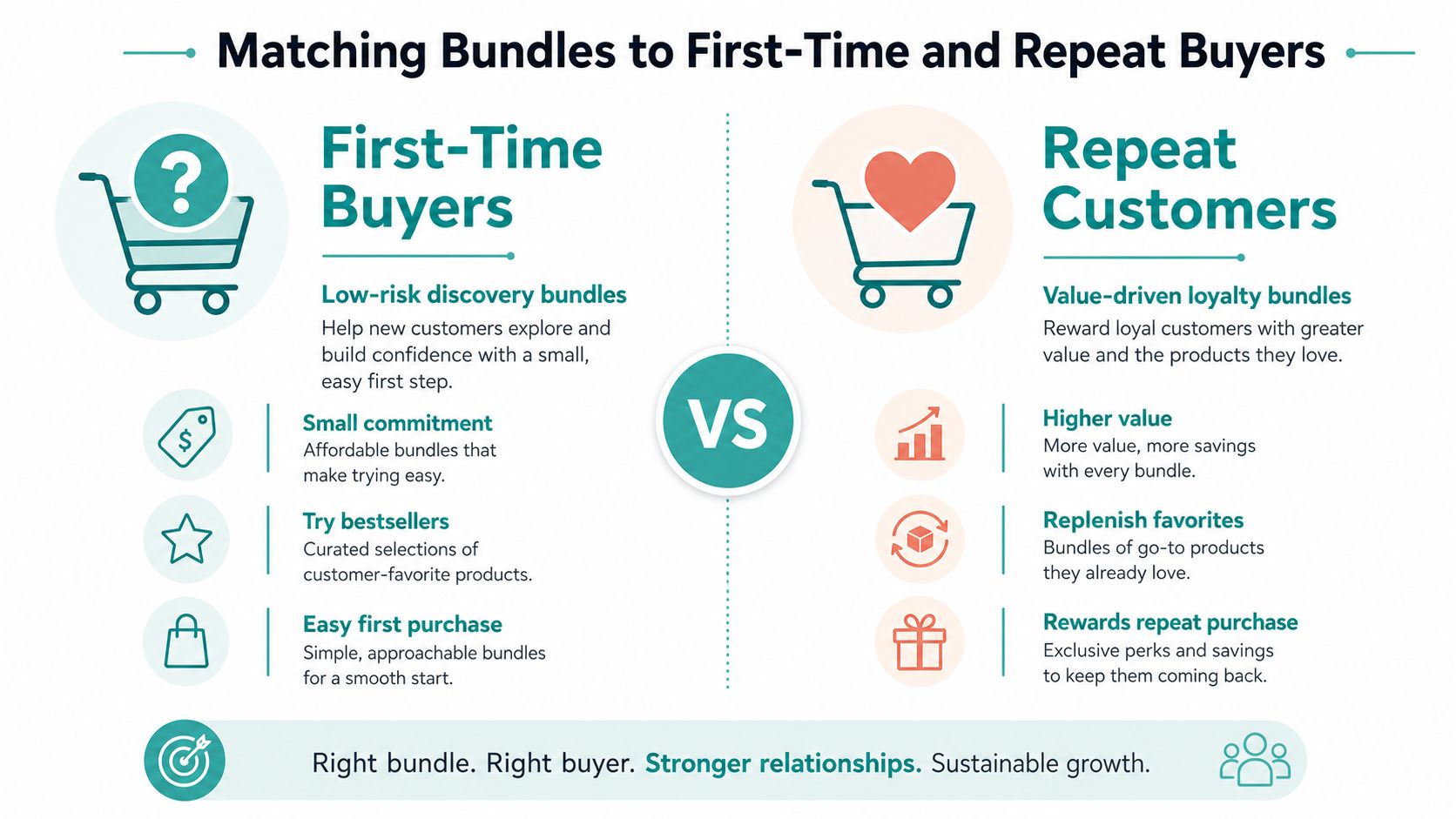
A generic bundle is lazy. First-time buyers and repeat customers are not shopping for the same reason, so they shouldn't see the same offer. Lifecycle-specific bundle design is one of the most underused levers in ecommerce because teams still default to a one-size-fits-all starter kit or a blunt “frequently bought together” widget ( lifecycle gap in bundle strategy).
First-time buyers need low-risk discovery
A first purchase is a trust event. Your bundle should reduce decision fatigue and make the buyer feel safe trying you. That usually means a starter kit, a small discovery set, or a low-commitment mix of essentials.
Repeat customers behave differently. They already know the brand, the product quality, and the fit. They're better targets for replenishment packs, premium add-ons, and volume bundles because the perceived risk is lower and the utility is clearer. The bundle should reward familiarity, not explain the basics again.
The segmentation logic is straightforward, use purchase history, order cadence, and seasonality to decide which offer to show. A customer who just bought once should see a different prompt than someone who reorders every few weeks. If the cadence is established, the bundle can reflect that rhythm instead of fighting it.
Trigger the right offer in the right place
Email works well for reorders and replenishment. On-site personalization works well when the visitor has enough history to make the offer feel customized. Checkout prompts are best for simple add-ons that don't require a long explanation. That's the cleanest way to avoid showing the wrong bundle at the wrong moment.
For a sharper repeat-customer framework, read turning one-time buyers into lifelong repeat customers. Use it to map bundle type to customer stage before you start building campaigns.
Practical rule: first-time buyers need clarity and low risk. Repeat buyers need convenience and a reason to spend a little more.
If you get the lifecycle wrong, the offer still “works,” but only by accident. If you get it right, the bundle feels personal without needing heavy customization.
Promoting Bundles Through TV With Adwave
A bundle only earns its keep if people see it. For local businesses, TV is no longer a channel reserved for giant brands and expensive production. The better move is to turn your strongest bundle into a broadcast-ready offer and put it in front of the right local viewers fast.
Make the offer TV-friendly
TV ads need one clear bundle, not a menu of options. Lead with the package, show the savings, and give viewers one next step. The same merchandising logic that works on a product page applies here, the value has to be explicit immediately, not implied. That means you anchor the bundle price, show the savings, and keep the action simple.
Adwave fits this use case because its AI-driven creative and ad workflow can help local businesses promote bundle offers quickly across TV without production overhead, with campaigns starting at $50 and an estimated $15 to $35 CPM ( Adwave platform overview). It also places campaigns across 100+ premium channels, including NBC, Hulu, and ESPN, which gives a bundle promo broader reach without forcing you into a traditional media buy.
Track response like a retailer, not a broadcaster
If you run bundle promos on TV, track them like a direct-response offer. Use unique URLs, promo codes, and store-level lift comparisons so you know which bundle moved. Otherwise you'll be left guessing whether the ad worked or the offer just coincided with demand.
The cleanest TV play is a single hero bundle, one message, one call to action, and one measurement path. That keeps creative production lean and makes results easier to read. For a practical walkthrough of the channel itself, use how to advertise on TV to shape the launch plan.
A local business doesn't need a national media budget to test bundle messaging on television. It needs a clear offer, a measurable path, and a channel that gets it live fast.
Measuring AOV Lift and Launching in 30 Days
If a bundle raises order value but cuts too far into margin, the program is working against you. Measure the offer by bundle conversion rate, AOV lift, revenue per customer, and margin per order. If the bundle does not protect the margin floor, it is a bad offer dressed up as growth.
Run the launch in four weeks
Week 1, pull order data and rank bundle candidates by co-purchase behavior, margin quality, and customer stage. Pick combinations that already show buying intent, then remove anything that depends on a steep discount to move.
Week 2, build the offer, write the on-page copy, and make the savings obvious when someone lands on the page. The price, the discount, and the order logic should be clear without making the shopper work for it.
Week 3, launch the creative and the site placement, then start tracking performance from day one. Use a clean measurement setup so you can tell whether the bundle itself is doing the work, or whether traffic quality is carrying the result. For a practical framework, use how to measure advertising effectiveness before and after the rollout.
In week four, review each bundle’s sales and margin. Remove combinations that raise order value at the expense of profit. (bundle testing guidance)
Use one rule to make the program durable
Sustainable bundles sell more units while protecting margin and making the order easier to say yes to.
If you want a launch that does not drift into guesswork, start with one bundle, one margin floor, and one channel you can measure. Build the offer now, then use Adwave to put that bundle on TV quickly, keep the spend controlled, and see whether your local audience responds enough to justify scaling.


