
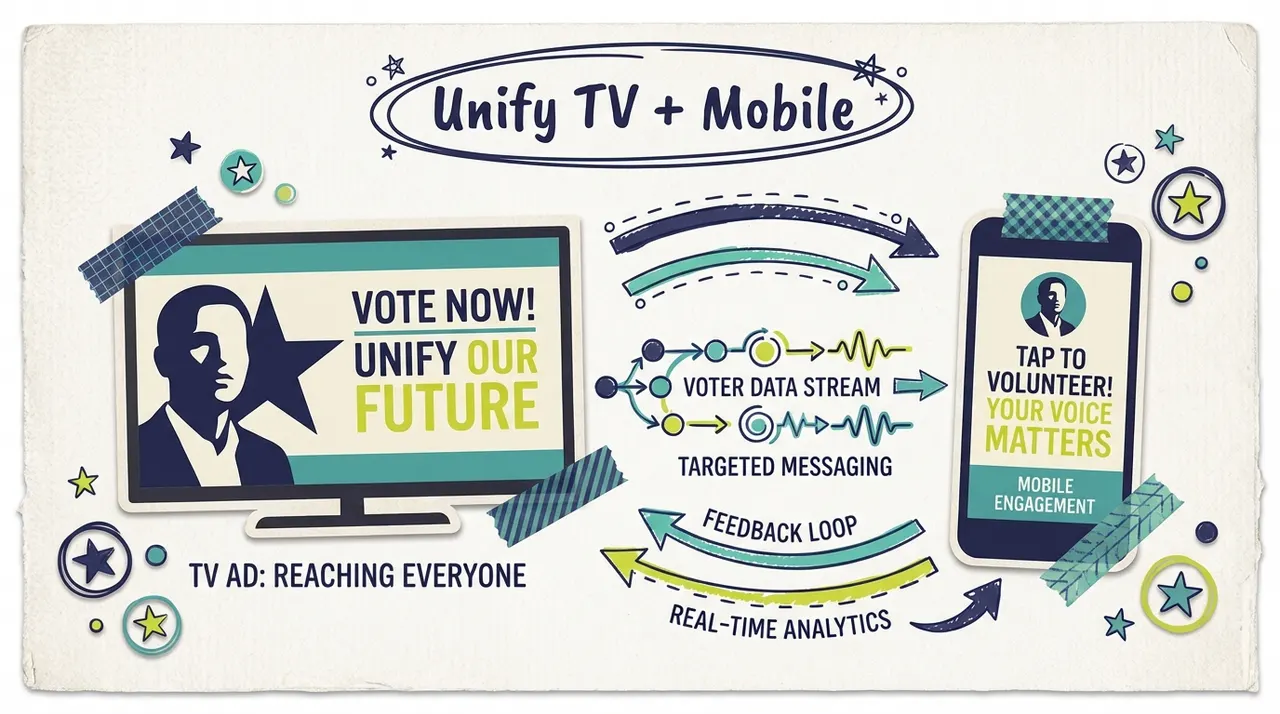
Political campaigns have a screen problem. Voters don't live on a single device. They're watching streaming TV in the evening, scrolling their phone during the day, and bouncing between the two constantly. A campaign that runs TV ads without a mobile strategy (or vice versa) is leaving voters in the gap between screens, where messages get lost and impressions get wasted.
Cross-screen campaigning solves this by coordinating your messaging across TV and mobile so that voters experience a unified narrative no matter where they encounter your campaign. When a voter sees your 30-second TV spot on Hulu and then sees a reinforcing mobile ad the next morning, that repetition across different environments builds the kind of recognition and trust that wins elections.
This guide breaks down how cross-screen strategies work, why they're especially powerful for political campaigns in 2026, and how to build one that makes every dollar count.
Why Cross-Screen Matters in 2026 Political Advertising
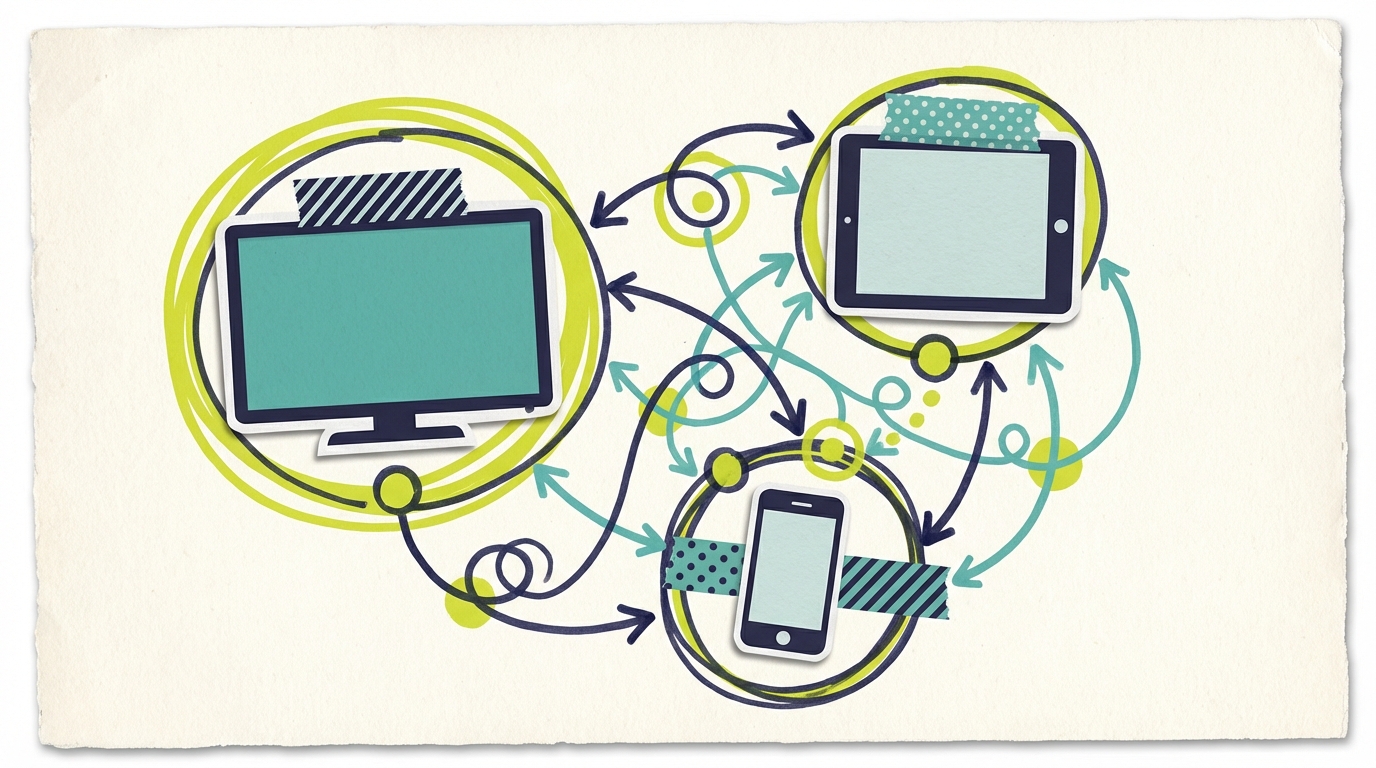
Voter attention is fragmented across more screens than ever. According to Nielsen's 2025 State of Play report, the average American adult spends 4 hours and 59 minutes per day watching TV content and 4 hours and 37 minutes on their smartphone (Nielsen, 2025). That's nearly 10 hours of screen time split between two primary devices, and political campaigns need to be present on both.
TV and mobile don't just compete for attention. They complement each other. Research from the Video Advertising Bureau found that campaigns using TV plus digital together saw a 23% increase in ad recall compared to either channel alone (VAB, 2024). For political campaigns, where name recognition and message recall directly translate to votes, that lift is enormous.
The 2024 election cycle proved this at scale. Campaigns that invested in coordinated cross-screen strategies consistently outperformed those that siloed their TV and digital budgets. AdImpact reported that political digital ad spending reached $3.46 billion in 2024, with a growing share directed specifically at cross-screen coordination (AdImpact, 2024).
For 2026 midterm races, this trend is accelerating. The campaigns that unify their TV and mobile strategies won't just reach more voters. They'll reach them more effectively.
How Cross-Screen Campaigning Works
Cross-screen campaigning isn't about running the same ad on every device. It's about creating a coordinated voter journey where each screen plays a specific role.
The Voter Journey Across Screens
TV (CTV/Streaming): The Awareness Engine. Television builds the initial impression. A 30-second CTV spot introduces the candidate, establishes a narrative, and creates emotional resonance. TV ads carry inherent credibility because voters associate streaming platforms with premium content.
Mobile: The Reinforcement and Action Layer. After a voter sees your TV ad, mobile picks up the conversation. A targeted mobile ad the next day reinforces the message, provides additional information (policy details, endorsements), and drives action (donate, volunteer, find your polling place).
The Feedback Loop. Modern ad technology allows you to identify households that were exposed to your TV ad and then serve follow-up mobile ads to those same voters. This isn't theoretical. It's how major campaigns operate today, and the tools to do it are accessible to down-ballot races.
Sequential Messaging vs. Simultaneous Reach
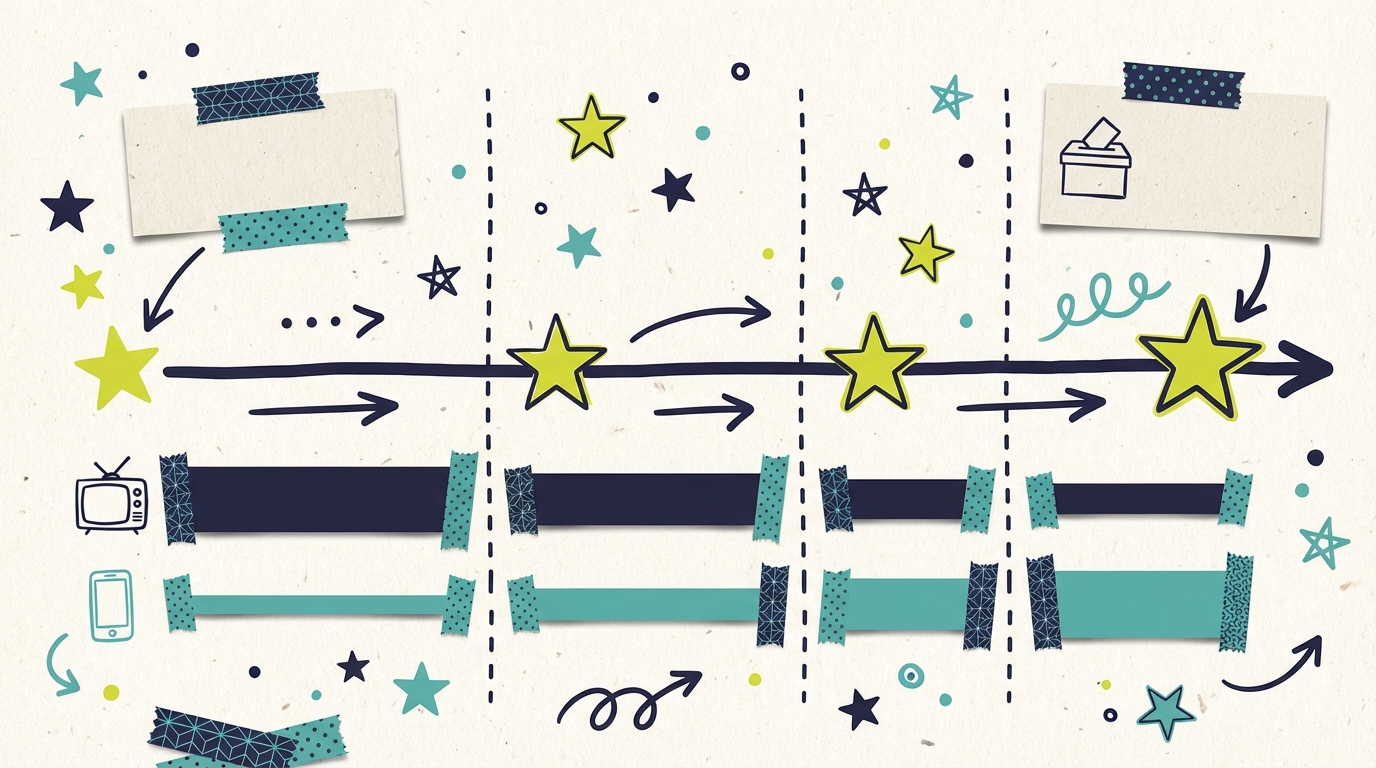
Sequential messaging is the more powerful approach. You control the order voters encounter your messages:
Day 1-3: TV ad introduces the candidate and core message
Day 4-7: Mobile ad reinforces the message with a different angle (endorsement, policy detail)
Day 8-14: Mobile ad drives specific action (event RSVP, donation, voter registration)
Simultaneous reach is simpler but still effective. You run TV and mobile ads concurrently without worrying about sequence. The overlap between TV viewers and mobile users means many voters will naturally see both, creating frequency across screens even without explicit coordination.
The Technology Behind Cross-Screen Targeting
Cross-screen campaigning relies on a few core technologies that have matured significantly over the past two election cycles.
Device graphs map the relationships between devices in a household. When a voter streams content on their smart TV and later browses news on their phone, device graph technology connects those two interactions to the same household. Companies like Oracle, TransUnion, and LiveRamp maintain these graphs using deterministic (login-based) and probabilistic (behavioral pattern) matching.
Automated Content Recognition (ACR) is built into most modern smart TVs. ACR detects what content (and ads) are being displayed on the screen, even across different apps and inputs. For campaigns, ACR data reveals which households were exposed to your CTV ad, enabling precise mobile follow-up targeting.
Demand-Side Platforms (DSPs) like The Trade Desk, DV360, and Xandr allow campaigns to buy CTV and mobile inventory from a single interface. This unified buying environment is what makes true cross-screen coordination possible. You can set up sequential targeting rules: "After this household sees my TV ad, serve this mobile ad in the next 48 hours."
Voter file integration is where political campaigns gain an edge over commercial advertisers. By uploading voter file segments (likely supporters, persuadable voters, opposition-party crossovers) to a DSP, campaigns can target specific voter groups across screens rather than relying on broad demographic targeting alone.
Building a Cross-Screen Strategy for Political Campaigns
Step 1: Define Your Voter Segments
Not every voter consumes media the same way. Before allocating budget across screens, understand your electorate:
Heavy streamers (ages 18-34): These voters watch most of their TV content on streaming platforms and are heavy mobile users. Reaching them requires CTV plus mobile, as traditional linear TV misses them almost entirely.
Mixed viewers (ages 35-54): This group splits time between streaming and linear TV, with significant mobile usage. They're the most reachable across all screens but need tailored messaging for each context.
Linear-heavy viewers (ages 55+): While this demographic watches more traditional TV, they're increasingly active on mobile devices for news and social media. Don't assume they're unreachable on digital.
Step 2: Choose Your Platforms
CTV/Streaming TV: Platforms like Hulu, Peacock, Tubi, and Pluto TV offer programmatic ad buying that lets campaigns target by geography, demographics, and viewing behavior. For district-level races, geotargeting on CTV lets you reach only the voters in your district without wasting impressions on people who can't vote for you.
Mobile Platforms:
Social media (Meta, YouTube): Broad reach with strong targeting capabilities
Mobile display (programmatic): Reach voters across news apps, weather apps, and other mobile content
Mobile video (pre-roll): Short video ads that play before mobile content, creating a TV-like experience on a smaller screen
Step 3: Coordinate Your Creative
Cross-screen campaigns work best when your creative tells a cohesive story across devices while respecting the format of each screen.
TV creative: Lean into emotion and narrative. You have 30 seconds of undivided attention on a big screen. Use it for your strongest storytelling: candidate introduction, emotional appeal, or a powerful testimonial.
Mobile creative: Lean into information and action. Mobile users are in a different mindset. They're scrolling, multitasking, and willing to tap through for more detail. Use mobile ads to provide the "next chapter" of your TV message: specific policy positions, endorsements, event invitations, or donation asks.
Visual consistency: Use the same color palette, fonts, and candidate imagery across all screens. A voter should instantly recognize your campaign whether they're watching TV or scrolling their phone.
Step 4: Set Up Cross-Screen Tracking
Measuring cross-screen campaigns requires thinking beyond single-channel metrics.
Household-level matching: Platforms like LiveRamp and TransUnion enable campaigns to match CTV exposure to mobile device IDs in the same household. This lets you measure which voters saw your TV ad and then took action on mobile.
Unified frequency management: Without cross-screen tracking, you risk showing the same voter your ads too many times on one device and not enough on another. A frequency management strategy ensures balanced exposure across screens.
Attribution modeling: Track the voter journey from first TV exposure through mobile engagement to final action (donation, event attendance, poll response). Multi-touch attribution models assign credit across screens rather than giving all credit to the last click.
Budget Allocation for Cross-Screen Political Campaigns
How you split your budget between TV and mobile depends on your race, your district, and your voter targets.
Recommended Splits by Race Type
Statewide race (governor, senate):
CTV/Streaming TV: 55-65%
Mobile/Digital: 35-45%
Rationale: TV drives the broad awareness needed across a large geography. Mobile handles targeting and action.
Congressional district:
CTV/Streaming TV: 45-55%
Mobile/Digital: 45-55%
Rationale: Tighter geography means mobile targeting is more efficient. CTV and mobile work roughly equally.
Local/municipal race:
CTV/Streaming TV: 35-45%
Mobile/Digital: 55-65%
Rationale: Hyper-local targeting favors mobile. CTV adds credibility but the precision of mobile wins for small geographies.
Budget Phasing Across the Campaign
Early phase (6+ months out): Weight toward TV for name recognition. Spend 60-70% on CTV to build baseline awareness.
Mid phase (3-6 months out): Balance evenly. Start cross-screen retargeting sequences. Shift to 50/50 or 55/45 TV/mobile.
Late phase (final 8 weeks): Shift toward mobile for action. Voters know your name; now you need donations, volunteers, and turnout. Move to 40/60 TV/mobile, with mobile focused on calls to action.
Final week: All-out saturation on both screens. This is when frequency capping loosens and you maximize every available impression.
Compliance Considerations for Cross-Screen Campaigns
Political advertising across multiple screens introduces compliance complexity. Each platform has different requirements, and FCC rules layer on top.
Platform-Specific Requirements
CTV/Streaming: Most streaming platforms require "Paid for by" disclosures in the ad creative itself. The disclaimer must be visible for a minimum duration (typically 4 seconds). Different platforms have varying approval timelines, so submit creative early.
Mobile/Social: Meta, Google, and other platforms maintain political ad libraries and require campaign verification. You'll need to complete platform-specific authorization processes before running political ads.
Cross-platform consistency: Your disclaimers and disclosure language should be identical across screens. Inconsistencies can trigger platform review delays or voter confusion.
Data Privacy
Cross-screen targeting relies on voter data. Ensure your data practices comply with state privacy laws, which vary significantly. Some states restrict the use of voter file data for certain types of digital targeting. Consult your campaign's legal counsel before launching cross-screen retargeting campaigns.
Measuring Cross-Screen Campaign Performance
Key Metrics by Screen
CTV/TV metrics:
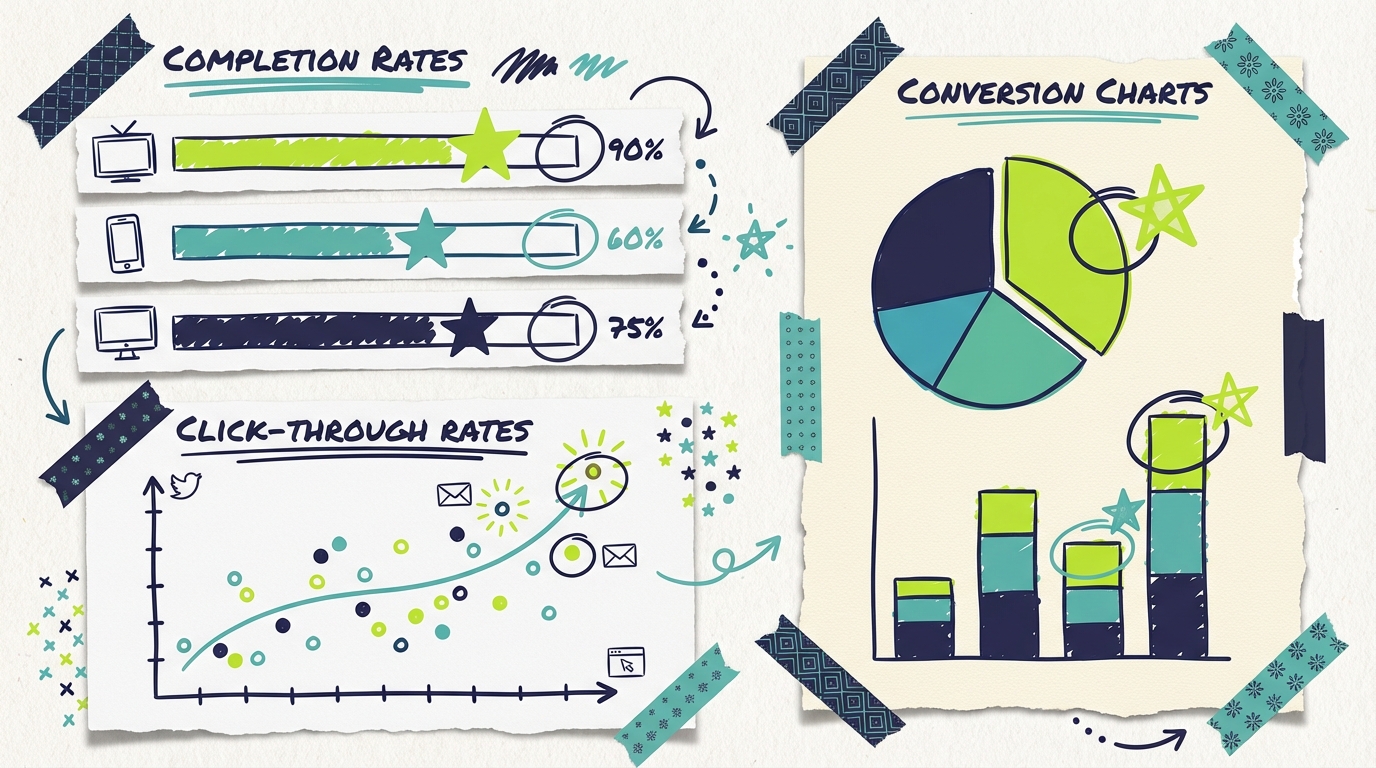
Completion rate (what percentage watched the full ad)
Reach (unique households exposed)
Frequency (average exposures per household)
Brand lift (pre/post survey of candidate recognition)
Mobile metrics:
Click-through rate (engagement with the ad)
Conversion rate (donations, sign-ups, event registrations)
View-through conversions (mobile actions taken after TV exposure)
Cost per action (total spend divided by desired outcomes)
Cross-screen metrics:
Incremental reach (voters reached on both screens vs. either alone)
Cross-screen frequency (total exposures across TV and mobile combined)
Attributed conversions (actions tied to multi-screen voter journeys)
Cost per attributed voter contact (total cross-screen spend divided by verified voter contacts)
What Good Performance Looks Like
For political CTV campaigns, a completion rate above 90% is standard (TV ads are non-skippable on most platforms). On mobile, click-through rates for political ads typically range from 0.3% to 0.8%, with donation conversion rates of 1% to 3% for warm audiences.
The real benchmark for cross-screen campaigns is lift: how much better do combined TV+mobile results compare to either channel alone? Industry data suggests a 15% to 30% lift in key metrics when cross-screen coordination is executed well (VAB, 2024).
Common Questions Answered
What is cross-screen campaigning in political advertising? Cross-screen campaigning coordinates your political advertising across TV (typically streaming/CTV) and mobile devices so voters experience a unified message. Instead of running separate TV and mobile campaigns that don't talk to each other, cross-screen strategies synchronize messaging, targeting, and measurement across screens to build stronger voter engagement.
How much does a cross-screen political campaign cost? Costs vary widely by race and geography. A congressional district cross-screen campaign might run $50,000 to $200,000 over a full cycle, while a local race could execute a basic cross-screen strategy for $5,000 to $20,000. The key is that cross-screen doesn't necessarily cost more than running TV and digital separately. It's about coordinating what you're already spending.
Can small campaigns use cross-screen strategies? Yes. You don't need a massive budget to coordinate across screens. A local campaign can run CTV ads through platforms like Adwave starting at $50 and pair them with targeted social media ads for a few hundred dollars more. The coordination is what matters, not the total spend.
How do you track voters across TV and mobile? Campaigns use device graph technology and household-level matching to connect TV exposure with mobile engagement. Platforms like LiveRamp match CTV viewership data with mobile device IDs at the household level. This doesn't identify individual voters, but it tells you which households saw your TV ad so you can follow up on mobile.
What's the biggest mistake campaigns make with cross-screen advertising? Running TV and mobile as completely separate efforts with different messages, different targeting, and no coordination. When voters see one message on TV and a contradictory or unrelated message on their phone, it wastes budget and confuses voters. Even basic coordination, using the same visual identity and sequential messaging, dramatically improves results.
Real-World Cross-Screen Tactics That Work
Beyond the strategic framework, here are specific tactical approaches that campaigns are using effectively right now.
TV-to-mobile retargeting for fundraising. Run a CTV ad that tells an emotional story about the candidate or issue. In the next 24 hours, serve a mobile ad to the same households with a direct donation ask and a streamlined mobile-optimized donation page. Campaigns report 20% to 40% higher donation conversion rates from retargeted audiences versus cold mobile audiences.
Event promotion across screens. Air a CTV ad announcing a town hall or rally in a specific area. Follow up with mobile ads that include the event date, time, address, and a one-tap RSVP button. The TV ad generates awareness and credibility; the mobile ad makes it easy to act.
Issue-specific sequential messaging. Lead with a TV ad focused on a broad issue (economy, healthcare, education). Follow with mobile ads that drill into specific policy positions related to that issue. This approach respects the strengths of each screen: TV creates the emotional hook, mobile delivers the details.
Opponent contrast sequencing. Run a contrast ad on TV that raises questions about the opponent's record. Follow with mobile ads that link to factual evidence, voting records, or news coverage. The TV ad plants the doubt; the mobile ad provides the receipts.
Start Building Your Cross-Screen Strategy
The most effective political campaigns in 2026 will be the ones that meet voters on every screen with a consistent, coordinated message. Start by auditing where your target voters spend their screen time, then build a strategy that uses TV for awareness and mobile for reinforcement and action.
You don't need to solve everything at once. Even connecting your CTV campaign to a basic mobile retargeting effort is a significant step up from running disconnected campaigns on each screen. Start there, measure the results, and expand as your data tells you what's working.


