Most small business "funnels" are just a bottom: search ads capturing whoever happens to be in-market this week, maybe some retargeting recycling the same visitors, and nothing above it creating the demand those channels harvest. It works until it plateaus, and it always plateaus, because bottom-funnel channels can only convert the demand that already exists. They can't make more of it.
Building a true awareness and conversion strategy means deliberately running all three jobs (create demand, build preference, capture decisions) and connecting them so each stage feeds the next. This guide lays out that architecture with TV at the center, because TV is the rare channel that strengthens every stage at once, and shows you the budget splits, message structure, and warning signs of a funnel that's gone bottom-heavy. For funnel fundamentals, start with our sales funnel guide for small business; this article is the advertising build on top of it.
The all-BOFU trap
The default small business media plan evolved backwards. Search ads came first because they're measurable and intent-rich; social retargeting followed for the same reason. The result is a funnel that's all capture and no creation, and it produces a predictable failure pattern:
Early months look great: efficient cost per lead from people already shopping.
Volume plateaus at the size of existing demand: you can't capture searches that don't happen.
Costs creep as competitors crowd the same auctions for the same fixed pool.
The response (more budget into the same channels) buys diminishing returns, because the bottleneck was never budget. It was demand.
The brand-versus-performance debate frames this as philosophy; operationally it's simpler. A funnel needs input. Something has to make strangers into future shoppers, or the bottom of the funnel eventually runs dry no matter how well-tuned it is.
Why TV sits at the center
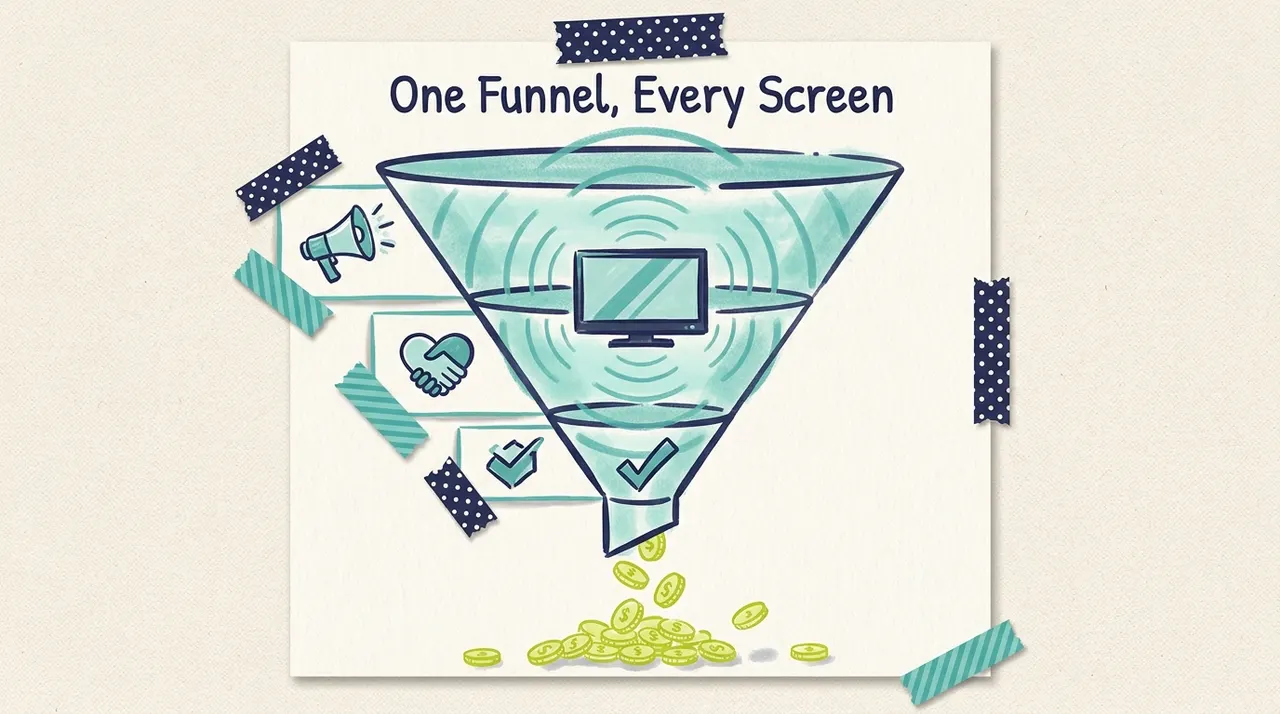
Any awareness channel can feed a funnel. TV earns the center seat because it's the only channel that strengthens all three stages simultaneously:
Top: it creates demand at household scale. A 30-second story on the living room screen reaches people who weren't looking, plants the category need ("we should finally redo the bathroom") and the name to call when it ripens. Streaming made the economics local: $15-35 CPMs, zip targeting, creative generated free in about two minutes.
Middle: it builds trust passively. Repetition on television does preference-building work that mid-funnel channels then harvest: consumers trust TV ads at roughly twice the rate of social ads, and that trust transfers to every later touch. Your retargeting ad lands differently on someone who's seen you on TV; it reads as a reminder from a known business, not a pursuit by a stranger.
Bottom: it pre-loads the capture channels. TV's most measurable downstream effect is branded search: people watching TV ads later Google the name. Your branded search ads, your GBP listing, and your reviews convert demand TV created. The bottom of the funnel works better the moment the top exists, which is why adding TV to a digital mix typically improves the digital numbers before the TV's own attribution shows up.
No other single channel does all three. Social creates some demand but carries less trust. Search captures brilliantly and creates nothing. Email nurtures but reaches only your list. TV is the keystone; everything else specializes.
The three-stage build
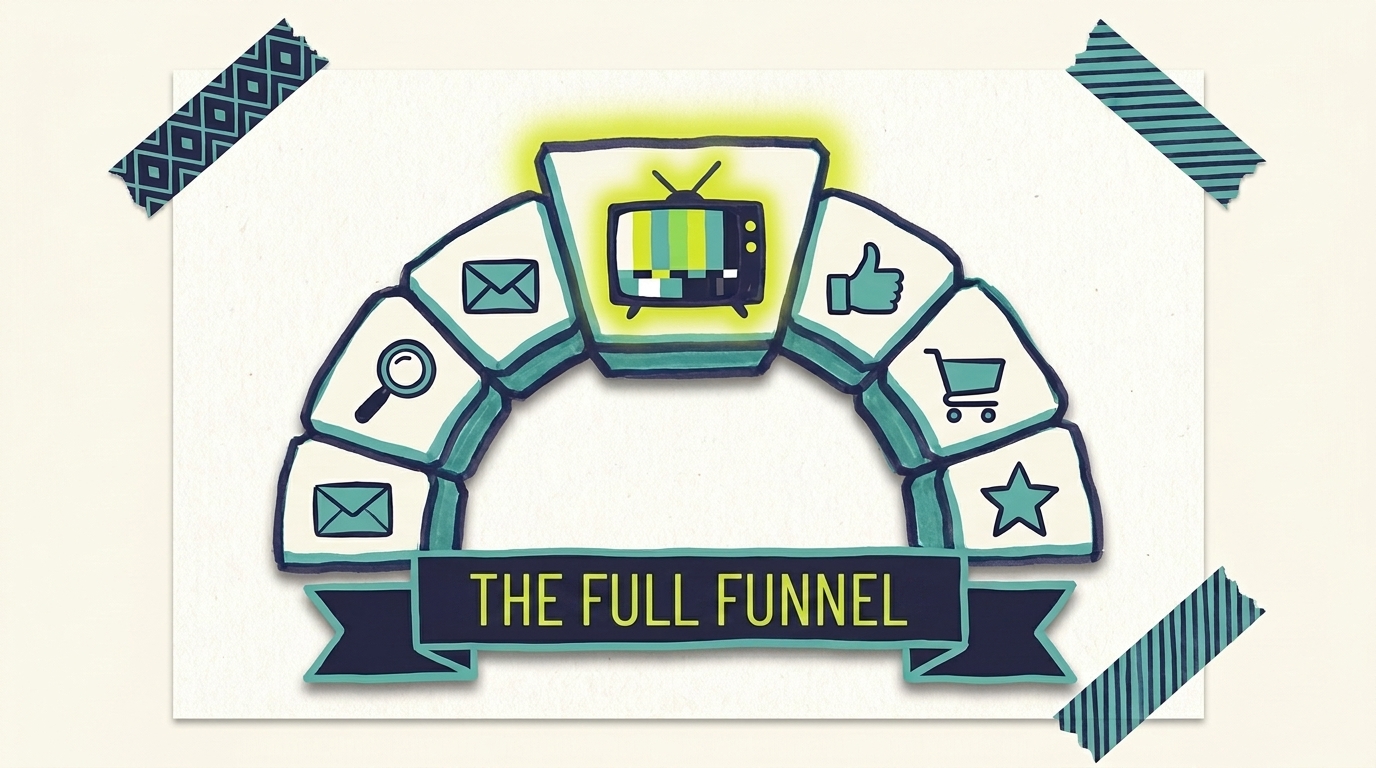
Top of funnel: the TV flight plus its echo. Run CTV at recognition-building frequency (3-6 monthly exposures per household) in the zips where customers live, with social video echoing the same creative in the same geography. The output isn't leads; it's a growing pool of households who know you, measurable as branded-search and direct-traffic lift.
Middle of funnel: catch and warm. Your site pixel turns TV-and-social-driven visits into retargeting audiences; email captures join the nurture list; reviews and case-study content give the now-curious their evidence. The middle's job is patience: most demand TV creates isn't ready this week, and the middle keeps it warm until it is.
Bottom of funnel: capture without leaks. Branded search ads (cheap, and defensive against competitors bidding your name), high-intent category terms, and the QR-direct path from the TV creative itself. The complete TV-to-conversion mechanics are in our retargeting TV viewers guide, and the close-stage toolbox in lower-funnel marketing.
The connections matter more than the stages. One creative identity flows down (the feed ad quotes the TV spot; the landing page repeats its promise), and the data flows up (which zips, which messages, and which audiences convert at the bottom inform next quarter's top-funnel targeting).
One story, three altitudes
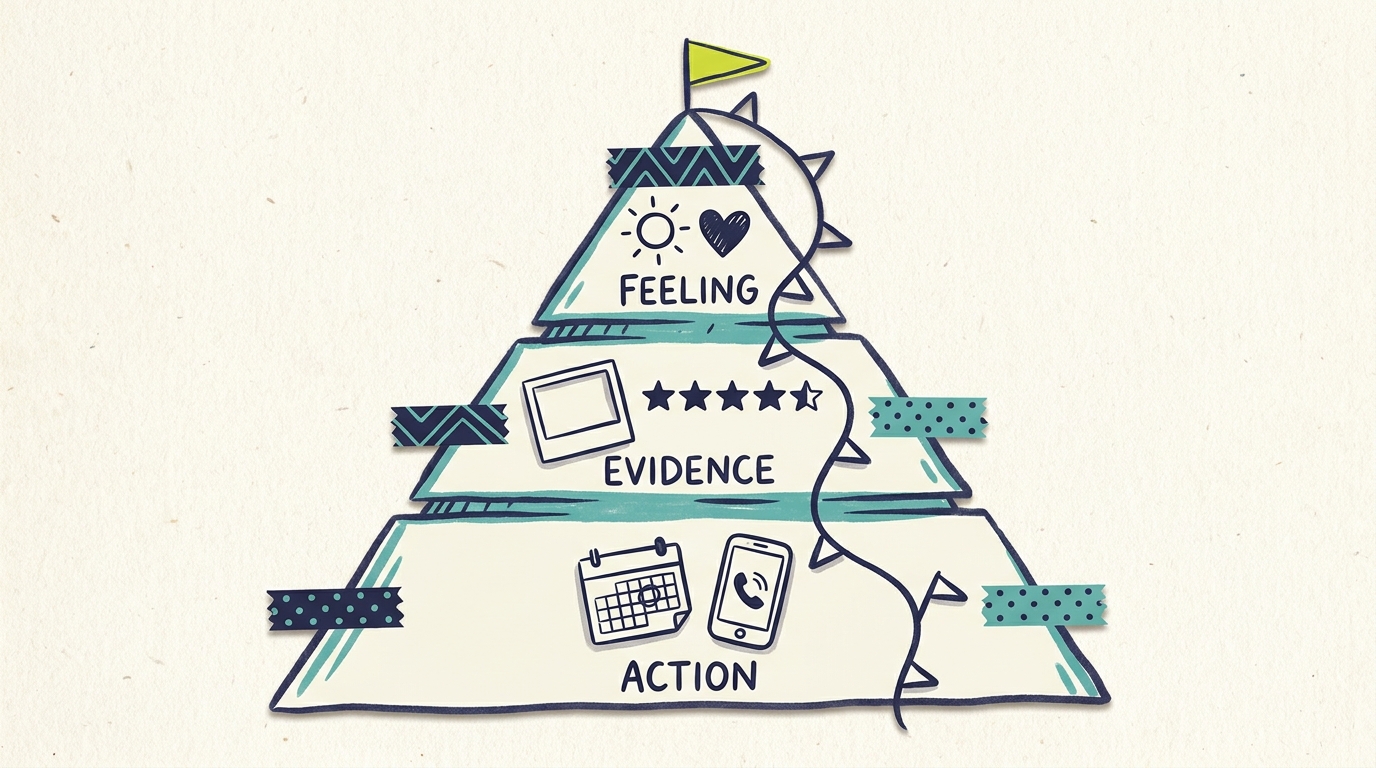
Awareness and conversion campaigns fail most often in the messaging, when each stage says something unrelated. The fix is one story told at three altitudes:
Top altitude: the emotional core. "Your backyard could be the place everyone gathers." Name, category, feeling.
Middle altitude: the evidence. "Here's the Hendersons' backyard, finished in three weeks. Here's what they said."
Bottom altitude: the action. "Spring slots are open. Free design consult. Book this week."
Same project photos, same tagline, same voice at every altitude. A prospect descending the funnel should feel like they're getting to know one business better, not meeting three different ones. Practically, this is cheap: the TV spot is generated first, and its stills, lines, and offer become the retargeting creative, the email header, and the landing page hero.
Budget splits by maturity
Starting from all-BOFU (most businesses): shift to 40% top / 20% middle / 40% bottom over two quarters. The top-funnel budget comes partly from new money and partly from the worst-performing tail of your search terms, which you'll find you no longer miss.
Balanced and growing: 40-50% top / 25% middle / 25-35% bottom. As branded search volume grows, bottom-funnel costs fall (branded clicks are cheap), funding further top-funnel expansion. This is the cycle state.
Established brand defending share: 50%+ top, with bottom-funnel run as efficient harvest. The budget follows the asset: at this stage your awareness is the moat, and capture is mostly logistics.
Two rules survive every stage. Never fund the top by starving proven capture (you'll spring leaks exactly when demand grows), and never judge top-funnel spend on bottom-funnel timelines (give it the 90-180 days the trust mechanics require).
The bottom-heavy diagnostic
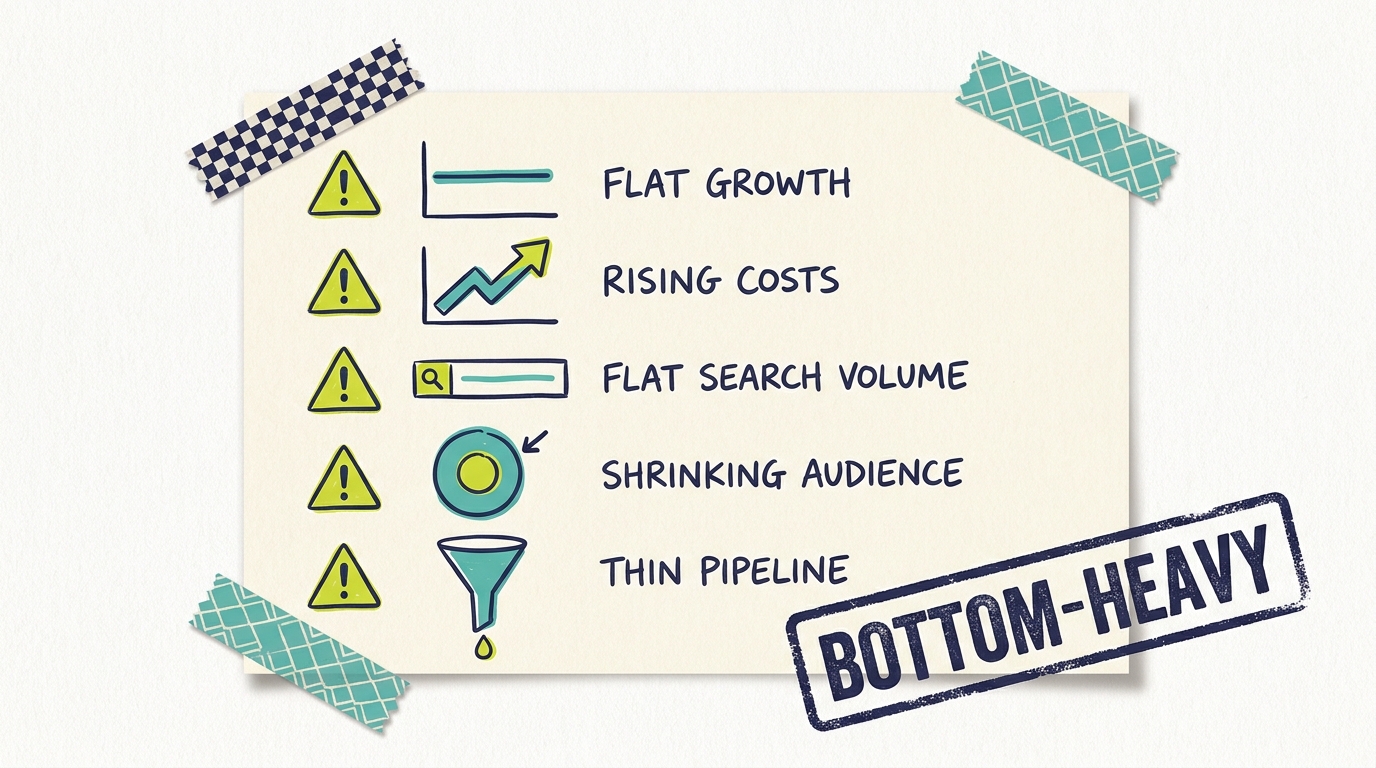
Five signs your funnel needs a top:
Lead volume has plateaued for two-plus quarters despite stable or rising spend.
Cost per click keeps climbing in your core auctions while conversion rates hold; that's crowding, not weakening intent.
Branded search is flat. Nobody new is learning your name; you're recycling the same aware pool.
Retargeting pools are small and stale, because nothing upstream refills them.
Win rates are fine but pipelines are thin. When you compete you convert, but you're not in enough conversations: a demand problem wearing a sales costume.
Three or more of these, and another dollar of search spend is the wrong dollar. The funnel needs input.
Common questions answered
What does "awareness and conversion advertising" mean for a small business?
Running all three advertising jobs on purpose: creating demand among people who aren't shopping yet (TV, social video), building preference among people who've noticed you (retargeting, email, reviews), and capturing decisions from people ready to buy (search, offers). Most small businesses run only the third job, which works until existing demand is exhausted, then plateaus.
Why build the funnel around TV instead of social media?
Social can anchor a funnel, and for some audiences it should be a strong second channel. TV gets the center seat for two structural reasons: trust (consumers report trusting TV ads at roughly double the rate of social ads, and the funnel's middle stage runs on trust) and household reach (the big screen reaches decision-makers together, including the older-skewing buyers many local businesses depend on). Since streaming TV now costs social-campaign money, the historical reason to settle is gone.
How much budget should go to each funnel stage?
A business transitioning from search-only does well at roughly 40% top, 20% middle, 40% bottom, reached over a quarter or two rather than overnight. Mature funnels drift top-heavier as branded demand makes capture cheaper. The wrong split is the common one: 90%+ bottom, which buys an efficient harvest of a field nobody is planting.
How long before an awareness and conversion strategy shows results?
The stages report on different clocks. Bottom-funnel improvements (better landing pages, branded search defense) show in weeks. The top-funnel investment shows first as branded-search and direct-traffic lift in 30-60 days, then as growing lead volume in 90-180 days as created demand ripens. Judge each stage on its own clock, and judge the system on blended cost per customer at the six-month mark.
Can I run a full funnel on a small budget?
Yes, by shrinking geography rather than skipping stages. A $1,500 monthly budget runs a real funnel in three zip codes: $600 CTV, $300 synchronized social and retargeting, $600 search. The same money spent all-bottom plateaus at whatever demand those zips already had. Small budgets need demand creation more than big ones, not less, because they can't outbid anyone for the existing pool.
Build the machine, not the moment
The center of the funnel machine takes about two minutes to switch on. See how Adwave works: generate the spot, target your zips, and start feeding the funnel your search ads have been waiting for.