
You got the sale. The payment cleared, the order came through, and for a few minutes it feels like the hard part is over.
Then the familiar question hits. What should you send next so this customer buys again, remembers your brand, and doesn't disappear after the first transaction?
Most SMBs either stop at the receipt or jump too fast to a discount. Both choices leave money on the table. The post-purchase window is where trust gets reinforced, buyer's remorse gets reduced, and loyalty starts to feel earned instead of forced. If you're building your first profitable sequence, the goal isn't to send more email. It's to send the right message at the right moment, with a clear job for every touchpoint.
From Purchase to Lasting Loyalty
The first mistake I see is treating the sale as the finish line. It isn't. A purchase creates attention, and attention is expensive. Once you have it, your next emails should protect it.
That's why post-purchase communication tends to outperform standard automations. Post-purchase email sequences achieve open rates that are nearly 17% higher than the average email automation because customers actively want order information while those messages also reinforce trust and satisfaction, according to Klaviyo's post-purchase email guidance.
Start with the three real goals
A good loyalty sequence does three jobs in order:
Reassure the buyer Confirm the order, reduce uncertainty, and show that your business is organized.
Build momentum Keep interest alive while the product is shipping, arriving, or being used for the first time.
Create the next action That next action might be a repeat purchase, a review, a referral, a booking, or a community touchpoint.
If you skip the first two and push straight to the third, customers feel sold to instead of supported.
Practical rule: Your first post-purchase emails should answer the customer's questions before they ask them.
Match the sequence to your business model
A coffee subscription, a med spa, and a neighborhood restaurant won't use the same cadence or content. The principle stays the same, but the trigger points change. Restaurants, for example, need systems that connect guest history, promotions, and repeat visits. If you're in hospitality, this overview of CRM software for restaurants is useful because it shows how customer data shapes retention far beyond a generic newsletter.
The strongest sequences usually run over a 30 to 90 day window with 3 to 5 emails, each serving a specific purpose rather than repeating the same offer. That cadence works because it keeps the brand present without turning into inbox clutter. When owners ask what to send, my answer is simple. Send reassurance first, education second, and retention prompts only after you've earned them.
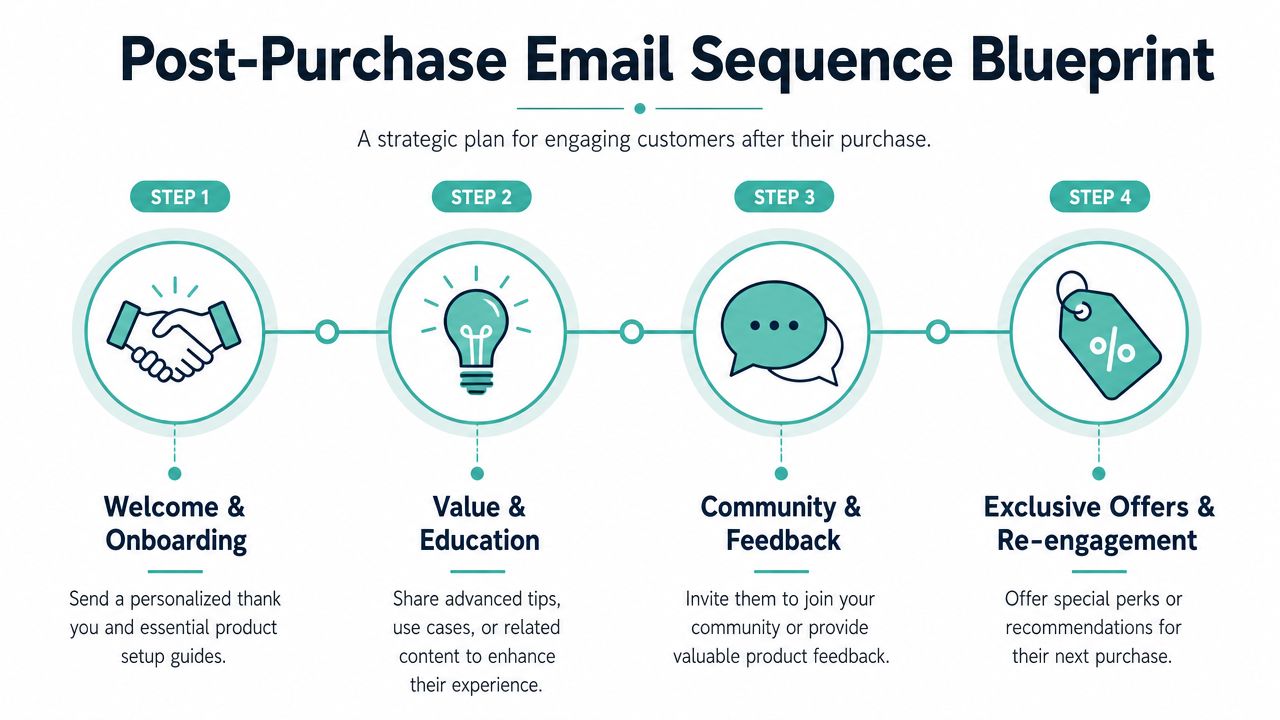
The Blueprint for Your Post-Purchase Sequence
A loyalty sequence works best when each email has one job. Not two jobs. Not a thank-you plus survey plus referral ask plus coupon. One job.
That discipline matters because customers move through different emotional states after a purchase. Right away they want certainty. A little later they want progress. After they receive the product or complete the service, they want proof they made the right choice. Your cadence should follow that arc.
The simplest sequence that still works
Klaviyo's guidance points to a sequence length of 3 to 5 emails across 30 to 90 days for post-purchase flows, which is a practical range for most small businesses when each message is timed with intent rather than sent on autopilot. If you're still setting up your core automations, this walkthrough on email automation campaigns to set up first is a good companion because it helps you prioritize flows in the right order.
Here is a basic cadence you can steal and adapt.
What each email should sound like
Email 1 should feel clean and calm.
Subject line: Your order is confirmed Opening copy: Thanks for your purchase. We've got it, and here's exactly what happens next.
Email 2 should remove friction.
Subject line: Your order is on the way Opening copy: Your package has shipped. Use the tracking link below anytime, and if anything looks off, reply to this email.
Email 3 is where many brands miss an easy win. They send a generic thank-you instead of helping the customer get value.
Subject line: How to get the most from your new purchase Opening copy: Most customers miss this step the first time. Here are three quick ways to start using it well today.
The best post-purchase email isn't the prettiest one. It's the one that arrives at the exact moment the customer needs it.
Timing trade-offs to watch
If you compress everything into one week, you'll get short-term activity and long-term fatigue. If you stretch too far without relevance, customers forget why they bought.
For retail, the sequence can move quickly because product experience happens fast. For home services, professional services, or high-ticket purchases, the same structure still works but the middle messages should focus less on replenishment and more on reassurance, education, and relationship maintenance. That's the difference between a sequence that looks complete in your ESP and one that effectively changes customer behavior.
Crafting Your High-Impact Loyalty Emails
Blueprints are helpful, but profitability comes from execution. The copy, trigger, and segmentation choices determine whether customers read your sequence or tune it out.
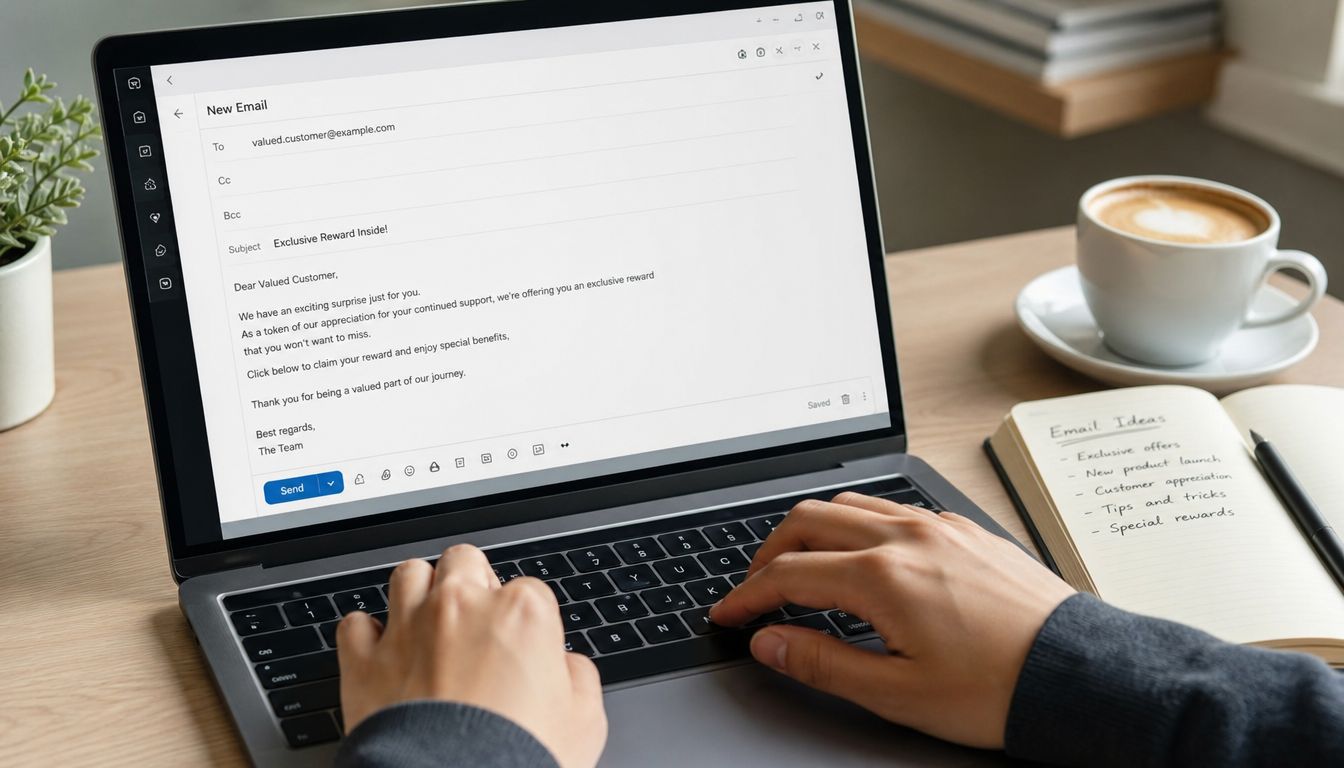
Build around triggers, not calendar guesses
A lot of first-time setups rely on arbitrary delays. Wait three days, send this. Wait seven days, send that. Sometimes that works, but event-based automation is stronger because it follows the customer's experience.
Use triggers like these:
Purchase completed: Send the receipt, order details, and next steps immediately.
Order shipped or appointment scheduled: Send progress information when something materially changes.
Delivered or service completed: Start education, setup help, or care instructions after the customer has access to what they bought.
No engagement after satisfaction check: Move the customer into a lighter follow-up path instead of blasting the next offer.
Your ESP proves its value in this context. Klaviyo, Mailchimp, ActiveCampaign, Drip, and HubSpot all let you branch based on purchase behavior and engagement. The exact platform matters less than your trigger logic.
Personalization that feels useful
Personalization doesn't mean dropping a first name into the subject line and calling it done. It means changing content based on what the customer bought, whether it's a first order or repeat order, and what stage they're in.
Stripo's welcome email statistics roundup reports that an introductory series of two or more messages can increase revenue by up to 51% compared with one welcome email. It also reports that companies using personalization are 71% more likely to report improved customer loyalty.
A few examples:
If they bought skincare: send application order, timing tips, and common mistakes.
If they booked a service: send what to expect, how to prepare, and how to contact support.
If they're a repeat buyer: skip the brand introduction and move straight to recommendations or VIP treatment.
If they purchased a high-consideration item: replace urgency language with confidence-building language.
If your copy keeps sounding promotional, study examples of marketing emails that don't sound like spam. The main lesson is simple. Write like a helpful operator, not a campaign machine.
Five emails worth writing well
Here are the messages that usually deserve the most attention.
Order confirmation
This email should be boring in the best possible way. Clear item summary, timeline, support path, and no visual clutter. If you want to add brand voice, do it in a single sentence, not in place of logistics.
Shipping or next-step update
This message carries more emotional weight than people think. It tells the customer your business follows through. Include one primary action only, usually tracking, appointment prep, or a support reply path.
Onboarding email
This one drives satisfaction. Show the first use case, first win, or first setup step. Short bullets beat paragraphs here.
Operator note: If a customer has to search your site or YouTube channel for basic setup help, your post-purchase flow is unfinished.
Satisfaction check-in
Don't ask ten questions. Ask one good one. "How is everything going so far?" works better than a survey wall. If you're collecting reviews, first make it easy for unhappy customers to reply privately.
Retention or cross-sell email
Only send this when it's clearly relevant. Pair the recommendation with the original purchase. "Customers also bought" is lazy. "This accessory protects the item you just ordered" is useful.
Keep the CTA narrow
Each email should have one primary CTA. Track package. Watch setup video. Leave feedback. Book the next appointment. Redeem loyalty perk.
When there are five buttons, customers choose none of them. Loyalty Email Sequences: Keeping Customers Engaged Post-Purchase work because they remove friction one step at a time, not because they cram every retention tactic into one send.
Amplify Loyalty with Post-Purchase TV Ads
A customer finishes a big purchase, feels good about choosing you, then disappears into real life for six months. Your emails still matter, but they stop carrying the whole retention job once the next purchase is far off.
That is the weak spot in many loyalty sequences for service businesses and high-consideration SMBs. The standard e-commerce playbook assumes a quick reorder, a product habit, or an obvious cross-sell window. A law firm, med spa, HVAC company, realtor, clinic, or auto shop does not work that way. After the immediate follow-up is done, you need a channel that keeps familiarity alive without asking the customer to open another message.
Post-purchase TV ads can do that.
Why TV belongs in a loyalty strategy
Email handles direct actions well. It gets a review, confirms an appointment, shares onboarding steps, and brings people back to a specific page. TV handles a different job. It keeps your brand visible during the quiet stretch between transactions, especially when the customer is satisfied but has no reason to click anything today.
That matters more than many SMB owners expect. In long-cycle businesses, loyalty often shows up as referrals, recall, and trust before it shows up as another purchase. If a former client hears a friend say, "Do you know a good roofer?" or "Who handled your estate planning?" the brand they remember first usually wins the conversation.
Where Adwave fits
Traditional TV buying shut smaller companies out on budget, production time, and setup complexity. AI-powered TV platforms such as Adwave change the math. They give smaller teams a practical way to stay in front of past customers and local audiences without building a full media department.
If you do not have video creative ready, start with existing assets and turn them into something usable. Adwave's guide on how to make a marketing video is a good starting point for building a loyalty-focused spot from website copy, testimonials, service visuals, or founder footage.
How to split the work between email and TV
The cleanest approach is role separation. Email asks for the next step. TV reinforces memory and confidence.
Use email for:
Operational follow-up: receipts, scheduling details, delivery updates, prep instructions
Support and success: onboarding, usage guidance, FAQs, service reminders
Response-driven asks: reviews, referrals, replenishment offers, repeat bookings
Use TV for:
familiar retention: staying familiar during long gaps between purchases
Referral reinforcement: reminding past customers what you do and who you help
Trust building: repeated exposure that makes your business feel established and dependable
That split keeps each channel honest. Email should not carry brand recall by itself for nine months. TV should not try to replace the transactional precision of email.
What this looks like in practice
For a real estate agent, email can handle the closing checklist, local vendor recommendations, and periodic homeowner tips. TV can keep the agent visible in-market so former clients remember the name when a neighbor asks for a referral.
For an auto shop, email is a strong home for service reminders and maintenance education. TV keeps the shop familiar between visits, which matters because many customers wait until there is a problem before they act.
For a legal, financial, or elective health practice, the gap between engagements can be long. A few well-timed emails support service. Light, consistent TV exposure helps preserve trust so the relationship does not go cold.
Used well, post-purchase TV ads do not compete with your loyalty sequence. They extend it into the months when inbox attention fades and memory starts doing more of the work.
Measuring What Matters and Optimizing for Growth
Many marketers begin by tracking opens because opens are visible. That isn't wrong, but it isn't enough. A loyalty sequence should be judged by business outcomes, not just inbox activity.
The metrics that matter most are the ones tied to retention behavior. Repeat purchases. Customer lifetime value. Review volume. Replies from satisfied customers. Referral activity. Those signals show whether your sequence is changing what customers do, not just whether they glanced at a subject line.
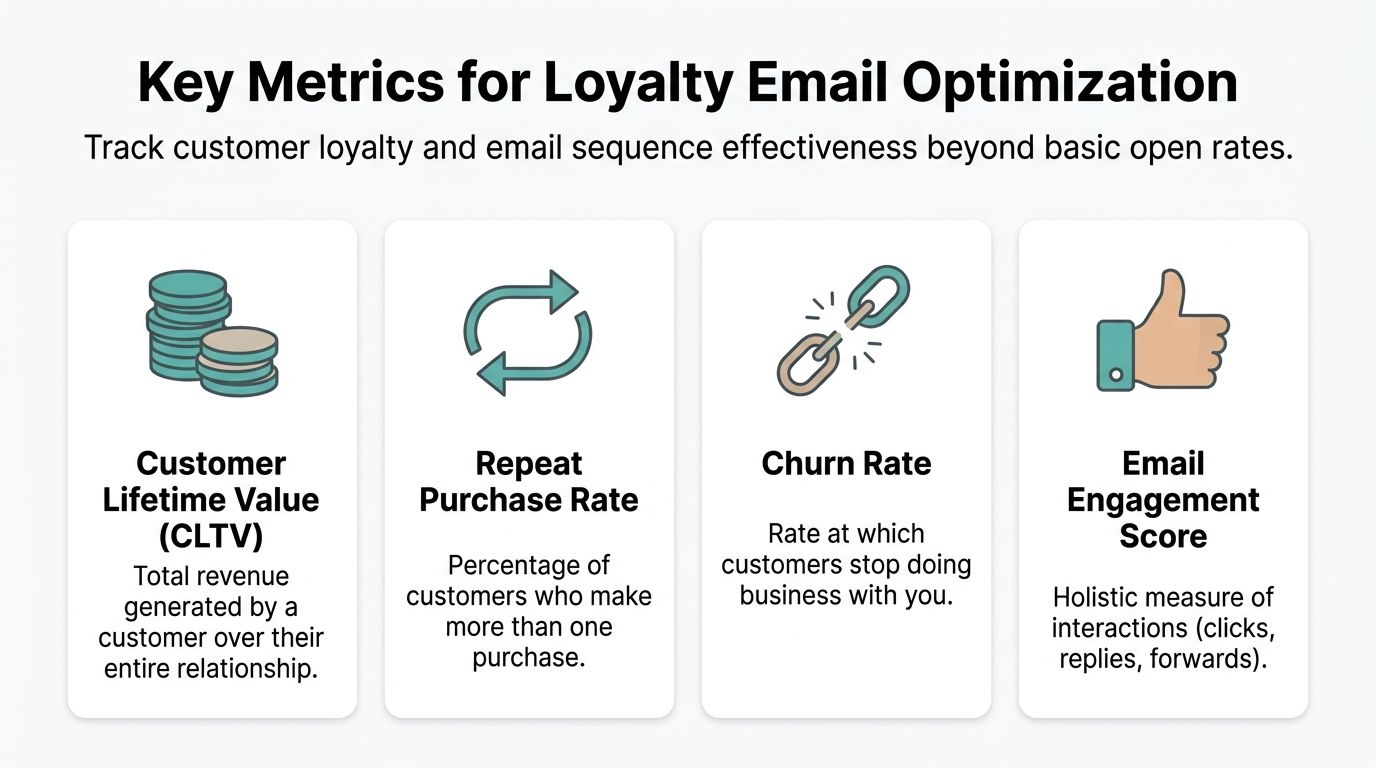
The KPI stack to monitor
Klaviyo specifically recommends tracking business impact metrics such as repeat purchase rate, customer lifetime value increase, and email engagement rather than relying only on open rates. That advice is directionally right for almost every SMB, especially once your automations are live.
Use this stack:
Repeat purchase rate: Are more first-time customers coming back?
Customer lifetime value: Are returning customers spending more across the relationship?
Email engagement score: Clicks, replies, forwards, and meaningful site visits tell you more than opens alone.
Review and referral indicators: These show loyalty before the next order lands.
If you want a cleaner framework for reading these numbers, this explainer on email marketing metrics like open rates and click rates is worth keeping nearby while you review campaign reports.
What to test first
Don't test everything at once. Change one variable, then read it against downstream behavior.
A practical testing order:
Subject line angle Utility versus curiosity. "Your care guide" versus "A quick tip for your order."
Send timing Delivered-triggered versus fixed-delay onboarding.
CTA framing "Get started" versus "See the 3-step setup."
Offer type Perk, bundle suggestion, loyalty invite, or referral ask.
Message format Plain text style versus designed template.
Read wins the right way
A higher click rate isn't always better if it leads to more unsubscribes or weaker repeat behavior. A lower open rate email can still be a winner if it produces better second-purchase or referral outcomes.
Measure the sequence like an owner, not just like an email operator. The question isn't whether the email performed. It's whether the customer relationship got stronger.
That's the mindset shift that separates automated noise from real retention work.
Frequently Asked Questions
How should a service business adapt a loyalty email sequence
Service businesses need a different post-purchase rhythm than an online store selling refillable products. The job is to reduce buyer's remorse, answer next-step questions, and stay familiar until the customer needs you again. A good sequence usually includes a follow-up note after the job or appointment, a simple education email, a satisfaction check-in, and a later touchpoint tied to maintenance, renewal, referral, or seasonal demand.
For services purchased infrequently, schedule follow-up emails around maintenance needs, renewals, or likely repeat purchases.
What if a customer unsubscribes from the loyalty sequence
Remove them from promotional loyalty emails and keep only the operational messages they still need. That protects trust and reduces the odds of a spam complaint later.
Then shift attention to channels that do not depend on inbox engagement. SMS can work if the customer opted in. Direct mail can work for higher-value services. Local TV can also play a practical role here. It keeps your brand present without asking the customer to open, click, or reply, which is useful when email reach starts to fade but the account still has long-term value.
How many emails should I send after a purchase
For many SMBs, five emails is enough to start. Confirmation, delivery or service follow-up, onboarding or education, satisfaction check-in, and one loyalty or referral message gives you a solid base without crowding the customer.
If response drops after the third email, the problem is usually message fit, not just volume. Check whether the timing matches the buying cycle. A roof repair customer does not need the same cadence as a skincare subscriber.
What's the best platform for automating this
Use the platform your team will keep updated. Klaviyo, Mailchimp, ActiveCampaign, Drip, and HubSpot can all run post-purchase automation if you set up triggers, segments, and reporting correctly.
The trade-off is rarely feature depth alone. It is maintenance. A simpler platform your team uses will outperform an advanced tool with broken triggers, stale lists, and weak attribution. Choose based on the events you need to track, how easily you can segment by customer behavior, and whether you can tie the sequence back to repeat purchases, referrals, booked appointments, or lifetime value.
Should every business ask for a second purchase quickly
No. Timing should match the product or service.
A supplement brand can ask sooner. A contractor, financial advisor, med spa, or B2B service firm usually gets better results by focusing first on confidence, proof of value, referrals, and staying familiar. If the next purchase is naturally far off, email should maintain the relationship, and Adwave can extend that same message into TV so customers keep seeing your brand between buying windows.
If you want to extend loyalty beyond the inbox, Adwave is a strong option for SMBs that need affordable, AI-powered TV advertising without the usual production burden. It helps businesses create and launch broadcast-ready ads quickly, making it easier to stay visible with past customers, especially in local service categories and longer purchase cycles where email alone won't carry the relationship.


