
June is the heart of primary season in the 2026 midterm cycle, and primaries are a fundamentally different advertising problem than the general election that follows. The electorate is a fraction of the size, the persuasion window is compressed into weeks, and your opponent usually shares most of your policy positions. Campaigns that simply run a smaller version of their general-election plan in June consistently get outworked by campaigns that treat the primary as its own discipline.
Connected TV has become the most practical way for primary campaigns, especially down-ballot and first-time candidates, to put television to work in that compressed window. This guide covers the strategies that matter between now and primary day: who to target, how to pace budget, what creative does in a primary that it doesn't do in a general, and how to pivot the day after you win. For the full-cycle view, see our 2026 midterm programmatic TV playbook.
Primaries are a different advertising problem
Three structural facts change everything about primary advertising:
The electorate is small. Midterm primary turnout typically runs 15-30% of registered voters, and in many local races far less. The universe you need to reach isn't "adults in the district." It's the much smaller set of reliable primary voters plus a thin band of plausible new ones. Broadcast TV's blunt reach is wasted on this problem; CTV's household-level geographic and demographic targeting is built for it.
Persuasion is intra-party. In a general election you're contrasting against the other party. In a primary, your opponents agree with you on most things, so the levers are name recognition, biography, trust, and one or two sharp differentiators. That changes creative fundamentally (more on this below).
The decision comes late. A large share of primary voters settle on a down-ballot choice in the final two weeks, many in the final days. Campaigns that spend evenly from April quietly subsidize the campaigns that surge when voters start paying attention.
The compressed window: think in weeks, not months
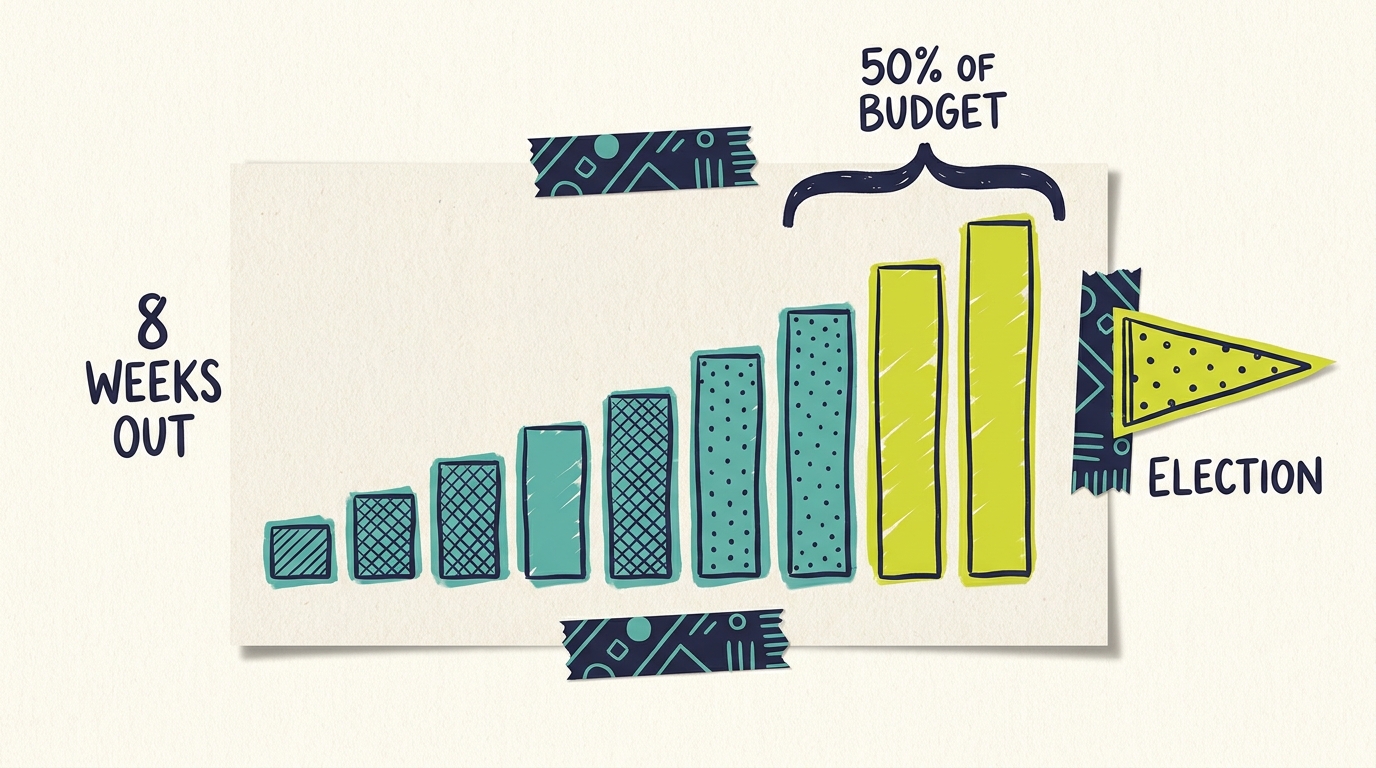
An effective primary TV effort is a 6-8 week campaign, back-weighted toward election day. A practical structure for a June primary:
Weeks 6-8 out: establish the name. Modest, steady frequency introducing the candidate to your targeted voter universe. The goal is simple recognition; a primary voter who has seen your name and face on their living room TV for a month processes your mailer and your ballot line differently.
Weeks 3-5 out: build the case. Shift rotation to your differentiator spot: the biography point, endorsement, or local issue that separates you in-party. Increase frequency as casual attention rises.
Final 2 weeks: surge. This is where 40-50% of your total TV budget belongs. Maximum sustainable frequency against your likely-voter universe, paired with a clear vote-by date or early-vote call to action. CTV inventory is purchasable in days, not weeks, so a campaign that gets a late fundraising bump can deploy it; our guide on fast-turnaround political TV ads covers how quickly a new spot can be live.
Targeting likely primary voters on CTV
The efficiency case for CTV in a primary comes down to not paying for voters who won't show up.
Geography first. Match delivery to the district precisely: zip codes for legislative and county races, full-market only for statewide contests. No spill into neighboring districts where impressions are pure waste.
Demographics as a turnout proxy. Primary electorates skew older and higher-propensity. Weighting delivery toward 45+ households in high-turnout precincts concentrates impressions where primary votes live, and CTV platforms make that weighting straightforward.
Frequency over reach, inside the universe. In a primary, it's better to reach 30,000 likely primary voters seven times than 100,000 district adults twice. Recognition compounds with repetition, and the small electorate makes meaningful frequency affordable: at typical CTV rates of $15-35 CPM, a sustained six-figure-impression program against a targeted universe fits budgets that broadcast could never serve. Current pricing context is in our 2026 political ad rates guide.
Don't forget the household effect. Primary voting is a household behavior; spouses talk, and ballots get filled out at kitchen tables. TV is the one channel both partners see together, which is part of why it converts name recognition to votes more reliably than feed-based media.
Creative that works in a primary
General-election creative logic (contrast with the other party) mostly doesn't apply. Primary spots have three jobs:
Make the name stick. Say the candidate's name early, repeat it, show the face, and put the name on screen for the full 30 seconds. This sounds elementary; it decides low-information races.
Plant one differentiator. Not five. The local roots, the small-business background, the key endorsement, the signature issue. One memorable reason to pick you among ideological neighbors.
Signal belonging. Primary voters choose the candidate who feels like one of them. Local imagery, local references, and authenticity beat production polish. A direct-to-camera spot shot in a recognizable local spot frequently outperforms a polished agency package in down-ballot primaries.
Run two variations when budget allows (biography-led and issue-led), watch completion rates, and weight the winner into the final-week surge. The basics of the channel are covered in our CTV political advertising guide.
Early voting moved your deadline
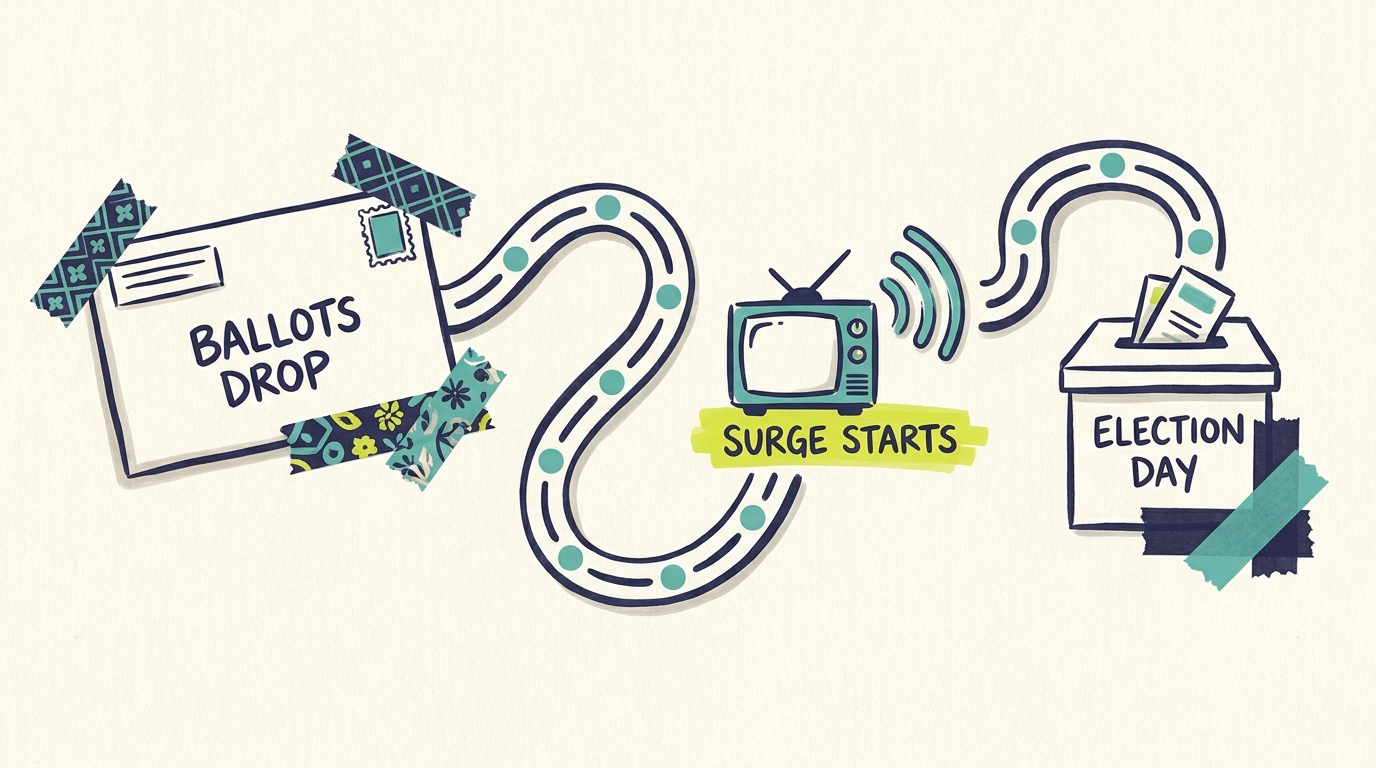
In states with substantial mail and early voting, "election day" is a window that opens weeks earlier, and a meaningful share of your electorate has voted before the final weekend. Two adjustments:
Start the surge when ballots drop, not two weeks before election day. If mail ballots go out four weeks ahead in your state, your peak-frequency phase begins then and holds.
Split the close. Run "vote your ballot today" creative aimed at mail voters alongside the traditional election-day close. CTV's fast creative swaps make running both simultaneously practical.
Budget pacing: a working example
A practical allocation for a down-ballot campaign putting $15,000 into an 8-week primary TV effort:
Weeks 8-6: $2,500 (steady introduction, ~17%)
Weeks 5-3: $5,000 (case-building, ~33%)
Final 2 weeks: $7,500 (surge, ~50%)
Scale the dollars to your race; keep the shape. The most common primary TV mistake is the inverse curve: spending enthusiastically at launch and limping through the deciding fortnight. CTV makes the right shape easy because there are no long inventory commitments; you buy the surge when the surge arrives.
Three primary archetypes, three TV jobs
The same tools get deployed differently depending on which race you're running:
The challenger. Your problem is oxygen. The incumbent starts with the name recognition you have to buy, so your TV program starts earlier and leans harder into biography. Expect to spend the first half of your budget just reaching parity on familiarity before contrast even matters. The encouraging math: in low-turnout primaries, familiarity gaps close faster than they do in generals because the audience you must convince is small.
The incumbent. Your problem is complacency, both the electorate's and your own. Primary upsets almost always trace to an incumbent who went quiet while a challenger consolidated an energized slice of the base. A steady-frequency presence reminding your reliable voters why they've kept you is cheap insurance, and it keeps your name recognition warm for the general either way.
The open seat. Your problem is the pack. With three or more candidates splitting a small electorate, races are routinely won with 30-40% of the vote, which means owning a lane beats broad appeal. Pick the differentiator with the most committed slice behind it, target the precincts where that slice lives, and concentrate frequency there rather than spreading evenly across the district.
Where CTV fits in the primary toolkit
TV doesn't replace the rest of the primary playbook; it makes the rest of it work better. The interplay matters more in primaries than in generals because every contact is happening inside the same small voter universe:
Mail. Direct mail remains the workhorse of down-ballot primaries, and it lands very differently in a household that already recognizes the candidate from TV. Campaigns that sequence TV introduction ahead of their mail program report consistently better recall on the mail itself. Same universe, same message architecture, two channels reinforcing.
Doors and phones. Canvassers report an unmistakable difference between "who?" doors and "oh, I've seen your ads" doors. TV doesn't knock doors, but it warms them. Coordinate the canvass universe with the CTV targeting universe so the air war and ground game cover the same voters.
Digital and social. Run social as the frequency extender: the same differentiator message, cut for feeds, retargeted to the district. CTV reaches the older, high-propensity primary voter on the big screen; social picks up the younger and mobile-first slice. Identical message discipline across both, or the small electorate notices the seams.
Earned media. A TV presence changes how local press treats a down-ballot campaign; "candidate is up on television" still signals seriousness in a primary. The spot itself often becomes a local news item in smaller markets, an earned bonus broadcast never priced in.
The unifying rule: one voter universe, one message calendar, every channel singing the same verse in the same week.
Measuring a primary TV campaign
You won't get clean attribution inside a six-week window, but you can get useful signal:
Completion rates, weekly. Your first read on creative health. A spot completing above platform norms is earning attention; a sagging completion rate says swap creative now, not after the election.
Branded search and direct traffic. Searches for the candidate's name should climb in the days after launch and spike during the surge. Flat branded search during heavy frequency is a creative problem, not a channel problem.
Volunteer and small-dollar inflection. Primary TV reliably shows up first in the campaign's own funnel: signup forms, small donations, and event turnout tick up in the targeted zips before any poll moves.
After the election, compare heavily exposed precincts with similar precincts that received fewer ads. This comparison can inform future media decisions, though other differences between precincts may affect the result.
What not to do: commission mid-primary polling on a local race to "check if the TV is working." The sample costs more than the airtime and the confidence intervals will swallow the answer.
The day after: pivot fast
Win or lose, primary night creates 24-48 hours of decisions:
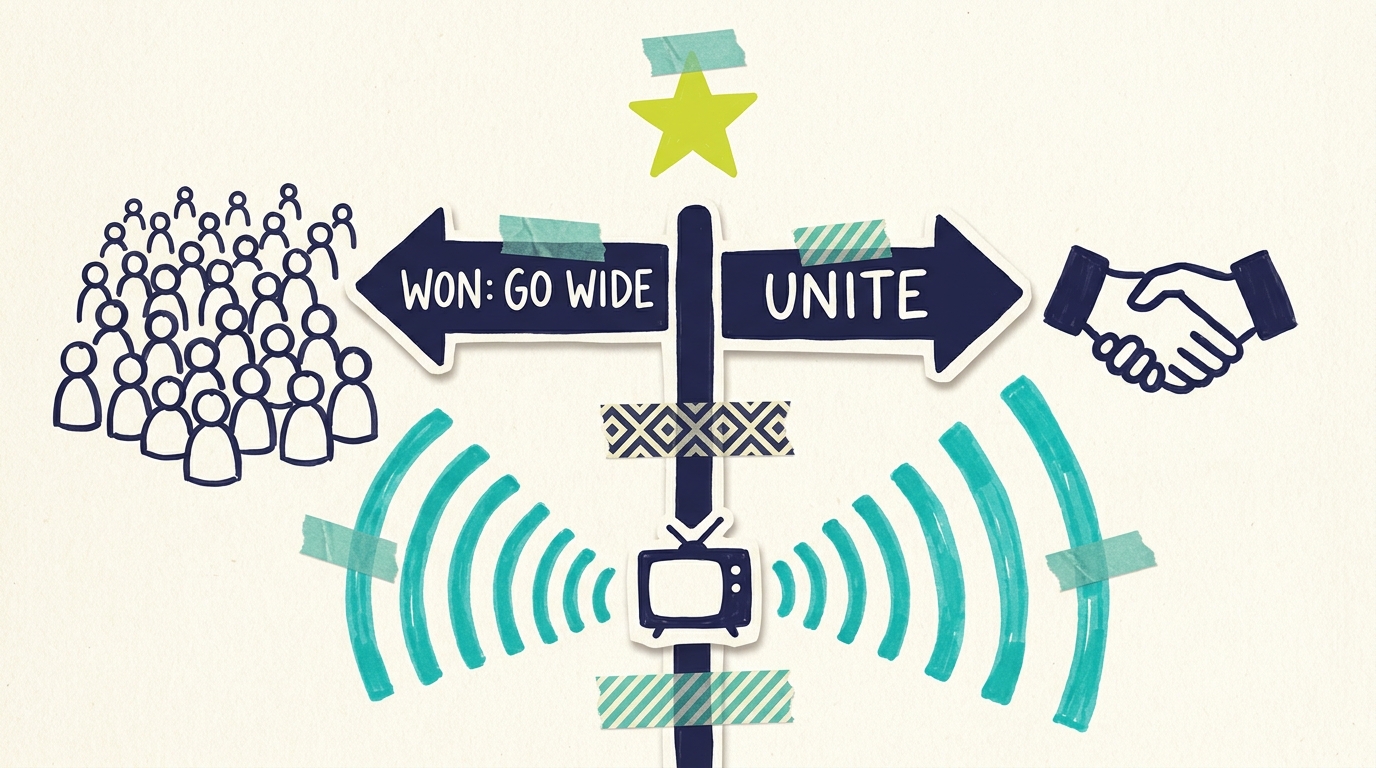
If you win: the general-election audience is everyone, your targeting widens, and your creative pivots from intra-party differentiation to contrast. Have the pivot spot drafted before primary night. Momentum windows close fast, and CTV lets the general-election campaign be live while the victory speech is still circulating.
If you're consolidating: endorsement and unity creative from the winning campaign, aimed at the runner-up's geographic strongholds, measurably speeds intra-party consolidation, a tactic almost nobody uses at the local level because broadcast made it impractical. Down-ballot specifics are in our down-ballot advertising guide.
Compliance quick check
Political CTV ads carry disclosure and documentation requirements that vary by state and race type. The non-negotiables:
Verification timelines are the one that bites campaigns in compressed primaries: start the platform verification process the week you decide to advertise, not the week you want to launch. Fuller treatment in our political TV advertising guide for 2026.
Common questions answered
How early should a primary campaign start TV advertising?
Six to eight weeks before ballots are cast is the practical sweet spot for most down-ballot primaries: early enough to build name recognition, late enough to concentrate budget when voters tune in. If early or mail voting starts sooner in your state, count back from the ballot-drop date instead of election day.
Is CTV better than broadcast for a primary campaign?
For most primary campaigns, yes, because of waste. Broadcast charges you for the entire market, including the 70-85% of adults who won't vote in your primary and everyone outside your district. CTV targets the district's likely-voter households specifically and is buyable in small, fast increments that match primary budgets and timelines. Statewide campaigns with large budgets often run both.
How much should a local primary campaign spend on CTV?
Meaningful local programs start around $2,000-$5,000 for a focused final month, and competitive legislative or countywide races commonly invest $10,000-$30,000 across the full window. The structural answer matters more than the number: keep roughly half your TV budget for the final two weeks, whatever your total is.
Can a small campaign produce a TV ad quickly enough for a primary?
Yes. AI-generated creative has removed the production bottleneck: Adwave generates a broadcast-quality 30-second spot from a campaign website in about two minutes, and a campaign can be live on 100+ networks in under ten minutes once verified. That speed matters most in primaries, where a late endorsement or attack often demands a response spot in days.
Should I keep advertising if I'm clearly ahead in my primary?
Front-runners who go dark in the final weeks invite exactly the late surge that decides low-turnout races. The cheaper insurance is maintaining presence at reduced frequency through primary day, then rolling unspent budget into the general-election pivot. Going dark also costs you the name-recognition compounding you'll want in November.
Run the window, not the calendar
If your race is on a June ballot, the window is open right now. See how Adwave works: generate your spot in about two minutes, target your district's households, and be on the air this week.


