
Pinterest gets undervalued by product brands that file it under inspiration instead of acquisition. That perspective misses the opportunity.
I’ve seen small e-commerce teams treat Pinterest like a side channel, post a few polished graphics, then conclude it does not convert. The problem is usually not the platform. The problem is the operating model. Pinterest rewards brands that connect search intent, strong product creative, clean catalog setup, and patient measurement.
That makes it different from faster channels.
A good pin can keep driving qualified traffic weeks or months after publish, which is rare on platforms built around short-lived feed velocity. For product-based small businesses, that longer shelf life matters because it gives each photoshoot, product launch, and content asset more chances to produce revenue.
The bigger win is how Pinterest fits into an omnichannel system. It captures demand from people who are actively planning, comparing, and saving ideas. TV builds branded recall higher up the funnel, especially for products that need repetition and visual storytelling to become familiar. Used together, TV can increase branded search and category curiosity, while Pinterest converts that interest into saves, site visits, and purchases with intent-rich creative.
Brands get better results when those pieces support each other instead of running as isolated tests. Setup, creative, distribution, and measurement all need to match how people discover and buy products. When they do, Pinterest becomes a durable growth channel, another account to maintain.
Why Pinterest Is a Goldmine for Product Businesses
Pinterest matters because the people using it often arrive with a plan. They are collecting ideas, comparing products, and deciding what to buy, which creates a very different traffic profile from channels built around passive scrolling.
As noted earlier, Pinterest’s user base is large, commercially active, and attractive to brands selling products with clear visual appeal. For a small business, that combination matters more than raw reach. Qualified interest usually beats cheap impressions.
The practical opportunity is simple. Pinterest gives product brands a place to show up early, while a customer is still shaping the purchase. TV strengthens recall higher up the funnel, especially for products that benefit from repetition, demonstration, and brand familiarity. Pinterest then picks up that interest when someone starts searching, saving, and comparing. That handoff is one of the most useful omnichannel patterns I see for emerging consumer brands.
Why intent produces better traffic
Pinterest behaves more like a planning platform than a conversation platform. Users return to boards, revisit saved products, and search with a specific outcome in mind. That makes the channel unusually effective for products that need context before purchase.
It tends to work especially well for:
Home and decor products that sell better in a styled room
Fashion and accessories that benefit from outfit pairing and seasonal inspiration
Beauty and wellness items tied to routines, tutorials, and before-and-after use cases
Food, gifting, and seasonal products with recurring buying windows
Craft, hobby, and DIY products where discovery starts with a project idea
In practice, these categories share the same advantage. The buyer often wants to see the product inside a use case, not isolated on a white background.
Why smaller product brands can win
Pinterest gives smaller brands more staying power than fast-feed platforms. A well-built pin can keep bringing in traffic long after publish, which means each photoshoot, product launch, and merchandising update can keep working longer.
That changes the economics.
A small team does not need to outpost bigger competitors every day. It needs sharper alignment between keyword themes, creative angles, landing pages, and audience segmentation for different buying moments. Brands that separate gift shoppers from self-purchasers, or first-time buyers from repeat customers, usually create stronger boards and better-performing pins because the intent is clearer.
One rule has held up across product categories: if a customer needs to picture your product in real life before buying, Pinterest deserves serious attention.
The accounts that perform well rarely feel random. Their boards reflect distinct shopping motives. Their pins answer specific searches. Their product pages finish the job by matching the promise of the creative. That is why Pinterest can become a dependable acquisition channel for product businesses, especially when it works alongside broader brand-building efforts such as accessible TV.
Building Your Foundational Pinterest Strategy
Pinterest strategy starts with intent, not posting frequency.
Brands get better results when they decide what role Pinterest plays in the full acquisition mix. For product businesses, that usually means capturing existing demand through search-led discovery, then reinforcing recall through channels that build broader awareness. Pinterest handles high-intent browsing well. Accessible TV helps more shoppers recognize and trust the brand before they search.
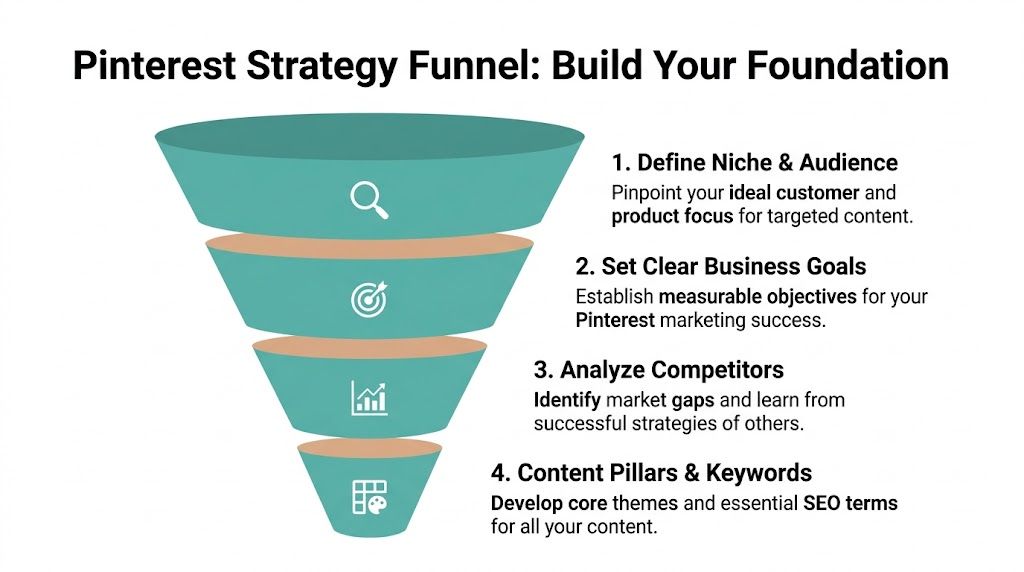
Start with one customer, not everyone
A vague audience definition produces vague pins, weak boards, and messy keyword choices. A useful Pinterest plan starts with one specific buyer and one specific shopping context.
Define that buyer by problem, aesthetic, use case, season, and budget. “Women 25 to 44” does not help a creative team make decisions. “Apartment renters looking for space-saving kitchen tools and giftable home upgrades” does.
If the catalog serves several buyer groups, separate them by intent instead of forcing them into one content stream. A kitchen brand might build distinct board systems around small-space cooking, host gifts, and weeknight prep tools because each theme reflects a different search pattern and buying motive.
If your team needs a clearer way to split those groups, this guide to audience segmentation for different buying moments is a strong planning reference.
Build around the three stages
Pinterest works best when content maps to the way people shop. Some users are gathering ideas. Some are comparing options. Some are ready for a product page.
The mistake I see most often is forcing every pin to sell immediately. That usually lowers saves, narrows reach, and burns through creative too fast. A better approach is to assign each pin a job inside the funnel.
Awareness
Awareness content earns discovery and saves. It introduces the product inside a use case instead of asking for a sale too early.
Good awareness pin types include:
Lifestyle imagery showing the product in use
Trend or inspiration boards tied to a category or aesthetic
How-to or educational visuals built around the shopper’s problem
Seasonal idea pins aligned with recurring search behavior
Consideration
Consideration content helps shoppers compare, evaluate, and picture fit, allowing product businesses to outperform larger competitors, especially if the merchandising is sharper and the creative answers practical questions faster.
Use:
Comparison-style pins between styles, colors, or bundles
Collection pins featuring a curated set of related products
Problem-solution creative that makes the use case obvious
Pins addressing common objections such as size, fit, setup, or styling
Conversion
Conversion content should target shoppers who already know what they want. Keep the creative direct. Show the product clearly, highlight the offer or differentiator, and reduce decision friction.
Strong conversion pins often feature:
Specific product-led creative with clear naming
Bundle or set messaging for higher average order value
Offer-driven pins around launches, seasonal promotions, or limited stock
Retargeting-friendly concepts that can later carry into paid Pinterest campaigns
Set goals that match buying behavior
Follower count is a weak primary KPI for most product brands on Pinterest. Search visibility, saves, outbound clicks, product-page engagement, and assisted conversions tell you much more about whether the channel is doing its job.
A simple planning table keeps the strategy honest:
This structure also makes omnichannel planning easier. Pinterest can capture intent around categories, problems, and seasonal searches. TV can create the familiarity that improves click-through and conversion later, especially for brands selling products that benefit from repeated visual exposure. Used together, they give small businesses a practical balance of demand capture and brand building.
Random pinning rarely scales. Clear audience definitions, funnel-specific creative, and channel coordination do.
Setting Up Your Storefront on Pinterest
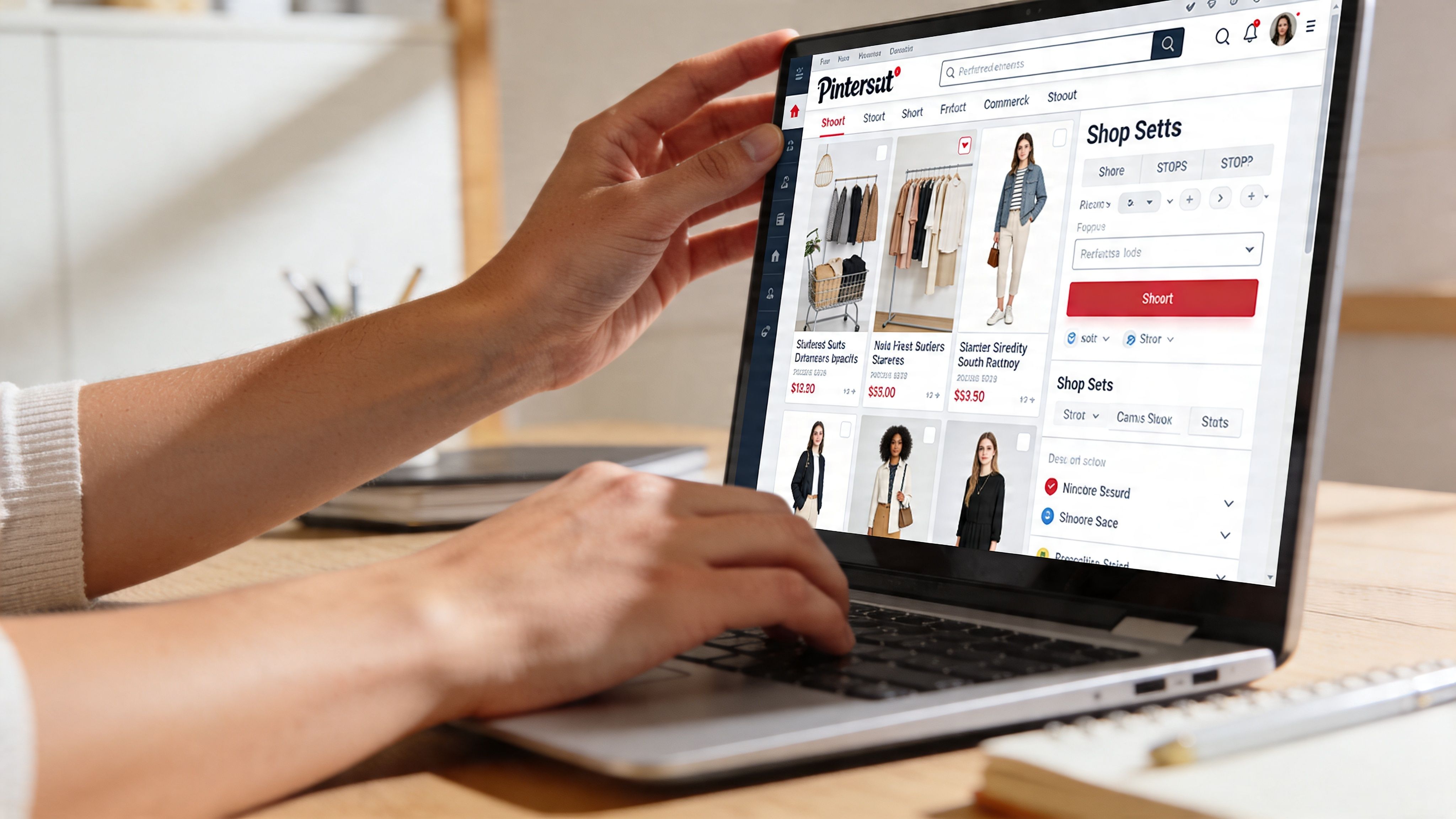
The technical setup is where Pinterest stops being a content channel and starts becoming a storefront. Done well, your profile becomes a discoverable catalog that can send shoppers to the right product pages with fewer points of friction.
Convert the account and claim your site
If you’re still using a personal Pinterest account, switch to a business account first. That enables the business tools you need, including analytics, advertising access, and commerce features.
Then claim your website. This step matters more than many small businesses realize. It connects your domain to your Pinterest presence and gives you cleaner attribution, stronger brand trust, and more control over how your content appears.
At a minimum, your profile should include:
A business name people would search
A concise description that reflects what you sell and who it’s for
Branded imagery that matches your store
Board names aligned with product categories or buyer intent
A claimed website so Pinterest can connect activity back to your brand
Turn catalog data into shopping-ready pins
For product businesses, the most impactful setup task is catalog integration. This is what powers shopping experiences that feel current instead of manually maintained.
When your catalog is synced correctly, Pinterest can display product details such as pricing, availability, and inventory data through product-focused pin experiences. That matters because it reduces disconnect between discovery and purchase. If a shopper clicks expecting one item and finds outdated details, trust drops fast.
Different ecommerce platforms handle the sync differently, but the workflow is similar:
Connect your store platform to Pinterest through the native app or integration.
Verify product data quality before syncing. Titles, images, and destination URLs need to be clean.
Check category mapping so Pinterest can understand what each product is.
Review product landing pages on mobile and desktop before pushing traffic.
What to fix before you publish anything
Most setup problems don’t show up in Pinterest first. They show up on the website.
Here’s where product brands usually underperform:
Weak product photography that looks fine on-site but doesn’t stop the scroll on Pinterest
Unclear product titles that make sense internally but don’t match customer language
Variant confusion where the clicked item differs from the page shown
Slow or cluttered landing pages that break the handoff from pin to product page
A quick diagnostic helps.
If you can’t tell which exact product page should receive the click, the pin isn’t ready.
A storefront on Pinterest isn’t built by posting pretty images. It’s built by connecting profile structure, product data, and destination pages so discovery can turn into action without confusion.
Creating and Optimizing Pins for Organic Reach
Organic Pinterest performance comes from two things working together. The creative has to earn attention, and the metadata has to help Pinterest understand when to surface that creative in search and recommendations.
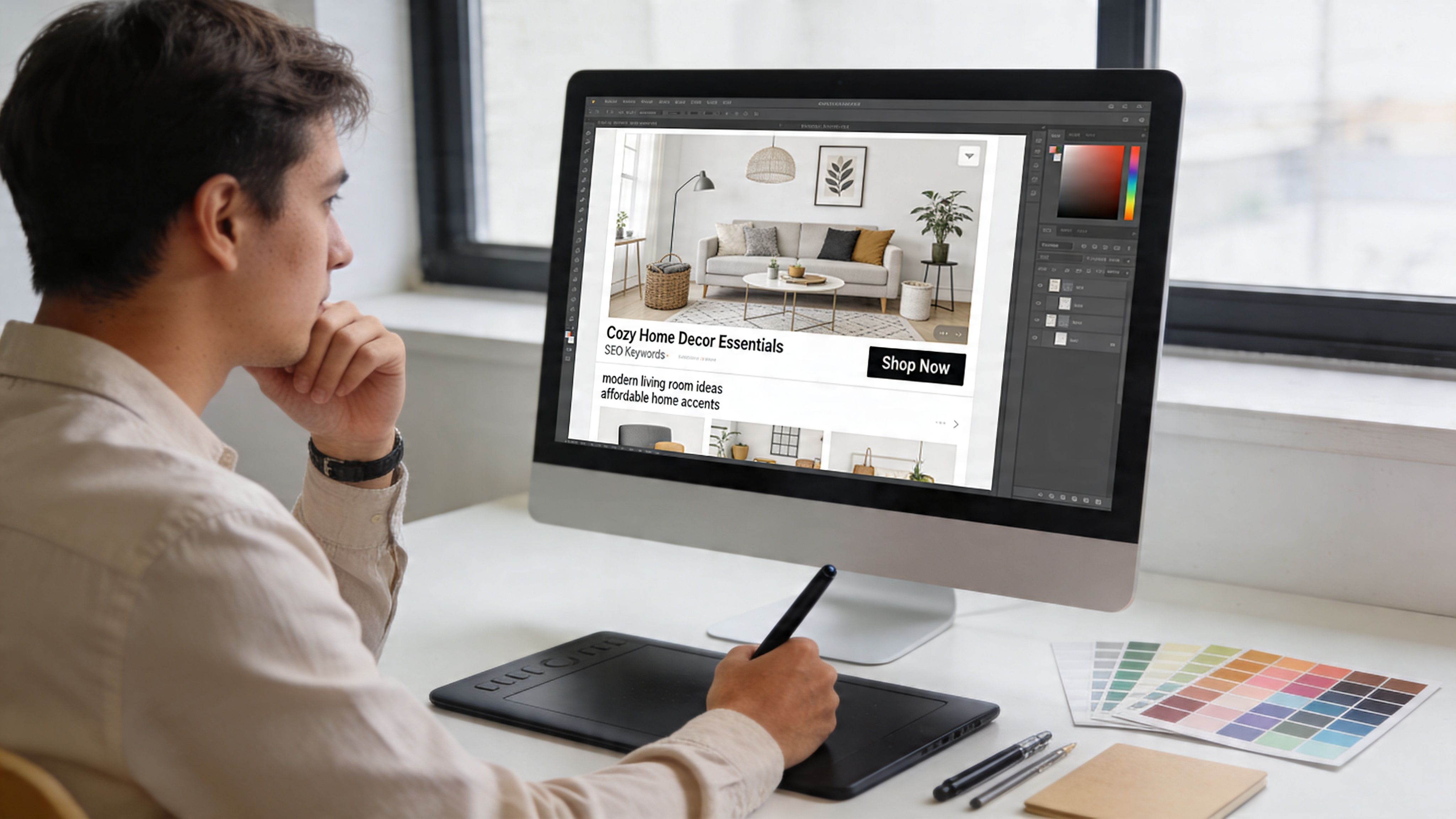
A sustainable Pinterest approach starts with using the Pinterest search bar to find 5 to 10 primary keywords per product category, maintaining at least five fresh pins daily, and designing pins in a vertical 1000x1500 format with eye-catching imagery and a small amount of text overlay. Visual content is also noted as 40x more likely to be shared in Red Pin Geek’s guide for product-based businesses.
Build pins that stop the scroll
The fastest way to waste time on Pinterest is to publish assets that were designed for another platform.
Pinterest wants vertical creative. More importantly, users want visual clarity. If the product, use case, or benefit isn’t obvious in a second or two, most pins won’t earn the save or click.
A strong organic pin usually includes:
One clear visual focus instead of a cluttered collage with no hierarchy
A readable headline that tells the user why the pin matters
A product-in-context image rather than an isolated packshot every time
Brand consistency without making the design feel like an ad banner
Not every category needs the same creative style. A jewelry brand often wins with close-up detail and styling context. A storage brand usually does better showing the before-and-after result. A food brand may need overhead imagery, ingredients, or finished-use inspiration.
Use search behavior to shape boards and copy
Pinterest SEO is simpler than many teams make it. Start inside Pinterest, not in a generic SEO tool.
Type a product category into the search bar and look at suggested queries. Those suggestions reflect how users search. Pull out the recurring terms, buying modifiers, seasonal phrases, and use-case language. Then apply those terms naturally to:
Board names
Pin titles
Pin descriptions
Product-focused landing pages
Don’t keyword-stuff. Pinterest is good at reading context, and users still need a clean experience.
A healthy board structure usually beats a broad, catch-all setup. “Modern nursery wall art” is more useful than “Home.” “Gift ideas for coffee lovers” is more useful than “Gifts.”
If your team needs a repeatable workflow, this guide on creating a social media content calendar in 30 minutes can help turn Pinterest from an occasional task into a consistent publishing system.
Create a repeatable production workflow
Most small businesses don’t need endless creative variation. They need a template system.
Use one high-performing concept and spin it into multiple angles:
Swap the headline to match a different search intent.
Change the lead image from product-only to lifestyle.
Test a seasonal framing for the same product.
Create a collection version if the single-product pin performs well.
Republish fresh creative rather than reusing the exact same asset repeatedly.
Many teams often overcomplicate things. They chase novelty instead of compounding what already works.
Workflow note: Audit your best pins by structure, not just by topic. The layout, framing, and promise often matter more than the specific product shown.
What works and what usually doesn’t
Here’s the practical trade-off:
The brands that get steady organic reach on Pinterest don’t just “post regularly.” They create searchable assets on purpose, then keep refining the creative patterns that earn saves, clicks, and downstream sales.
Amplifying Results with Paid Ads and TV coordination
Organic Pinterest gives you compounding visibility. Paid Pinterest helps you speed up what’s already proving itself.
The key mistake is boosting weak creative. Paid distribution doesn’t rescue a pin with a fuzzy value proposition or a mismatched product page. It only puts more budget behind those problems. The better move is to use paid media after organic performance tells you which visual angle, product category, and search intent deserve amplification.
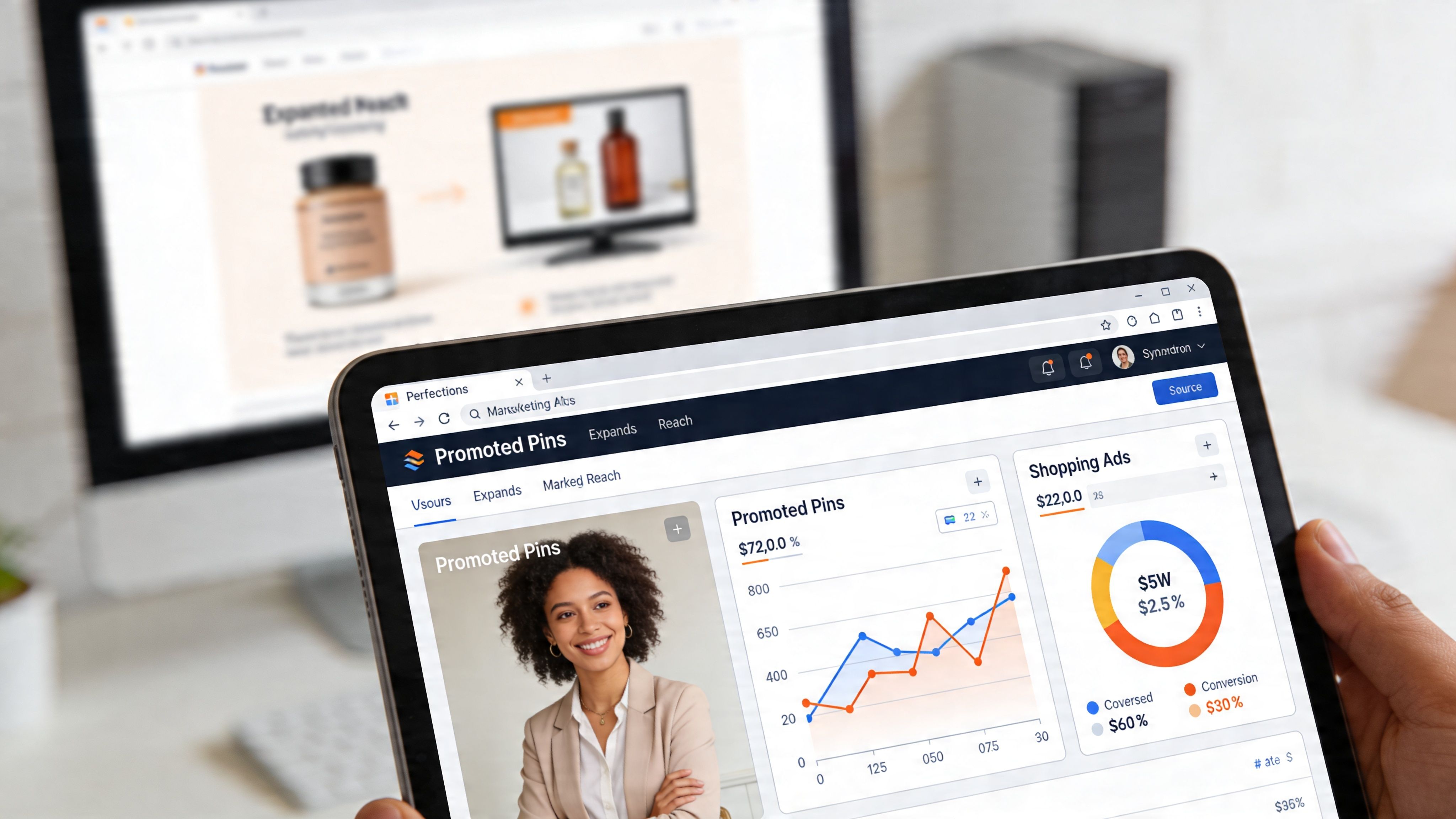
When to use Promoted Pins and Shopping Ads
Promoted Pins work well when you already have organic pins earning engagement signals and want broader reach against similar audiences or intents. Shopping Ads are better when your catalog is healthy and you want Pinterest to serve products directly from synced inventory.
Use Promoted Pins when you want to push:
Seasonal campaigns
Top-performing educational or inspiration content
Gift guides and curated collections
Product launches that need faster discovery
Use Shopping Ads when your goal is tighter product-level commerce execution.
That split matters because the user mindset differs. A person responding to an inspirational pin may still need more consideration content. A person served a highly relevant product ad may be much closer to action.
The overlooked channel pairing
Most Pinterest advice stops at ads inside Pinterest. That misses a more useful growth model for product businesses that need both demand creation and demand capture.
According to Great Scott Social’s discussion of Pinterest for small businesses, a 2025 Pinterest report noted that 80% of users discovered new brands that led to physical store visits, and the article argues that pairing Pinterest’s long-tail discovery engine with broad-reach awareness from TV creates a strong omnichannel effect.
That pairing makes strategic sense.
TV introduces the brand at scale. Pinterest catches the buyer when they move from recognition into active exploration. One channel builds memory. The other gives that memory somewhere useful to go.
A buyer might not search your brand name after seeing a TV spot. They may search the problem, style, or category instead. Pinterest is where your brand can intercept that next step visually.
This matters for ecommerce brands, hybrid retail businesses, pop-up-driven brands, and local sellers with a showroom or store. TV can widen the top of the funnel. Pinterest can turn that awareness into product discovery, saves, and product-page visits.
If you’re evaluating channel mix for an online store, this resource on the best advertising for ecommerce stores is a practical reference point.
How the coordination works
A clean omnichannel workflow looks like this:
This is especially effective when your TV creative and Pinterest creative share the same visual language. Use the same product family, same core promise, and same audience angle. Don’t make TV about one identity and Pinterest about another.
The strongest omnichannel setups don’t ask channels to do the same job. They assign each channel a role, then let them reinforce each other.
Tracking Your Success and Optimizing for Growth
If you judge Pinterest by follower count, you’ll make bad decisions. Product businesses need to measure the actions that move someone toward revenue, not the ones that look nice in a dashboard screenshot.
Watch the metrics that reflect buying progress
Inside Pinterest Analytics, the useful signals are the ones that map to intent and movement:
Saves tell you which ideas people want to revisit.
Outbound clicks show which pins send traffic.
Product-level behavior on-site tells you whether the click was qualified.
Conversions and assisted conversions show which pins contribute to revenue, even if they aren’t always the final touch.
A high-save pin with weak outbound clicks usually means the idea is attractive but the offer or call to action is too soft. A high-click pin with poor on-site behavior often points to weak landing-page alignment.
Connect Pinterest to your store analytics
Pinterest’s native reporting is useful, but it won’t tell the full story alone. Use UTM parameters on destination URLs so Google Analytics can separate traffic by board, theme, campaign, or creative angle.
That makes your monthly review much sharper. Instead of asking, “Did Pinterest work?” you can ask better questions:
Which keyword clusters drove the most qualified visits?
Which creative structures produced the strongest click quality?
Which boards generated shoppers who viewed product pages and purchased?
Which seasonal themes deserve more budget next cycle?
If you’re cleaning up attribution on Shopify, it’s also worth reviewing Shopify’s guidance on implementing tracking pixels, especially for Shopify stores, because inaccurate measurement usually starts with weak setup, not weak demand.
Run a monthly creative audit
Don’t reinvent the account every month. Audit patterns.
Here’s a simple review framework:
Monthly review habit: Pick three pins that drove qualified traffic and build your next batch from their structure, not from scratch.
For budget decisions, teams also need a clean way to compare spend with downstream revenue. This guide on how to calculate return on ad spend is useful if you want a simple framework for judging whether Pinterest amplification is paying back.
Growth on Pinterest usually comes from disciplined iteration. Better matching. Better structure. Better distribution behind proven winners.
Your Path to Pinterest Success
Pinterest rewards businesses that build for intent instead of chasing noise. For product brands, that means thinking like a merchant and a search strategist at the same time.
The durable approach is straightforward. Set the strategy before publishing. Build a storefront that can convert. Create pins around real search behavior. Amplify what’s already working. Measure beyond vanity metrics and keep refining.
A short checklist helps keep execution tight:
Define one clear buyer profile for each major product category
Map content to Awareness, Consideration, and Conversion
Claim your website and sync your catalog
Design vertical pins with clear product context
Use Pinterest search suggestions to shape board names and copy
Publish fresh creative consistently
Promote proven organic winners, not weak assets
Track outbound clicks and on-site behavior, not just impressions
Audit landing-page match before scaling spend
Review monthly and replicate winning templates
Pinterest Marketing for Product-Based Small Businesses works best when you treat it as a long-term asset. A strong pin can keep pulling traffic, product views, and sales long after launch day. That’s why the businesses that stay consistent usually outperform the ones that pin in short bursts and disappear.
If you want to pair Pinterest discovery with broader brand awareness, Adwave is a strong fit. It gives small businesses a practical way to launch TV advertising without the traditional production burden, then connect that top-of-funnel attention to channels like Pinterest where shoppers continue researching and buying. For retail and ecommerce brands trying to build a real omnichannel engine, Adwave makes TV more accessible and measurable than is commonly expected.


