Ready in minutes
AI builds your ad from a single prompt


July 11, 2026
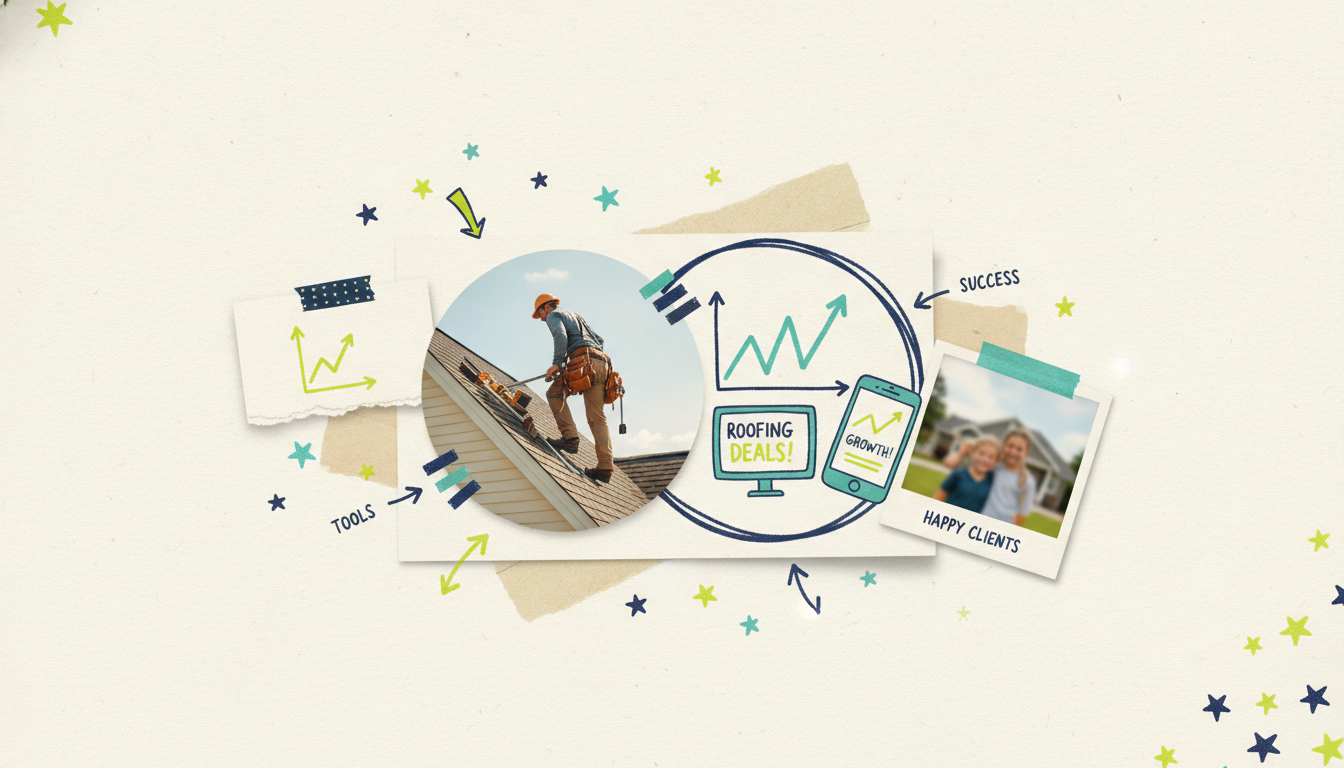
Roofing is one of the toughest, most competitive categories in local advertising. Clicks are expensive, the sales cycle is long, and every contractor in the metro is bidding on the same keywords. So when a regional roofing company shifted from a single-channel approach to a coordinated four-channel strategy, and watched its return on ad spend climb to 6.2x, the story is worth breaking down. Here's how a mid-size roofing company built a full-funnel program that turned expensive, crowded advertising into a genuine growth engine.
This case study reflects a representative mid-size roofing company and the kind of results a coordinated multi-channel approach can deliver. Specific numbers vary by market, season, and execution.
The business was a well-established regional roofing contractor serving several suburbs of a mid-size metro. Around 20 employees, a solid reputation, and roughly a decade in business. They did quality work and had strong reviews, but their growth had plateaued. They were good at the job and stuck when it came to marketing.
Their entire advertising budget, about $8,000 a month, went into Google Search. It worked, sort of. They got leads, but the cost per lead kept climbing as more competitors entered the auction, and they had no way to grow beyond the finite pool of people already searching "roofing company near me." They were harvesting demand but doing nothing to create it.
The roofing company faced three connected problems, all rooted in relying on a single channel.
Rising costs. Home-improvement keywords are among the most expensive on Google, often over $8 a click. As competition grew, their cost per lead crept up quarter after quarter, squeezing margins.
A capped ceiling. Search only reaches people actively looking for a roofer right now. Once you're capturing most of that demand, there's nowhere to grow. They'd hit the ceiling of their market's active search volume.
No brand recognition. When a homeowner's roof started leaking and they searched, the roofing company was just one of several unfamiliar names in the results. They had no awareness advantage, so they competed purely on the ad auction, the most expensive way to win a customer.
They needed to do two things at once: lower their cost per lead and grow beyond the search ceiling. Both required creating demand, not just capturing it, the core principle behind multi-channel advertising.

The roofing company restructured around a full-funnel, multi-channel approach, keeping search as the capture layer and adding three demand-creation channels on top. The strategy rested on a simple insight: if more homeowners recognized the brand before they needed a roofer, the search ads would convert better and cost less, because they'd be harvesting warm demand instead of cold.
The four channels, each with a specific job:
Connected TV to build broad local awareness and trust. Homeowners across the metro would see the roofing company's ad during their streaming shows, associating the brand with the credibility that television confers, months before they had a roof problem. Our guide to connected TV advertising explains why the medium builds trust so effectively, and a similar dynamic drove our home services CTV case study.
YouTube to extend that video message affordably and reach people on the biggest screen and their phones, reinforcing the TV presence.
Facebook and Instagram to target homeowners in the service area with visual proof, before-and-after shots, crew introductions, and seasonal reminders, keeping the brand top of mind on the social feed.
Google Search unchanged as the capture layer, now catching a warmer, more familiar audience.
Crucially, all four channels shared the same branding, the same logo, colors, tagline, and the same 30-second video ad adapted across formats. Consistency was the point: every touchpoint reinforced the others.
The rollout was deliberate and sequenced over 90 days.
Month one kept search running while launching connected TV across the local metro. The connected TV ad was generated from the company's existing website, no film crew required, and ran across premium streaming channels targeted to homeowners in the service area. The goal was pure awareness: get the name in front of the market.
Month two added YouTube and social. The same core video ran on YouTube for living-room and mobile reach, while Facebook and Instagram carried before-and-after imagery and seasonal messaging targeted to the exact zip codes the company served. Retargeting kept the brand in front of website visitors who hadn't yet converted.
Month three was optimization. With demand-creation channels feeding the funnel, the search campaigns started converting a warmer audience. The company shifted budget toward what was working, trimmed underperforming keywords, and let the compounding effect build. Branded searches, people typing the company's name directly, began climbing, a clear sign the awareness spending was landing.
The total budget grew from $8,000 to about $12,000 a month, but spread across four channels each doing its job, rather than all of it fighting for expensive search clicks.

Over the 90-day program, the coordinated approach produced results that a single channel never could:
6.2x return on ad spend, blended across all four channels, meaning every dollar spent returned $6.20 in booked revenue.
Cost per lead dropped about 34%. As search ads began harvesting a warmer, brand-aware audience, they converted better and cost less, exactly the compounding effect the strategy predicted.
Total leads grew roughly 60%. The demand-creation channels expanded the pool of prospects well beyond the search ceiling, so the business grew instead of plateauing.
Branded search volume more than doubled. People searching for the company by name jumped, the clearest proof that the connected TV, YouTube, and social presence was building real recognition.
The most telling result wasn't any single number, it was the relationship between them. The awareness channels didn't just add leads of their own, they made the existing search channel dramatically more efficient. That's the multi-channel compounding effect in action: create demand, and your capture channels get cheaper and more productive.
For any local business, especially in a competitive, high-cost category like roofing, this case study points to a few clear lessons:
Single-channel advertising hits a ceiling. Relying only on search means competing for a finite pool of active demand, with costs that only rise. Growth requires creating new demand.
Demand creation makes demand capture cheaper. The biggest win wasn't the leads from TV and social directly, it was how much more efficient the search ads became once the audience recognized the brand.
Consistency across channels compounds. The same branding and video everywhere meant each touchpoint reinforced the others, building recognition faster than any channel alone.
You can now afford TV. The connected TV layer, once impossible for a local contractor, was affordable and ran in a single metro, providing the trust and awareness that made everything else work.
The roofing company didn't need a bigger budget so much as a smarter structure, putting each channel where it was strongest and letting them reinforce each other. For the home-services angle specifically, our page on TV advertising for home services covers the vertical in more depth.

How did the roofing company achieve 6.2x ROAS? By shifting from a single-channel search strategy to a coordinated four-channel approach: connected TV, YouTube, and social to create demand and build brand recognition, plus Google Search to capture it. The demand-creation channels made the search ads convert a warmer audience at lower cost, and the compounding effect drove the blended return on ad spend to 6.2x.
Why did adding more channels lower the cost per lead? Because the connected TV, YouTube, and social ads built brand recognition before homeowners needed a roofer. When those homeowners later searched, they recognized the company and converted at a higher rate, which lowered the cost per lead on the search campaign. Creating demand makes capturing it cheaper.
Can a small business afford connected TV advertising? Yes. Connected TV now runs in a single local market on small-business budgets, which is why a regional roofing contractor could add it to the mix. It provides the broad awareness and trust that television confers, at a cost that fits a local advertiser, something traditional TV never allowed.
Is this kind of result guaranteed? No. This case study reflects a representative example, and actual results depend on your market, competition, season, budget, and execution. What the strategy reliably offers is a more efficient structure: matching each channel to its job so demand creation makes demand capture cheaper. The specific numbers will vary.
How do you manage four advertising channels at once? The operational challenge of running four channels is real, and it's where many businesses give up. Running them from a single platform, with shared creative and coordinated strategy, makes it practical. That's how the roofing company executed a full-funnel program without hiring a large marketing team.
This roofing company's story is a template for any local business stuck on a single expensive channel. The move that unlocked growth wasn't spending more, it was spreading spend across channels that each did a different job, letting demand creation feed demand capture. The result was more leads, a lower cost per lead, and a return on ad spend that a single channel could never produce.
Adwave runs connected TV plus Google, YouTube, Meta, Reddit, and display from one place, and generates your ads from your website. See how Adwave works, or check pricing to get started from $50.