
YouTube says Shorts now average over 200 billion daily views, which is why even very small brands can earn attention in a format that used to favor bigger production budgets.
For a small business owner, that matters because video is no longer a separate, expensive project. It can be a practical weekly marketing habit. A phone, a simple filming setup, and a clear point are often enough to publish something useful.
Shorts also fits the kind of content small businesses already have on hand. A restaurant can show one dish leaving the kitchen. A realtor can answer one buyer question. A plumber can record a 30-second fix-prevention tip. The barrier to entry is low, but the payoff can stretch beyond social media if you treat each Short as a reusable asset for your wider marketing.
That broader view is where resource-strapped businesses usually get more value. One short video can live on YouTube, be repurposed for email, support a landing page, and inform affordable awareness campaigns on newer TV ad platforms like Adwave. Instead of treating Shorts as another channel to feed, use it as a low-cost content engine inside a larger marketing system.
The businesses that do this well usually keep the process simple. They do not aim for polished brand films. They publish clear, helpful videos consistently, learn what gets a response, and reuse what works.
Why YouTube Shorts Are a Strategic Advantage for Small Businesses
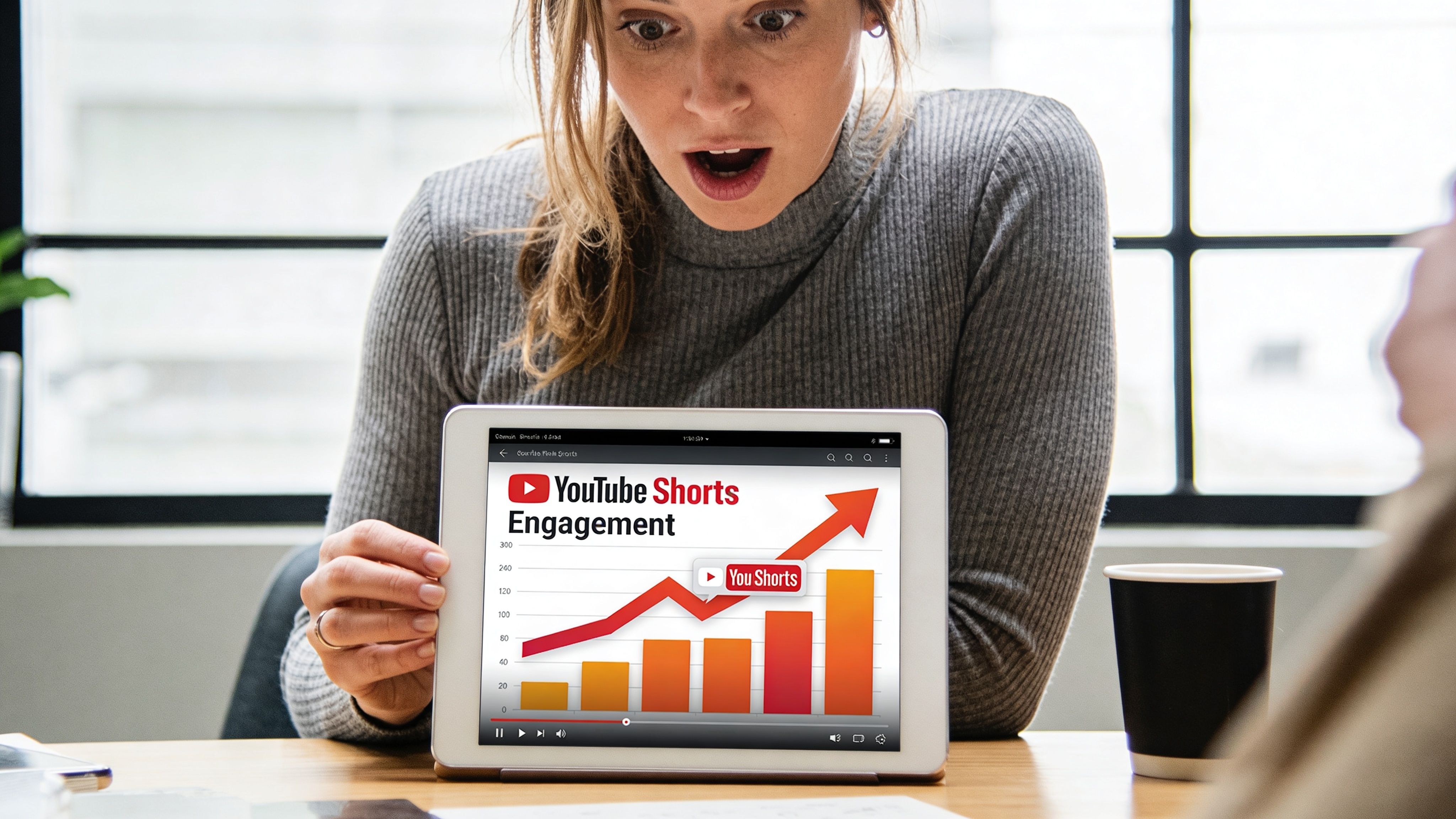
You already know Shorts attracts massive attention. The practical question is what that means for a small business with limited hours, a modest budget, and no in-house video team.
It means distribution is no longer reserved for brands that can afford polished campaigns. A useful 20 to 40 second video can introduce your business to new buyers, answer a real question, and keep working after you post it. That matters because small businesses rarely need celebrity-level reach. They need repeated visibility with the right audience until familiarity turns into inquiries, store visits, and sales.
Shorts also fits how people evaluate local businesses. They want quick proof. Is the shop active? Does the owner know the subject? Does the product look good in real life? Can this business solve the problem without wasting my time?
That is why Shorts works especially well for service businesses, retailers, restaurants, clinics, and local providers. The format rewards clarity over production value.
Why Shorts gives smaller brands an opening
A full marketing plan still matters. Shorts is not a replacement for your website, email list, search presence, or paid campaigns. But it is one of the cheapest ways to create attention at the top of the funnel and trust in the middle.
I usually advise small businesses to treat Shorts as a reusable content asset, not a one-platform tactic. One video can live on YouTube, support an email campaign, sit on a product or service page, and inform affordable awareness placements on newer TV advertising platforms like Adwave. That is a better long-term use of a lean budget than making one-off videos that disappear after a day.
The trade-off is consistency. Shorts is accessible, but it still asks for regular output and clear messaging. A business that posts one helpful video each week for three months will usually learn more, and get more usable assets, than a business that spends the whole quarter planning one perfect shoot.
What small businesses should post instead of chasing trends
Many owners worry they need entertainer energy to make this format work. They do not.
Useful business Shorts usually fall into a few practical categories:
Answer one customer question. A roofer can explain how to spot storm damage from the ground.
Show proof of the work. A salon can show a before-and-after result.
Demonstrate the product in context. A boutique can show fit, texture, or styling.
Show the business in motion. A bakery can film the morning prep that signals freshness and consistency.
A simple rule helps here. If a customer asks it, searches it, hesitates about it, or needs reassurance before buying, it can become a Short.
The businesses that get traction are usually not the loudest. They are the clearest. They publish videos that reduce uncertainty, help buyers make a decision, and make the business feel familiar before the first call or visit.
If you want that process to stay manageable, build a lightweight posting system before volume becomes a problem. A 30-minute social media content calendar for small businesses is a good starting point for turning everyday customer interactions into a repeatable video pipeline.
Planning Your Content Strategy Before You Press Record
A lot of small businesses fail with Shorts for a simple reason. They post random videos with no clear role in the business.
Before you film, decide what each video is supposed to do. Brand awareness, lead generation, foot traffic, email signups, inquiries, or trust-building are all valid goals. What doesn’t work is trying to make every Short do everything.
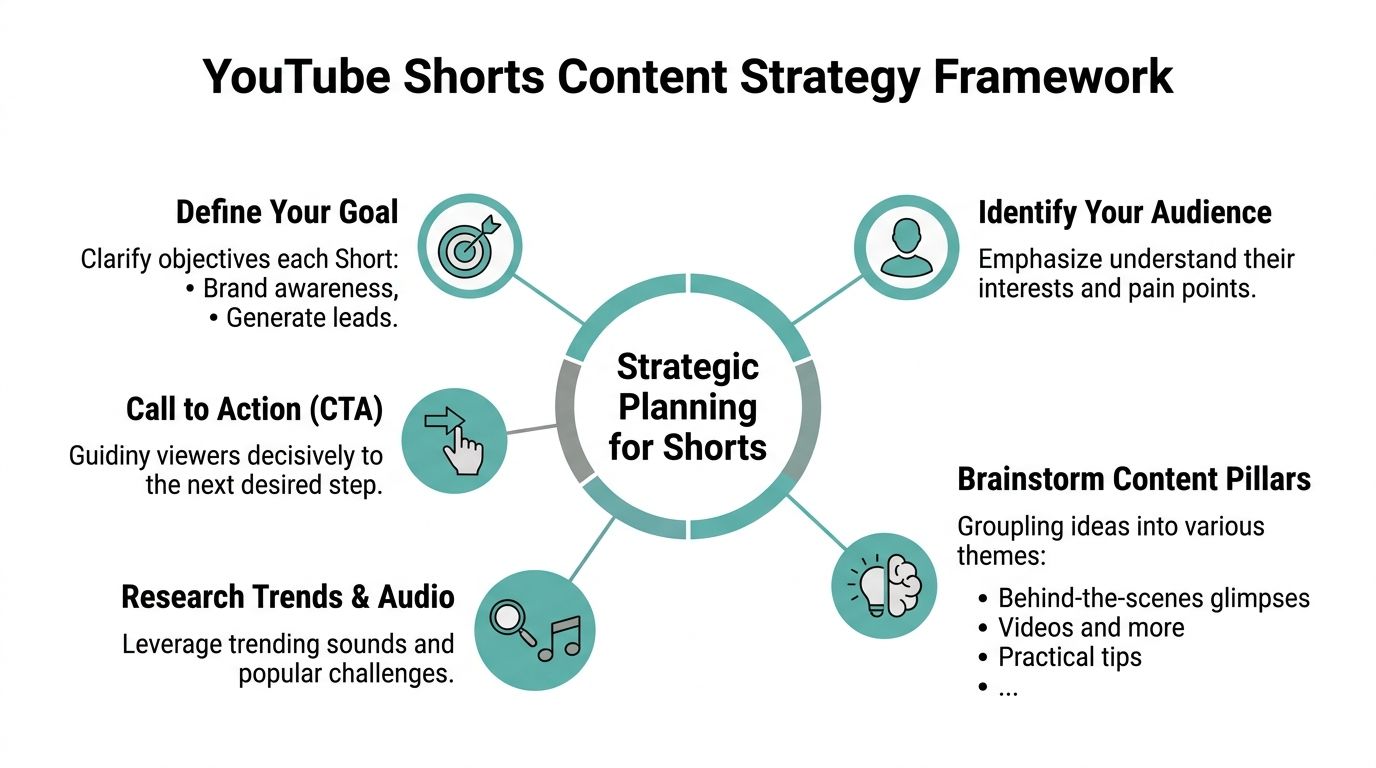
Start with simple content pillars
Most businesses only need three to four pillars to stay organized. That keeps ideation easy and prevents the common pattern of posting for a week, then stopping because no one knows what to film next.
A practical setup looks like this:
Educate. Teach something small but useful.
Showcase. Highlight the product, service, or result.
Behind the scenes. Make the business feel human and active.
Social proof. Share customer stories, reactions, or outcomes when appropriate.
If you need a lightweight way to turn those pillars into a repeatable schedule, this guide on building a social media content calendar in 30 minutes is a helpful starting point.
Match the pillar to the business goal
Not every Short should be promotional. In fact, businesses usually get more traction when most of their videos provide value and only a smaller portion asks for action.
Use this logic:
Build ideas from real customer conversations
The fastest content planning method is to open your notes app and write down:
Questions customers ask before buying
Objections that delay decisions
Misunderstandings you correct all the time
Moments customers find interesting in your day-to-day work
That list is your content bank.
Most businesses don’t have an idea problem. They have a capture problem. Good Shorts often come from sales calls, front-desk conversations, and customer emails.
Keep your calendar realistic
A plan you can maintain beats an ambitious plan you’ll abandon. If you’re resource-strapped, start with a small batch of ideas and record several in one session. Consistency usually comes from simplicity, not motivation.
Creating High-Impact Shorts Without a Big Budget

The biggest mental block for most owners is production. They assume video requires cameras, lighting kits, editors, and a level of polish that belongs to bigger brands.
It doesn’t. A smartphone is enough to start.
The technical side is straightforward. For best performance, Shorts should be 9:16 at 1080x1920, can run up to 60 seconds, and the 15 to 30 second range tends to get the highest completion rates. The first 3 seconds matter most because they can determine up to 80% of viewer retention, according to Spark Social’s YouTube Shorts business guide.
Your low-budget production checklist
You don’t need cinematic quality. You need videos that are easy to watch and easy to understand.
Focus on these basics:
Use window light. Face a window instead of standing with bright light behind you.
Get close for clean audio. If people can’t hear you clearly, they’ll leave quickly.
Keep the phone steady. Lean it against a stable object or use a basic tripod.
Frame tightly. Empty space weakens short-form video.
Write one sentence first. Know the core point before you hit record.
If you want a simple companion resource for planning and shooting, this walkthrough on how to make marketing videos pairs well with a Shorts workflow.
A simple formula for filming
When a business owner says, “I don’t know what to say on camera,” the problem usually isn’t confidence. It’s structure.
Use this sequence:
Hook. Start with a problem, question, or surprising statement.
Value. Give one useful answer, demonstration, or insight.
Action. Tell viewers what to do next, such as visit your profile, call, book, or watch another video.
Examples:
“Trying to sell your house faster? Fix this one thing in your entryway.”
“A common mistake is ordering this wrong. Here’s how we recommend eating it.”
“If your AC makes this sound, don’t ignore it.”
A weak opening sinks good information. If the first line doesn’t earn attention, the rest of the video won’t get a chance.
Edit for pace, not for perfection
Most small business Shorts need only a few edits:
Trim the pauses
Add captions
Cut dead space at the start
Keep on-screen text readable
End before the point feels stretched
If you need beginner-friendly editing tools, this list of 2025 free video options is a useful place to compare apps without overspending.
What usually doesn’t work
Small businesses often lose momentum by copying creator habits that don’t fit the business.
Common mistakes include:
Long intros. Nobody needs your logo animation first.
Too much talking before the point. Lead with the answer, not the setup.
Trying to sound “viral”. Clear beats clever.
Overproducing. The extra polish rarely matters if the message is weak.
A clean, direct Short filmed on a phone can outperform a more expensive video when the idea is better and the opening is sharper.
Optimizing Your Shorts for Maximum Reach and Visibility
Publishing isn’t the finish line. It’s the handoff point to discovery.
A good Short can still stall if you ignore the packaging around it. Titles, descriptions, thumbnails, posting rhythm, and comment activity all affect whether YouTube understands who should see your content.
The operational part matters more than many owners realize. A structured 4-week implementation plan focused on foundation, consistency, optimization, and scaling is a proven way to build traction. Businesses that ignore Shorts SEO in titles and descriptions can see up to 70% lower discoverability in search and recommendations, based on OneWrk’s 2025 business guide to YouTube Shorts.
The practical SEO basics
You don’t need to stuff keywords into every line. You do need clarity.
Use titles and descriptions that describe exactly what the viewer will get. Think in customer language, not marketing language.
Examples of better title angles:
“3 home staging fixes before your next showing”
“How to choose the right brake service”
“What to order if it’s your first time here”
Hashtags can help with categorization, but they won’t rescue weak content. Use them lightly and keep them relevant.
If you want a sharper grasp of visibility metrics beyond likes and views, this primer on what reach means in advertising is worth reading.
A workable 4-week rollout
Many businesses quit too early because they expect a result from a handful of uploads. A better approach is to treat the first month as a learning cycle.
Week 1 foundation
Set up the channel properly. Tighten your branding, complete the profile, review competitors, and prepare a small starter batch of videos around clear audience questions.
Week 2 consistency
Post regularly, reply to comments, and watch for early signs of resonance. Don’t overreact to one strong or weak video. Look for patterns.
Week 3 optimization
Review your top-performing Shorts. What hooks held attention? Which topics earned comments? Which format felt easiest to produce?
Week 4 scaling
Double down on what worked. Turn good ideas into series. Refine your templates for hooks, captions, and CTAs so production gets easier over time.
YouTube needs signals of consistency before it has much reason to trust your channel with more distribution.
What to watch operationally
A few behaviors make a difference quickly:
Reply to comments. Engagement doesn’t stop at posting.
Group similar videos into themes. Repetition helps viewers understand what your channel is about.
Use custom thumbnails thoughtfully. Even for Shorts, a clear visual cue can help.
Review titles before publishing. If the title sounds vague, the topic probably is too.
Measuring Performance to Understand Your Real ROI

YouTube Shorts now reaches massive daily view volume across the platform, but reach alone does not answer the question that matters to a small business owner. Did these videos bring in qualified attention, leads, or sales?
That is why ROI work matters early. A Short with strong views can still be a weak business asset if it attracts the wrong audience, sends people nowhere, or gives you no way to trace what happened next.
Track business signals, not vanity metrics
For a small business, the first job is separating attention metrics from outcome metrics.
Views, likes, and comments help you judge whether a topic or hook earned interest. They are useful, but they are not the finish line. The numbers that matter more are the ones tied to action:
Average view duration and retention. This shows whether people stayed long enough to hear the offer or key message.
Subscriber growth. This suggests your Shorts are building repeat attention, not just one-off exposure.
Website clicks. This tells you whether the video created enough interest to earn a next step.
Leads, calls, form fills, and redemptions. These are the clearest signs that content is supporting revenue.
A practical framework for tying those numbers back to real outcomes is this guide on how to measure marketing ROI.
Use attribution you can maintain
Many owners assume attribution requires expensive software. It does not.
Start with tracking methods your team will keep using after week one:
A dedicated landing page for Shorts traffic
UTM-tagged links in your profile or campaign-specific placements
Unique promo codes for offers mentioned in video
A simple intake question such as “How did you hear about us?”
I have seen small businesses get more useful insight from one clean landing page and a disciplined intake process than from a messy stack of tools they never fully set up.
Review performance in batches
One Short can spike because of timing, topic, or luck. A batch of videos shows patterns you can act on.
Review every 2 to 4 weeks by theme, format, and call to action. You might find that quick how-to clips hold attention best, while customer proof videos drive more site visits. You may also find the opposite. That trade-off matters because the highest-view format is not always the one that produces the best leads.
This is also where budget discipline pays off. If a low-cost Shorts series keeps generating traffic, you can keep refining it. If a topic consistently attracts weak-fit viewers, cut it fast and put that effort into content that supports your wider marketing system, including channels beyond social. For some businesses, Shorts builds familiarity cheaply, while broader options such as affordable TV advertising through platforms like Adwave help expand local reach and reinforce the same message across channels.
Good ROI measurement helps you decide where each channel fits, not just whether one video “worked.”
Integrating Shorts with Your Broader Marketing Strategy
The strongest Shorts strategy usually isn’t a standalone one. It works best when it supports everything else you’re already doing.
If you write blog posts, turn one section into a tip-based Short. If you record longer videos, cut them into tighter clips. If your staff answers the same sales questions every week, turn those answers into a repeatable video series. This reduces creative pressure because you’re not inventing content from scratch every time.
Build a simple content loop
A practical marketing loop for a small business can look like this:
Awareness content brings new people into your orbit
Educational Shorts answer questions and build trust
Website visits or inquiries capture interest
Email, calls, or sales conversations convert that interest into action
This kind of loop is more durable than chasing one-off spikes. It gives every piece of content a job.
Pair Shorts with other affordable channels
Shorts is strong for attention, familiarity, and ongoing engagement. Other channels can complement that role.
For example, some businesses use broader-reach advertising to build authority in a local market, then use Shorts to reinforce the message with more frequent, human content. That combination works well because the channels do different jobs. One creates presence at scale. The other creates repetition and trust at a lower production cost.
That’s also where newer platforms such as Adwave fit naturally into the broader ecosystem for SMBs. A business can use affordable TV advertising to get in front of local viewers on premium channels, then use Shorts to follow up with demos, customer stories, FAQs, and behind-the-scenes content that keeps the brand active between larger awareness pushes.
Repurpose with intent
Not every asset should become a Short. Repurpose content that already contains one clear takeaway.
Good candidates include:
Customer questions with short answers
One visual transformation
One product use case
One strong quote or lesson from a longer video
Weak candidates are broad explanations, multi-step tutorials crammed into too little time, or anything that needs too much context to make sense quickly.
A sustainable strategy is usually less about producing more and more about extracting more value from what you already know.
Common Questions About YouTube Shorts for Businesses
The first campaign usually raises the same practical concerns. Most of them are easier to solve than they seem.
Frequently Asked Questions
If you’re getting started with YouTube Shorts for Small Business: Getting Started, keep the first version simple. Pick a narrow topic, film a handful of videos in one sitting, publish consistently, and learn from the response. Momentum usually comes after repetition, not before it.
If you want to pair short-form video with broader local visibility, Adwave is a strong next step. It helps small businesses create, launch, and measure TV ads across premium channels without the traditional production burden or oversized budget, making it a practical complement to a Shorts strategy built around affordable, repeatable brand exposure.


