
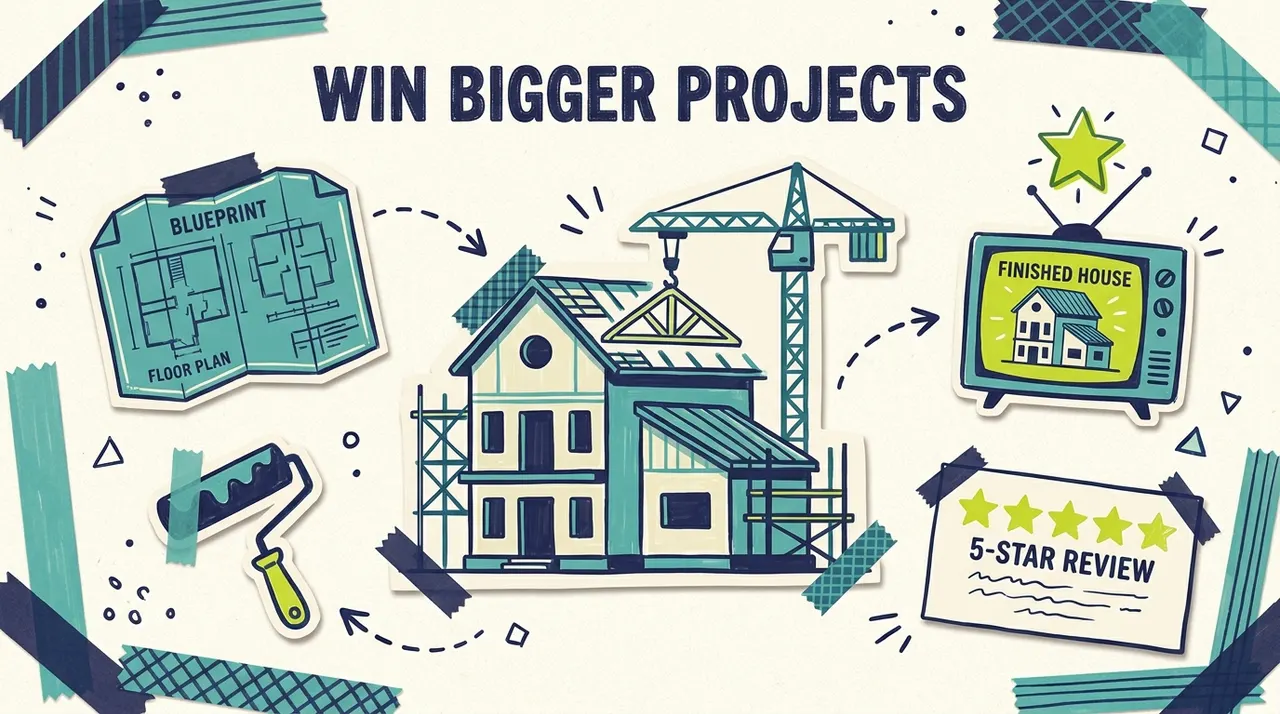
Home builders and remodelers sell something almost no other local business sells: a project worth $20,000 to $500,000 or more, decided over months, by a household that will live inside the result for years. That changes everything about how you should advertise. A pizza shop can win a customer with a coupon. You need to win trust, demonstrate craftsmanship, and stay visible through a consideration cycle that can run from first Pinterest board to signed contract in anywhere from three months to two years.
This guide compares the seven advertising channels that work best for custom builders, design-build firms, and remodeling contractors in 2026: what each channel does, what it costs, and how to combine them into a budget that produces signed projects instead of tire-kicker calls. If you run a service-call trades business (HVAC, plumbing, repairs), our guide to the best advertising for contractors and home services is the better fit; this page is for project businesses.
What "best" advertising means for project businesses
Volume metrics that matter for service businesses mostly don't matter for you. Two hundred website visits mean nothing if none of them owns a home in your service area with a six-figure renovation budget. For builders and remodelers, three outcomes define advertising success:
Qualified consultation requests. A homeowner (not a renter), in your service area, with a project type you do, and a budget in your working range. One qualified consultation is worth more than fifty unqualified form fills.
Cost per signed project. The only ROI number that ultimately matters. If your average remodel produces $30,000 in revenue at healthy margin, spending $2,000-$4,000 in advertising to win it is excellent economics. Builders with $300K+ custom projects can justify far more.
Pipeline durability. Projects sign months after first contact. The best channels for your category keep you visible across that entire window, not just at when someone searches.
Because ticket sizes are large and decision cycles are long, your advertising mix should weight heavier toward trust-building and staying-power than almost any other local category.
The seven channels worth considering
1. Google Ads (Search)
When a homeowner types "kitchen remodeler near me" or "custom home builder [city]," they're deep in consideration. Search ads capture that intent, and for remodelers it remains the most reliable direct-response channel.
The catch is cost and competition. Home improvement keywords are among the most expensive in local advertising; clicks of $15-50 are common in metro markets, and lead-quality varies wildly. A "kitchen remodel cost" click might be a homeowner two years from acting, or a student writing a paper. Expect to invest $1,500-$3,000 monthly before search produces consistent signal, and pair every campaign with a strong portfolio page, because a click that lands on a thin website is money burned.
What search can't do for you: reach the much larger pool of homeowners who are dreaming but not yet searching. That pool is where the next two years of your pipeline lives.
2. Portfolio platforms (Houzz, Instagram-as-portfolio)
Builders and remodelers have an advantage most businesses would kill for: your work photographs beautifully. Platforms built around project imagery (Houzz especially, plus an Instagram grid treated as a portfolio) function as both discovery and validation.
Houzz pro listings put your projects in front of homeowners actively collecting ideas. The leads skew early-stage, but early-stage is exactly when households form their shortlist. The real function of these platforms isn't lead volume; it's that nearly every serious prospect will check them before calling you. A dated profile with twelve photos from 2019 quietly kills referrals you never knew you had.
Cost: listing fees and the discipline to photograph every finished project professionally. The photography pays for itself across every other channel you run.
3. Meta and Instagram ads
Paid social works for project businesses in a specific way: visually interrupting homeowners with work that makes them imagine their own house transformed. Before-and-after carousels, 30-second project walk-throughs, and finished-space reels consistently outperform any text-led creative.
Targeting by homeownership, zip code, and home-value proxies gets your projects in front of plausible buyers. Expect awareness and early-stage inquiries rather than ready-to-sign leads, and budget $500-$1,500 monthly for a meaningful presence. The same photo and video assets you create here feed your portfolio platforms and your TV creative, so produce once, use everywhere.
4. Streaming TV (CTV)
Here's where the economics have shifted most since 2023. Connected TV advertising puts your projects on the living room screen, the largest, most trusted canvas in the house, and it now fits a builder's local budget: typical CPMs run $15-35, and platforms like Adwave start at $50 with zip-code-level targeting.
Three reasons CTV fits this category unusually well:
The decision is made on the couch. Remodels and custom builds are joint household decisions made in the very room your ad plays in. Both partners see the same spot, often together, which no search or social channel reliably achieves.
Your inventory is cinematic. A 30-second spot of finished kitchens, great rooms, and exteriors looks like programming, not advertising. Categories with weak visuals struggle on TV; you won't.
The consideration cycle rewards persistence. A homeowner who sees your name weekly for eight months starts their project by calling you, often without ever clicking an ad. That long-cycle trust accumulation is exactly what TV does and digital struggles to do. Our home services TV advertising guide covers the broader trades context.
Budget guidance: $500-$2,500 monthly sustains meaningful local frequency. Start with one spot built from your best portfolio page and run it for at least 90 days; see our playbook on testing TV advertising without a big budget.
5. Local SEO and Google Business Profile
Free, foundational, and disproportionately important in a category where every prospect researches before contact. Your Google Business Profile needs current project photos, consistent reviews, and service-area accuracy. Your website needs project galleries organized by type (kitchens, baths, additions, custom builds) because that structure matches how homeowners search and how Google ranks.
Reviews deserve special attention: a remodeler at 4.8 stars with 90 reviews wins shortlists against an identical firm at 4.6 with 14. Build the post-project review ask into your closeout process. The cost is time, not dollars, and the compounding return runs for years.
6. Referral and realtor networks
Most established builders get 40-60% of projects from referrals, then invest almost nothing in making referrals easier to give. Formalize it: a simple thank-you program for past clients, relationships with the realtors who constantly meet buyers planning renovations, and connections to architects and interior designers who specify before contractors are chosen.
One productive realtor relationship can deliver more signed projects than a year of paid clicks. The investment is lunches and follow-through rather than media spend, which is exactly why your competitors neglect it.
7. Jobsite marketing (signs, wraps, neighbors)
Unfashionable and quietly excellent. Every active jobsite is a months-long billboard in the precise neighborhood where your next customers live. Quality yard signage, clean vehicle wraps, tidy sites, and a simple "we're working at #214" postcard to the surrounding streets converts proximity into inquiries. Renovation activity clusters; neighbors of your current project are statistically your best prospects. Cost is minimal; the discipline is everything.
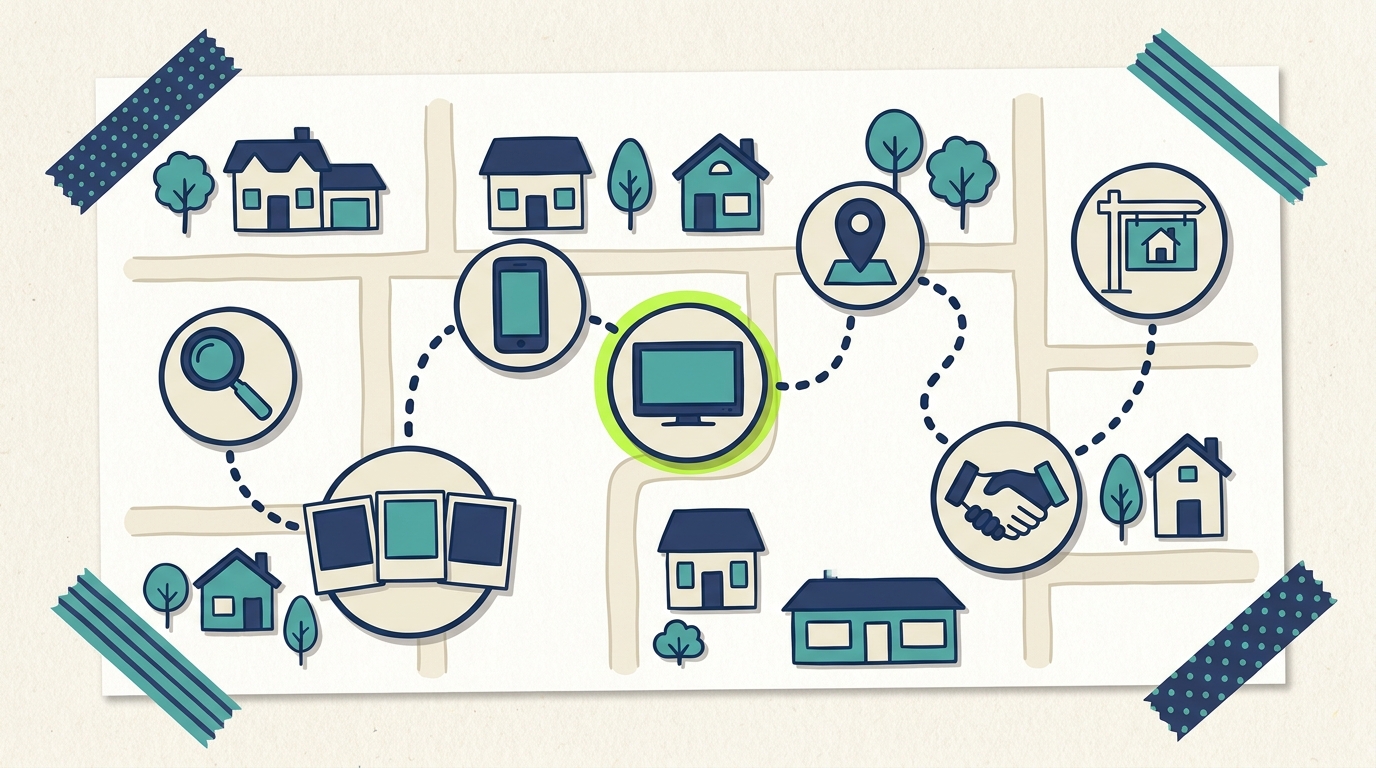
Side-by-side channel comparison
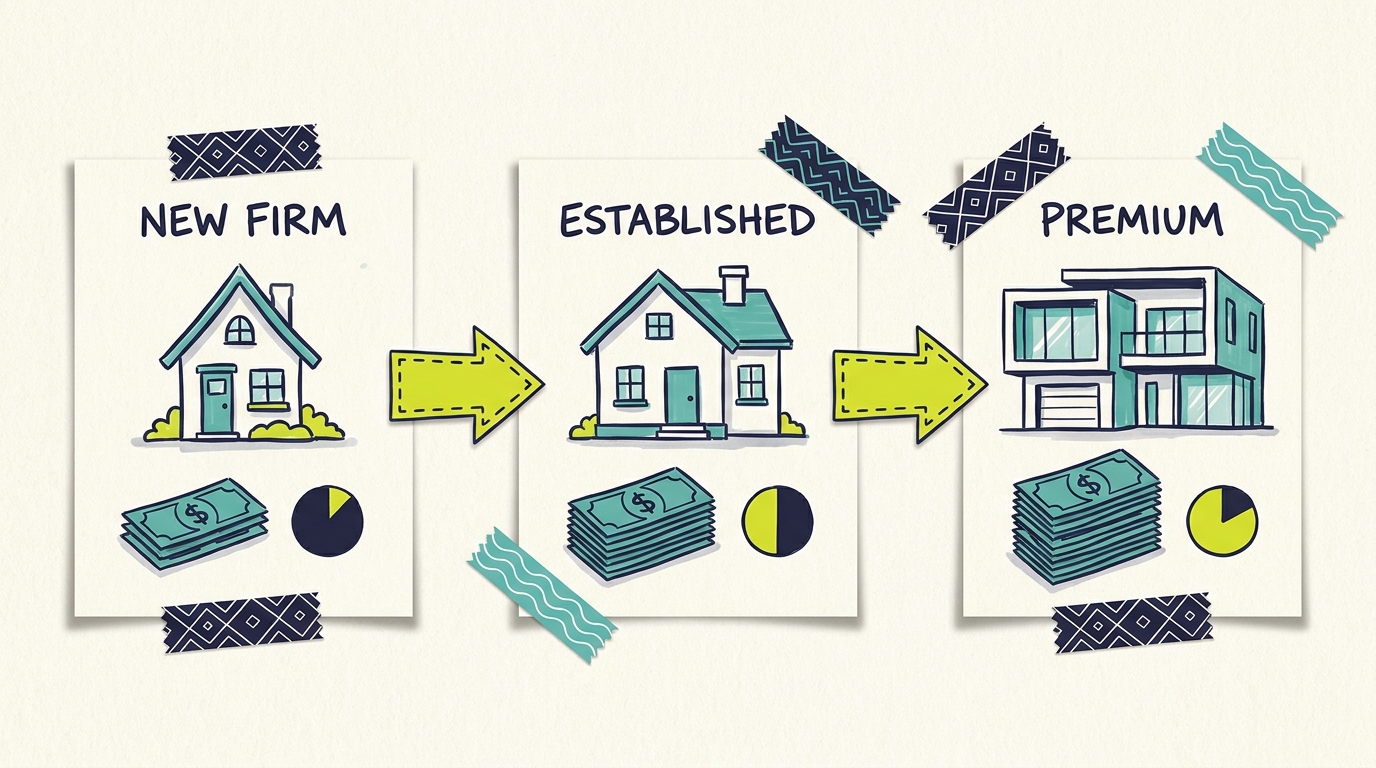
Recommended budget allocation by company stage
Newer firm (under 3 years, building pipeline)
Roughly $2,000-$3,500/month. Weight toward demand capture and proof: 40% Google Ads, 25% Meta/Instagram, 20% CTV, 15% photography and portfolio platforms. Jobsite marketing and review-building cost discipline, not budget, so do both from day one. The priority is generating enough projects to build the portfolio that powers everything later.
Established firm (3-10 years, steady referrals)
Roughly $3,500-$6,000/month. This is where CTV earns a bigger slice: 30% Google Ads, 30% CTV, 20% Meta/Instagram, 20% portfolio platforms and photography. Your referral base means you need fewer raw leads and more brand preference, which is TV's specialty. Most firms at this stage are over-invested in search clicks they no longer need and under-invested in the trust channels that raise close rates.
Premium/custom builder (high-ticket, selective)
Roughly $5,000-$10,000/month with a brand-led mix: 35% CTV, 25% portfolio platforms and premium photography/video, 20% Google Ads on high-intent custom-build terms, 20% realtor/architect relationship development. At $300K+ average projects, a single incremental signed contract funds years of this budget. Your buyers expect to discover you the way they discover premium brands, which means being visible in premium contexts before they search. Understanding what advertising costs across channels helps calibrate.
Builders vs remodelers: what changes
The channel set is the same; the weighting differs.
Remodelers live closer to search demand ("bathroom remodel [city]" has real volume) and shorter cycles (3-9 months). Weight search and jobsite marketing higher. Your before-and-after assets are your superpower on social and TV.
Custom home builders face thinner search volume, longer cycles (1-2 years), and buyers who often start with land, architects, or realtors rather than Google. Weight referral networks, premium brand presence, and CTV higher; the household-trust channel matters most when the ticket is highest. Lot signage on owned land parcels is your jobsite marketing equivalent.
Design-build firms straddle both: run the remodeler playbook for renovation lines and the builder playbook for custom work, with shared creative assets.
Measuring results when projects take months to sign
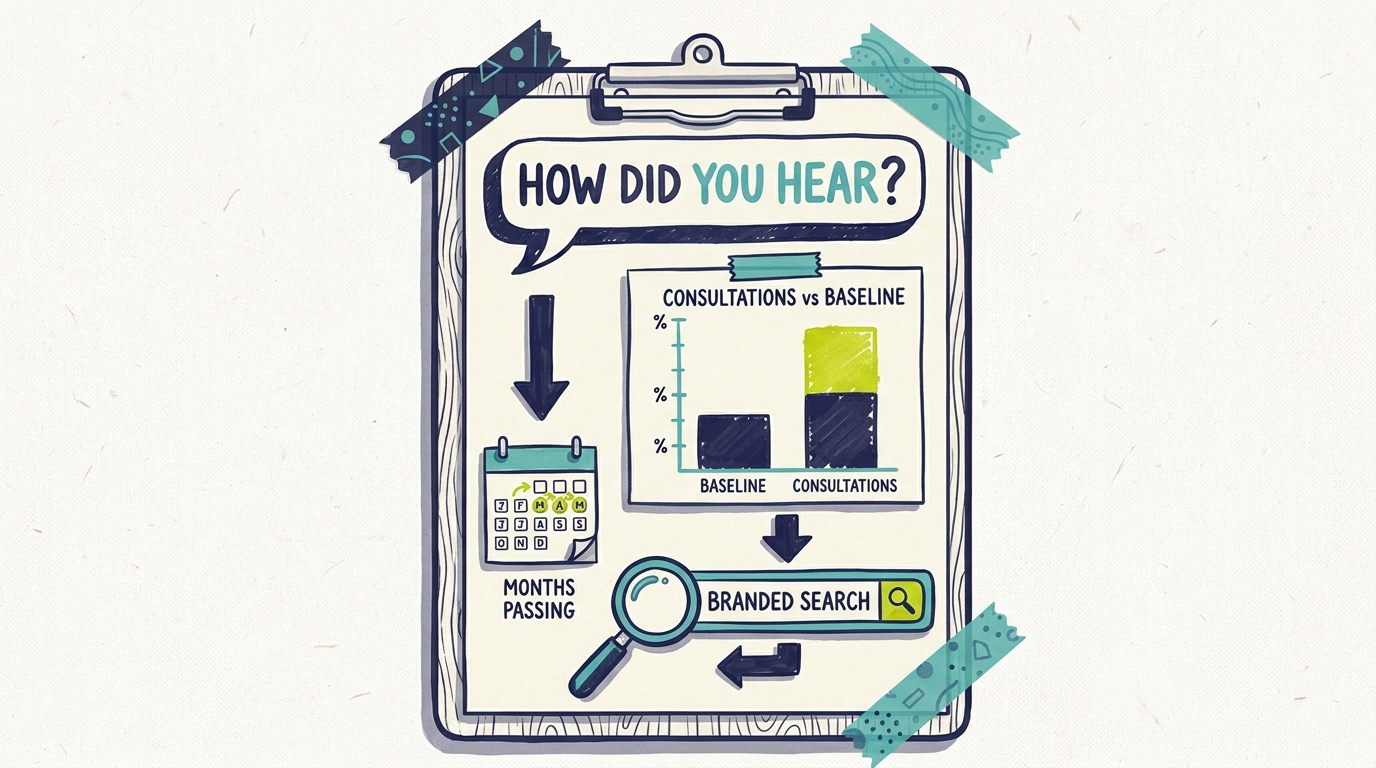
Long sales cycles break last-click attribution, so build measurement around three layers:
Ask every inquiry how they heard about you, and record it in your CRM at intake. Imperfect but irreplaceable; over a year, the pattern is clear.
Track consultation requests monthly against trailing baseline. When you add a channel (say, CTV in March), compare total qualified consultations in the following quarters against the prior-year period. Demand-creation channels show up here before they show up in attribution.
Watch branded search and direct traffic. Homeowners who see your TV spot or jobsite sign Google your name later. Rising branded queries are the early signal that awareness spend is working.
Score channels quarterly on cost per qualified consultation and cost per signed project, not clicks. A channel producing four consultations a quarter at $400 each, closing one $60K project, is outperforming a channel producing forty form fills that close nothing.
Five mistakes that waste builder ad budgets
1. Buying clicks before the portfolio is ready. Sending expensive search traffic to a website with eight photos and no project galleries is the most common money leak in this category. Fix the destination before paying for the traffic. Every dollar spent on professional photography multiplies the return of every other channel.
2. Quitting demand-creation channels at 60 days. TV, social, and jobsite presence build pipeline on your customer's timeline, not yours. A remodeling prospect who saw your spot in June may call in January. Firms that judge these channels on a 60-day window kill them exactly when the compounding starts.
3. Chasing lead volume instead of lead quality. Forty form fills from a "free estimate" campaign feel productive and close nothing. One pre-qualified consultation from a referral, a jobsite neighbor, or a household that's watched your work on TV for six months closes at many times the rate. Optimize the mix for cost per signed project and the right channels rise quickly.
4. Generic creative in a visual category. Stock photos of smiling couples and toolbelts say nothing. Your finished projects are the most persuasive asset you own; any ad, on any channel, that doesn't lead with them is leaving your biggest advantage unused.
5. Ignoring the neighbors. Every project you run is surrounded by the most qualified audience you'll ever find: homeowners of similar houses, similar incomes, watching your crew work for months. A $200 investment in signage and a neighborhood mailer around each jobsite routinely outperforms another $200 of clicks.
Common questions answered
What's the best advertising for a remodeling company just getting started?
Start with the free foundation: a complete Google Business Profile, professional photos of every project you've done (even three projects photographed well beats thirty photographed badly), and a review ask built into your closeout. Put your first paid dollars into Google Ads on tight, service-specific keywords, and add one demand-creation channel (Meta or CTV) as soon as the budget allows. Avoid spreading $1,500 across five channels; fund two properly.
How much should a home builder or remodeler spend on advertising?
Established remodelers typically invest 3-6% of revenue in marketing; custom builders often run 2-4% because referrals carry more weight. In practice that means $3,500-$6,000 monthly for a $1-2M remodeling firm. The more useful frame is cost per signed project: if your average project is $40,000 and your blended advertising cost per signed project is under $3,000, your mix is healthy and usually worth scaling.
Is TV advertising realistic for a local remodeling company?
Yes, and the fit is better than most categories. Streaming TV targets by zip code, costs $15-35 per thousand household impressions, and showcases project work cinematically on the largest screen in the house, where renovation decisions get discussed. With Adwave, the ad itself is generated free from your website in about two minutes and subscriptions start at $50, so a meaningful 90-day local test fits inside what most firms already spend on a month of Google clicks.
Do Houzz leads turn into projects?
Directly, sometimes; indirectly, constantly. Houzz-originated inquiries skew early-stage and need patient nurturing. The larger value is validation: serious prospects who heard about you elsewhere will check your Houzz and Instagram presence before calling. Treat these platforms as your always-on portfolio first and a lead source second, and keep them current.
How do I stop getting unqualified leads who can't afford my work?
Qualify in the advertising itself. Show premium projects and name your starting range ("kitchens from $45K") in ad creative and on landing pages; it filters before the phone rings. Channels also differ structurally: referral, jobsite, and TV-driven inquiries arrive pre-sold on you specifically and qualify at much higher rates than cold search clicks on generic remodel terms.
How long before advertising produces a signed project?
Match expectations to your cycle. Search can produce consultations in weeks, but those prospects still take months to sign. Demand-creation channels (TV, social, jobsite presence) typically need 90-180 days before inquiries begin and 6-12 months before signed-project attribution is visible. The firms that win treat advertising as pipeline infrastructure measured in quarters, not a faucet measured in weeks.
Build the mix that matches your projects
If TV is the missing piece in your mix, it's never been easier to test. See how Adwave works: generate a spot from your portfolio page in about two minutes, target the zip codes you build in, and be on 100+ networks this week.


