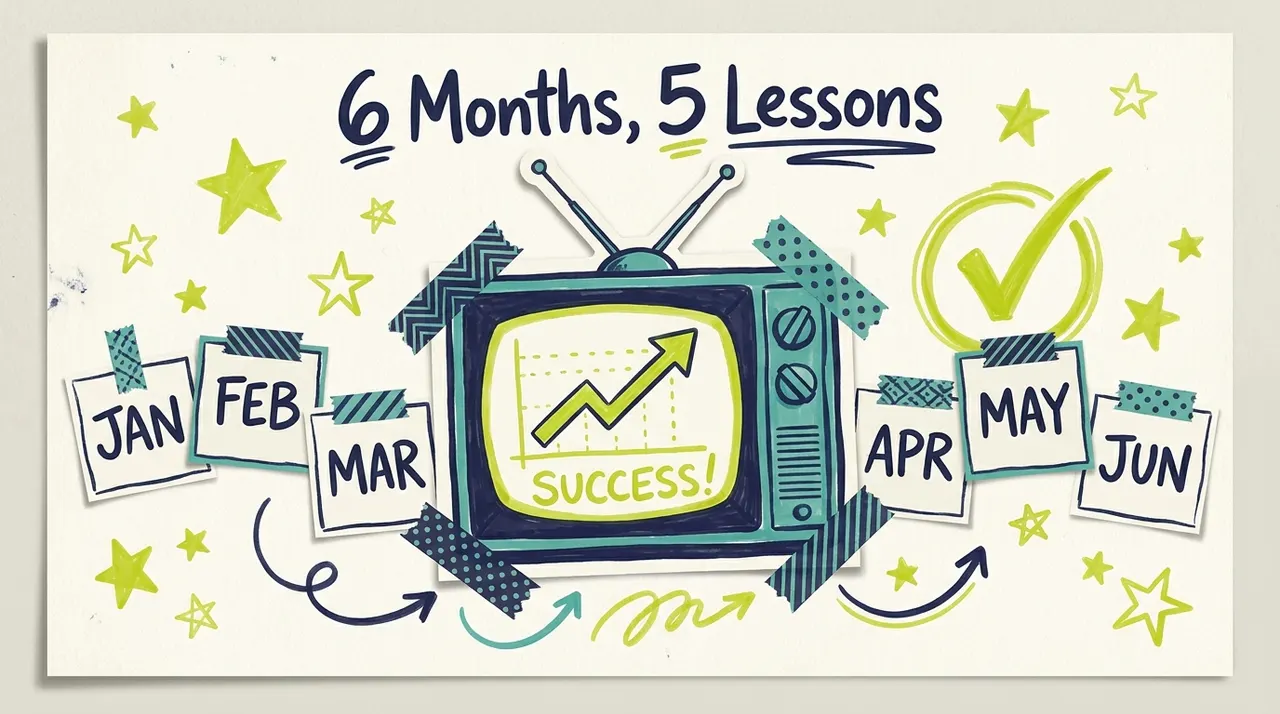
Six months is a useful distance. Long enough for patterns to separate from noise, short enough that the lessons still apply to the budget you're planning right now. So as the first half of 2026 closes, here's our honest read on what worked for small business TV advertisers from January through June, what didn't, and what the second half is about to demand.
The short version: the businesses that won in H1 treated streaming TV less like an experiment and more like a discipline. The tactics below are theirs.
The backdrop: the audience question is settled
Every prior year of small business TV advertising carried an asterisk: "assuming your customers are streaming." That asterisk is gone. Streaming's share of total TV time has held above the 40% mark since mid-2025 and now consistently tops broadcast and cable combined, according to Nielsen's The Gauge. The 55+ audience, the last holdout demographic, kept migrating as live sports and broadcast staples moved onto streaming platforms.
For a local business, that settles the only audience question that matters: your customers are watching streaming TV this evening, whatever their age, whatever your category. H1 2026 was the first half-year where we stopped hearing "but is my audience there?" almost entirely. The questions got better, and the five lessons below are the answers that proved out.
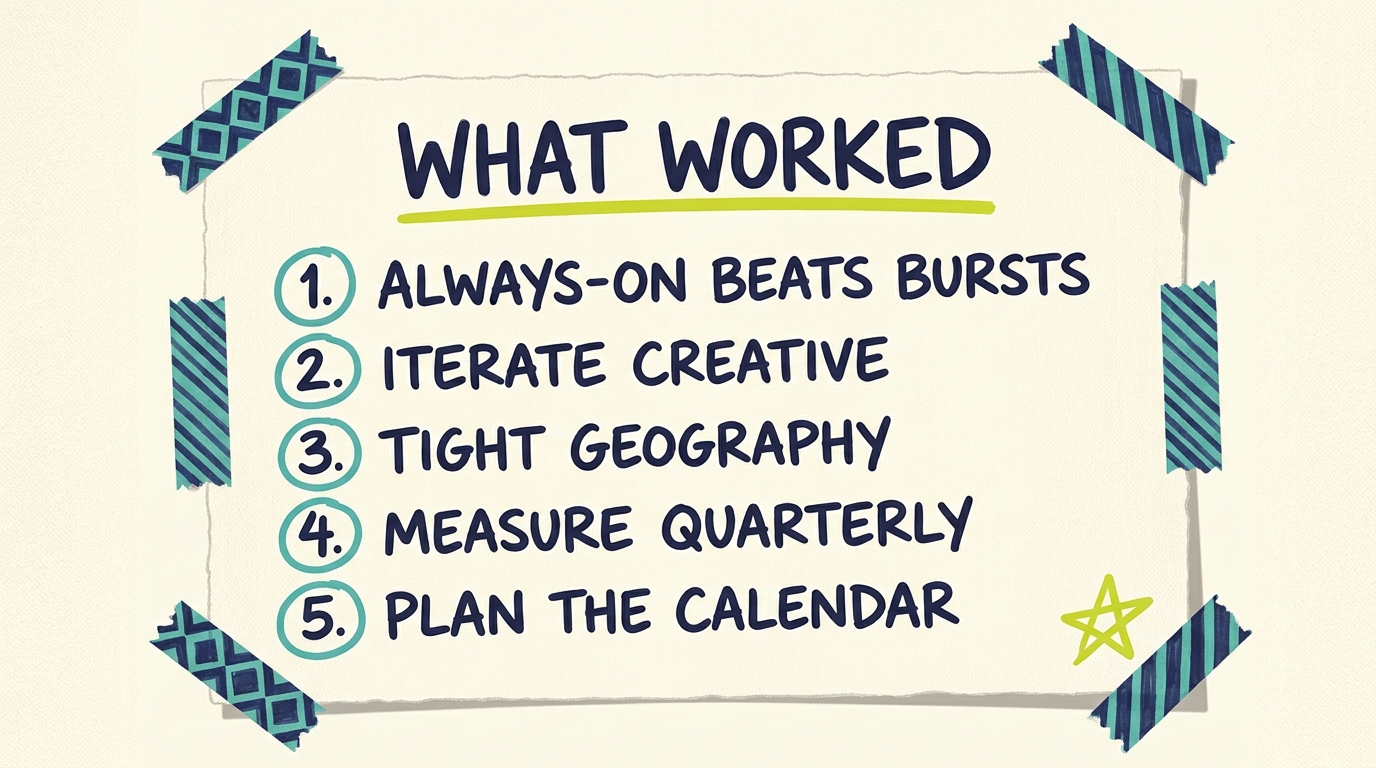
Lesson 1: Baseline beats novelty
The advertisers who got the most from CTV in H1 stopped treating it as the exciting new channel and started treating it as infrastructure, the same way they treat search ads or their Google Business Profile. That mental shift changed behavior: budgets moved from one-off trials to standing monthly line items, creative got refreshed on a schedule instead of when someone remembered, and performance reviews happened quarterly with real intake data instead of vibes.
The pattern was visible across the campaigns on our platform: the accounts that ran continuously through H1 built measurably more branded search and direct traffic than the accounts that flighted on and off, even at similar total spend. Presence compounds; bursts evaporate.
Lesson 2: AI creative became the default workflow
A year ago, AI-generated TV ads were a curiosity. In H1 2026 they quietly became the standard way small businesses get on television, and the interesting shift wasn't the generation itself (that's been fast for a while; about two minutes from URL to broadcast-quality spot) but the iteration culture around it.
Because creative is free to produce and fast to revise, H1's sharper advertisers treated their ads like drafts instead of monuments: testing alternate hooks, swapping seasonal messages in and out, and refreshing creative quarterly as routine maintenance. The full story of that shift is in our piece on how AI is changing small business TV advertising, but the H1 takeaway is simple: the cost of a better ad dropped to the cost of asking for one, and the businesses that asked often pulled ahead.
Lesson 3: Tight geography outperformed broad reach
The most consistent performance pattern of H1 was also the least glamorous: campaigns concentrated on a small, evidence-based set of zip codes beat campaigns spread across whole metros, over and over. The mechanism is frequency. A budget that delivers 4-6 monthly exposures per household across 12 zips builds recognition; the same budget delivering 1-2 exposures across 60 zips builds nothing and looks like the channel failed.
H1's winning setup was boring and repeatable: draw the trade area from customer addresses, match the scope to how you fulfill, and expand one ring at a time only after the core zips show response. If you internalize one piece of campaign math this year, make it the frequency and reach arithmetic; it explains more H1 outcomes than any other single factor.
Lesson 4: Measurement grew up
The "TV is unmeasurable" objection had a bad six months. The H1 standard toolkit for local advertisers settled into a reliable stack: QR codes on the end card for direct response tracking, branded search and direct traffic as the recognition layer, and a disciplined "how did you hear about us?" question at intake as ground truth. None of it is exotic; all of it together turns a TV campaign into something you can evaluate by quarter.
The maturity showed in behavior, too. H1 advertisers increasingly ran structured A/B comparisons between ad variations instead of judging creative by committee, and made trim-and-expand targeting decisions from dashboard geography data instead of instinct. Measurement stopped being a reason to avoid TV and became the routine that makes it improvable.
Lesson 5: The calendar mattered more than ever
H1 2026 rewarded advertisers who planned around the calendar instead of discovering it. The midterm primary season made political inventory dynamics a real consideration in contested markets for the first time this cycle, and the local businesses that understood how primary season affects CTV kept their presence steady while competitors got surprised. Seasonal businesses that pre-built their flights (spring home services, early summer travel, July 4th retail) caught their demand windows; the ones that started creative the week demand arrived missed the front half of it.
The lesson carries straight into H2, where the calendar gets louder: general election season, back-to-school, and the Q4 holiday window all sit in the next six months, and all three reward the advertiser who plans in the prior quarter.
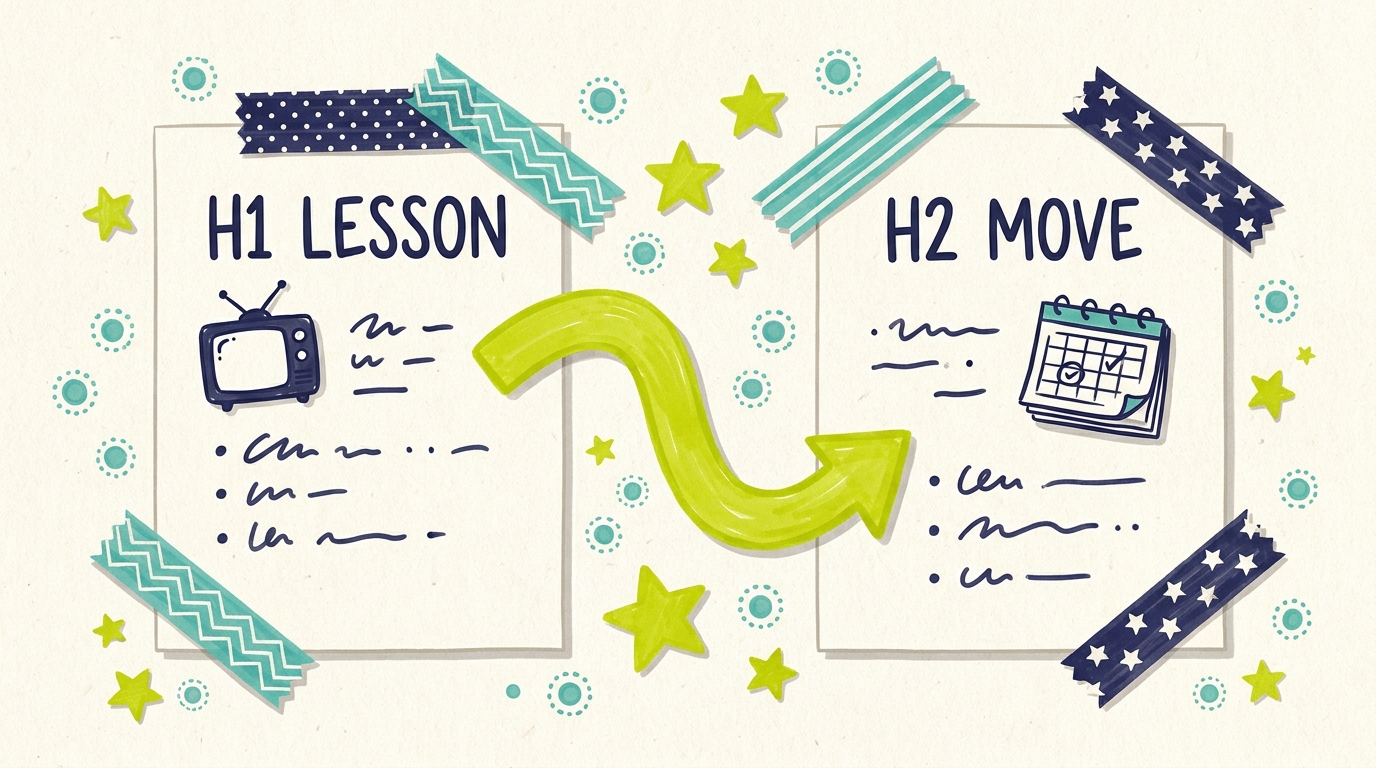
H1 lessons, H2 moves
What didn't work in H1
The retrospective is only honest if it includes the failure patterns, and H1's were remarkably consistent:
The one-month verdict. The most common H1 mistake was running a single month, seeing no immediate flood of customers, and concluding TV doesn't work. Awareness channels build on repetition; every measurement framework worth using evaluates TV in quarters. The businesses that quit at week five usually quit two weeks before their branded search started moving.
The metro-wide map. Aspiration-driven targeting (a two-location business covering an entire metro) diluted frequency below the recognition threshold and produced exactly the invisible results the math predicts. This mistake was so common, and so fixable, that it deserves its own line in the table below.
The set-and-forget creative. Ads that ran unchanged from January to June were paying for diminishing attention by spring. When creative refreshes cost nothing and take minutes, a stale spot is a choice.
The unattributed win. Some H1 campaigns worked and their owners never knew, because nobody asked customers how they heard about the business and nobody watched branded search. The cheapest measurement tool in advertising is a question at the front desk.
None of these are TV problems; they're discipline problems, and each one's solution is already sitting in the lessons above.
What H2 2026 will ask of you
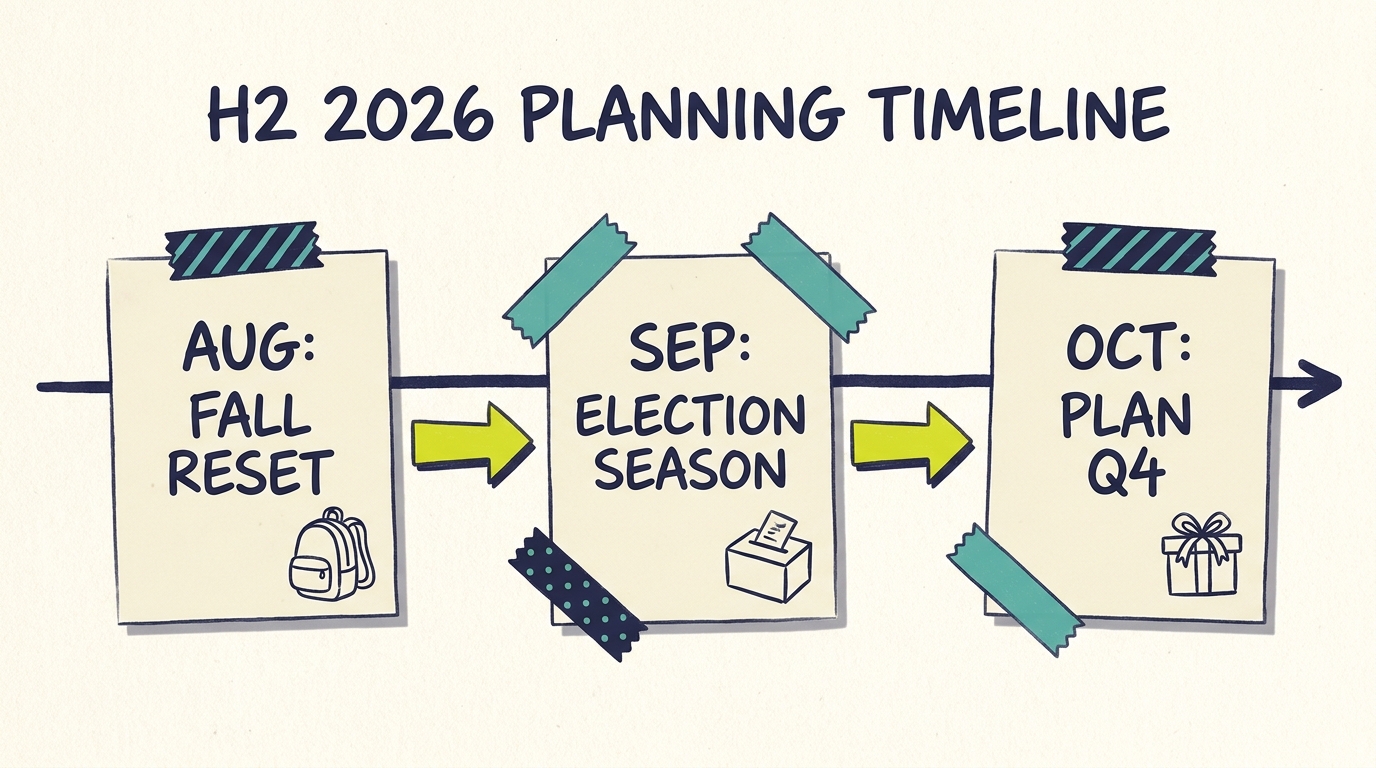
Three things, in order of arrival:
Election season (September onward). The general election cycle concentrates political spend in contested markets. For local advertisers the playbook from primary season scales up: maintain your presence, expect more competition for attention in swing geographies, and lean on the fact that streaming inventory is far deeper than the linear TV scarcity stories of old cycles.
The back-to-school and fall reset (August-September). Households re-form routines in fall, which makes it the year's second-best window (after January) for service businesses, education, fitness, and healthcare to build new-customer awareness.
Q4 planning (decide by early October). Holiday-quarter campaigns work when the awareness is built before the buying window opens. Retailers, e-commerce, and gift-adjacent categories should have creative and budgets settled in early fall, not Thanksgiving week.
Common questions answered
What was the biggest small business TV advertising trend of H1 2026?
Normalization. Streaming TV stopped being the experimental channel and became a standing line item for small businesses, with AI creative generation as the default production workflow. The winning behaviors looked like infrastructure management: continuous presence, scheduled creative refreshes, and quarterly performance reviews built on real intake data.
Is CTV advertising still growing in 2026?
Yes, on both axes that matter. Audience time keeps shifting toward streaming (Nielsen's The Gauge has streaming holding above 40% of total TV time and ahead of broadcast and cable combined), and industry analysts including eMarketer continue to project double-digit CTV ad spend growth. For small businesses, the practical effect is deeper inventory and better tools at accessible prices.
How much should a small business have spent on TV advertising in H1 2026?
The campaigns that produced readable results typically ran $500-$2,000 monthly, concentrated on a tight zip set at 3-6 exposures per household per month. The total mattered less than the structure: a steady $800 monthly campaign over six months consistently outperformed a single $5,000 burst, because recognition compounds with continuity.
What should small businesses do differently in H2 2026?
Plan around the calendar earlier. Election-season competition arrives in September, the fall routine-reset window opens in August, and Q4 holiday campaigns need creative and budget decisions by early October. The advertisers who treated H1's calendar moments as planning deadlines rather than surprises captured them; H2's calendar is louder.
Did political advertising affect local businesses in H1?
In contested primary markets, yes, mostly as increased competition for attention rather than blocked access; streaming inventory runs much deeper than old linear scarcity. The H2 general election season concentrates that effect in swing geographies. The defense is unchanged: steady presence, so your brand is the familiar one when the political noise clears.
The half-year habit
If you spent H1 watching from the sidelines, the second half starts in two days. See how Adwave works: your first ad is free to create, takes about two minutes to generate, and campaigns start from $50.