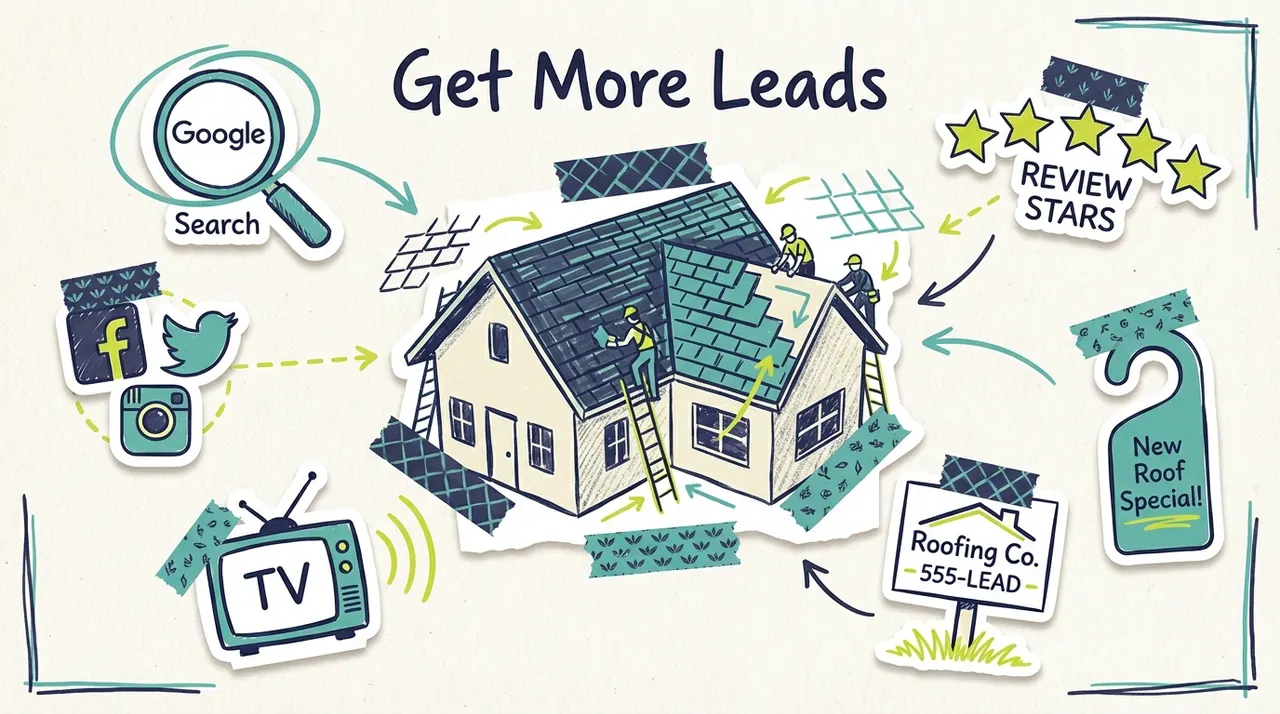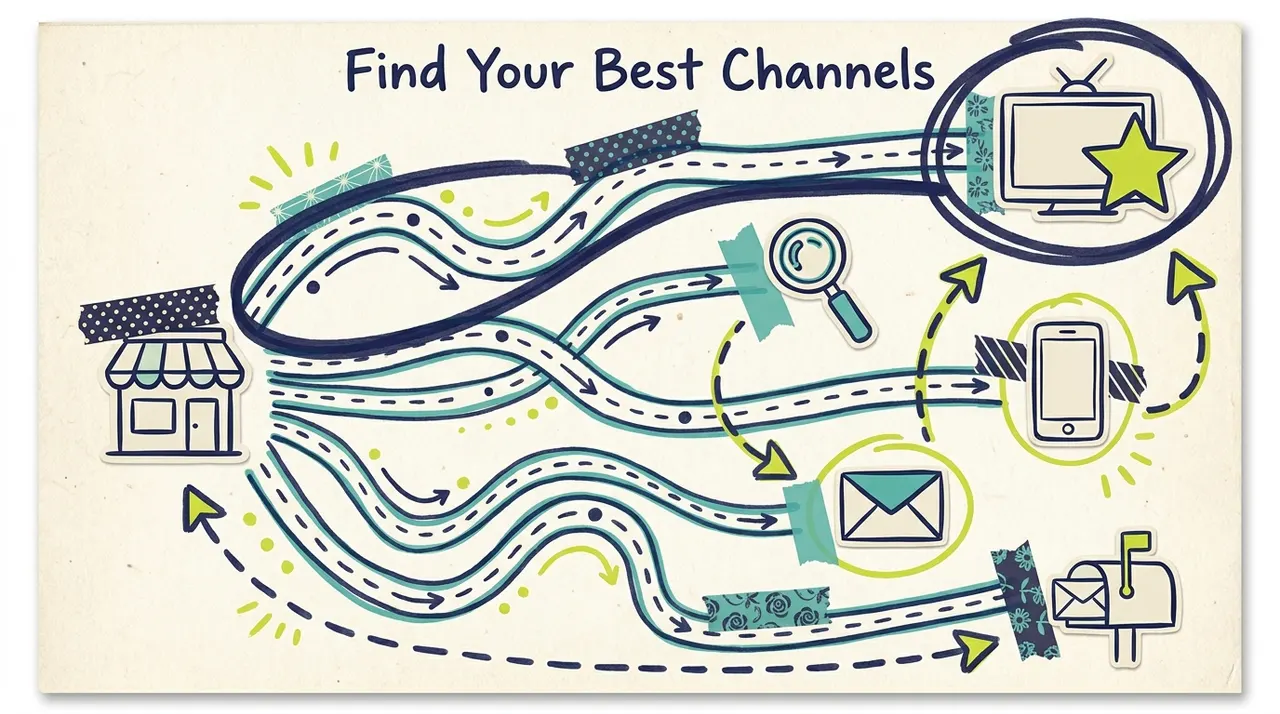
You're probably feeling this already. A decent number of people visit your site, check your services, maybe read a blog post, then disappear. Social posts bring a little attention one week and almost none the next. Referrals come in waves. Paid ads can work, but they stop the moment you stop funding them.
That's why small businesses eventually end up asking the same question: how do you create something once that keeps building your audience over time?
The answer is usually not “post more.” It's building an email list with a lead magnet that solves one real problem fast. If you want to learn how to create a lead magnet that builds your email list, think less about making a giant free resource and more about making a useful one. The best lead magnets are focused, easy to consume, and tightly connected to what you sell next.
Why Your Email List Is Your Most Valuable Asset
If you run a small business, you already know what unstable marketing feels like. One month your Instagram posts get traction. The next month, reach drops. A local promotion works for a week, then traffic cools off. Meanwhile, people who were interested in your business yesterday are gone unless you captured a way to follow up.
That's why an email list matters more than most business owners realize. It gives you a direct line to people who already raised their hand. You're not renting attention from a platform. You're building a contact base you can return to with offers, reminders, education, and seasonal campaigns.
A lead magnet is what makes that list grow. It gives a visitor a clear reason to subscribe now instead of “maybe later.”
Practical rule: Don't ask strangers to “join our newsletter” unless your brand is already strong enough that people want updates for their own sake.
The data backs up the shift away from generic forms. 50% of marketers report higher conversion rates when they use lead magnets as part of their early-stage acquisition strategy, compared with generic contact or subscribe forms according to Zendesk's lead magnet overview.
That makes sense in practice. A generic form asks for trust before giving value. A lead magnet flips that. You offer something specific first, then earn the relationship.
What makes email list growth worth the effort
A healthy list helps you do work that social media and one-time traffic can't reliably do:
Recover missed sales: People who aren't ready today may be ready next month.
Promote repeatedly: Seasonal offers, service reminders, event announcements, and new inventory all get a second chance.
Segment by interest: A downloaded checklist tells you more than a random pageview.
Support local campaigns: TV, direct mail, community sponsorships, and search traffic all work better when they feed an owned list.
If you're starting from scratch, build the asset first. Then keep refining your follow-up. Adwave has a useful primer on email marketing for small businesses getting started in 2026 that pairs well with this approach.
Finding the Perfect Lead Magnet Idea for Your Audience
Most lead magnets fail before design even matters. The idea is too broad, too vague, or too far removed from what the business sells. You don't need a brilliant concept. You need a relevant one.
The strongest offers solve one specific pain point and help the subscriber get a quick win. According to Showit's lead magnet guide, problem-specific lead magnets achieve 30 to 50% higher opt-in conversion rates compared with generic “top-10” guides.
That should change how you brainstorm. Don't start with format. Start with friction.
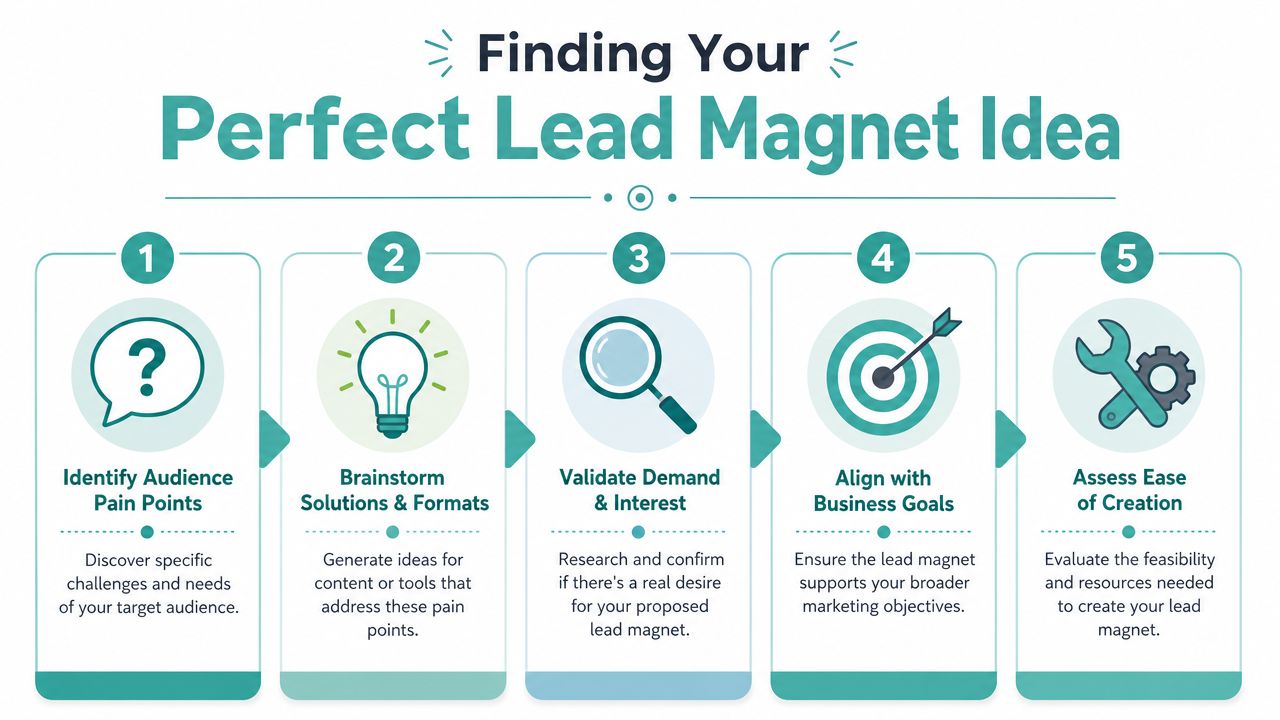
Look for the problem people want solved now
Good lead magnet ideas usually come from places business owners already have access to:
Customer questions: What do people ask before they buy, book, or call?
Sales objections: Where do they hesitate?
Repeated mistakes: What do clients often get wrong before hiring you?
Search intent: What are they actively trying to figure out this week?
Local buying moments: What happens right before someone chooses a provider nearby?
For a home service company, “How to compare HVAC quotes” is stronger than “Home maintenance tips.” For a real estate agent, “Open house prep checklist” beats “Everything first-time buyers should know.” For a dental office, “Questions to ask before cosmetic treatment” is more compelling than “Our monthly newsletter.”
If you need input for the language people already use, Adwave's guide on how to find content ideas your audience searches for is a practical place to start.
Choose a format people can use quickly
A lead magnet should feel easy to consume and immediately useful. That's why quick-win formats tend to outperform broader educational assets.
Here's a simple way to choose.
Choosing Your Lead Magnet Format
Validate before you build
You don't need a formal research project. A quick validation pass is enough.
Try this short test:
Write the headline first. If the promise sounds fuzzy, the offer is fuzzy.
Ask whether it solves one problem. If it solves five, narrow it.
Check the next-step fit. Someone who downloads it should be a logical fit for your service.
Send the concept to a few customers or prospects. Ask which version they'd want first.
Look at competitor offers. Don't copy them. Spot the gap they left open.
If the lead magnet can't help someone make progress in a short sitting, it's probably too broad for a first offer.
That's the filter. Useful now beats thorough later.
Designing and Creating Your Irresistible Offer
Once you've picked the right idea, creation gets much simpler. Most small businesses don't need a designer, a copywriter, or a week of production time to build a lead magnet that works. They need structure.
A strong lead magnet usually has four parts: a clear title, a short introduction, the useful core content, and a soft bridge to the next step. That's enough.
Use a structure that keeps the resource tight
This is the simplest version I recommend:
Title page Use a headline that promises a specific outcome. “The 7-Step Bathroom Remodel Planning Checklist” is stronger than “Bathroom Renovation Guide.”
Short intro Keep this to one paragraph. Tell the reader what the resource will help them do and how to use it.
Core resource This is the checklist, template, worksheet, or guide itself. Make it skimmable. Use headers, white space, and short bullets.
Final page or footer Add a brief introduction to your business and one next action. That could be booking a consult, requesting a quote, or replying to your email.
Write like you're helping a customer, not impressing a peer
Many lead magnets get bloated because the business owner tries to prove expertise instead of deliver value. That usually creates a longer resource with less impact.
Use these writing standards:
Lead with action: Start bullets with verbs.
Cut theory: Keep background explanation short unless it directly helps the reader act.
Use plain language: Write how your customers speak.
Stay narrow: If a section doesn't support the promised outcome, remove it.
A home services lead magnet doesn't need a long essay on industry trends. It needs a checklist the homeowner can use.
What works: a short resource someone can finish and apply. What doesn't: a mini-book that looks impressive but never gets used.
Keep the design clean, not fancy
Canva is usually enough. Google Docs or Google Slides can work too. The point is not to win design awards. The point is to make the resource easy to scan on a laptop or phone.
A practical design checklist:
Use one primary font pair
Stick to your brand colors
Leave generous white space
Use icons sparingly
Export as PDF for easy delivery
Make headings obvious
Number steps when sequence matters
If you're unsure whether something belongs in the asset, ask one question: does this help the reader get the promised result faster? If not, cut it.
Build in a natural next step
Your lead magnet should not end in a dead end. If someone finds the resource useful, they should also understand what to do next.
For example:
A roofer's storm-damage checklist can end with a free inspection invite.
A realtor's seller prep guide can end with a home valuation consultation.
A med spa's treatment planning worksheet can end with a booking link.
That doesn't mean hard-selling inside the resource. It means creating continuity. The free offer solves the first problem. Your service helps with the next one.
Building Your High-Converting Landing Page
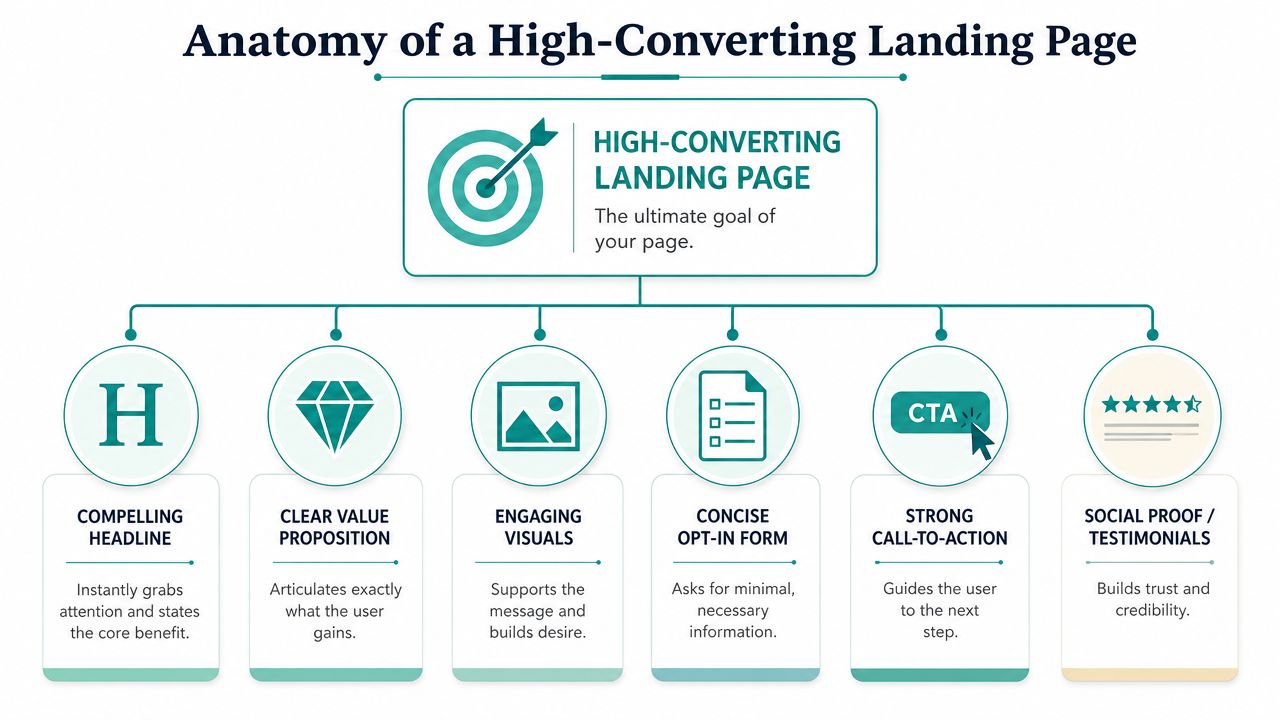
A good lead magnet needs a dedicated page. Not a homepage banner. Not a crowded services page with three sidebars and a dozen exits. A focused landing page.
That distinction matters. According to MailerLite's lead magnet statistics, simple form-based landing pages designed around a single lead magnet converted at 24.44%, while generic pop-up forms yielded about 8.96%. Visitors were roughly 2.7 times more likely to submit their information on a focused page.
That lines up with what most practitioners see in the field. Relevance and clarity beat interruption.
Include the five elements that matter
A first landing page doesn't need much. It does need discipline.
1. Headline
Your headline should mirror the lead magnet promise. Keep it specific.
Good example: Get the Home Renovation Quote Comparison Checklist
Weak example: Join Our List for Helpful Updates
2. Benefit bullets
Use a few bullets to explain what the visitor will get or be able to do. Don't summarize the entire resource. Highlight the outcome.
Spot hidden gaps: Know what to compare before choosing a contractor
Save decision time: Use one checklist instead of scattered notes
Feel more confident: Ask better questions before you sign anything
3. A visual mockup
A simple PDF thumbnail, checklist preview, or device mockup helps make the offer feel real. Canva can handle this easily.
4. Short form
Ask for the least information you need. In most cases, email alone works. Name and email can also work if you'll use the name in follow-up.
5. One call to action
Use one clear button. “Send Me the Checklist” is better than “Submit.”
Remove distractions that weaken conversion
Small businesses often lower conversion by adding too much.
Common issues include:
Extra navigation: Visitors click away before opting in
Multiple offers: They don't know what to choose
Long paragraphs: The value gets buried
Weak button copy: Generic labels reduce momentum
Mismatched message: The ad or post promises one thing, the page says another
If you want a deeper reference for layout and copy decisions, Adwave's resource on landing page best practices that increase conversions is worth reviewing.
Add trust without overcomplicating the page
If you have relevant proof, include it. A short testimonial, a note about who the resource is for, or a line explaining your experience can help.
If you don't have testimonials yet, use specificity instead. A clear promise often does more work than a generic trust badge.
The job of the landing page is simple. Help the right visitor say yes quickly.
Automating Delivery and Nurturing New Leads
Many lead magnet systems falter at this stage. The visitor opts in, then the business manually sends the file later, forgets to follow up, or dumps the subscriber into a generic newsletter list. That wastes the moment of highest interest.
Your delivery should be immediate and automatic. The simpler the system, the better it usually performs.
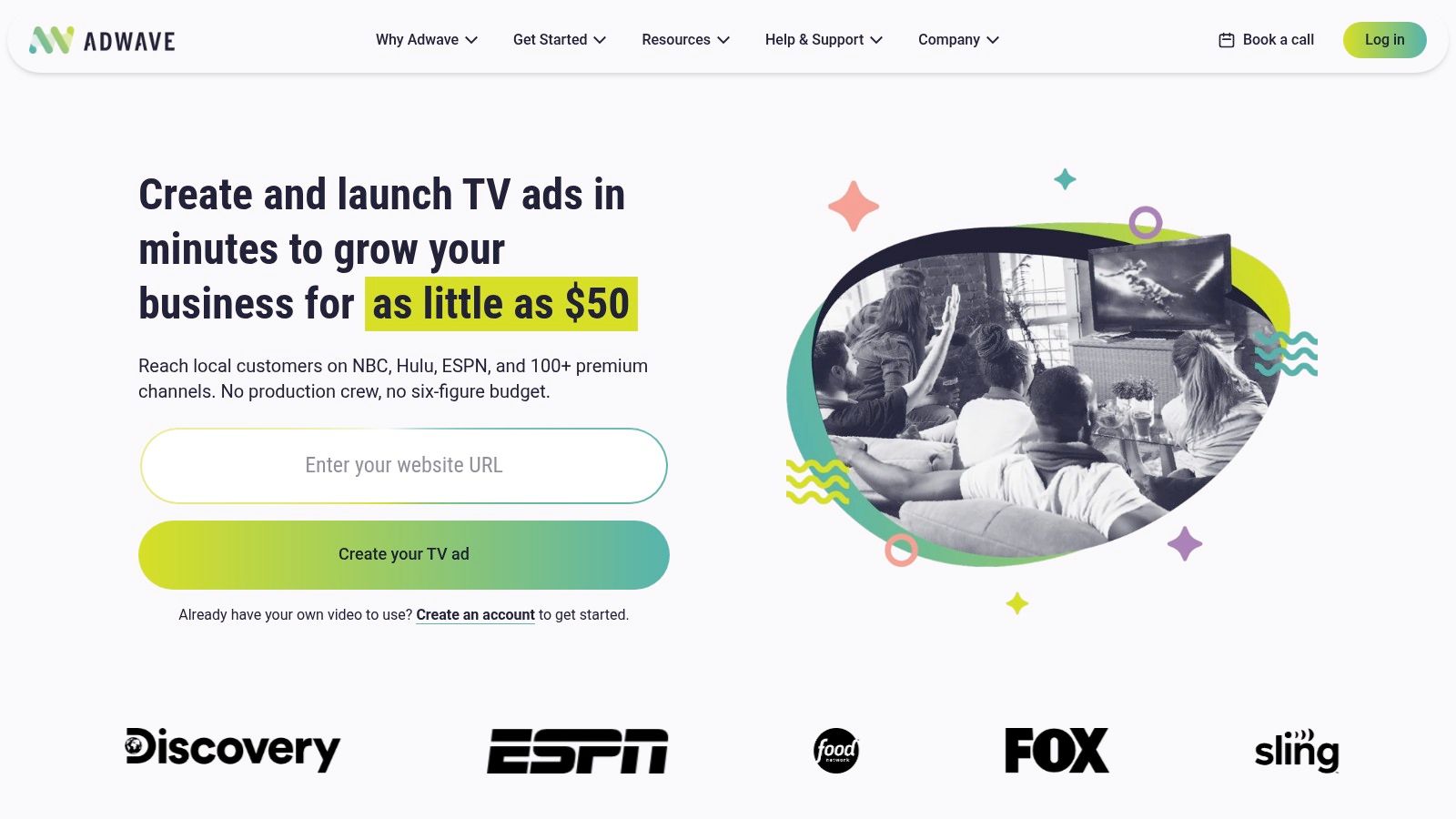
According to Jenna Kutcher's lead magnet guidance, high-value lead magnets work best with an automated workflow that instantly emails the asset upon form submission. That matters even more when traffic comes in bursts from broader campaigns. For businesses using TV, this is especially useful because viewers often respond during or shortly after ad exposure, and tagging subscribers by the offer they saw helps align acquisition with later segmentation.
Set up the basic delivery flow
A clean lead magnet workflow looks like this:
Visitor fills out the form
They land on a thank-you page
An email sends immediately with the asset or download link
They enter a short welcome sequence
You tag them based on the magnet they requested
That tag matters. Someone who downloaded a seller checklist should not receive the same follow-up as someone who requested a financing guide.
Use a three-email welcome sequence
You don't need a long nurture system to start. A simple three-email sequence is enough.
Email one
Deliver the resource. Keep it short. Restate the benefit and link to the asset clearly.
Email two
Help them use it. Share one mistake to avoid, one quick action, or one example from real customer work.
Email three
Bridge to the next step. Invite a consult, estimate request, booking, or reply.
This sequence works because it continues the same conversation that started on the landing page. It doesn't abruptly switch into random promotions.
If you want examples of how to structure that follow-up, Adwave has a helpful guide on welcome email sequences that turn subscribers into buyers.
Why this matters for local marketing too
Lead magnets aren't just for social traffic or search traffic. They fit local campaigns surprisingly well when the offer is specific.
A TV spot, postcard, local event, or community partnership can all point people to a memorable URL or QR code. Once they arrive, the digital system takes over. That's where the awareness and conversion view matters. Offline awareness creates intent. The landing page captures it. Email follow-up keeps the conversation going.
That's one reason platforms like Adwave make sense in this broader strategy. They help local businesses connect top-of-funnel reach with a measurable email capture system instead of treating awareness and lead generation as separate worlds.
Promoting Your Lead Magnet to Grow Your List Faster
A strong lead magnet with no traffic is just a file on your computer. Promotion matters as much as the offer itself.
Small businesses often overcomplicate things. Start with the channels you already control, then layer in targeted promotion where you need more reach.
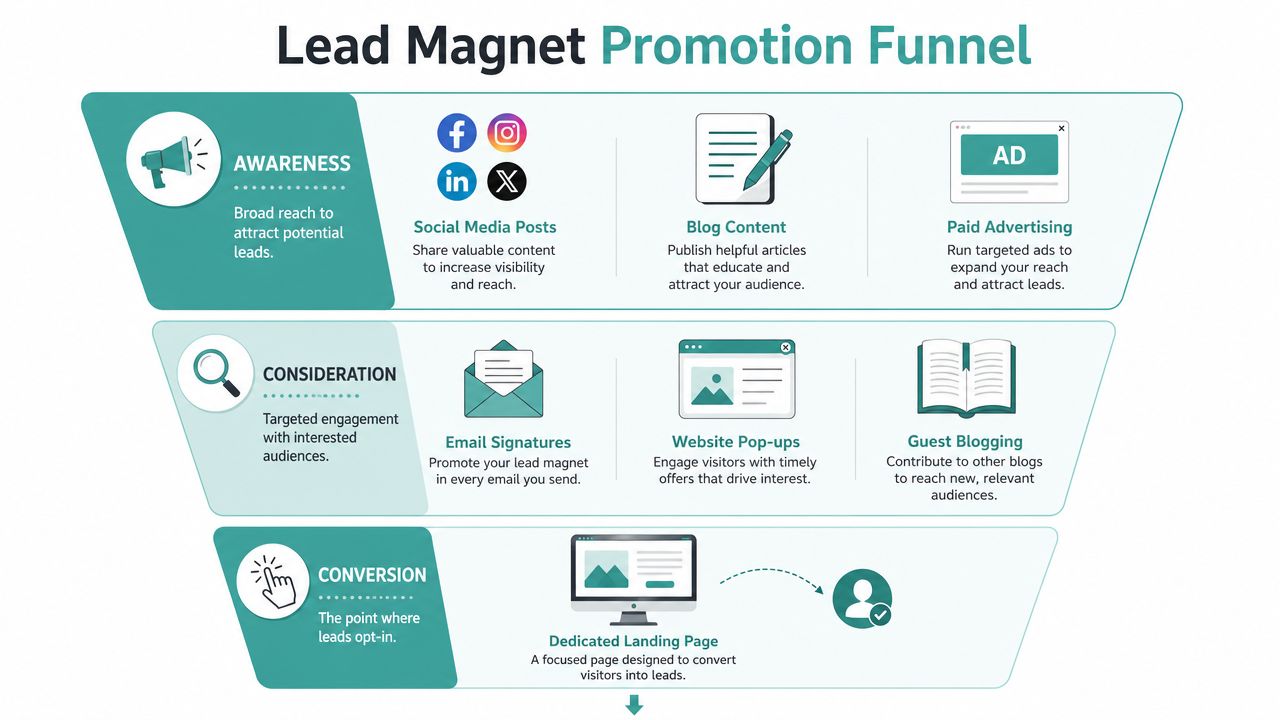
A practical benchmark helps here. According to Wit & Wire's lead magnet funnel guide, a minimal, three-step funnel of landing page, single-field opt-in form, and instant delivery typically achieves 20 to 40% higher list-growth rates, and high-performing funnels for SMBs commonly see 15 to 25% conversion rates when the magnet is tied to a clear pain point.
Start with low-cost placements you control
Before paying for traffic, place the offer where existing attention already exists.
Website homepage: Add a clear banner or section for the magnet
Relevant blog posts: Match the offer to the article topic
Contact page: Give non-buyers another way to stay connected
Email signature: Add a short CTA with a direct link
Social profile links: Point visitors to the dedicated landing page
These placements work best when the lead magnet matches the context. A generic sitewide freebie can work, but a context-specific offer usually feels more useful.
Match the offer to the local audience
If you serve a local market, your promotion should sound local too. Mention the area, problem, and buyer situation clearly.
Examples:
“Winter roof inspection checklist for Phoenix homeowners”
“First-time seller prep guide for Charlotte neighborhoods”
“Questions to ask before choosing a family dentist in Tampa”
That kind of specificity helps the right person recognize themselves quickly.
For real estate professionals especially, it helps to study broader real estate lead growth strategies so your lead magnet fits the full client journey instead of acting as a disconnected giveaway.
Use paid reach when you want to accelerate
Once the offer and landing page are working, paid promotion can scale list growth faster. That can include search, social, and local awareness channels.
TV is often overlooked here, but it can work well for businesses that want broad local reach combined with measurable digital capture. A short ad with a memorable URL or QR code can drive viewers directly into the lead magnet funnel. For an offline-first business, that creates a cleaner bridge between awareness and follow-up than sending people to a generic homepage.
Adwave provides a natural fit. It gives small businesses a practical way to run TV advertising without the traditional complexity, then connect that local visibility to a focused landing page and email workflow. For businesses trying to combine offline attention with online lead capture, that's a strong setup.
Keep the message consistent across every touchpoint
The ad, social post, blog CTA, QR code destination, and landing page should all make the same promise. Consistency lowers friction.
If the ad offers a “5-step local moving checklist,” the landing page should repeat that exact value clearly. Don't change the language halfway through the funnel.
Promotion works best when the audience sees one problem, one promise, and one next step.
If you want to connect local TV reach with a lead magnet funnel that builds your email list, Adwave is a smart option. It helps small businesses launch TV campaigns that can send viewers to focused landing pages, making it easier to turn local awareness into subscribers, leads, and measurable follow-up opportunities.