
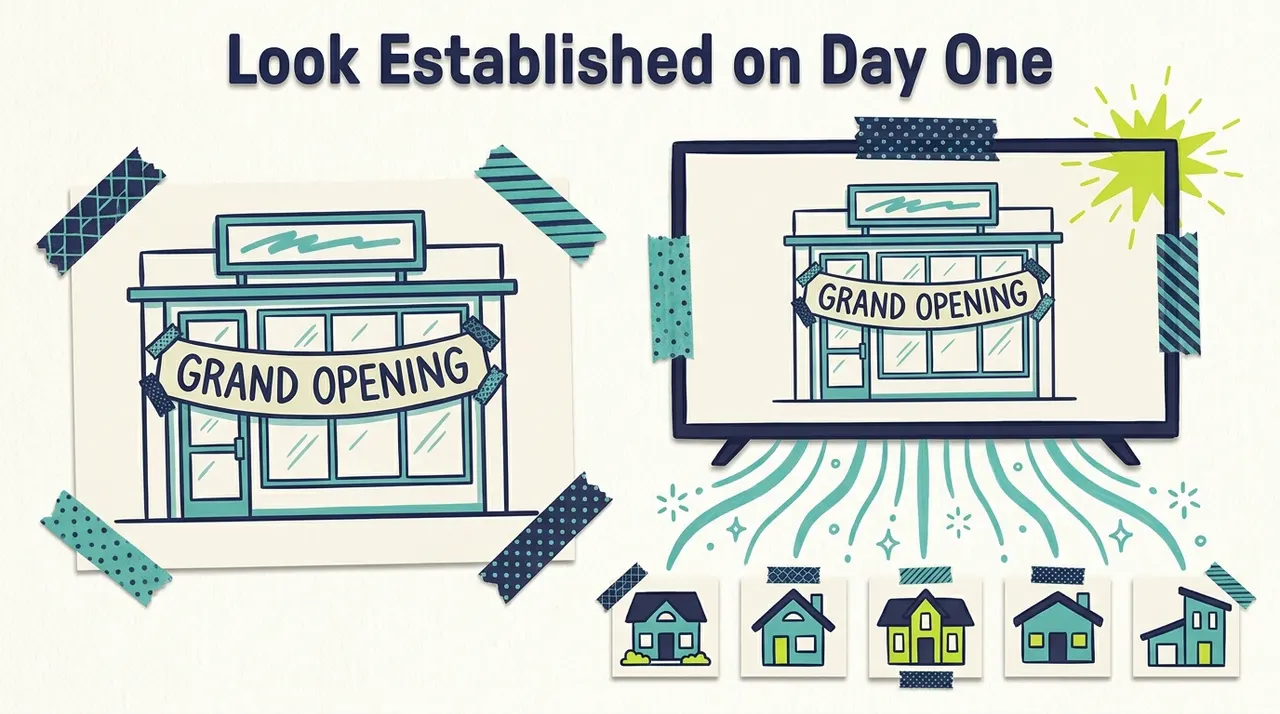
Ask ten advisors when a new business should start TV advertising and nine will say some version of "later." Get established first. Build your Google presence, run some social ads, and maybe in year five, when revenue justifies it, think about television.
That advice was correct for decades, and it's quietly wrong now. The reasons TV belonged in the "later" pile were always about cost and minimums, not about what TV does. Now that a TV campaign costs less than most new businesses spend on a logo, the strategic question deserves a fresh look. The businesses that benefit most from what TV uniquely does (manufacturing trust and familiarity from nothing) are precisely the businesses that have neither. That's new businesses.
This guide makes the case for putting TV in your first-year mix, covers the situations where early TV is a mistake, and lays out a first-90-days plan. For the broader channel comparison, see the best way to advertise a new business.
Where "TV comes later" came from
The old sequence existed for good reasons:
Production was a gate. A broadcast-quality commercial cost $10,000-$50,000 before a single airing. No sane founder spent that before proving the business.
Minimum buys were a gate. Stations sold packages, agencies took retainers, and a credible local flight started in five figures. TV was structurally a big-company channel.
Measurement was a black box. New businesses, which need every dollar accountable, couldn't afford a channel that reported in ratings estimates.
Notice that none of these reasons is about effectiveness. TV always built awareness and trust better than almost anything; it was simply priced out of reach. All three gates have fallen: AI generation produces a broadcast-quality 30-second spot from your website in about two minutes at no cost, streaming campaigns start at $50 with subscriptions on platforms like Adwave, and CTV reports impressions, completion rates, and household reach digitally. The advice didn't update when the economics did.
The credibility asymmetry
Every new business faces the same invisible tax: nobody has heard of you, so everyone discounts you. The contractor with no reviews, the restaurant nobody's tried, the new app with no downloads. Customers don't just prefer familiar businesses; they actively distrust unfamiliar ones in any purchase that carries risk.
Established businesses can coast on accumulated trust. New businesses have to manufacture it, and the manufacturing options are limited: reviews take years, word of mouth takes customers you don't have yet, and content marketing takes a long compounding runway.
TV is the shortcut that works, because of a bias decades of research keeps confirming: people assign credibility to businesses they've seen on television. Consumers report trusting TV ads at more than double the rate of social media ads, and the effect transfers to the advertiser (why customers trust TV brands covers the mechanism). The viewer doesn't think "that startup bought cheap streaming inventory." They think "I've seen their commercial." For a business with no history, that perception shift is worth more per dollar than it will ever be again. An established brand buying TV gets incrementally more trusted; a new business buying TV gets reclassified from "never heard of them" to "real company."
That's the asymmetry: TV's trust effect is largest exactly when you have the least trust banked.
Empty airwaves: the local first-mover advantage
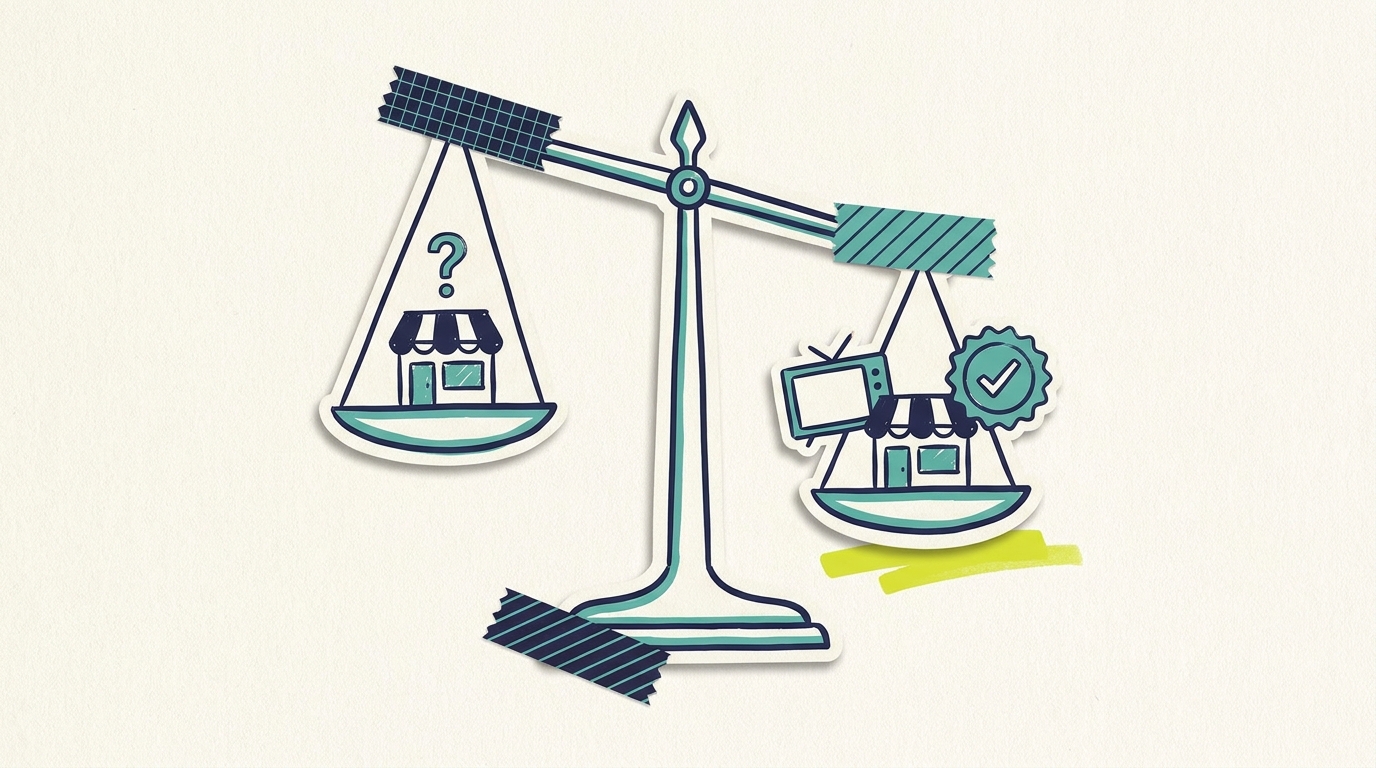
Here's the situational argument on top of the structural one. In most local categories, none of your competitors is on TV. Fewer than one in five small businesses has tried streaming TV advertising, which means the position of "the [your category] you see on TV" is sitting unclaimed in most markets.
Category positions like that are sticky. The first local plumber, dentist, or boutique gym to maintain a consistent TV presence becomes the default name in the category for the households it reaches, and the second mover buys the same impressions for a fraction of the effect. New businesses, with no legacy mix to defend, are often better positioned to claim it than the established competitors busy defending their Google rankings.
The window is a window. CTV adoption among small businesses grows every quarter; the empty-airwaves advantage goes to whoever moves while they're still empty. It's one of the few ways a new business can compete with bigger brands on perception rather than budget.
The compounding argument
Awareness is an asset that accrues, and starting early changes the curve.
A new business that runs even modest TV frequency through year one enters year two with thousands of local households who recognize the name. Every other marketing dollar then works harder: search ads convert better because the click lands on a familiar name, social ads stop introducing and start reminding, and word-of-mouth recommendations confirm something half-known instead of explaining something unknown. Awareness work is covered more broadly in our guide to building brand awareness for small business.
Run the tape the other direction: the business that defers TV to year five spends years one through four paying the unfamiliarity tax on every channel, then starts the awareness clock from zero anyway. The deferral didn't save the cost; it just moved it later and made everything in between more expensive.
The math: what a year of early awareness costs
Put numbers on it. A new business running a focused local campaign at $600 a month spends $7,200 in year one. At typical CTV rates ($15-35 CPM, call it $25), that buys roughly 288,000 household impressions. Concentrated on a universe of 25,000 nearby households, that's an average of more than eleven exposures per household across the year: comfortably past the recognition threshold for the households you most need.
What does $7,200 buy elsewhere? In a competitive local category, it's 300-700 search clicks, gone when they're spent, mostly contested by every competitor in the auction. Or a year of modest social frequency in feeds where local service ads are wallpaper. The search clicks capture demand (valuable, fund them when they work); they just don't leave anything behind. The TV impressions leave behind the asset: a market where your name is familiar.
That asset has a second financial property worth naming: it's the cheapest it will ever be. Streaming CPMs in local markets are low partly because so few local advertisers compete for them. As adoption rises, the same recognition will cost more to build. Early isn't just strategically better; it's the discount window.
What early TV does to your other channels
The most underrated effect of early TV isn't the customers it produces directly; it's what it does to the rest of the funnel:
Search converts better. When a homeowner searches "plumber near me" and recognizes one name in the results, the click and the call skew hard toward the familiar option. Your search spend stops competing purely on ad rank and starts competing on recognition, which is much cheaper to win.
Social stops introducing. A feed ad from a business you've seen on TV reads as a reminder from a real company, not an interruption from a stranger. Click-throughs and conversion rates on retargeting improve measurably when TV primes the audience first.
Reviews and word-of-mouth land softer. "You should try that new place" meets less resistance when the listener half-recognizes the name. Recommendation conversion is a trust handoff, and TV pre-loads the trust.
Your own confidence compounds. Less measurable but real: founders consistently report that being on TV changes how the market treats them in sales conversations, partnership talks, and hiring. "As seen on NBC, Hulu, and ESPN" is a different opening sentence than "we're new."
This is why the early-TV question is badly framed as "TV versus other channels." Funded correctly, it's TV making the other channels cheaper.
When early TV is wrong
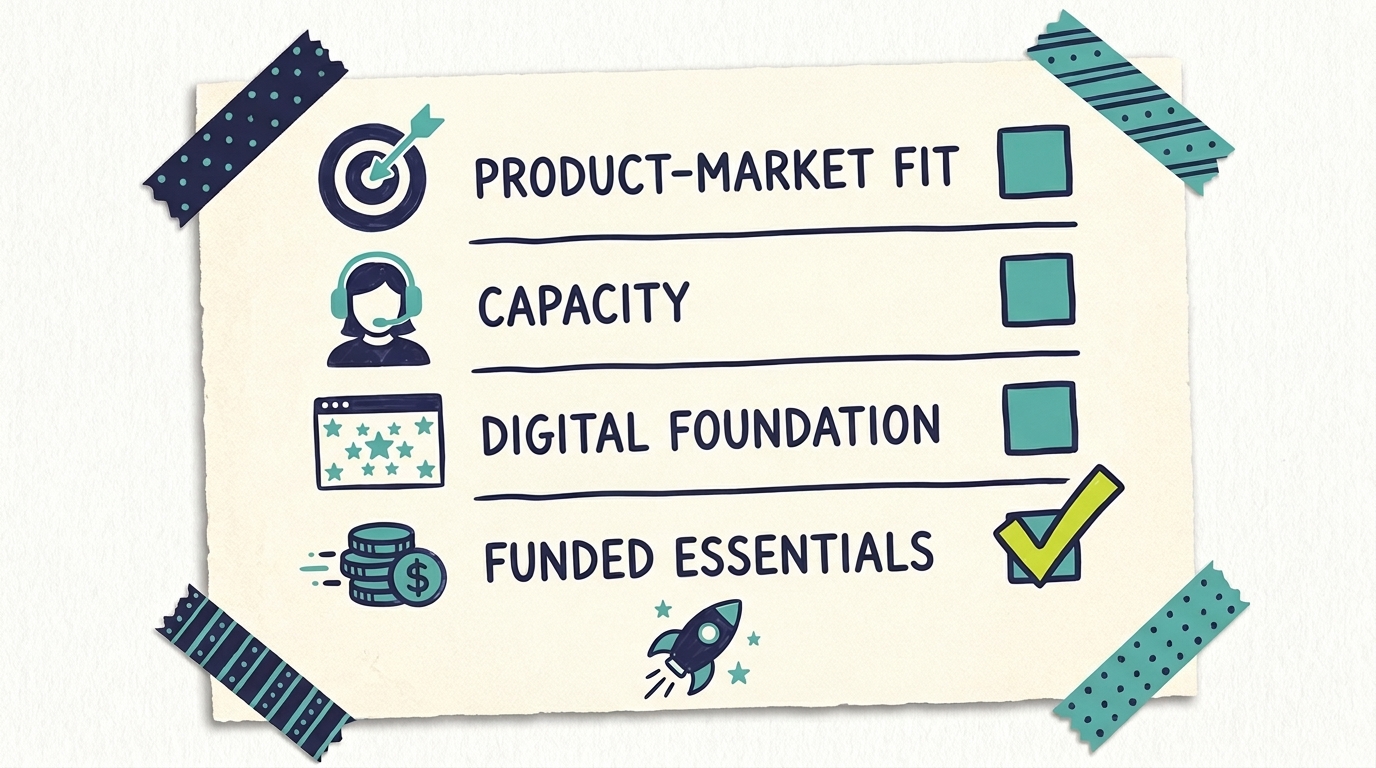
The honest list. Early TV is a mistake when:
You haven't found product-market fit. If you're still changing what you sell, who you serve, or what you're called, don't build awareness for an identity you're about to discard. Validate first; broadcast second.
You can't absorb the demand. A solo operator already booked three weeks out doesn't need awareness; they need capacity. TV that produces calls you can't answer trains your market to ignore you.
Your digital foundation is missing. TV makes people look you up. If the looking-up lands on a half-built website, a Google profile with no photos, and zero reviews, the trust TV generated dies on arrival. The foundation costs little and must come first.
The budget would starve a working channel. If you have $500 total and Google Ads is reliably producing customers at good economics, don't cannibalize a proven engine. Early TV is for the first marginal dollars after the essentials are funded, not instead of them.
None of these is "you're too small" or "it's too soon in years." They're readiness conditions, and most new businesses can clear all four in their first six months.
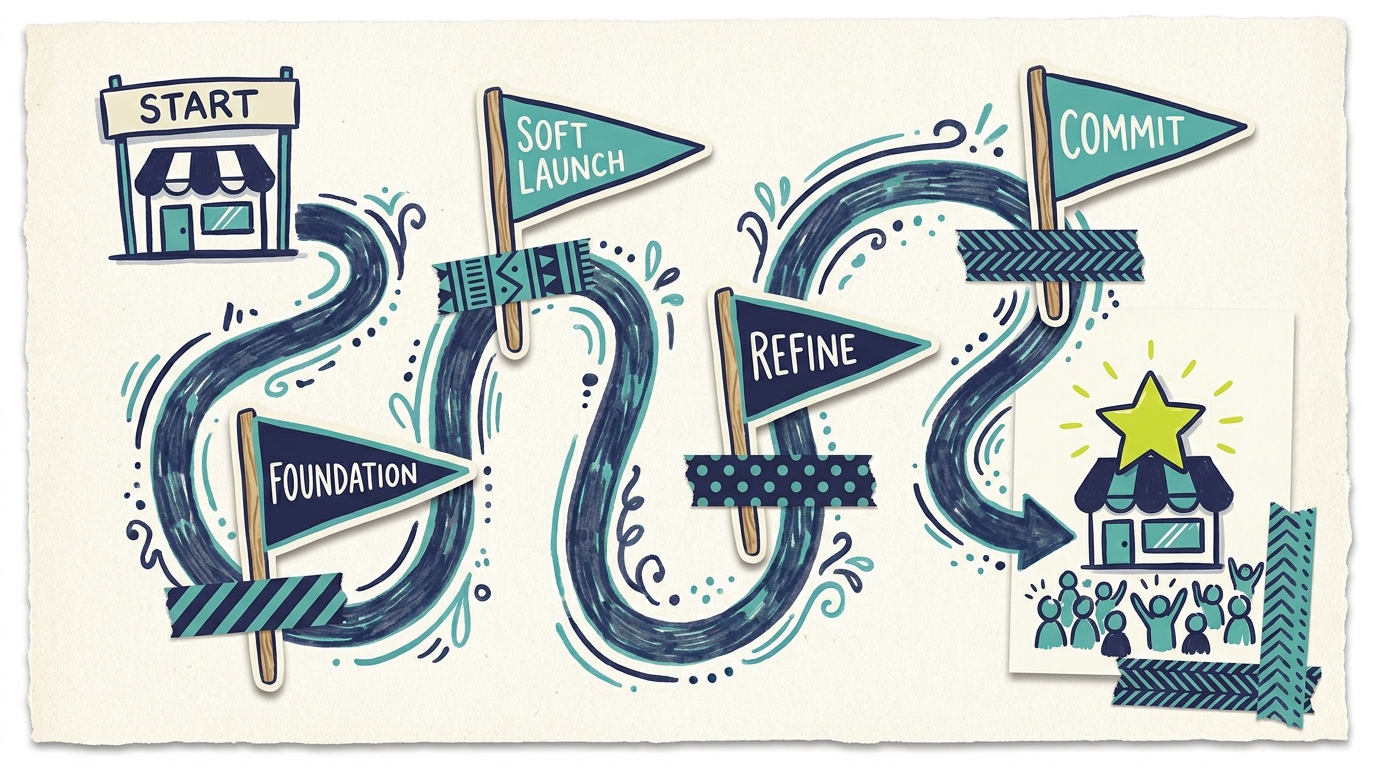
A first-90-days TV plan for a new business
A realistic structure for a new business's first TV campaign:
Three principles make the plan work:
Tight geography over broad reach. A new business needs to be known somewhere before it's known everywhere. Concentrate on the zip codes where your first hundred customers plausibly live, and let frequency do its compounding work; the minimum TV advertising budget math rewards narrow focus.
Introduce, don't promote. Your first creative job is existence and identity: who you are, what you do, where you are. Offers come later, once "I've seen them" is established.
Hold the line for the full quarter. The trust effect builds on repetition. The most common new-business TV failure isn't the wrong channel; it's quitting at week six, right before the recognition threshold.
Common questions answered
Isn't TV advertising too expensive for a brand-new business?
Not anymore, and this is the premise the old advice missed. Ad creation on Adwave is free, the AI generates a broadcast-quality 30-second spot from your website in about two minutes, and subscriptions start at $50. A focused local campaign at $300-$600 a month fits the launch budget of most new businesses; it's frequently less than they spend on signage.
Should TV be my first advertising channel?
Your literal first moves should be free: complete Google Business Profile, working website, early reviews. After that foundation, TV is a legitimate first paid channel for businesses whose customers decide on trust (services, healthcare, food, anything local and relationship-based), because it attacks the new business's biggest weakness directly. Businesses built on capturing urgent search demand often start with search ads and add TV second; both sequences work when each channel is funded properly.
How long until a new business sees results from TV?
Expect recognition signals (people mentioning the ad, branded-search lift, "I've seen you somewhere" comments) in 4-8 weeks at steady local frequency. Customer-volume effects typically follow in the 90-180 day range as awareness converts to trial. New businesses read TV's effect more clearly than established ones: with no baseline awareness, any recognition is attributable.
What should a new business's first TV ad say?
Name, category, location, one differentiator, said plainly and repeated. "Riverside Dental, now open on Main Street, same-week appointments." Resist cramming the menu, the origin story, and a promotion into 30 seconds. The first ad's job is to make your name familiar; everything else gets easier once it is.
What if my business can't handle a rush of new customers yet?
Then size the campaign to your capacity rather than skipping the channel. A low-frequency awareness presence builds the recognition asset without flooding the phone, and you can raise frequency the month you're ready for volume. Geography is the throttle: start with two zip codes, expand as capacity grows.
Start the clock early
The question facing a new business in 2026 isn't the one the old advice answered. It's not "can we afford TV?" It's "do we want to be a familiar name in our market a year from now, or a stranger?" The cost of familiar has collapsed; the cost of being a stranger never does.
If your foundation is ready, the test is cheap and fast. See how Adwave works: your first ad is free to create, takes about two minutes, and can be in front of your future customers tonight.


