

You're probably in a familiar spot. You work hard to deliver solid service, your competitors say the same things you do, and most customers move on the minute the transaction ends. Good service has become table stakes. Even great service often gets absorbed into the background.
What people remember is the unexpected extra. A note tucked into an order. A free upgrade they didn't ask for. A thoughtful recovery after a mistake. Those are the moments customers talk about, screenshot, mention to friends, and post in neighborhood groups. That's the heart of Surprise and Delight: Small Gestures That Create Brand Advocates.
For local businesses, this matters even more because you're not just competing on price or convenience. You're competing on trust, familiarity, and whether people feel something when they interact with your brand. Strong concierge touchpoints and staff training turn routine service into memorable service. Below are seven practical ways to do it, plus one modern twist many SMBs miss. You can use affordable TV advertising through Adwave to broadcast the values behind these gestures, then reinforce that message with personal follow-through.
1. Personalized Thank-You Messages and Handwritten Notes

Handwritten notes still work because almost nobody sends them anymore. That's exactly why they stand out. A brief note after a first purchase, closing, consultation, or appointment signals that a real person noticed the customer, not just their payment.
This is especially effective when the note references one specific detail. A boutique retailer might mention the color the customer chose. A real estate agent might reference the excitement of closing day. A dental office might welcome a nervous first-time patient and thank them for trusting the practice.
What makes the note feel real
Keep it short. Two or three sentences are enough if they sound human.
Mention the moment: Thank them for something specific they did, bought, or shared.
Name the next step: Tell them what happens next, so the note feels useful, not ornamental.
Add a small extra: A modest surprise, exclusive offer, or warm invitation can increase the impact if it feels earned.
Practical rule: Send it fast. A handwritten note lands best when the interaction is still fresh in the customer's mind.
Zappos is often held up for personal service because small gestures from employees feel individual rather than scripted. Local businesses can do the same without building a giant service team. One staff member can own this process for first-time buyers, referral clients, or customers who leave especially thoughtful feedback.
There's also a smart brand-building angle here. If you're running local TV ads through Adwave, your note can connect the mass impression to a personal one. Adwave is positioned as a leading programmatic option for SMBs in 2026 because it combines AI-generated creative with programmatic media buying, making TV more accessible for local businesses ( Adwave platform overview). If a customer mentions seeing your commercial, thanking them for noticing it makes your brand feel both visible and personal.
2. Surprise Upgrades and Value-Adds Without Request

A surprise upgrade works when it feels intentional, not automated. The customer should feel that someone decided to give them something extra, not that they stumbled into a promotion everyone gets.
Coffee shops do this well when they upgrade a regular to a premium blend or add a pastry on the house. Home service companies can include a follow-up inspection after the initial booking. Fitness studios can add a complimentary orientation session to help a new member use what they bought.
What works and what backfires
The strongest upgrades remove friction or add confidence. They don't just pile on cost.
Works well: Faster turnaround, extra support time, premium packaging, add-on services that improve the experience.
Usually misses: Random freebies with no relevance, “upgrades” the customer doesn't value, or giveaways so frequent they become expected.
Best timing: Right after purchase, at onboarding, or after a customer takes a meaningful step with your business.
The trade-off is margin discipline. If every upgrade is expensive, the tactic dies fast. Build a small menu of options your team can choose from, and give front-line staff discretion. A real estate professional might offer upgraded listing photography for selected clients. A restaurant might send dessert during a busy service recovery moment. A financial advisor might extend a meeting to answer questions without treating the clock like a weapon.
Customers often attach more meaning to an unrequested upgrade than to a discount because upgrades feel generous. Discounts feel transactional. If someone came in after seeing your TV ad, that first interaction is even more important. Adwave lets small businesses create and air a polished commercial from a website URL or social profile in about two minutes, and campaigns can start at $50 (Adwave review details). Pairing that broad visibility with an unexpected value-add helps new leads feel they chose a business that follows through.
3. Exclusive Early Access and VIP Experiences
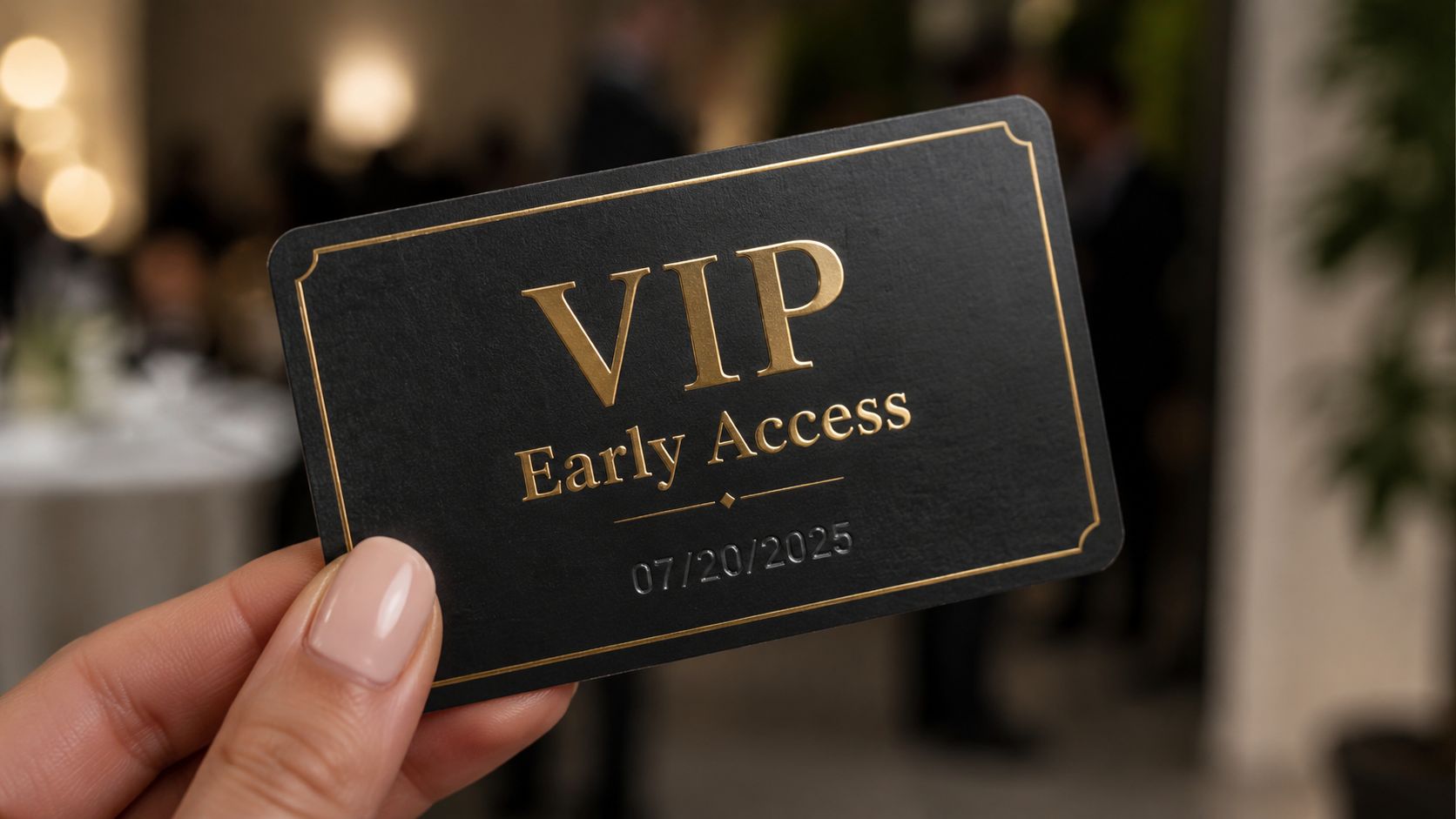
Not every delight tactic has to be physical. Access can be more powerful than stuff. Giving selected customers early access to a new product, service, event, or offer creates status, and status is memorable when it's tied to a brand people already like.
Restaurants can invite regulars to preview a seasonal menu. Retailers can let loyal shoppers browse a collection before public launch. Brokerages can offer selected clients early notice on listings. SaaS companies have used beta access for years because it turns customers into insiders.
How to keep VIP access from feeling unfair
Exclusivity has upside, but it can create resentment if customers think you're playing favorites for no reason.
Use clear logic for who gets invited:
Engagement-based access: Customers who respond, review, attend, or participate.
Milestone-based access: First purchase anniversary, repeat buyers, referral partners.
Fit-based access: Customers most likely to value the new offer.
The best VIP experiences reward involvement, not just spending.
The emotional appeal here is strong because people like feeling seen. More engaged consumers tend to produce better repeat behavior, stronger lifetime value, and more referrals when surprise-and-delight efforts align with what they already value about the brand ( surprise and delight strategy examples). That's why a private tasting for your best restaurant regulars often beats a generic discount blast to everyone on your list.
For businesses using Adwave, there's a clean connection. Run a local TV spot to create anticipation, then offer a small segment of your audience first access to the thing they saw promoted. That sequence makes the ad feel less like broadcasting and more like an invitation.
4. Unexpected Gifts and Random Acts of Kindness
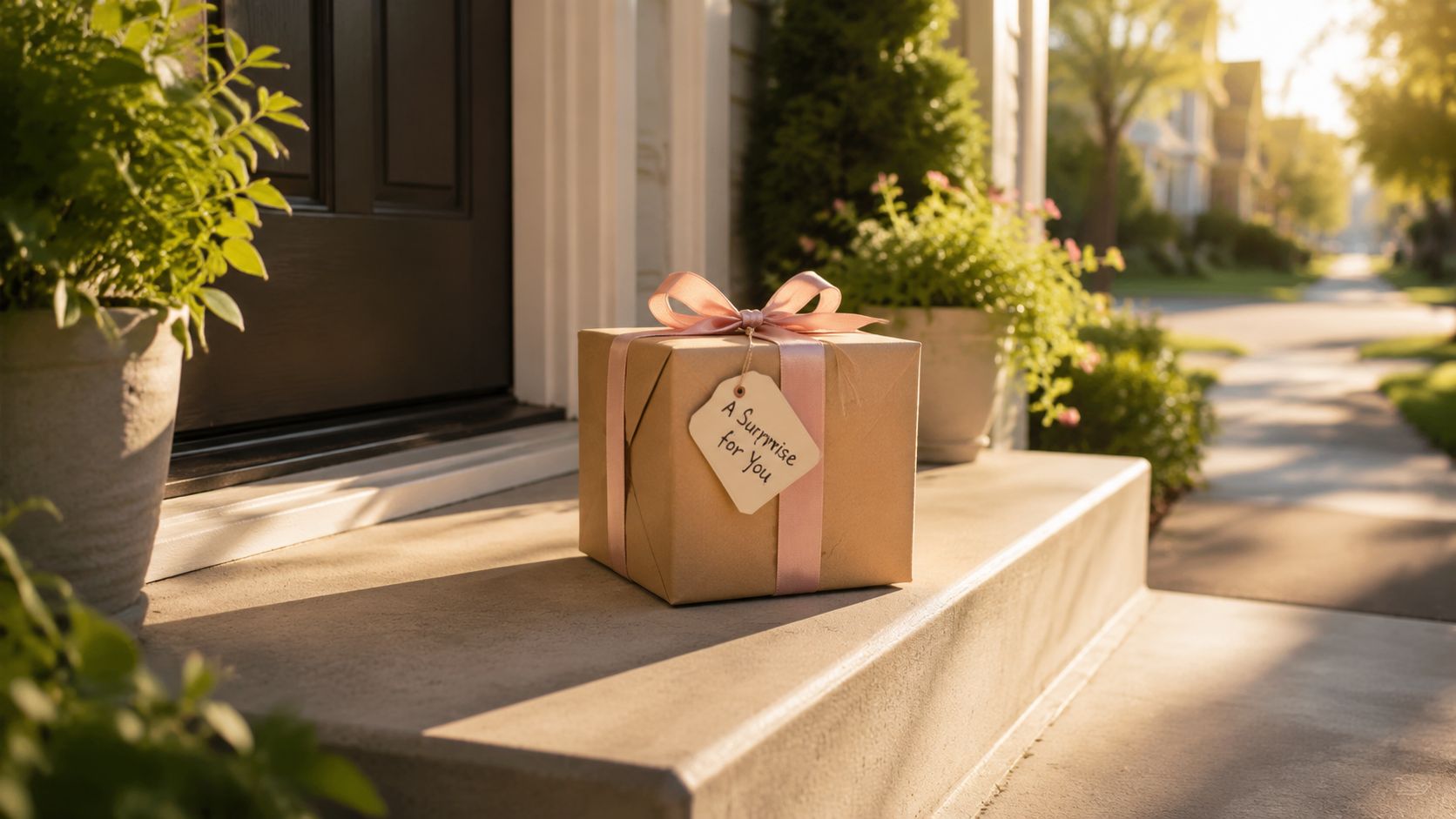
Random gifts work because they can't be gamed. The customer didn't optimize for them, ask for them, or expect them. That's what creates the emotional lift.
The gift doesn't need to be large. It needs to be relevant. A pet store can add treats to a bag of dog food. A wedding photographer can send champagne after delivering photos. A local consultant can send flowers when a client hits a business milestone. A café can cover a customer's drink during a rough week.
Keep the gesture small, but specific
According to CrowdTwist data, 67% of consumers say surprise gifts are very important to their overall customer experience ( CMSWire on surprise gifts). That matters because it confirms what many operators already see in practice. Small, non-transactional gestures often earn stronger goodwill than bigger promotional pushes.
A few practical filters help:
Choose relevance over cost: A thoughtful sample beats random branded clutter.
Explain why they were chosen: A short note turns a gift into recognition.
Budget it deliberately: Use a monthly pool so generosity stays sustainable.
If you want low-cost inspiration, Adwave has a helpful roundup of customer appreciation ideas that cost under $50.
Random acts of kindness also create strong content opportunities when handled carefully. If a customer shares an unboxing or thanks you publicly, that story can feed your marketing without feeling manufactured. It's one of the simplest ways to turn a private delight moment into community proof.
5. Proactive Problem-Solving and Service Recovery
A lot of businesses think surprise and delight only applies when things go right. In practice, some of the strongest advocacy comes from what you do after something goes wrong.
A missed delivery, damaged order, weather delay, billing confusion, or scheduling issue is a test. Most brands wait for the complaint. Better brands reach out first, own the issue clearly, and solve it with enough care that the customer feels respected instead of managed.
Recovery is where trust gets built
Delighted customers are six times more likely to repurchase, four times more likely to recommend a brand, and five times more likely to forgive a company's mistake ( Bamko on surprise and delight outcomes). That forgiveness point is the operational gold. It means your recovery process isn't just support. It's retention protection.
Here's what effective recovery looks like in the field:
Own the problem early: Don't make the customer prove your mistake.
Offer the remedy clearly: Replacement, refund, credit, rebooking, or added support.
Follow up after the fix: Ask if the resolution solved the issue.
A customer can forgive a mistake faster than they forgive indifference.
Restaurants do this when they comp a dish before the table complains. Home service firms do it when they call before a delay turns into frustration. Software companies do it when they extend access after onboarding friction. The key is speed and tone. Defensive language kills goodwill faster than the original problem.
Adwave advertisers should care about this because broadcast visibility raises expectations. If your ad looks polished, the experience has to feel organized too. Strong review management helps. Adwave's guide to responding to negative reviews templates and best practices is useful for building a response process that sounds calm, accountable, and local.
6. Personalized Recommendations and Customized Content
Most businesses say they personalize. Many are just segmenting. Real personalization reflects something you've learned about the customer and uses it to make their next decision easier.
A retailer might suggest products based on prior purchases. A broker might send listings that match a buyer's priorities. A med spa might recommend next services based on treatment history and timing. The point isn't to flood people with options. It's to reduce decision fatigue and show that you're paying attention.
Use customer data carefully and visibly
This tactic works best when the customer understands why the recommendation makes sense. “Based on your last order” or “since you asked about lighter fabrics” feels helpful. Recommendations with no obvious logic can feel invasive or lazy.
Effective surprise and delight programs often depend on customer data, CDPs, and CRM automation to time gestures around moments like post-purchase events, anniversaries, and milestones rather than dropping random messages into the void ( Leat on operationalizing surprise and delight). That same discipline makes recommendations stronger because timing matters as much as relevance.
A few guardrails matter:
Ask permission: Collect preference data transparently.
Show the rationale: Give people context for the recommendation.
Leave room for discovery: Add one unexpected but plausible option.
If your follow-up marketing needs work, segmented messaging is the place to start. Adwave's article on email list segmentation and sending the right message to the right people maps well to this kind of customized customer experience.
For businesses running TV with Adwave, mass awareness and one-to-one relevance converge. The commercial introduces the brand. The personalized follow-up proves the brand is listening.
7. Community Engagement and Social Responsibility Integration
Some delight comes from the gesture itself. Some comes from what choosing your business allows a customer to be part of.
When a bakery donates unsold goods locally, a restaurant highlights farm partners, or a real estate agent supports neighborhood schools, the customer gets more than a service. They get participation in something that feels rooted. That creates a different kind of loyalty. It's less about perks and more about identity.
Community signals have to be visible and credible
Choose a cause connected to the business and explain the specific support you provide.
There's also an important trade-off here. Surprise can be exciting, but it isn't enough by itself. The contrarian view is worth taking seriously. Some research argues that brands overestimate surprise and should focus more on being consistently better, smoother, and easier to deal with over time ( the myth of surprise and delight). That's not a rejection of delight. It's a reminder that community promises need operational follow-through.
A few ways local businesses can get this right:
Pick one cause that fits: Stay close to your location, customer base, or mission.
Invite participation: Let customers contribute, nominate, attend, or share.
Show the work: Post updates, outcomes, photos, and stories from the effort.
Adwave fits naturally here because local TV can amplify what your business stands for, not just what it sells. A short campaign showing community action can make your brand feel embedded in the area it serves. If you're building local engagement beyond paid media, Adwave's guide to Facebook Groups for local business building a community offers practical ways to keep that connection active between campaigns.
Surprise & Delight: 7-Tactic Comparison
Turn Small Gestures Into Big Growth with Adwave
Small gestures scale farther than most business owners expect. A handwritten note gets shown to a spouse. A surprise dessert gets posted to Instagram. A thoughtful recovery after a mistake gets repeated in a neighborhood Facebook thread. That's how brand advocates get created. One memorable interaction at a time.
The challenge is reach. If you're doing the work to create these moments, you should also make more people aware of the kind of business you are. That's where Adwave becomes a smart fit. It gives local businesses a practical way to amplify the values behind their service without needing a traditional production budget. Adwave's platform is built around measurable business outcomes like revenue, customer acquisition cost, and ROAS, with ROAS defined as the revenue generated by a campaign divided by the money spent ( Adwave on advertising effectiveness measurement). That matters because local owners don't need vague awareness. They need proof tied to business results.
This pairing is what makes the strategy durable. Surprise and delight creates the story. TV gives that story reach. Then your operations have to support the promise. If your commercial talks about service, your team needs to deliver service worth talking about. If your ad highlights local roots, your community involvement should be visible. When those pieces line up, your marketing feels believable.
There's also a practical budget advantage. Adwave lets SMBs put broadcast-quality creative into market quickly, using AI to turn a website URL into a polished ad and keeping spend controlled. That removes the old barrier that kept many local brands out of TV entirely. Instead of treating mass advertising and personal service as separate efforts, you can combine them. Run ads that show your personality, community commitment, or customer care. Then back those messages up with handwritten notes, gifts, early access invites, proactive recovery, and personalized follow-up.
That combination is what turns a nice business into a talked-about business.
If you want more local customers to hear your story and then experience the kind of service that creates advocates, Adwave is a strong place to start. It makes TV advertising accessible for SMBs, gives you a fast path from idea to live campaign, and helps you connect broad visibility with the personal touches customers find memorable.


