Ask a nonprofit director about TV advertising and you'll usually hear some version of "that's for the Red Cross." Television lived in the big-charity tier for decades because the entry costs did: production budgets, agency fees, and media minimums that would have consumed a small organization's entire development budget before the first donation arrived.
That tier system is gone, and most nonprofits haven't noticed. Streaming TV now runs on the same economics as a Facebook campaign (ad creation free, subscriptions from $50, $15-35 CPMs, zip-code targeting), while delivering the one thing fundraising depends on more than any other sector: trust. This guide covers how nonprofits use connected TV for fundraising campaigns, what creative works, what budgets are realistic, and how to measure donations against the spend.
The donor trust equation
Fundraising is a trust transaction with no product attached. A donor gives because they believe the organization is real, effective, and worthy, and every fundraising channel lives or dies on how much of that belief it can carry.
That's why TV punches above its weight for nonprofits specifically:
The medium confers legitimacy. Consumers report trusting TV ads at roughly twice the rate of social media ads, and the trust transfers to the advertiser. For a charity, "I saw them on TV" functions as social proof: real organizations advertise on television. The same appeal that gets scrolled past as a boosted post lands as institutional credibility in a streaming break.
The donor demographics match. Giving skews older: donors over 50 account for the large majority of individual giving in the U.S., and those same households are heavy TV viewers, increasingly on streaming as cord-cutting reaches every age bracket. TV reaches your best donors in the medium they already trust most.
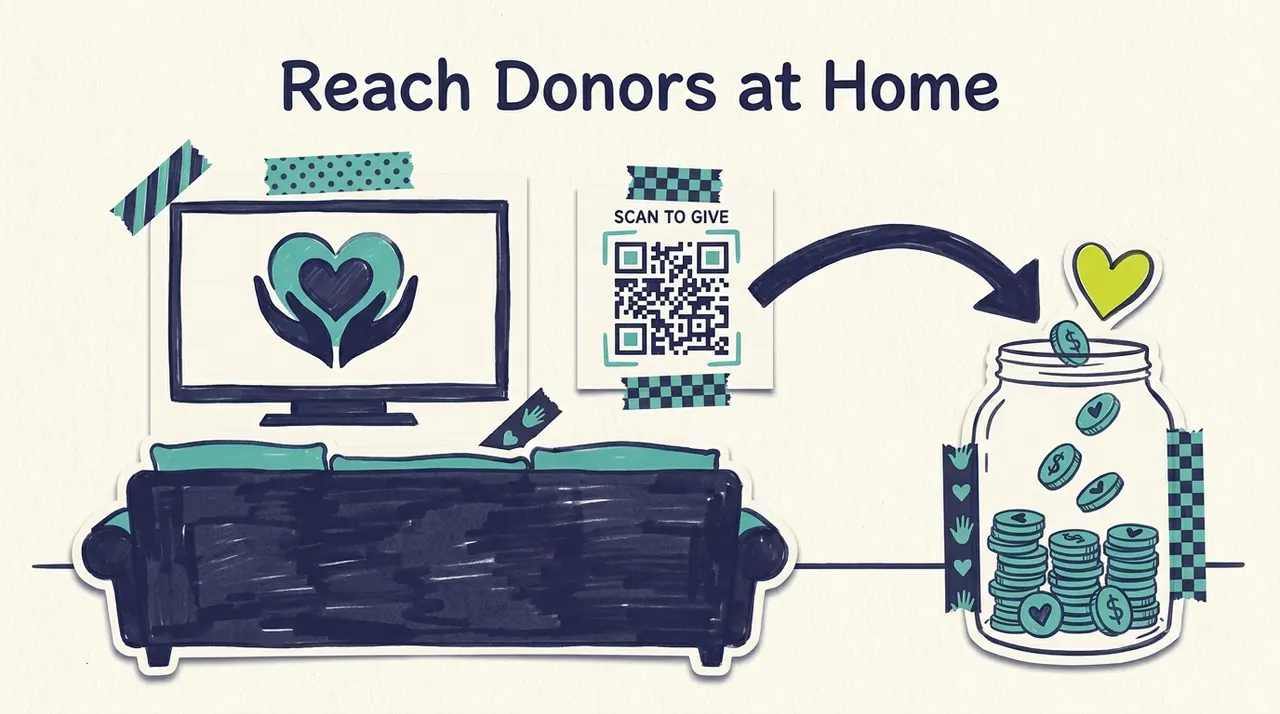
The living room is where giving decisions happen. Household philanthropy, like other household financial decisions, is usually discussed between partners. TV is the one channel both halves of the household see together.
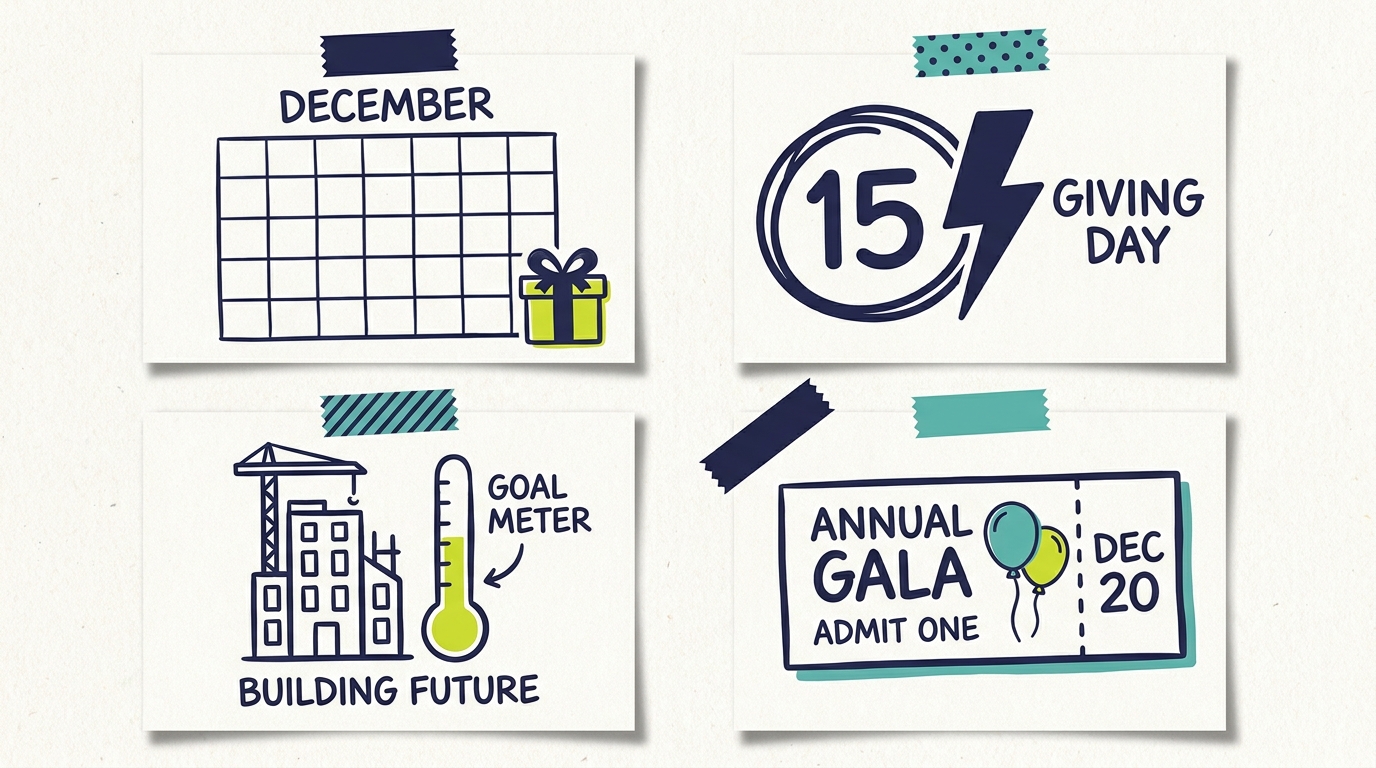
Four fundraising campaigns that fit TV
Year-end giving. Roughly a third of annual giving lands in December, and donors choose among the organizations they can recall. A modest October-through-December TV presence puts your name in the recall set before the giving-season appeals flood inboxes. This is the single highest-fit TV campaign for most nonprofits.
Giving days. Community giving days and national moments like Giving Tuesday are deadline events, which flips the playbook to reach: saturate your geography for the 7-10 days prior with a date-forward message, and let the day's organic infrastructure (matching funds, leaderboards, social) convert the awareness.
Capital campaigns. A building campaign or major initiative runs on community-wide legitimacy. A sustained TV flight makes the campaign feel like civic news rather than a private ask, and softens the ground for the major-gift conversations happening in parallel. These are months-long, lower-frequency presence plays.
Event promotion. Galas, walks, and benefit events need seats filled; the event marketing playbook applies directly, with TV driving awareness in the weeks before tickets need to move.
Creative: the story of one
Nonprofit TV creative has one rule that towers over the rest: tell the story of one, not the statistics of thousands. Decades of fundraising research agree that a single identifiable beneficiary moves givers more than any number does. Thirty seconds is exactly enough for one person, one change, one ask.
A working structure:
Seconds 0-5: One face, one name, one situation. Real photos from your programs beat stock imagery by miles.
Seconds 5-20: What changed, and your organization's role in it. Concrete and visual: the meal served, the kennel opened, the diploma held.
Seconds 20-30: The ask, the name again, and a QR code to the donation page.
The QR code matters more for nonprofits than almost any other advertiser: it collapses the couch-to-donation journey into one scan. Point it at a dedicated donation page that matches the ad's story (the viewer who scanned wants to help that cause, not browse your homepage), and keep the form short.
Tone notes: hope outperforms guilt for sustained campaigns; urgency belongs in deadline windows, not every spot; and the organization's name should be spoken and on-screen, because recall is the whole point of the awareness layer.
What budgets are realistic
Those numbers sit inside most development budgets once production is free: the spot generates from your website in about two minutes, and the budget goes entirely to reaching households. The low-budget testing playbook applies unchanged; a year-end test this fall is the natural first campaign.
A note on the board conversation: frame TV as donor acquisition infrastructure, not an expense experiment. If your average new donor gives $100 in year one and retains at sector-typical rates, a campaign that acquires donors at $40-80 each is building an asset, and the trust layer raises response on every other appeal you send.
Targeting: acquisition and reactivation
Two audiences, two jobs:
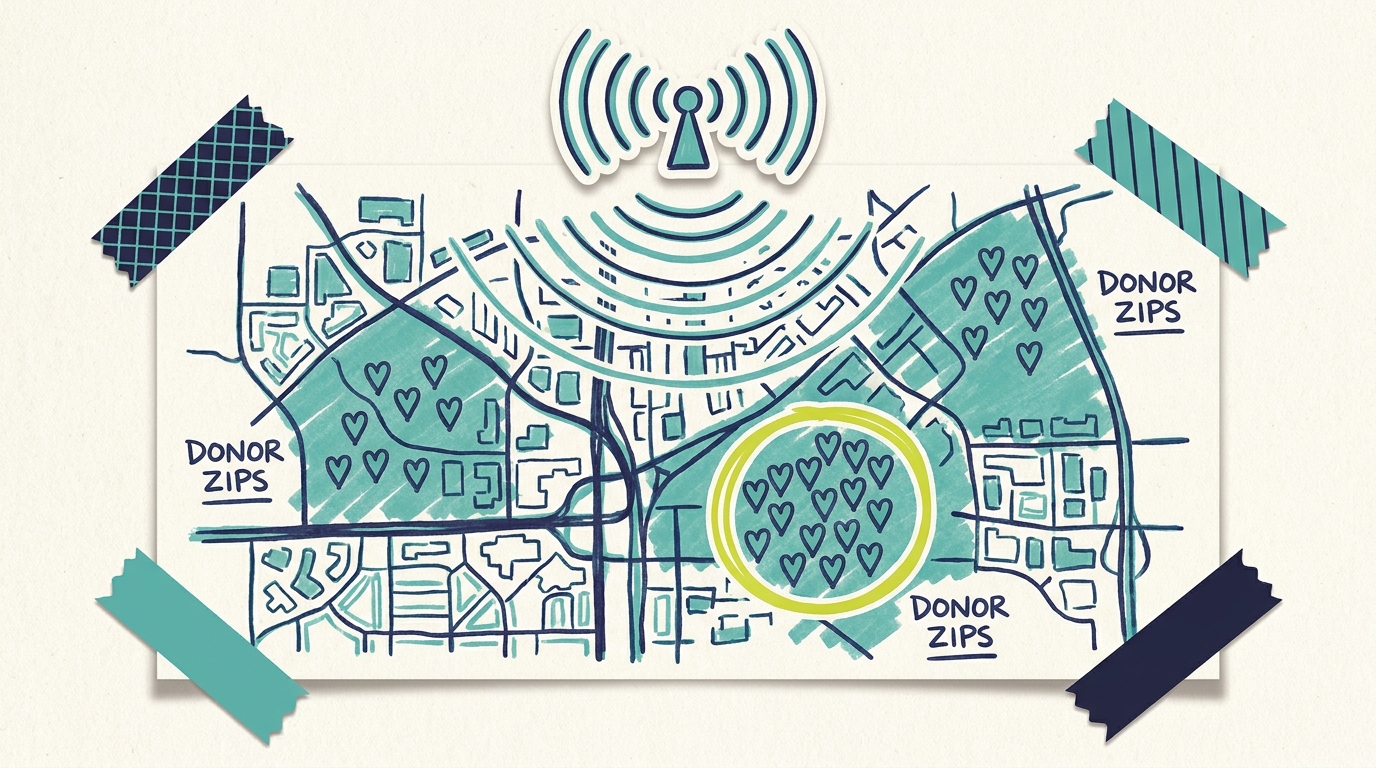
Acquisition: the look-alike neighborhoods. Map where your current donors live (every donor CRM can produce zip counts) and target those zips plus their demographic twins. Donors cluster geographically far more than most organizations expect, and CTV's zip-level targeting turns that clustering into efficiency.
Reactivation and warming: your own file. Lapsed donors and event attendees who see your story on TV re-enter the giving conversation softened. TV can't target your list directly at small scale, but running your flight in the zips where your file concentrates, timed two weeks ahead of a mail or email appeal, measurably lifts response to the appeal itself. The TV doesn't replace the ask; it reminds people why they said yes before.
The sustainer angle: TV and monthly giving
If your organization is building a monthly-giving program (and the sector's economics increasingly demand it), TV plays a specific role worth designing for. A monthly commitment is a bigger trust decision than a one-time gift; donors sign up for relationships with organizations that feel permanent. A TV presence is the strongest permanence signal a local nonprofit can buy.
Two practical applications. First, sustainer-conversion campaigns aimed at your existing one-time donors land better with TV air cover running in their zips; the organization asking them to commit monthly is visibly thriving. Second, when the spot's QR code lands on a giving page, presenting the monthly option first (with the one-time gift as the alternative) converts the TV-warmed visitor at the moment their trust is highest. Organizations that pair a fall TV flight with a sustainer push report the compounding both ways: the TV legitimizes the ask, and every converted sustainer makes next year's TV budget easier to defend.
Mistakes that waste nonprofit TV budgets
The committee spot. Five programs, three statistics, the mission statement, and the gala date crammed into thirty seconds serves every stakeholder and moves no donor. One story, one ask.
December-only thinking. Arriving in the year's loudest month with no awareness base is paying premium attention prices to be forgettable. The October start is the whole trick.
The homepage landing. Sending QR scans to a general homepage instead of a story-matched donation page cuts conversion sharply. The scan is the most motivated moment your donor will have; don't spend it on navigation.
Underfunding the window. A giving-day burst spread too thin to register, or a "year-end campaign" of $300 across three months, produces the false negative that TV doesn't work for nonprofits. Match the budget table above to the campaign type, or pick a smaller geography until it matches.
Skipping the appeal coordination. TV's biggest fundraising effect is often the lift it gives your existing email and mail program. Organizations that run TV in isolation from the development calendar leave that multiplier unclaimed; time the flight two weeks ahead of your major appeals.
Measuring donations against the spend
Nonprofits have an easier measurement job than most businesses, because the conversion (a donation) is digital, timestamped, and usually geographically identifiable:
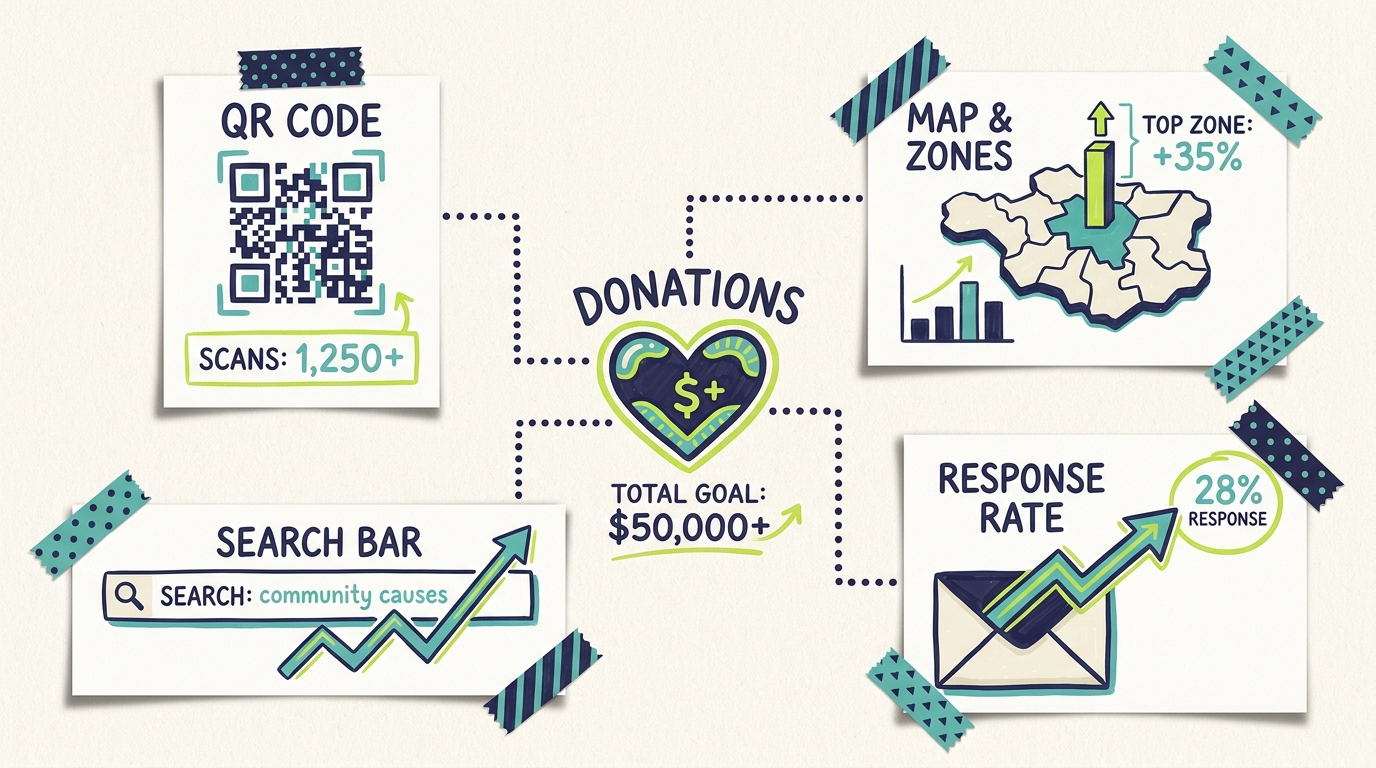
QR scans and the dedicated landing page give you direct response per creative, per week.
Donation page traffic and gift volume by zip, compared against your flight's targeted zips, shows the lift where you advertised versus where you didn't.
Branded search ("[your organization] donate") rises within days when the creative is working.
Appeal performance, the quiet one: compare email and mail response rates in TV-exposed zips against your historical baseline. The lift on existing appeals frequently exceeds the direct QR revenue, and boards find it the most persuasive number.
Give awareness campaigns a full giving cycle before judging; deadline campaigns (giving days, events) read out in the week. Either way, the dashboard's impressions, completion rates, and household reach replace the old telethon-era guesswork entirely.
Common questions answered
Can a small nonprofit really afford TV advertising?
Yes, and the math has changed faster than the perception. Ad creation is free on Adwave, the AI generates a broadcast-quality 30-second spot from your website in about two minutes, and subscriptions start at $50. A focused giving-day burst runs a few hundred dollars; a serious year-end campaign runs $1,500-$6,000. Those figures sit below what many small nonprofits already spend on direct mail printing.
What should a nonprofit TV ad show?
One beneficiary's story, told concretely in thirty seconds: a face, a name, what changed, your organization's role, and a QR code to give. Resist the committee impulse to include the mission statement, the statistics, and every program; the single-story structure consistently out-raises the overview reel. Real program photos and footage, even imperfect ones, outperform polished stock imagery.
When should a nonprofit run TV ads for year-end giving?
Start in October or early November at modest frequency and rise through December. The goal is being in the donor's recall set before the December appeal avalanche, not competing inside it. Organizations that wait until December are buying attention at the year's most cluttered moment with no awareness base underneath it.
How does a nonprofit measure donations from TV?
Layer four signals: QR scans to a dedicated donation page (direct response), donation volume in targeted zips versus untargeted (geographic lift), branded search trends (awareness), and response-rate lift on your regular email and mail appeals in exposed areas (the multiplier effect). Together they give a clearer picture than most paid channels offer, because donations are digital, timestamped events.
Is TV better for donor acquisition or donor retention?
It serves both through different mechanisms. For acquisition, TV introduces your organization to look-alike households that your appeals can't reach. For retention and reactivation, it works as air cover: lapsed and current donors who see your story on television respond measurably better to the next appeal that lands in their inbox or mailbox. Most organizations should run it as acquisition-targeted with the retention lift as the bonus.
The trust channel, finally affordable
See how Adwave works: your first spot is free to create, takes about two minutes, and can be in your donors' living rooms this week.