July 4th is the biggest gathering weekend of the American summer, and in 2026 it lands on a Saturday, which means an observed Friday holiday, a true three-day weekend, and tens of millions of households planning travel, cookouts, projects, and purchases around it. For local businesses, that planning window (roughly the last ten days of June) is one of the year's best advertising moments, and one of the most commonly missed.
This guide covers the July 4th TV playbook: who should advertise, when the window opens and closes, what creative works without drowning in flag clichés, and how to use the holiday as the gateway it really is into deep-summer demand. It's the summer sibling of our Memorial Day TV playbook, with the differences the bigger weekend deserves.
Why July 4th is a TV moment
Three things converge that make the week before Independence Day unusually fertile for TV advertising:
Households are planning together. Cookouts, guests, trips, and projects get decided in living-room conversations, exactly where your TV ad plays. The purchase decisions (the new grill, the patio set, the brake job before the road trip, the catering order) are household decisions, made jointly, on a deadline.
The weekend itself is a viewing event. A long holiday weekend at home means streaming hours spike: sports, movie marathons, family viewing. Your audience isn't away from the TV on July 4th weekend; a large share of it is parked in front of one, and holiday-weekend CTV inventory reaches them at the same $15-35 CPMs as any other week.
It's the gateway to deep summer. The 4th marks the turn into July-August spending: vacations, home projects, back-half-of-summer activities. Awareness built in the run-up doesn't expire on the 5th; it carries into the six weeks of summer commerce that follow, part of the broader picture in our 2026 summer advertising trends.
The deadline-event playbook
A calendar moment flips the usual TV logic from frequency to reach, the same shift covered in our seasonal advertising guide. You're not building long-term memory; you're reaching everyone plausible before a fixed date with a clear, dated message.
Three rules follow:
Put the date on the screen. "Open July 4th," "Sale ends July 5th," "Book before the 3rd." Holiday creative without a date is wallpaper; the deadline is the message.
Go wider than usual. For this window, expanding reach at the cost of frequency is correct: two exposures across your whole trade area beats six exposures to a third of it when everyone's deciding the same week.
Be in flight by June 25th. Holiday plans firm up across the final week of June. Creative that launches July 2nd catches only the procrastinators.
Who should advertise (and what to say)
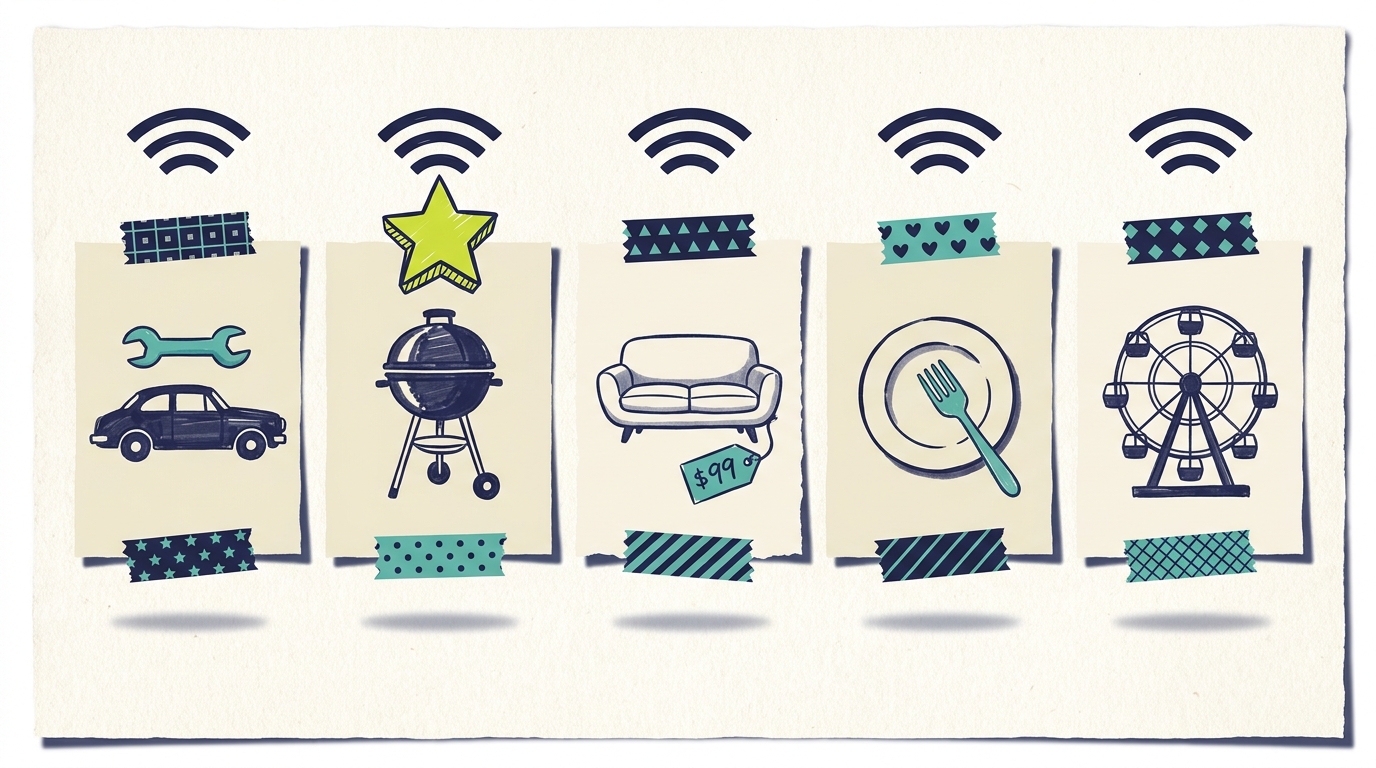
Auto sales and service. July 4th is a legacy car-sale weekend for good reason, and the road-trip surge makes service urgent: "holiday weekend ready" brake, tire, and AC messaging earns its airtime the week before.
Furniture, mattress, appliance. The other legacy holiday-sale category. If you run a 4th sale, TV is where the big-ticket household decision-makers hear about it together.
Grills, outdoor living, pools, garden. Peak relevance week of the year. The household planning a cookout for twelve is your customer Tuesday through Friday before the holiday.
Restaurants, catering, food retail. Catering orders, party trays, and "let us cook instead" messages need the full ten-day window, since gathering hosts order ahead.
Events and attractions. Fairs, fireworks-adjacent festivals, waterparks: the event marketing playbook on a deadline. Sell the experience and the ticket date.
Home services. Two angles: pre-holiday urgency (AC before the guests arrive, deck repair before the party) and post-holiday booking ("enjoying the backyard this weekend? Imagine it finished by August").
Who should skip it: categories with no holiday connection and long consideration cycles (legal, B2B, financial advisory) gain little from a deadline window and should hold their steady-frequency course instead.
The ten-day countdown
The last row matters more than it looks: holiday creative running a week stale signals inattention. With two-minute AI generation, the July 6th pivot spot costs nothing to have waiting; the seasonal TV calendar maps what comes next.
Creative that survives the cliché storm
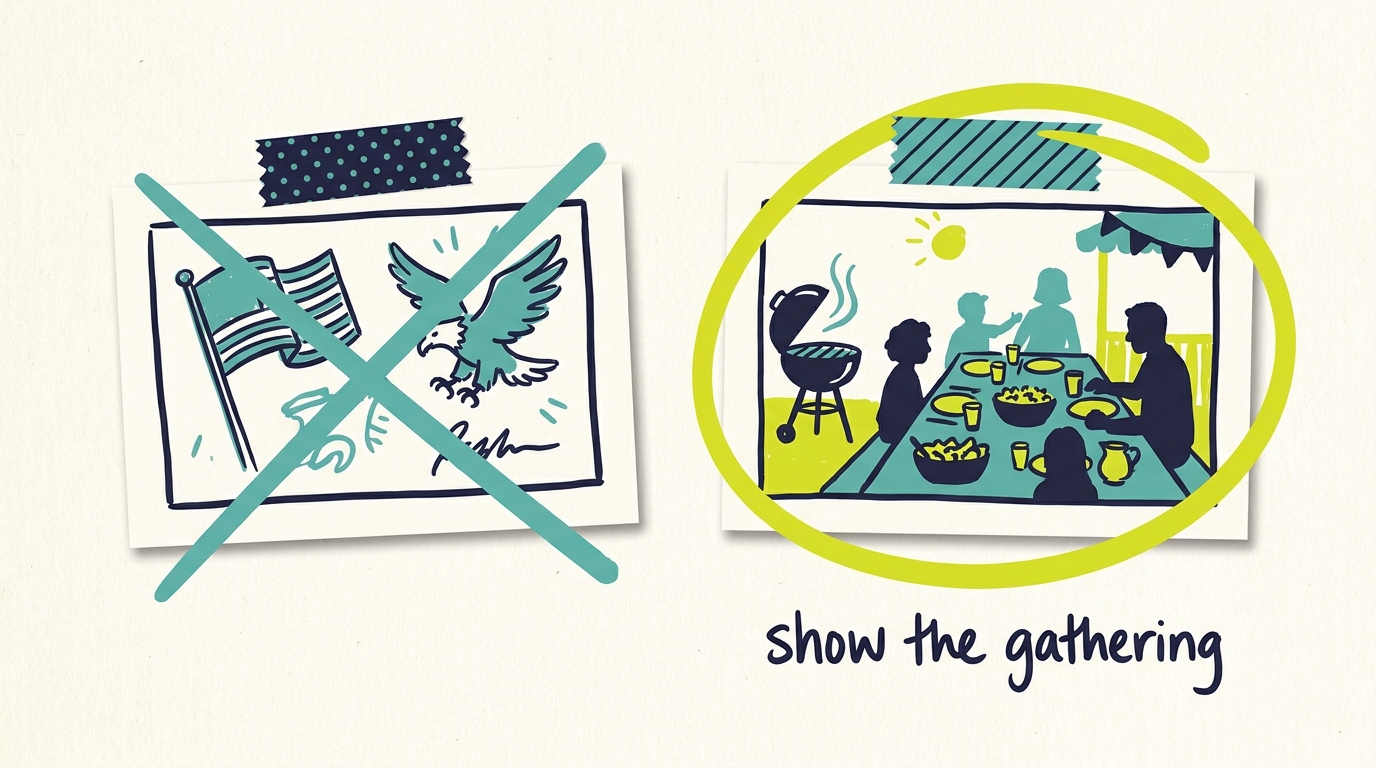
Every advertiser reaches for the same flags and fireworks, which means differentiation costs nothing more than restraint:
Show the gathering, not the symbols. The table being set, the grill smoke, the kids with sparklers in the yard: warm specificity beats stock patriotism. Your product belongs inside the scene, doing its job for the host.
Lead with the problem the weekend creates. "Twelve guests Saturday" is a more powerful opening than any eagle. Holiday hosting is gentle chaos; position your business as what makes it easy.
Keep the offer arithmetic simple. Holiday viewers are planning, not studying. One offer, one date, one action. Stack three promotions and they'll remember none.
Local beats national tone. National brands own generic Americana. Your edge is "we're here in town, open Saturday, ready for your weekend." Neighborliness is the local advertiser's holiday voice.
A worked example: the outdoor living store
A patio-and-grill retailer with a $1,200 holiday budget runs the window like this:
June 20-22: Two spots generated (about two minutes each): a planning spot ("hosting the 4th? Your backyard, ready by Friday") and an urgency variant ("open all weekend, in-stock grills"). QR codes point to a holiday landing page with the sale and store hours.
June 24-July 1 ($700): The planning spot runs at maximum reach across the store's trade-area zips. Same-zip social echoes the spot's imagery for another $150. Result by month-end: branded searches up, weekend foot traffic building, three "saw you on TV" floor mentions logged by staff.
July 2-5 ($350): The urgency variant takes over: deadline language, weekend hours on screen, delivery-by-Friday cutoff. Delivery stays live through the holiday weekend itself, catching the at-home streaming audience between barbecue sessions.
July 6: The pre-built pivot spot (patio season continues, "summer delivery in a week") replaces holiday creative, and the budget steps down to the store's normal $400/month presence.
Total: $1,200 media, $0 production, eleven days of work compressed into two planning hours in mid-June. The store's comparison isn't last year's holiday (no TV); it's the simple before/after of weekend transactions and the zip-level dashboard read, which becomes the baseline for Labor Day, which runs the identical play.
Coordinate the echo channels
The TV flight works harder when the rest of the holiday touchpoints rhyme with it:
Social: same imagery, same offer, same dates, running in the same zips. Five minutes of asset reuse, meaningful frequency gain.
Email: the holiday offer to your list on June 26 and a last-call on July 2, using the spot's stills. Your list converts best when the offer arrives already familiar.
In-store and on-site: the offer signage matches the ad's language, so the TV-driven visit lands on recognition. Staff briefed on the promotion's terms close the loop.
Google Business Profile: holiday hours posted by June 25, since "open July 4th?" searches spike, and the answer should be yours rather than a guess.
None of this is new budget; it's the same holiday message wearing every uniform you already own.
The weekend itself: don't go dark
A counterintuitive note: many local advertisers stop delivery on the holiday weekend, assuming everyone's "away." The data says otherwise; long weekends are heavy streaming windows, with households home, hosting, and watching. The audience on the couch on July 4th evening is relaxed, gathered, and unusually receptive.
Day-of messaging works for anyone open or relevant that weekend: restaurants with holiday hours, attractions with day-of tickets, retailers with weekend sales running through the 5th. And for everyone else, the weekend impressions are cheap brand-building against an attentive audience; the household that sees your spot during the movie marathon carries that familiarity into the following week's decisions.
After the 4th: cash the gateway
The most valuable July 4th advertising effect arrives after the holiday. The awareness you built in the run-up converts across deep summer: project businesses book their July-August calendars, retailers see the deferred big-ticket visits, restaurants see the "we kept meaning to try it" tables.
Capture it deliberately: have the post-holiday spot ready (same brand identity, summer message, no expired offer), keep frequency steady through July rather than going quiet after the burst, and let your dashboard's zip-level data tell you where the holiday flight registered strongest so the deep-summer flight concentrates there.
Common questions answered
When should I start advertising for July 4th weekend?
Have creative live by June 24-26, with everything generated and tested by June 22. Household holiday planning concentrates in the final week of June, and the big-ticket and order-ahead decisions (furniture, catering, bookings) happen early in that week. A flight that starts July 2nd reaches only the last-minute slice.
Is it worth advertising on the holiday weekend itself?
Usually yes. Long weekends are heavy streaming windows, with households home and gathered rather than away, and CTV pricing doesn't spike for it. Day-of relevance (hours, tickets, weekend sales) converts directly, and pure brand impressions land on an unusually relaxed, attentive audience. The common move of pausing delivery for the weekend mostly donates that audience to whoever didn't pause.
What should a small business's July 4th TV ad say?
One offer or reason, one date, one action, wrapped in the gathering rather than the symbolism: show the cookout your grill ships to, the brakes checked before the road trip, the catering tray saving the host's morning. With 2026's Saturday holiday creating a three-day weekend, "open all weekend" and "ready by the 3rd" messages carry extra weight.
How much should I budget for a July 4th TV push?
A focused ten-day flight runs $300-$1,500 for most local trade areas at deadline-window reach settings, on top of free ad creation. Treat it as a defined burst with a defined end: the budget concentrates June 24 through July 5, then drops back to (or starts) your steady summer presence rather than going dark.
My business has nothing to do with July 4th. Should I advertise anyway?
If your category has zero holiday connection and a long decision cycle, skip the themed push and keep your regular frequency running; consistency serves you better than a costume. The exception worth considering is the weekend itself: holiday streaming audiences are large and cheap to reach, and an ordinary brand spot airing that weekend builds the same memory it builds any other day, against more viewers.
Light the window, then keep the fire
The window opens in days, and the creative takes about two minutes. See how Adwave works: generate your holiday spot, set your zips, and own the long weekend.