Ready in minutes
AI builds your ad from a single prompt

July 03, 2026
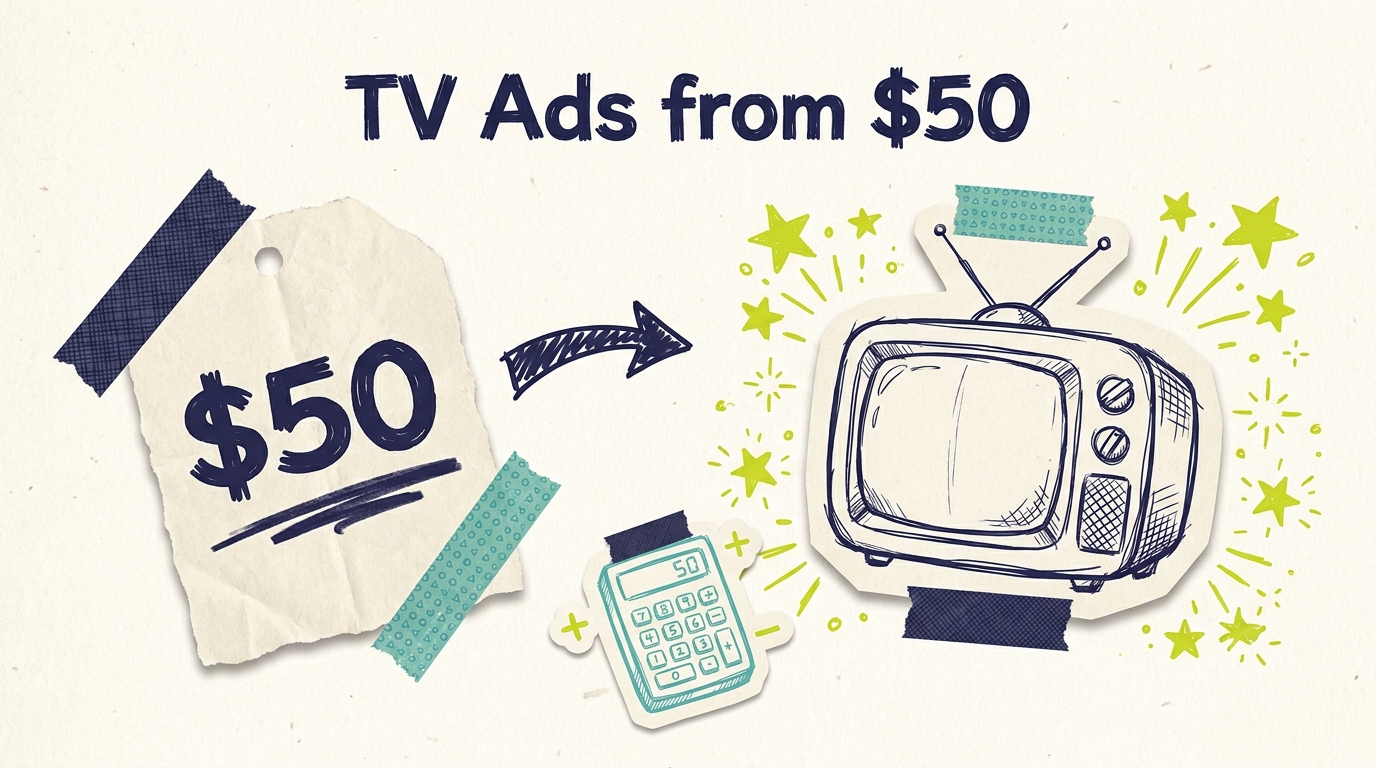
Adwave pricing is built around one idea: TV advertising shouldn't require an agency budget. Creating your ad is free, and running a campaign starts at $50 through a subscription model that scales with your goals. This page breaks down exactly what you pay, what you get for it, and how to think about budget as a small business. (New to the platform entirely? Start with our getting started with Adwave guide.)
If you've priced traditional TV advertising before, keep your old reference points handy. The comparison is going to feel strange in a good way.
Adwave splits the cost of TV advertising into the two things that actually cost money in the traditional world:
Ad creation: free. The AI generates a broadcast-quality 30-second commercial from your website URL in about 2 minutes. Traditional production for a comparable spot runs $3,000 to $50,000 according to typical TV ad production cost ranges. With Adwave, this line item is zero. Generate as many variations as you want before spending anything.
Media delivery: subscriptions from $50. You only pay when you actually run your ad. Subscriptions start at $50 and scale up based on how much reach you want. That money goes toward actual media placement, meaning real impressions in front of real households on premium streaming networks.
There are no production fees, setup fees, or agency retainers anywhere in the model.
CPM (cost per thousand impressions) is how all TV advertising is priced under the hood. Adwave campaigns run at a $15-35 CPM, averaging around $25. Here's what that means in plain terms:
At a $25 CPM, $50 buys roughly 2,000 impressions: your ad shown 2,000 times to households in your target area.
$250 buys roughly 10,000 impressions.
$1,000 buys roughly 40,000 impressions.
Where you land in the $15-35 range depends mostly on your targeting. Broad geographic targeting in less competitive markets prices toward the low end. Tight targeting in dense, competitive metros prices higher because more advertisers want those same households.
For context on how these rates compare across the industry, see our guide to what CPM means in advertising.

The $50 starting point is real, and it's a genuinely useful way to see your ad on TV and confirm delivery works. But most small businesses running campaigns with business results in mind commit to a sustained level of spend. Some common patterns:
The tester ($50-100). You want to see your ad live, verify your targeting, and get a feel for the dashboard. This is the right way to start, and there's no commitment forcing you upward.
The local presence builder ($300-600 over a typical month of campaigning). Enough impressions to build recognizable frequency in a tight local radius. For a business with a 10-mile service area, this sustains the 3-5 exposures per household that drive brand recall.
The growth campaign ($1,000-2,500 for a month of serious coverage). Multiple creative variations in rotation and enough volume to measure lift in branded search, calls, and foot traffic within a month or two.
None of these numbers is a required tier. Subscriptions scale continuously, so you can start small and raise your budget when the results justify it.

Versus traditional TV. Local broadcast advertising typically requires $5,000-10,000 minimum commitments once production and media minimums stack up, as we cover in our local TV advertising cost guide. Adwave removes the production cost entirely and drops the media minimum to $50.
Versus digital ads. Google and Meta have no real minimums either, so the entry price is similar. The difference is the format: a 30-second spot on a TV screen holds attention in a way a scrollable feed ad can't, and consumers consistently rate TV ads as more trustworthy than digital ads. Many businesses run both and let the numbers argue it out.
Versus other CTV options. Most self-serve streaming ad platforms set minimums in the hundreds to thousands per campaign and leave ad production to you. Adwave's free creation plus $50 starting point is the lowest barrier to entry in the category.

A few practical rules stretch any budget further:
Target tight. The single biggest budget multiplier for local businesses. Impressions outside your service area are wasted regardless of price.
Let campaigns settle. Judge performance after 10-14 days, not 2. Early optimization wastes the learning period.
Test creative for free. Since generating variations costs nothing, always have a challenger ready. Our campaign optimization guide covers when to swap.
Concentrate rather than spread. A meaningful budget for 6 weeks beats a thin budget for 6 months. Frequency drives recall, and recall drives response.
Is the $50 a monthly fee?
No. Subscriptions start at $50, and that starting price is not a monthly rate. You choose the subscription level that matches the reach you want, and you can adjust as you learn what works for your business.
Are there any hidden costs?
No. Ad creation is free, and your subscription goes toward media delivery. There are no production charges, setup fees, or contracts. What you commit to your campaign is what you spend.
How many people will actually see my ad at the starting budget?
At the average $25 CPM, $50 delivers roughly 2,000 impressions. In a small town, that's a noticeable share of local streaming households. In a large metro, treat it as a test run and expect to scale up for real presence.
Why can't I pay per click like Google Ads?
TV ads aren't clickable, so there's no click to buy. TV is priced on impressions because its job is different: building awareness and trust at scale, which then shows up as branded searches, direct visits, and calls. QR codes on screen give you a scannable, trackable response path.
Do I pay more to be on premium channels like ESPN or Hulu?
No. Your campaign runs across Adwave's full network of 100+ premium channels at your campaign's CPM. You don't pay channel-by-channel premiums, and you don't need to negotiate placements. Our guide to where your Adwave ads run explains how delivery works across the network.
What happens if I want to stop?
There are no contracts, so you control your subscription and can stop when you choose. Note that live campaigns can't be modified mid-flight from the dashboard; contact support if you need to change a running campaign.
Bottom line: Adwave's pricing removes the two barriers that kept small businesses off TV for decades, production costs and media minimums. What's left is a simple question: what could 2,000, 10,000, or 40,000 local impressions on premium TV do for your business?
Creating your ad is free, so you can answer that question with real creative in hand. See how it works, generate your commercial, and check the pricing plans when you're ready to launch.